
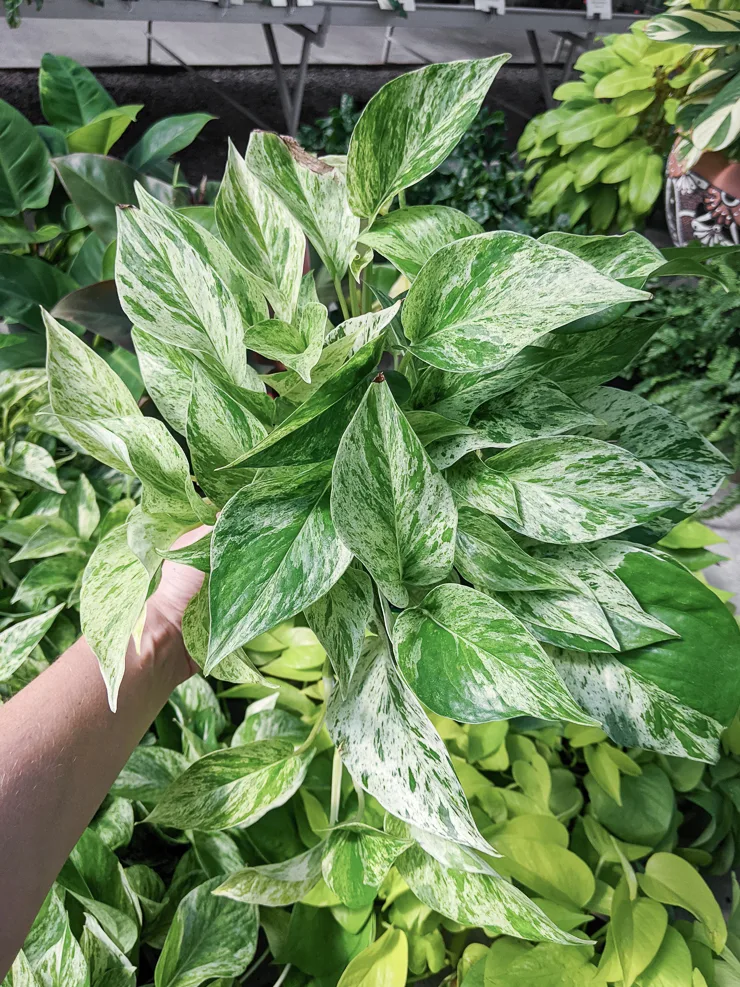
Epipremnum comparison hub
Epipremnum is a genus, not one interchangeable “pothos.” Compare the species group, visible plant, trade label and format separately, then move to the guide that owns your exact question.
Epipremnum types at a glance
| Species framework | Useful visual direction | Names seen in trade | Best fit |
|---|---|---|---|
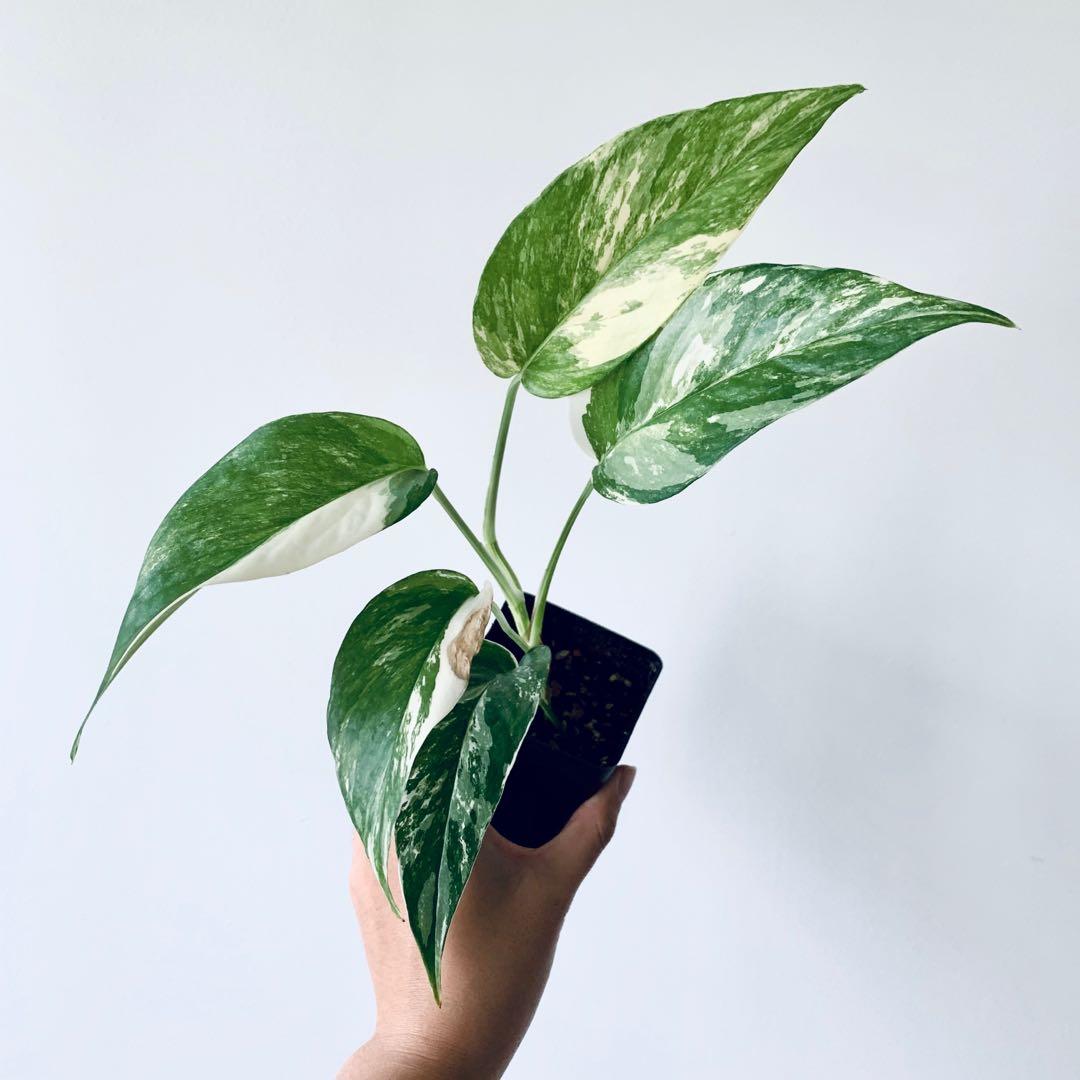
| E. aureum | Familiar juvenile heart-shaped pothos foliage; supported mature growth can become much larger. | Golden, Marble Queen, Neon, Jade, Manjula, N’Joy | Accessible trailing or climbing displays with many foliage patterns. |
| E. pinnatum | Longer juvenile blades; sustained supported growth can produce deeply divided mature leaves. | Albo, Marble, Cebu Blue, Skeleton Key, Mint | Collectors who value climbing architecture and developmental change. |
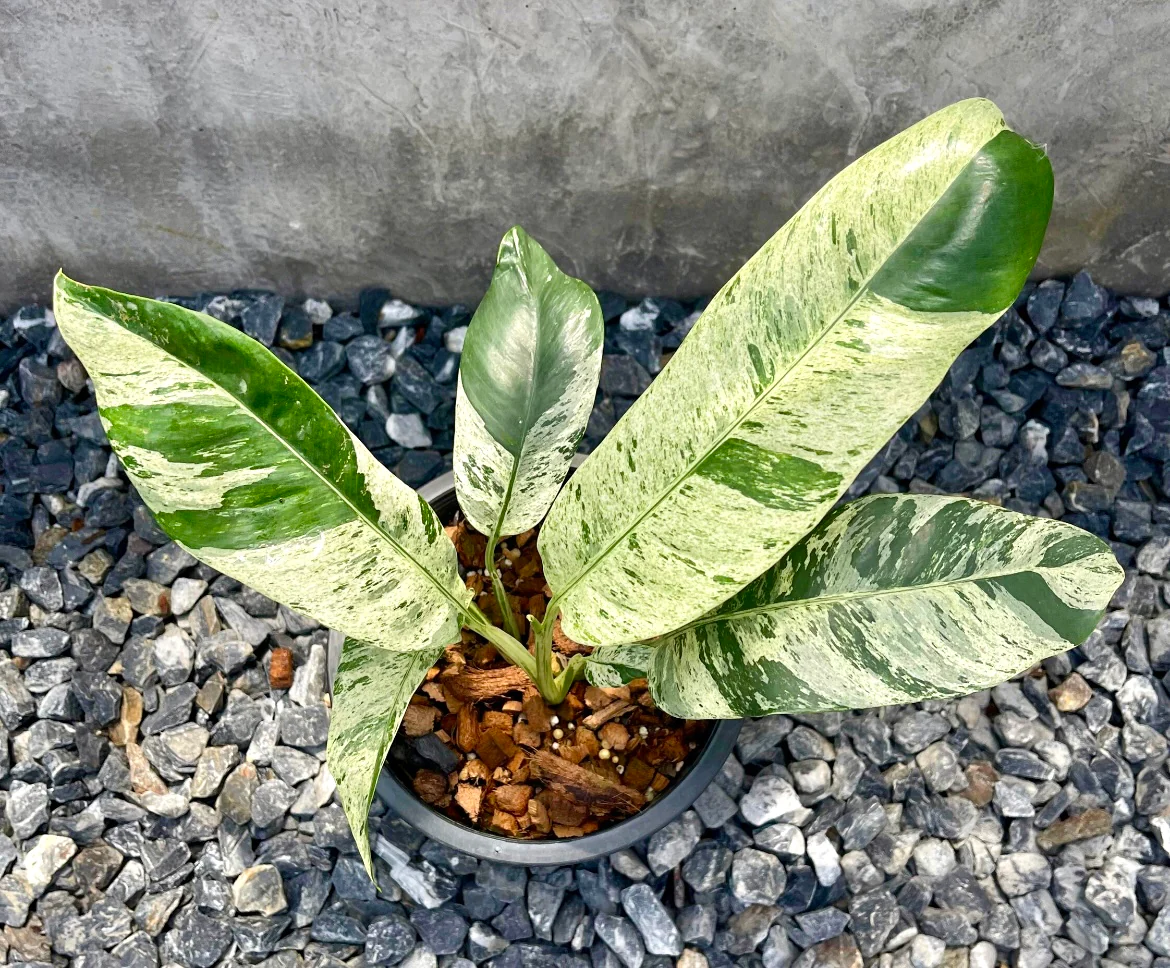
| E. giganteum | Broad, substantial foliage in green or cream-patterned trade forms. | Variegated, Marble Variegated | A focal specimen where leaf scale and texture lead. |
| E. amplissimum | Long, comparatively narrow blades with longitudinal pale or silvery pattern in selected forms. | Variegated, Silver Stripe | A clean elongated silhouette and line-driven pattern. |
These are selection cues, not an identification key. Juvenile form, growing conditions, photography and seller terminology can obscure identity. Evaluate the botanical name, several leaves, stem and petiole details, growth sequence and documented source together.
Species, cultivar and trade label are different evidence
Kew’s Araceae framework treats Epipremnum as a genus of tropical Asian, western Pacific and Australasian climbers. A species name such as Epipremnum pinnatum belongs to botanical classification. Marble Queen and Neon identify cultivated selections within E. aureum. Albo, Marble, Mint or Silver Stripe may be useful commercial labels, but sellers do not always apply them with one published standard.
- Species: which accepted species is claimed?
- Label: does the commercial name describe pattern, shape, clone or seller convention?
- Photograph: is it the exact plant, a batch, a mother plant or a mature reference?
- Format: are you comparing an established pot, cutting, tissue-culture plantlet or wholesale lot?
Epipremnum aureum: the familiar pothos group
Kew accepts E. aureum as a climber native to Society Islands (Mo’orea), and NC State lists familiar Golden, Marble Queen, Neon, Jade and other cultivated forms under the species. Choose this group when you want the familiar pothos silhouette with a broad range of green, yellow, chartreuse or cream pattern directions.
Color alone is weak identification. Marble Queen shows distributed cream-green marbling, Neon is chartreuse rather than cream-variegated, and N’Joy or Manjula require more than a single pale leaf. Use the Marble Queen identity and care guide for the most common “Marble” comparison, and the realistic Epipremnum benefits guide when a sales claim shifts from ornament to health.
Epipremnum pinnatum: pattern plus mature change
Kew accepts E. pinnatum across tropical and subtropical Asia to the Pacific and describes a root climber whose mature blades can divide deeply. A juvenile plant can have entire leaves, so the absence of splits is not proof of mislabelling. Support, sustained growth and developmental stage matter.
- Pinnatum Albo — high-contrast cream or white sectors and balanced-green buyer evidence.
- Pinnatum Marble — more distributed mottling and a label that must be verified across several leaves.
- Cebu Blue Variegated — species framework, commercial-line provenance and visible variegation separated.
- Skeleton Key — selected for a mature shape that a juvenile leaf cannot yet demonstrate.
Epipremnum giganteum: broad specimen foliage
Kew accepts E. giganteum as a species. In trade, green, Variegated and Marble Variegated wording directs attention to broad foliage and cream-green distribution, but two sellers may not use those pattern labels identically. Compare the exact plant, not the adjective.
This group suits a buyer who has room for a focal specimen and values leaf scale over a compact trailing display. The Epipremnum giganteum Variegated guide owns the detailed identity, format, acclimation and care decisions.
Epipremnum amplissimum: an elongated alternative
Kew accepts E. amplissimum as a wet-tropical climber native from New Guinea to Vanuatu. Its comparatively long, narrow blade gives the collection a different visual direction from heart-shaped E. aureum and broad E. giganteum.
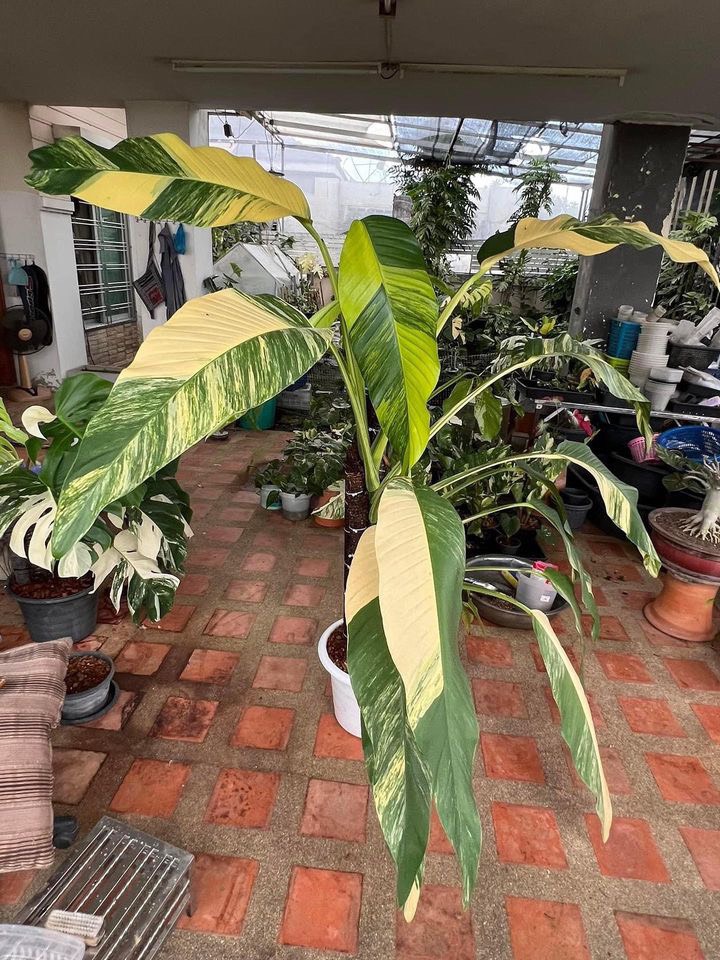
Continue to the amplissimum Variegated guide for the broad species/variegation owner, or the Silver Stripe buyer guide when that exact commercial label is the question.
Choose by the result you want to grow
| Your goal | Start with | Verify before buying | ||||||||
|---|---|---|---|---|---|---|---|---|---|---|
| Familiar shelf or hanging form | E. aureum cultivar | Dramatic mature climbing change | E. pinnatum group | Broad focal foliage | E. giganteum | Long narrow silhouette | E. amplissimum | Lower entry price | Cutting or tissue culture |
Once identity is narrowed, use the Epipremnum care hub for observation-led light, watering, support and troubleshooting. For an international order, review shipping information before comparing arrival formats. Continue by intentSources and limits
Evidence limit: accepted-species sources do not register every nursery trade label. Photographs document visible plants, not genotype, pedigree or the next leaf. Limited Time Offer: Buy 6 Items and Get 5% Off
|

3 thoughts on “Epipremnum Types: Species and Varieties Compared”