Greenboog Hoya guide
The ten names below offer a starting point for comparing foliage, growth habit and plant format. They are not ten interchangeable care prescriptions. Keep the original label and ask for clarification when species, cultivar or provenance is uncertain.
Compare the names before comparing the price
| Name used in this guide | What to compare | Before buying |
|---|---|---|
| Hoya carnosa | A climbing or trailing plant with many cultivated forms. | Confirm the form offered and allow space for mature vines. |
| Hoya kerrii | Heart-shaped foliage; a vine is different from a single rooted leaf. | Ask whether viable stem and a node are present. |
| Hoya linearis | Narrow foliage on trailing stems. | Plan hanging space and verify care requirements for this species. |
| Hoya pubicalyx | Longer leaves, often with silver markings; a vigorous vine. | Confirm cultivar claims and inspect the whole plant. |
| Hoya obovata | Rounded, thick foliage and climbing growth. | Compare mature leaves and the actual root system. |
| Hoya australis | A climbing form that can grow vigorously. | Check the supplied selection and the space needed for support. |
| Hoya caudata | A distinct species label that needs more than one attractive leaf photo. | Ask for mature-leaf and plant photographs plus source information; verify its care needs. |
| Hoya carnosa ‘Chelsea’ / Hoya Chelsea | A carnosa selection label, not a separate species in this comparison. | Ask the seller to explain the label and show the plant offered. |
| Hoya bella | A smaller trailing form, also encountered under older Hoya lanceolata subsp. bella naming. | Check the label and plan a position suitable for its finer growth. |
| Hoya nummularioides | A species label to verify against mature plant and flowering evidence. | Do not rely on a generic flower-color description or an unlabelled reference image. |
1. Hoya carnosa
This familiar Hoya can suit a hoop, trellis or hanging display. Its cultivated forms include curled foliage and different variegation patterns. “Compacta” refers to a carnosa form; tightly curled leaves do not guarantee a permanently short plant. Check leaf folds and joints carefully for pests.

2. Hoya kerrii
A heart-shaped leaf can be an appealing purchase, but inspect the format. A rooted leaf without the necessary stem node may remain a single leaf rather than growing a vine. NC State and Iowa State Extension both explain this limitation. An established kerrii vine also needs more space than a leaf in a tiny pot suggests.
3. Hoya linearis
This is a trailing option with narrow leaves. Allow vertical space and access to its finer stems. Do not assume that its watering and exposure tolerance match those of a thick-leaved Hoya simply because both belong to the same genus. RHS includes linearis among Hoya choices for hanging displays.
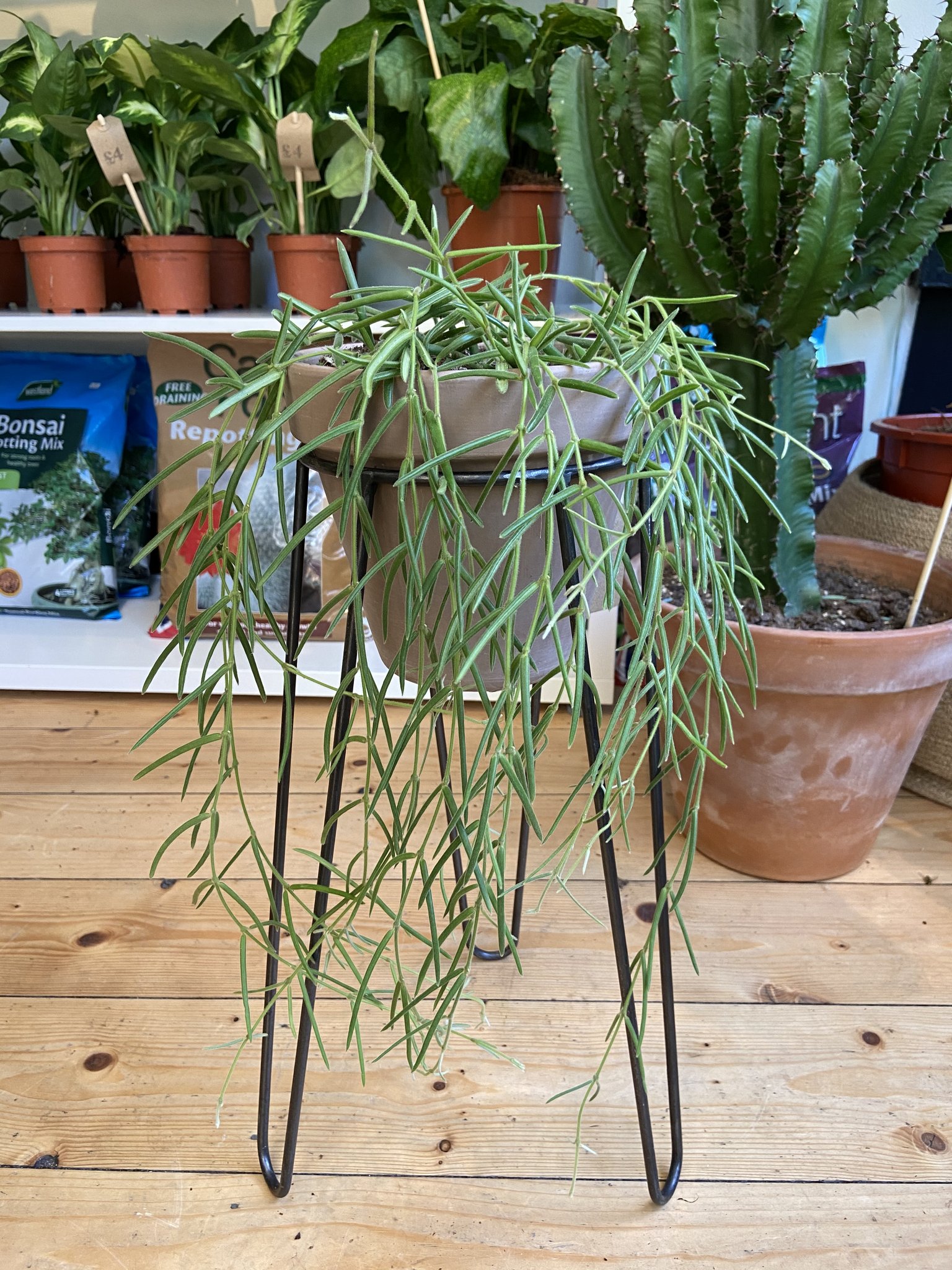
4. Hoya pubicalyx
Pubicalyx is a vigorous vining option with elongated leaves, often bearing silver markings. Flower appearance can vary among cultivated selections. Compare the label, mature leaves and provenance rather than deciding identity from a splash pattern alone.
5. Hoya obovata
Rounded, thick foliage provides a different visual effect from linearis or pubicalyx. Plan for climbing growth and compare the root system of the offered plant. Decorative leaf markings should not be treated as proof of a particular cultivar without supporting information.
6. Hoya australis
A vigorous australis can suit a grower who has room for support. Check whether the offer is the species or a named selection, and look at more than the most striking leaf in the listing. Give the plant a position and container matched to its current roots.
7. Hoya caudata
Keep the caudata name connected to the seller’s source information and whole-plant photographs. A leaf surface or color pattern by itself cannot confirm the label. Before choosing it over a familiar carnosa, verify the conditions under which that plant was grown and whether your room can provide a suitable transition.
8. Hoya carnosa ‘Chelsea’
“Chelsea” is commonly used as a selection label associated with Hoya carnosa. Keep the cultivar or trade label distinct from a species name. Ask for current photographs of several leaves and the whole vine, and avoid accepting a promise of constant flowering or permanent compactness from the name alone.
9. Hoya bella
Bella offers a smaller trailing habit. You may also encounter the older name Hoya lanceolata subsp. bella. NC State describes its small lance-shaped leaves and white flowers with a pinkish-purple center. Verify the exact plant and growing conditions when comparing nursery labels.
10. Hoya nummularioides
Retain the nursery label and ask for reliable mature-plant or flowering evidence when identity matters. A general flower-color description is not an identification rule. Choose it after checking plant condition and care requirements, rather than using an unverified color claim to make the decision.
Rooted cutting, potted plant or flowering reference?
These are different things. A rooted cutting should be assessed for viable nodes and root development. A potted Hoya still needs current condition and size checks. A mature flower image may illustrate the type without depicting the item for sale.
Read the actual listing for present availability, plant format and what is included. No species mentioned here is a guarantee that a matching item is currently stocked. Use the indoor setup guide and soil guide to judge whether your space and routine fit.
Frequently asked questions
Which Hoya is best for beginners?
A healthy, well-rooted plant with clear identity and needs that fit your room is a stronger choice than an unverified “easy” label. Common carnosa forms are worth comparing, but condition and setup still matter.
Do splash markings prove variegation or identity?
No single pattern proves a species, cultivar or future leaf appearance. Compare multiple mature traits and keep the supplied provenance.
Will every type purify the air or bloom indoors?
No such result is promised. See Hoya benefits and evidence limits and the care and flowering guide for realistic expectations.