Greenboog Hoya guide
“Well-draining” does not mean the roots must become completely dry immediately after watering. A very coarse mix in a hot hanging basket can dry too quickly, while a fine mix in an oversized pot may stay saturated. Judge the complete root zone rather than an ingredient in isolation.
What the ingredients do
| Component | Useful role | What to watch |
|---|---|---|
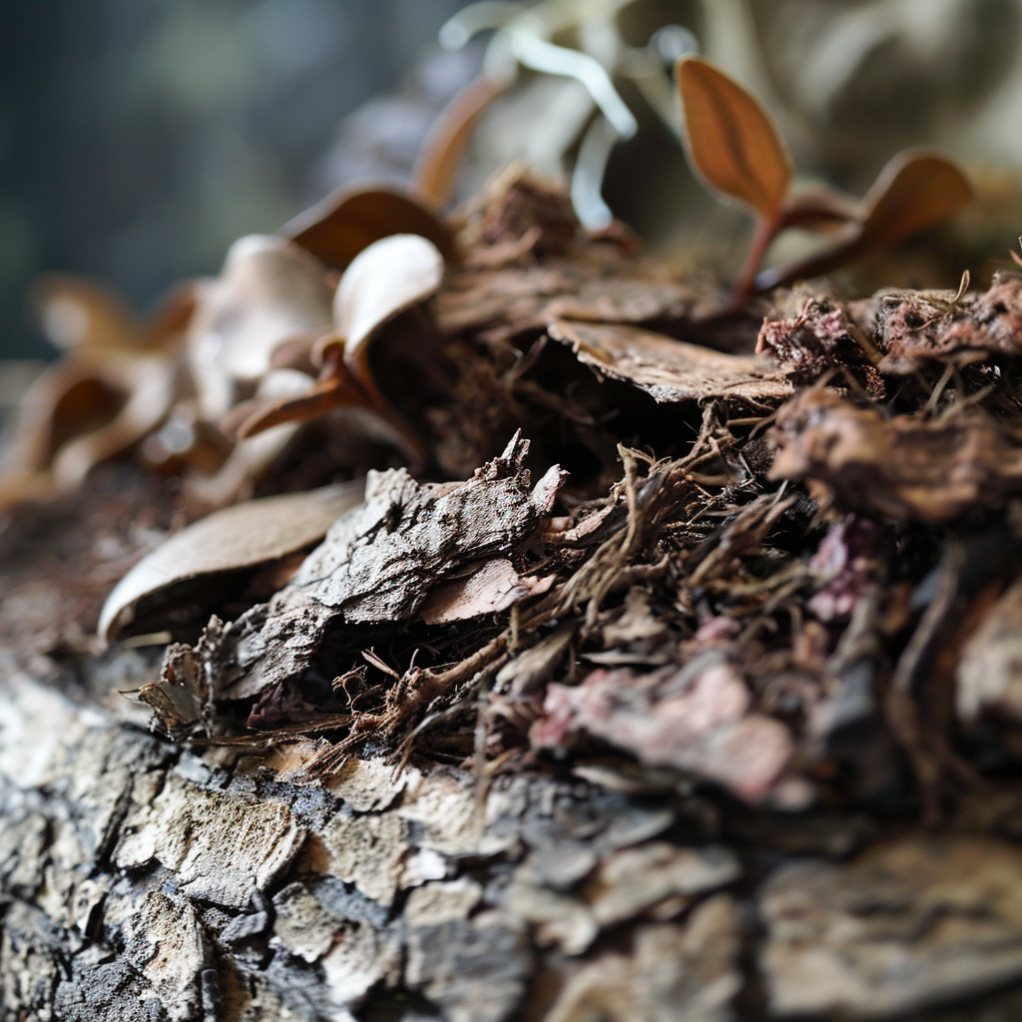
| Bark | Creates coarse structure and spaces within a mix. | Particle size varies; check that fine roots contact moist material and that old bark has not broken down. |
| Perlite or pumice | Adds a mineral component and helps maintain open structure. | Grade and proportion matter; mineral particles do not make an undrained pot safe. |
| Peat-free potting substrate or coir-based blend | Provides a finer moisture-holding component. | Check composition and how long the center remains wet in your container. |
| A complete commercial mix | Can be convenient if it performs well in your setting. | Read the ingredients and test wetting/drainage; a marketing label is not a performance test. |
RHS gives an example using equal parts orchid bark, peat-free multipurpose compost and coarse perlite by volume. Treat that as one practical option to adapt, rather than a universal requirement. A small cutting with fine roots may not settle well into the same coarse structure as a mature vine.
Check the container before changing the recipe
Confirm the inner pot has open drainage holes and that the decorative outer pot does not trap runoff. Do not rely on stones to turn a sealed container into a draining pot. Leave sensible watering space below the rim; filling to the top does not prevent water collecting beneath the roots.
Choose volume around the functioning root system, not around the length of the vine. A long Hoya can still have relatively little root mass. Conversely, a very small root-bound pot can become difficult to water evenly. Inspect actual roots before choosing the next size.
Observe a complete watering cycle
- Lift the pot before watering and note whether the center is dry, damp or wet.
- Apply water slowly and check that the root ball wets throughout. Water escaping quickly down the sides may leave a dry center.
- Allow runoff to drain and empty the outer container or saucer.
- Recheck weight and moisture as the plant uses water. Compare the center with the surface rather than applying a universal “top two inches” rule.
Keep the mix label and note the room position so you can compare results after a change. A different pot material, root mass or light exposure can alter drying even when the recipe stays the same. The main Hoya care guide connects these observations to watering and feeding.
When a soil problem is really a root problem
Leaves that wrinkle while the pot stays wet may indicate roots that cannot supply water. Adding perlite to the top of the pot will not repair rotted roots beneath it. Check the lower stem, smell, texture and integrity of roots when the plant is declining.
Use the common problems guide for symptom comparison. If the base is soft or decline is progressing, move to the dying Hoya triage guide before treating the issue as a routine repot.
When to repot
Consider repotting when the roots have outgrown the container, the mix has collapsed and stays poorly aerated, drainage fails, or a confirmed root problem requires intervention. A stable plant does not need disturbance just because a generic two-year rule says so.
For a routine repot, choose a period of active growth when practical and avoid unnecessary disturbance during budding. Prepare the new container and mix first. Support the root ball as you remove it and avoid tearing healthy roots to make every trace of old material disappear.
Afterward, track the new pot’s drying behavior. Do not copy the old watering interval or automatically add fertilizer to fresh mix. Check whether the mix already contains nutrients and follow the relevant product instructions.
Frequently asked questions
Can I use cactus mix for Hoya?
Possibly, if its actual ingredients and moisture behavior fit the plant and room. Some mixes need adjustment. The bag’s name alone does not tell you whether it is too fine, too dry or appropriate.
Does perlite hold absolutely no water?
No. It is misleading to describe a porous growing-medium ingredient as incapable of retaining any water. Evaluate the entire mix’s moisture and air balance rather than relying on that claim.
Should I let every Hoya dry completely?
No single drying threshold fits all species, stages and substrates. Avoid both persistent saturation and repeated severe dehydration, and monitor the plant’s roots and response.