
Epipremnum collector guide
Epipremnum Cebu Blue Variegated is best evaluated as a variegated seller or source line within the ‘Cebu Blue’ market—not as a separately proven species. Verify the blue-green juvenile framework, cream-to-mint pattern across several leaves, viable climbing stem and provenance before paying a rarity premium.
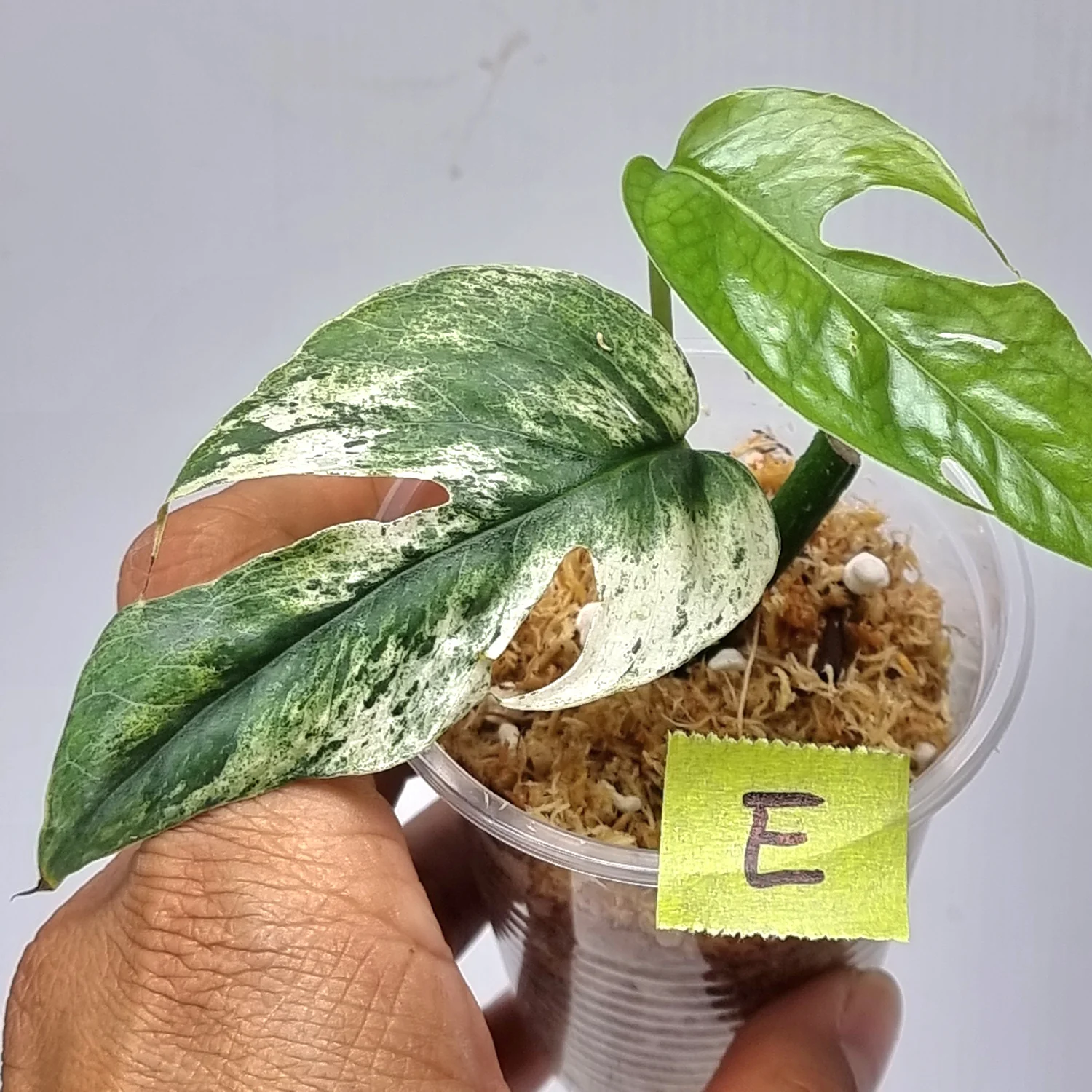
- Name: confirm the exact Cebu Blue Variegated label and seller/source history.
- Sequence: compare several hardened leaves, not one high-white blade.
- Color: record blue-green, green, mint and cream under neutral light.
- Structure: inspect stem, nodes, petiole channel, growth point and aerial-root habit.
- Condition: distinguish stable pattern from bleach, yellowing, scars or pests.
- Offer scope: identify exact plant, representative lot or reference image.
Species, ‘Cebu Blue’ and variegated line are not the same claim
Kew accepts Epipremnum pinnatum as a wet-tropical climber native across tropical and subtropical Asia to the Pacific, including the Philippines. That establishes the species framework; it does not prove that a particular variegated plant originated on Cebu or descends from one documented mother plant.
NC State lists ‘Cebu Blue’ as an E. pinnatum cultivar with blue-green juvenile foliage that can produce fenestrated mature leaves when given climbing support. It lists ‘Albo-Variegata’ separately. The reviewed sources did not establish “Cebu Blue Variegated” as a registered cultivar, patent or traceable lineage, so provenance belongs beside the phenotype.
Read the plant by evidence, not one dramatic leaf
| Observation | Useful interpretation | Next check |
|---|---|---|
| Blue-green narrow juvenile blade | Consistent with the documented ‘Cebu Blue’ framework. | Compare multiple leaves and stem structure. |
| Cream or mint sectors/mottling | Visible variegated phenotype on that leaf. | Review the sequence and source mother plant. |
| Fenestrated mature blade | Consistent with supported climbing development; not identity proof by itself. | Confirm the same active stem and source record. |
| One nearly white leaf | High visual contrast but limited photosynthetic tissue and weak lineage evidence. | Inspect node, growth point and adjacent leaves. |
| Sudden yellowing or scars | May reflect condition, roots, exposure or pest damage—not decorative variegation. | Inspect timing, undersides and roots. |
Authentic examples show development and variation
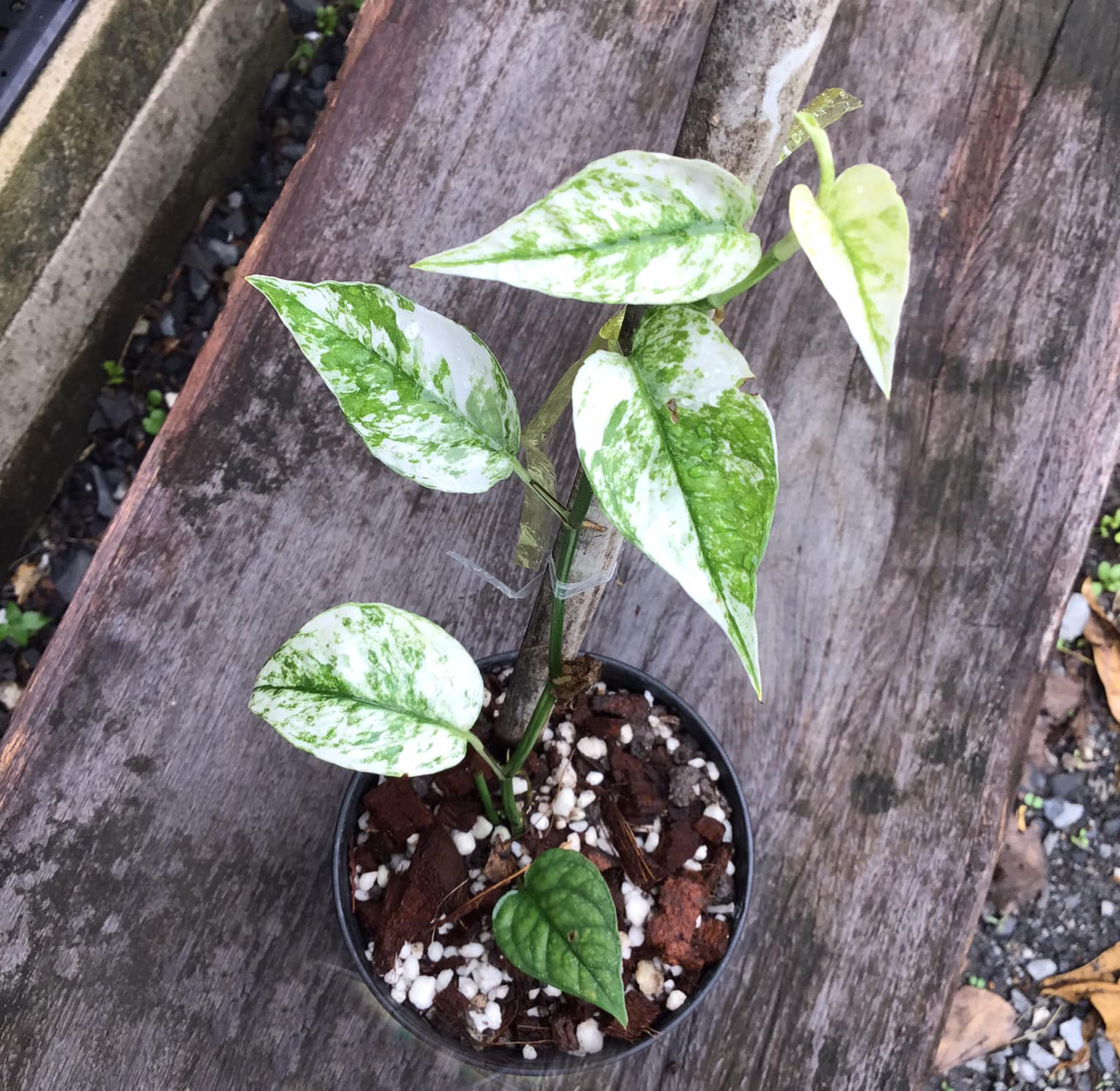
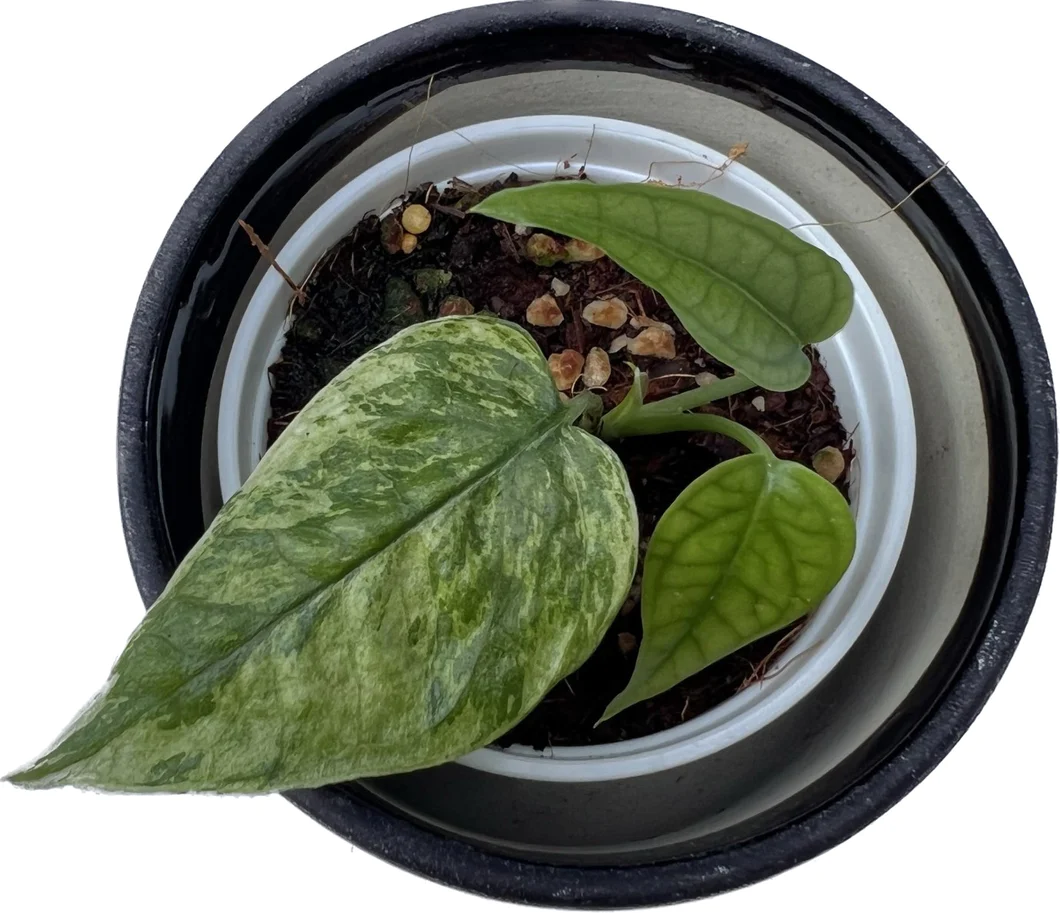
The Greenboog photographs show juvenile, intermediate and more fenestrated leaves with different green-to-cream ratios. They are useful because they do not imply that every leaf repeats one catalog pattern.
Buyer checklist
- Ask who supplied the variegated line and whether the seller retains parent photographs.
- Request current neutral-light images of the full stem and several hardened leaves.
- Confirm exact-plant, representative-lot or reference-image scope in writing.
- Inspect a viable node, active growth point and current roots.
- Confirm established plant, rooted cutting, fresh cutting or tissue-culture format.
- Use live listing terms for quantity, stock, price, shipping and claim evidence.
Care handoff: keep new leaves interpretable
The Epipremnum care guide owns the full light, watering, substrate, support and troubleshooting workflow. For a variegated Cebu Blue-labelled plant, avoid abrupt exposure changes and inspect emerging leaves before assigning every pale or damaged area to variegation.
Use bright filtered light, an aerated root zone and observation-led watering. Give a healthy rooted vine appropriate support if mature development is the goal. A fixed temperature, top-layer rule, soil recipe or repotting calendar cannot authenticate the line or guarantee fenestration and future pattern.
Choose the next page by intent
Sources and evidence boundaries
- Kew Plants of the World Online: Epipremnum pinnatum — accepted species, climbing habit and native-range boundary.
- NC State Extension: Epipremnum pinnatum — ‘Cebu Blue’ cultivar context, blue-green juvenile foliage, support-related fenestration and propagation framework.
Evidence limit: the sources do not register the exact variegated seller label. Greenboog photographs document visible plants, not genotype, pedigree, stability or current listing scope.
