
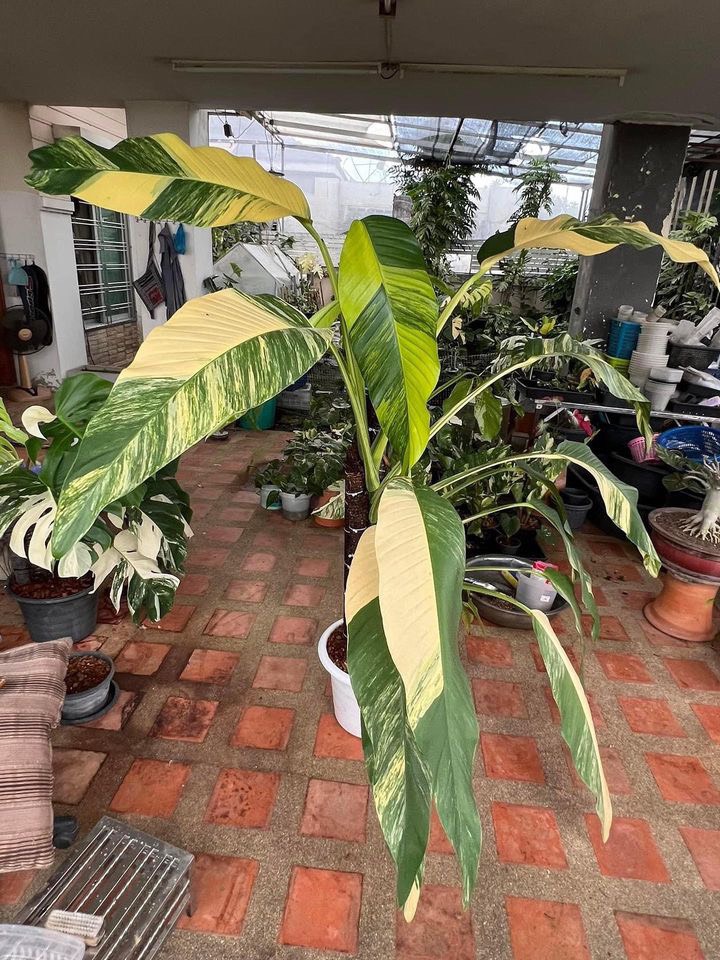
Epipremnum collector guide
Epipremnum amplissimum is its own accepted species, recognized by an elongated entire-leaf framework—not a Philodendron and not a form of E. pinnatum. Variegated, Albo, Aurea and Silver Stripe are commercial directions that still require exact-plant and source evidence.
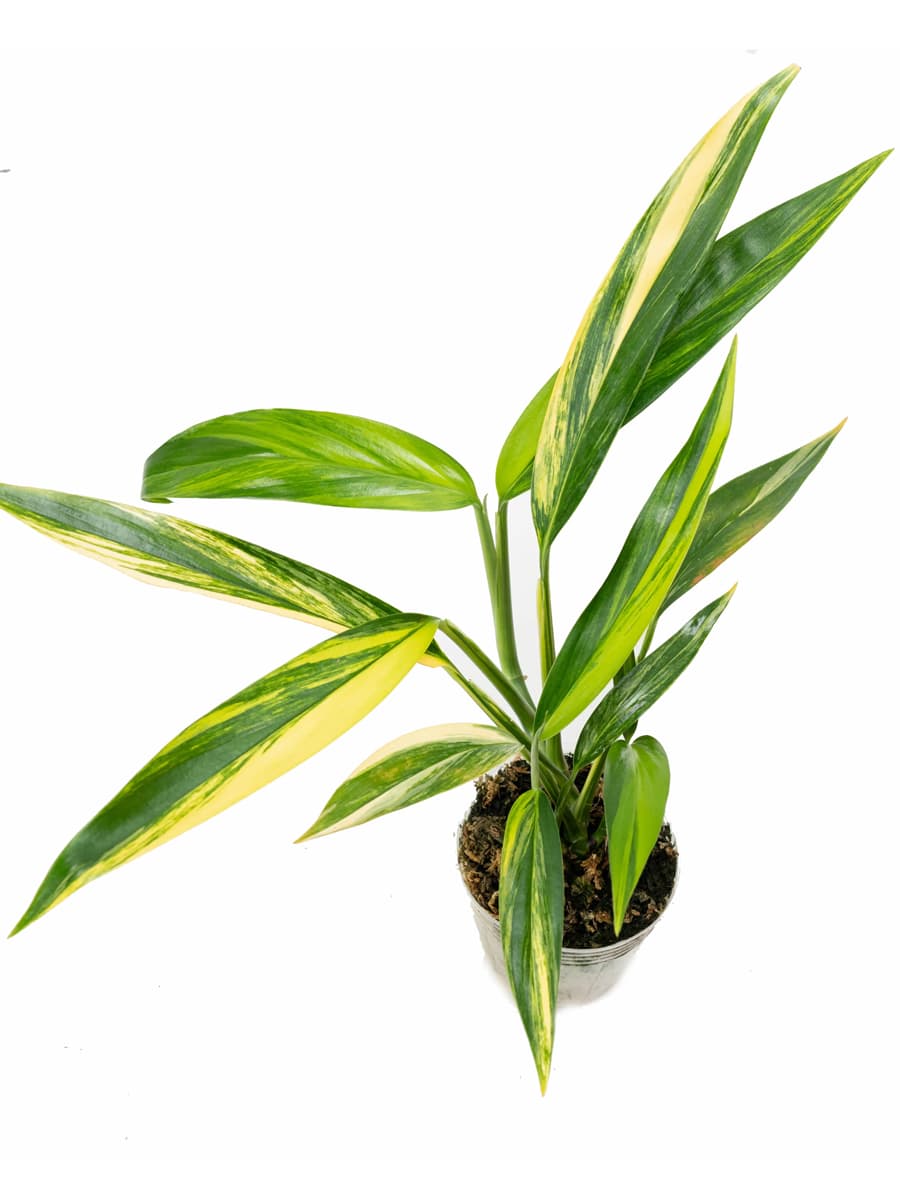
Amplissimum care and identity at a glance
| Factor | Useful starting point | Evidence to watch |
|---|---|---|
| Species | Accepted E. amplissimum, a climbing aroid. | Long narrow entire blades, venation, winged petiole/stem framework and source. |
| Pattern | Green, cream, yellow or silvery commercial forms. | Several hardened leaves and exact-photo status. |
| Light | Bright filtered light; change exposure gradually. | Internodes, leaf size, pattern contrast and burn orientation. |
| Water | Water rooted mix evenly after upper-zone drying and lower pot weight. | Drainage, drying speed, roots and odor. |
| Support | Stable vertical surface with loose stem attachment. | Aerial-root contact, thicker stem and broader mature sequence. |
| Propagation | Stem section with viable node/growth potential. | Node, eye, root initiation and rot. |
What is Epipremnum amplissimum?
Kew accepts Epipremnum amplissimum as a species native from New Guinea to Vanuatu and records it as a wet-tropical climber. Singapore NParks describes long, narrow foliage, filtered-light cultivation, well-drained media, climbing support and stem propagation. CSIRO adds morphology such as longitudinal venation, winged petiole structure and adventitious climbing roots.
Variegated, Albo, Aurea and Silver Stripe labels
These words direct a buyer toward visible color or pattern, but they do not all carry one formal published standard. “Variegated” may be broad. “Albo” often signals pale cream-to-white tissue, while “Aurea” suggests yellow-toned pattern. “Silver Stripe” points to lengthwise pale/silver-green lines on a narrower amplissimum framework.
- Species: accepted E. amplissimum structure and source.
- Commercial label: the nursery name attached to a lineage or visible phenotype.
- Current expression: what several hardened leaves on the exact plant actually show.
This page owns broad amplissimum and variegated-care intent. The Silver Stripe buyer guide owns that narrower label, longitudinal-phenotype and exact-offer question.
Identify amplissimum from repeated structure
Begin with repeated blade proportions. Juvenile and established leaves should trend long and comparatively narrow rather than defaulting to the broad heart shape of common E. aureum. Look for lengthwise venation, compatible petiole/stem structure, climbing nodes and source history. Variegation may distract from these stronger structural signals.
A single long leaf cannot prove identity. Transit stretch, weak light, mechanical damage or photography angle can change appearance. Compare several nodes and leaves, and distinguish a mature reference from the exact plant shipped.
Buyer evidence before price
- Botanical species and commercial pattern label are both stated.
- Photographs are marked exact plant, batch, mother plant or mature reference.
- Several hardened leaves repeat the elongated framework.
- Stem, viable node, active growth point, roots and damage are shown or described.
- Established pot, cutting, bare-root import or tissue-culture stage is explicit.
- No guarantee is made that the next leaf will copy the best photographed sector.
Use the standard amplissimum Variegated listing or an exact amplissimum specimen for current stock, size, price and photo scope.
Light, watering and root-zone decisions
Use bright filtered light to support compact growth and readable new leaves. Introduce stronger exposure gradually after shipping or nursery shade. Long internodes and progressively smaller blades can reflect insufficient usable light, failing support, root stress or a combination; bleached dry patches on the exposed side point toward sudden heat/direct light.
Water from moisture depth and pot weight. When the upper mix has dried and the container is meaningfully lighter, wet the rooted zone evenly and let runoff leave. Do not copy a fixed interval from another pot: root mass, light, airflow, substrate and propagation stage change demand.
Choose an aerated moisture-retentive mix and a draining container only modestly larger than the root system. Repot for compaction, failed drainage or root crowding rather than a yearly calendar.
Support and mature growth
Singapore NParks notes the species’ climbing habit and mature broadening. Give the stem a stable pole, plank or bark surface early, attach the stem loosely and keep new aerial roots near the support. Do not tie the petiole. A trailing vine can live, but interrupted climbing often resets leaf scale.
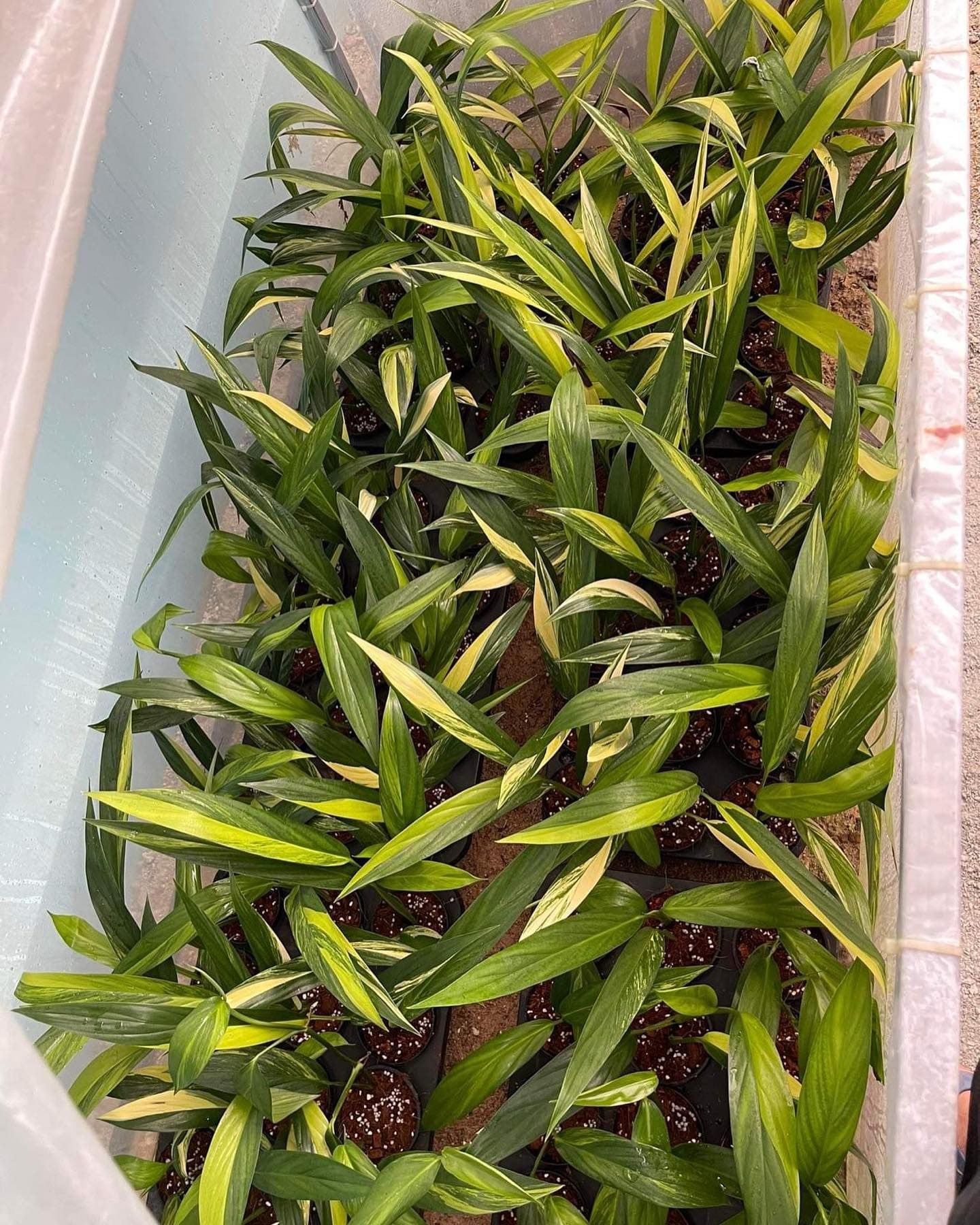
Troubleshoot the pattern and newest leaf
| Observation | Possible contributors | Next check |
|---|---|---|
| Yellow leaf + heavy pot | Prolonged saturation, cold roots or root loss. | Drainage, odor, root firmness and drying time. |
| Brown/pale dry patch | Sudden sun/heat, cold contact, salts or transit injury. | Damage orientation and recent exposure. |
| Long internodes + small leaves | Weak usable light, lost support or stressed roots. | Light geometry, attachment and root activity. |
| Distorted newest growth | Thrips, mites, scale, mechanical injury or root stress. | Both leaf surfaces, stem, roots and active pests. |
The Epipremnum care hub owns the complete observation-led support, watering, feeding, propagation and troubleshooting workflow.
Arrival, propagation and safety
Before an international order, review shipping information. Document the parcel and roots, isolate the plant and start in warm filtered light. Avoid stacking repotting, strong fertilizer and intense sun unless the root condition requires immediate intervention.
Propagate from viable stem/node tissue. A detached leaf cannot preserve a growing clone. Keep parent/cutting labels and source photos when pattern identity matters. As an aroid, amplissimum should be kept away from children and pets likely to chew it; seek professional advice after suspected ingestion.
Continue by intent
Sources and limits
- Kew Plants of the World Online: Epipremnum amplissimum — accepted name, native range and climbing wet-tropical habit.
- Singapore NParks: E. amplissimum — foliage, filtered light, media, support and propagation.
- CSIRO Australian Tropical Rainforest Plants: E. amplissimum — morphology, petiole, venation, roots and distribution.
Evidence limit: species sources do not standardize every variegation trade label or guarantee future expression. Exact-plant evidence remains necessary.
