Epipremnum care hub
Epipremnum can grow as an indoor vine or, where climate and local rules allow, as a contained outdoor plant. The best choice is not a fixed temperature or watering calendar: match filtered light, root-zone aeration, support and exposure changes to the species, plant stage and conditions you can actually monitor.
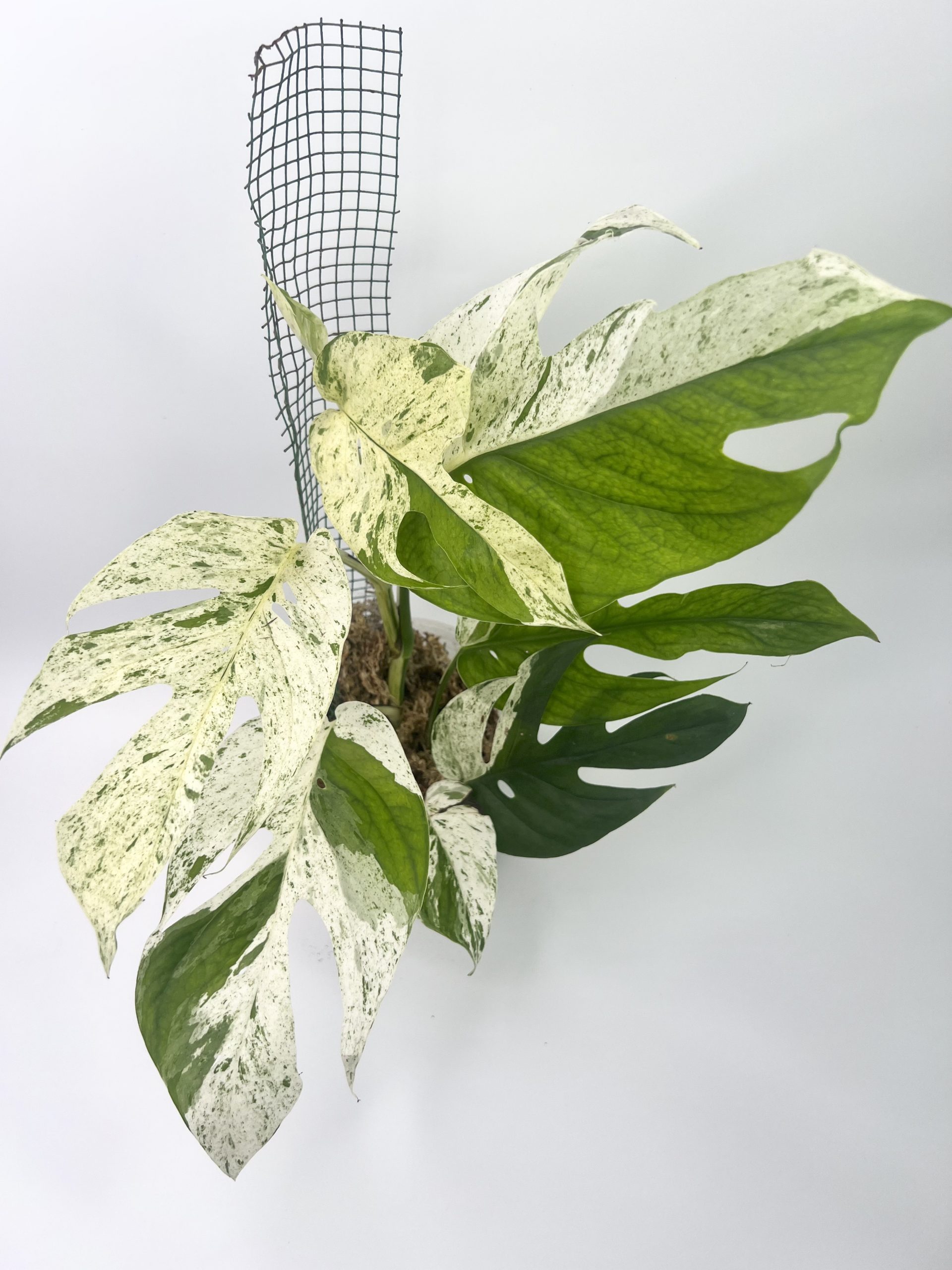
Indoor or outdoor: decide before you move the plant
| Decision point | Indoor setting | Outdoor setting |
|---|---|---|
| Light | Bright filtered light near a window or measured grow light; adjust distance from leaf response. | Sheltered/dappled exposure after a gradual transition; midday intensity can change quickly. |
| Water | Pot, mix, light and airflow govern drying; inspect below the surface. | Rain, heat and wind can swing moisture faster; drainage and weather checks are essential. |
| Temperature | Usually steadier, but watch glass, vents, heaters and cold drafts. | Cold snaps and heat load are less controllable; move containers before damaging weather. |
| Containment | Pruning and pot boundaries are easier to manage. | Check invasive status and prevent rooting into soil or climbing living trees. |
| Inspection | Pests can spread among houseplants; quarantine arrivals. | More pest and weather exposure; inspect before bringing a plant back inside. |
Light: use leaf response and exposure change
NC State describes bright indirect light for common E. aureum and E. pinnatum houseplants. “Survives in low light” is not the same as producing compact growth, larger leaves or strong pattern. If stems stretch and new blades shrink, review usable light, roots and support together.
Move gradually between settings. Start a sheltered outdoor transition in shade and increase exposure only while new tissue remains firm and unbleached. Indoors, do not assume a window direction guarantees light; season, glazing, distance and obstructions change the dose.
Water from the root zone, not the calendar
- Lift the pot and compare its weight with the same pot after thorough drainage.
- Check moisture deeper than the decorative top layer.
- Look for active roots, drainage paths and air space in the mix.
- Review recent light, temperature, wind and rain before adding water.
Water thoroughly when the root zone has used enough moisture, then let excess drain. A mix can look dry on top while staying saturated below; a small outdoor pot can do the opposite during hot wind. Yellowing, droop or brown edges each have several possible causes, so inspect roots and progression before diagnosing.
Root-zone design, support and feeding
Use a container with usable drainage and a mix that holds some moisture without collapsing around the roots. The correct blend depends on particle size, pot size, plant/root mass and your environment—not one peat/perlite ratio.
Epipremnum climbs using aerial roots. A stable, appropriately scaled support can help an established vine develop larger or more divided foliage, especially in forms related to E. pinnatum. Support is an opportunity, not a promise of a deadline or a specific leaf.
Feed only a healthy, actively growing rooted plant with a complete product used at its label rate and adjusted to the growing system. More fertilizer cannot compensate for poor aeration, damaged roots or insufficient usable light.
Different Epipremnum can read very differently
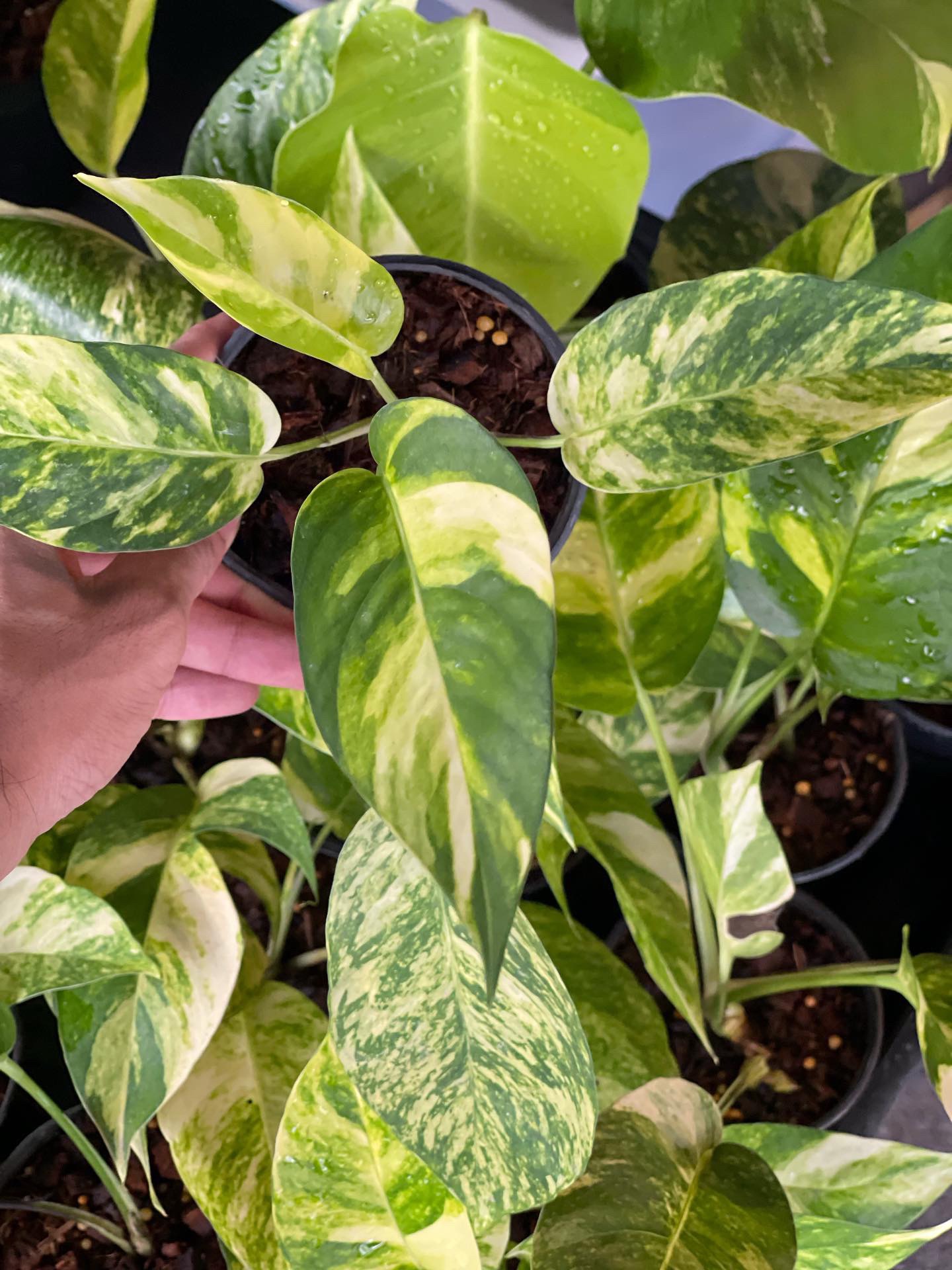
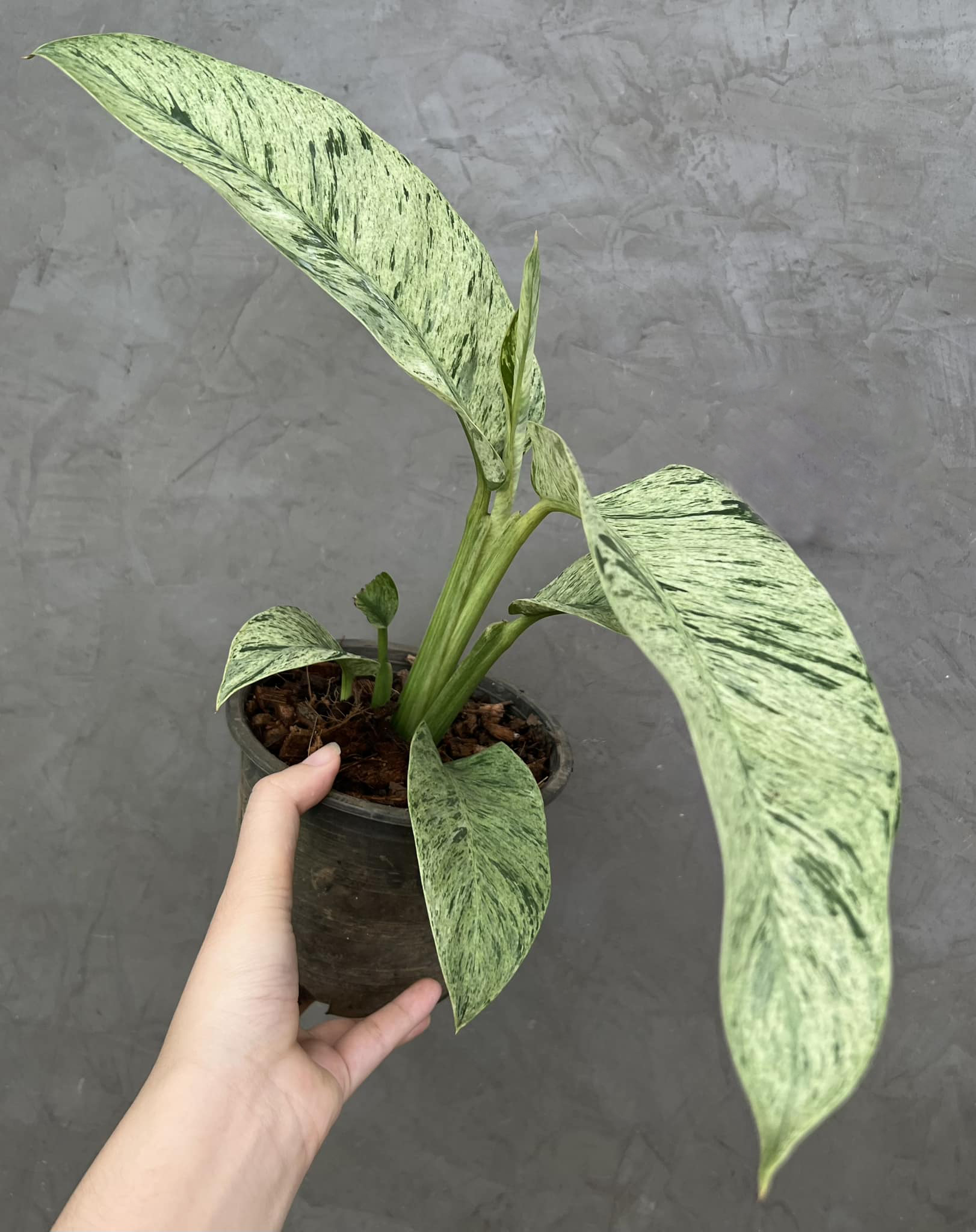
Genus-level care is a baseline. Broad, narrow, fenestrated, green, yellow, cream and mint selections can show different sensitivity and development, so preserve the plant’s exact seller/species label and observe its own leaf sequence.
Troubleshoot by pattern and progression
| Observation | Check first | Safer response |
|---|---|---|
| Several yellow leaves + wet mix | Drainage, root firmness, odor, temperature and recent watering. | Correct the root-zone cause; do not add fertilizer automatically. |
| Dry pale patch after a move | Sun/heat timing and whether damage faces the exposure. | Reduce intensity and transition more gradually. |
| Small new leaves/long gaps | Usable light, roots, nutrition and support together. | Change one limiting factor and monitor the next leaves. |
| Stippling, webbing or sticky residue | Leaf undersides, sheaths and nearby plants. | Isolate, identify the pest and follow a label-compliant control. |
| Soft stem or spreading lesion | Stem/node integrity, roots, moisture and cold exposure. | Isolate and preserve only firm, viable tissue. |
Propagation and household safety
Propagate from a healthy stem section with at least one viable node and growth point; a detached leaf alone cannot continue as a new vine. Keep the source label and parent photographs with collector forms so identity history survives propagation.
NC State lists these aroids as poisonous if ingested because of calcium oxalate. Keep plants and cuttings away from children and pets, use care with irritating sap, and contact the appropriate medical or veterinary service after a suspected exposure.
Choose the next page by intent
Sources and evidence boundaries
- Kew POWO: Epipremnum aureum — accepted species, range and climbing framework.
- Kew POWO: Epipremnum pinnatum — distinct accepted species and broad native range.
- NC State Extension: E. aureum — container habit, light, drainage, climbing and toxicity context.
- NC State Extension: E. pinnatum — climbing development, support, common cultivars and troubleshooting context.
- UF/IFAS invasive assessment: E. aureum — high-risk conclusion for Florida and outdoor-responsibility boundary.
Evidence limit: genus-level guidance cannot replace the exact plant label, current root/leaf condition, local climate, product directions or local invasive-plant rules.