
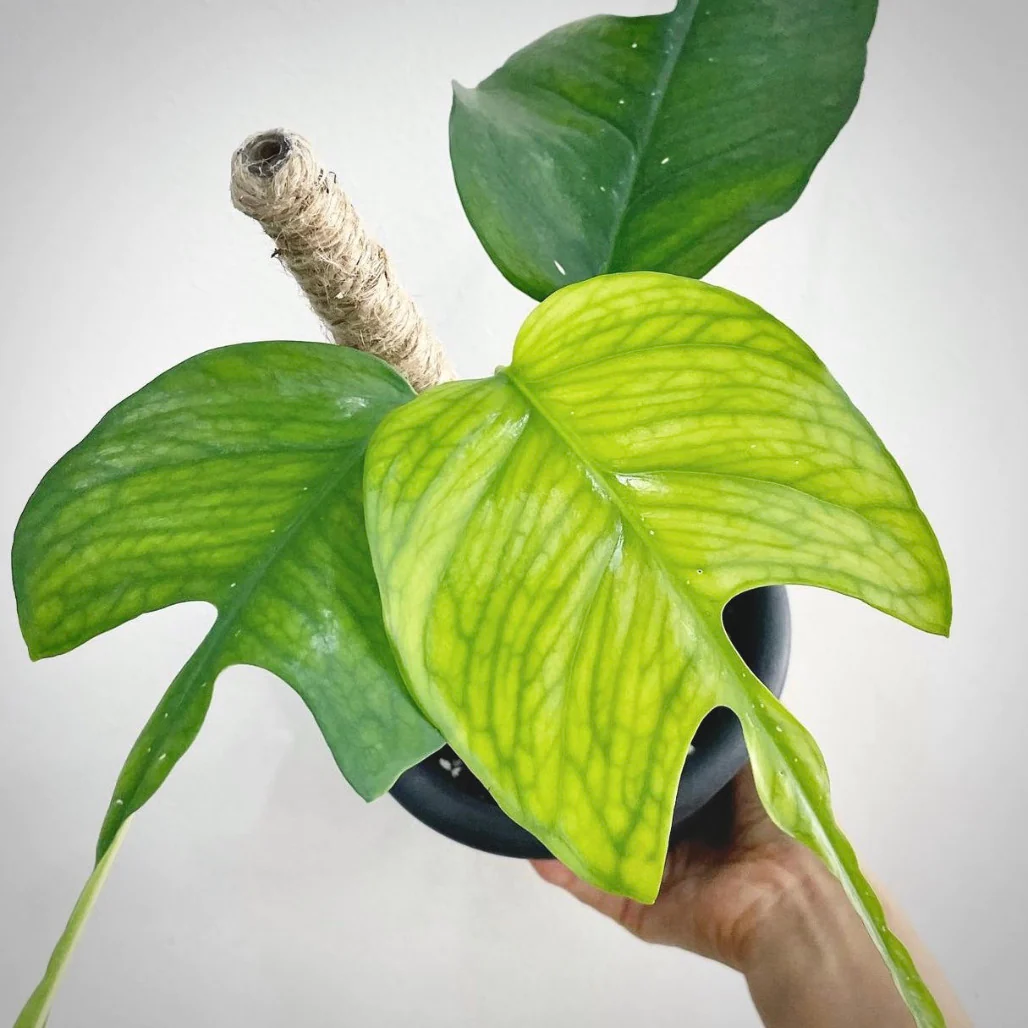
Epipremnum collector guide
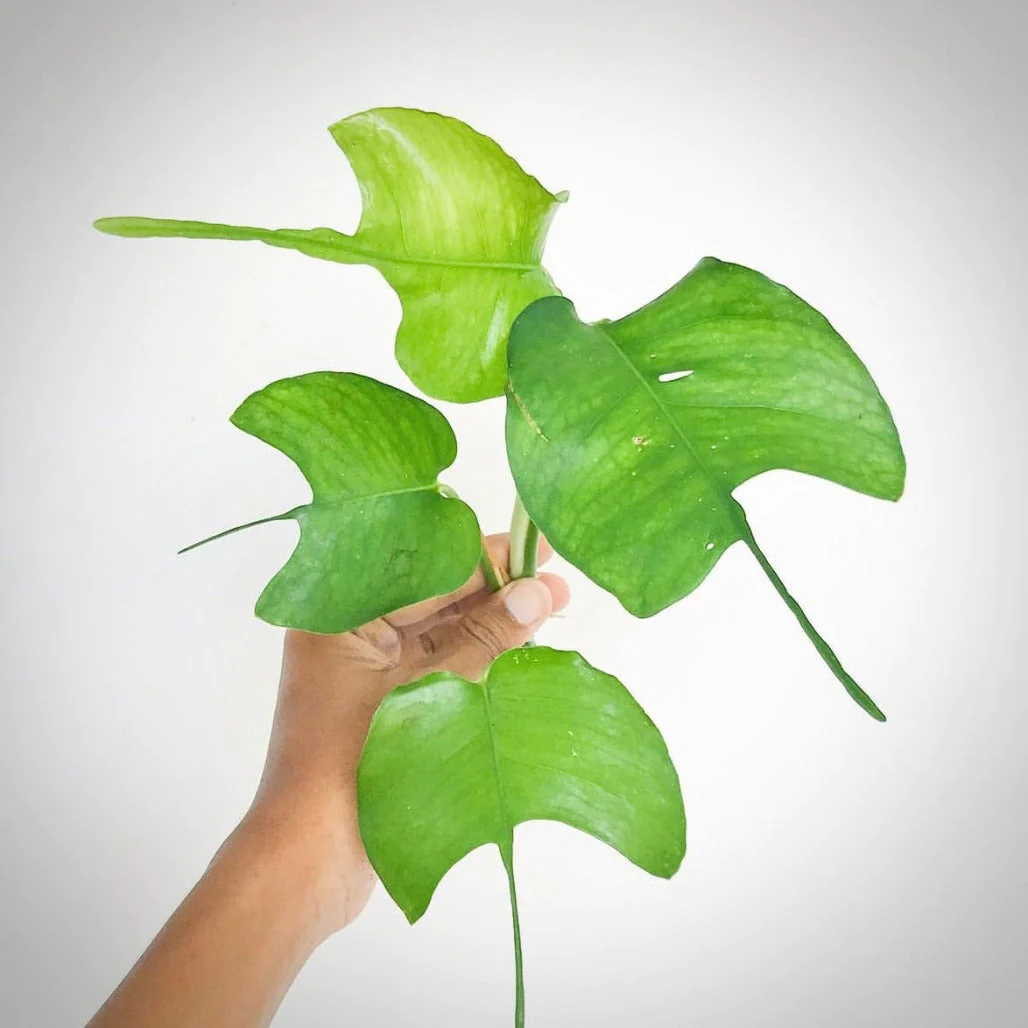
Skeleton Key is a green-leaved Epipremnum pinnatum selection known for the broad base and long narrow tip that appear on mature climbing foliage. Juvenile leaves can look ordinary; judge a labelled plant by its source, growth sequence and structure—not by white variegation it is not supposed to have.
Skeleton Key care at a glance
| Factor | Practical starting point | Evidence to watch |
|---|---|---|
| Identity | Green E. pinnatum selection; mature shape is the feature. | Label, source, several leaves, stem and petiole structure. |
| Light | Bright filtered light; introduce direct exposure gradually. | Internode length, leaf size, bleaching and hot-side damage. |
| Water | Water the root ball when upper mix dries and pot weight falls; drain runoff. | Drying speed, root firmness, odor and pot weight. |
| Root zone | Aerated, moisture-retentive mix in a freely draining pot. | Compaction, standing water and root-to-pot ratio. |
| Support | Stable pole, plank or trellis with the stem held close. | Aerial-root contact, thicker stem and progressive leaf size. |
| Propagation | Stem section with a viable node and growth potential. | Node, active eye, root initiation and rot. |
What is Skeleton Key pothos?
Kew accepts Epipremnum pinnatum as a wet-tropical root climber native from tropical and subtropical Asia to the Pacific. Mature species foliage can become deeply divided while juvenile leaves remain much simpler. NC State lists ‘Skeleton Key’ among E. pinnatum cultivars and documents the species’ juvenile-to-mature change, climbing habit, stem propagation and calcium-oxalate safety context.
Do not relabel it as a Philodendron or invent an E. aureum hybrid story. For the wider species/cultivar/trade-name framework, use the Epipremnum types comparison hub.
How the mature key-shaped leaf develops
Small cuttings usually make entire juvenile leaves. As a vine establishes roots and repeated contact against a vertical surface, its stem and new foliage may increase in scale. In Skeleton Key, the mature blade develops a comparatively broad lower area and a long narrow extension—the outline behind the name.
This is ontogenetic change: the same vine looks different as it develops. It is not a color change and does not arrive on a fixed schedule. Trailing, repeated detachment, weak usable light, root stress or frequent hard cutbacks can keep the sequence juvenile.
- Aerial roots maintain contact with the support.
- Internodes and stem remain sturdy rather than increasingly weak.
- Several new blades increase in size or proportion.
- The lower blade broadens before the narrow tip becomes convincing.
- No active pest, root or transit damage is distorting the newest leaf.
Buyer evidence for a juvenile plant
- Correct label: Epipremnum pinnatum ‘Skeleton Key’.
- Photo status: exact plant, batch, juvenile reference or mature parent is stated.
- Viable structure: active tip, nodes, stem and roots—not only the best leaf—are visible.
- Format: rooted pot, fresh cutting, plantlet or bare-root import is explicit.
- Mature reference: treated as a growth direction, not a guarantee for the leaf shipped.
Use the live Skeleton Key listing for current stock, size and price; use the Epipremnum category when comparing other formats.
Light, water and root-zone decisions
Start with bright filtered light. Gentle morning exposure may work after gradual acclimation; strong window heat or sudden direct sun can bleach or crisp exposed tissue. When internodes lengthen and new leaves shrink, inspect support contact and roots as well as light—one symptom does not name one cause.
Water from pot weight and moisture depth, not a weekday. When the upper mix has dried and the pot is clearly lighter, wet the rooted zone evenly and let runoff leave. A newly rooted cutting, imported juvenile and established climber do not use water at the same rate.
Use a root zone that holds some moisture while retaining coarse air spaces. Match bark, pumice/perlite and a quality potting or coco component to the room. A large pot around a small root ball can remain wet too long; repot for root crowding, failed drainage or compaction rather than a calendar anniversary.
Support is part of the maturity plan
A trailing vine can remain alive and attractive, but it is less likely to express the morphology that makes Skeleton Key distinctive. Install a pole, plank, bark slab or trellis early. Attach the stem loosely and keep the newest growth close; do not tie the moving petiole.
Each new leaf should be read as part of a growth sequence, not a deadline.

Troubleshoot the newest sequence
| Observation | Possible contributors | Next check |
|---|---|---|
| Leaves stay small | Detached support, weak light, roots rebuilding, repeated cutting. | Attachment, root health and next several leaves. |
| Yellow leaf + heavy pot | Prolonged saturation, root loss, cold root zone. | Drainage, odor and root firmness. |
| Dry pale patch | Sudden sun/heat, cold contact, salts or transit injury. | Damage orientation and recent exposure change. |
| Distorted newest growth | Thrips, mites, scale, mechanical damage or root stress. | Both leaf surfaces, stem, roots and active pests. |
The Epipremnum care hub owns the full observation-led care and troubleshooting workflow. Fertilizer cannot repair oxygen-starved roots or create a key-shaped leaf on demand.
Propagation, arrival and safety
Propagate from a stem section with at least one viable node. A leaf and petiole without a node cannot produce a new vine. A mature top cutting may return to smaller leaves while it rebuilds roots and climbing momentum; that does not by itself prove the clone was lost.
Before an international order, review shipping information. On arrival, document the parcel and roots, isolate the plant and begin with warm filtered light. Avoid stacking repotting, strong fertilizer, intense sun and abrupt humidity change unless root condition demands intervention.
E. pinnatum contains irritating calcium oxalate crystals. Keep the vine and cuttings away from children and pets that may chew them, and seek professional medical or veterinary advice after suspected ingestion.
Continue by intent
Sources and limits
- Kew Plants of the World Online: Epipremnum pinnatum — accepted species, range, climbing habit and mature morphology.
- NC State Extension: Epipremnum pinnatum — cultivar listing, juvenile/mature form, climbing, propagation and safety context.
Evidence limit: species and extension sources do not guarantee a nursery plant’s lineage, maturity timeline or future leaf. Exact-plant photos and source records remain necessary.
