Greenboog established-plant guide
Good Alocasia care is a feedback loop: read the light, root zone, temperature, new growth and pest evidence together. A yellow or drooping leaf is a clue, not a diagnosis by itself.
The five checks that set the care rhythm
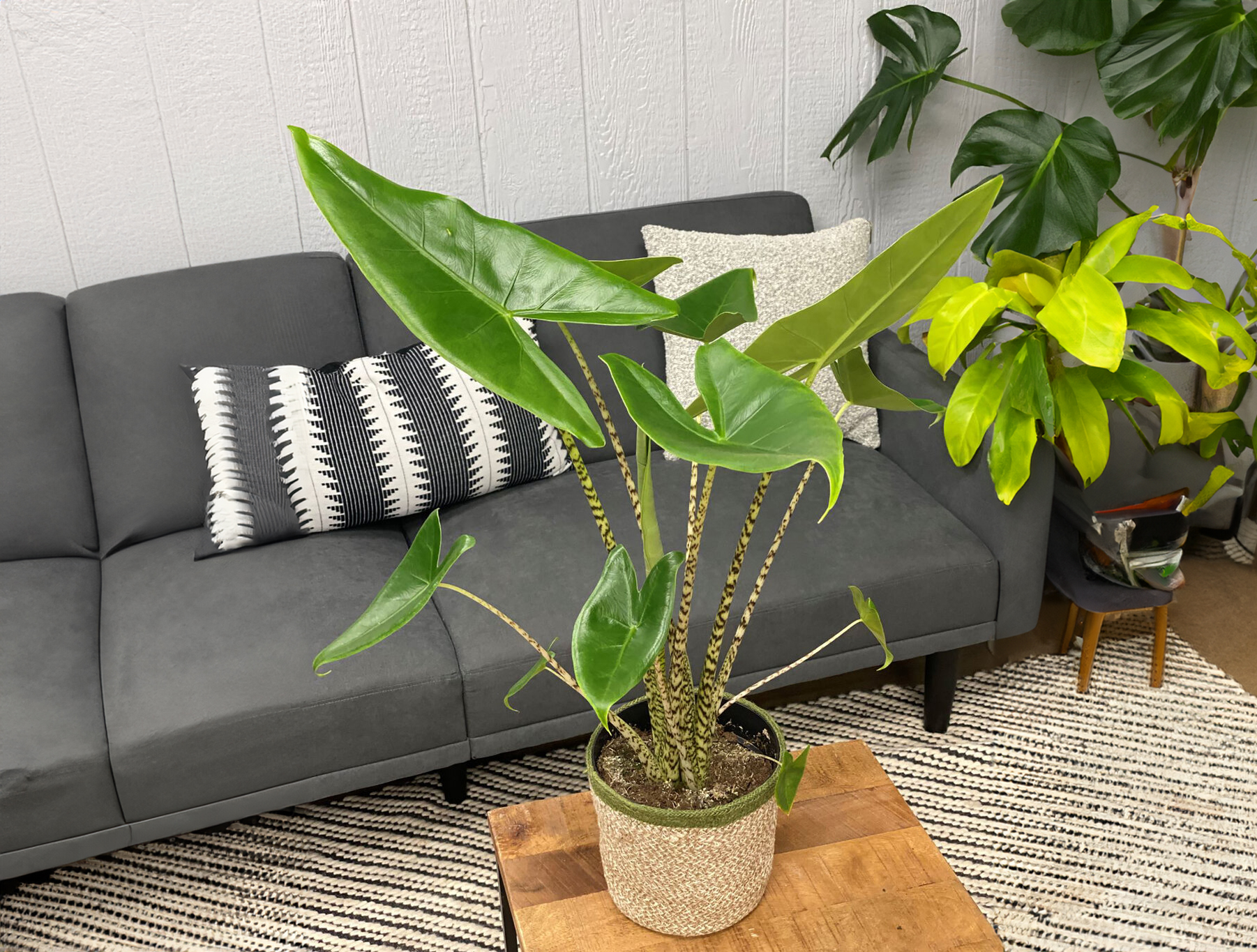
Start with the plant’s current format and condition. An established rooted pot can use the baseline below; a recent division, shipped bare-root plant or sealed tissue-culture vessel needs a staged transition. Confirm the Alocasia genus and growth structures before assuming a leaf, petiole or corm-like unit behaves like a complete plant.
Use the table as a loop rather than a fixed recipe.
| Factor | Working goal | Evidence to read |
|---|---|---|
| Light | Bright, filtered or indirect; gradual acclimation | New-leaf size, petiole lean, scorch and pot-drying rate |
| Water | Even rehydration followed by drainage and root-zone air | Depth moisture, pot weight, roots and temperature |
| Container and mix | Right-sized root volume; moisture retention plus air | Root occupancy, drainage, dry/wet pockets and stability |
| Warmth and humidity | Stable warmth; humidity that supports leaves without stagnant air | Leaf expansion, condensation, airflow and root temperature |
| Nutrition | Label-directed feeding while rooted and actively growing | New growth, existing nutrients, salts and root health |
Light: bright enough to support the root zone
Start an established indoor plant in bright filtered light. Abrupt intense sun can bleach or scorch exposed tissue, while very low light slows growth and pot drying. A low-light plant may lean, stretch petioles or produce smaller leaves; adding more water or fertilizer does not replace light.
Increase exposure gradually and compare the newest hardened leaf with the previous one. Window direction is not a universal rule: glazing, season, latitude, outdoor shade and distance all change intensity. If the plant moves outdoors for a warm season, acclimate it through shade and shelter it from wind.
Water the rooted zone, not the top inch
Water thoroughly enough to wet the root ball, allow excess to drain, then wait for the root zone to become ready again. Check below the surface and lift the pot. A dry top layer can sit above a saturated center, especially in a deep or oversized container.
Warmth, light, root density, airflow and leaf area determine use. The same plant may need water much sooner during active summer growth than during a cool low-light pause. Do not interpret droop alone as thirst: a light dry pot and a heavy wet pot can both droop but require opposite responses.
Pot size and substrate work together
Use a container only modestly larger than the active root system, with unobstructed drainage. The mix should retain enough moisture for the plant’s use while reopening air spaces after watering. Bark, coarse mineral material, coir or peat-free compost can contribute different functions, but there is no universal ratio for every climate and pot.
Repot when roots densely occupy the container, the medium has collapsed, drainage is unreliable or the plant is unstable—not just because a year passed. An oversized wet center can be more dangerous than a visually small pot.
Warmth, humidity and airflow
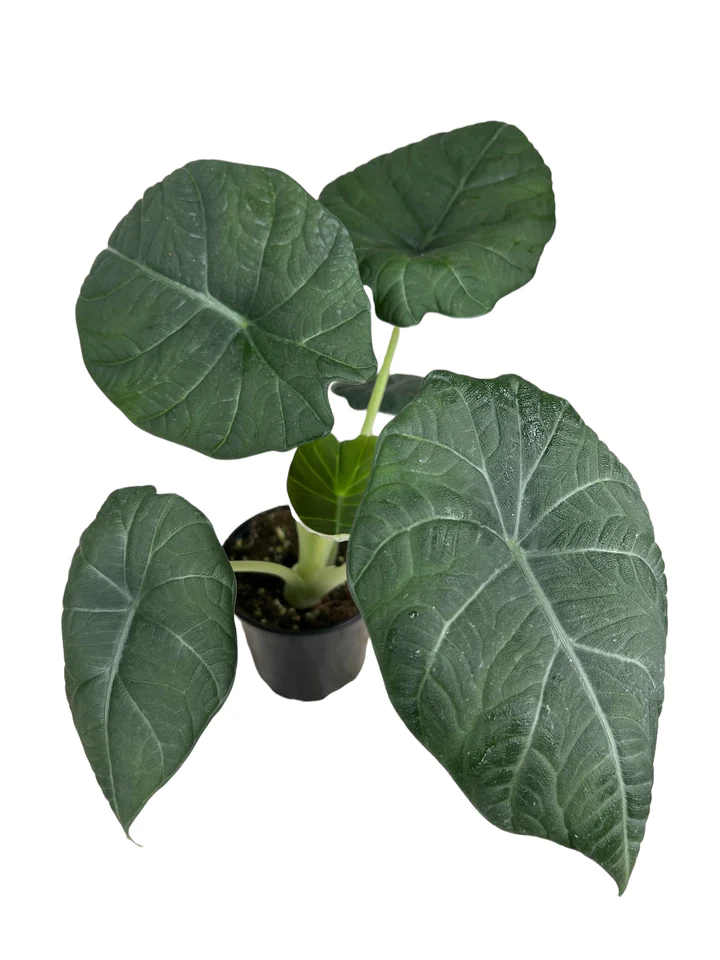
Alocasias are warm-growing plants. Keep roots and foliage away from cold glass, air-conditioning and abrupt drafts. Humidity influences how quickly leaves lose water, but a fixed percentage does not override species, leaf stage, root function or airflow.
If the room is dry, a clean humidifier can provide a measurable change. Grouping plants or a pebble tray may have only a local effect; routine misting does not repair a dry root ball and can obscure pest or lesion checks. Avoid crowding wet leaves in stagnant air.
Feed active roots, not a stressed calendar
Feed a rooted plant while it is producing active growth, following the fertilizer label and accounting for nutrients already in the medium. Reduce or pause feeding after shipping, division, root damage, cold or seasonal slowdown. Fertilizer cannot compensate for inadequate light or oxygen.
If new leaves remain smaller or growth stalls, use the Alocasia growth diagnostic to compare light, warmth, root volume, moisture, pests and nutrition in the correct order.
Seasonal slowdown and leaf turnover
Some established plants continue growing in a warm bright setup; others slow or shed foliage as light and temperature fall. Reduce water and feeding in proportion to actual use. A leafless or slow pot should not stay cold and saturated.
One oldest leaf yellowing as a new leaf opens can be ordinary turnover. Several leaves changing together, a heavy wet pot, soft basal tissue, odor or declining new growth needs investigation. Do not label every winter leaf loss dormancy before checking roots and temperature.
Arrival and repotting: stabilize before redesigning
Photograph the package, leaves, roots, medium and count on arrival. Isolate the plant and inspect leaf undersides and petiole junctions. Check pot weight, depth moisture and root condition before watering. Shipping droop is not a stand-alone watering instruction.
Repot immediately only when the medium, roots, pests or container create a clear risk. Otherwise, let warmth, light and hydration stabilize before another major change. Use the Alocasia buying and arrival checklist for transaction evidence; use a separate tissue-culture acclimation workflow for in-vitro plantlets.
Match symptoms with root and environment evidence
| Pattern | Check first | Safer response |
|---|---|---|
| Droop + light dry pot | Depth dryness and water bypass | Rehydrate evenly, drain and reassess |
| Droop + heavy wet pot | Cold, drainage, odor and root firmness | Restore warmth/air; inspect roots if decline spreads |
| Pale dry patch | Recent light or heat change | Reduce abrupt exposure and acclimate gradually |
| Yellowing leaves | Leaf age, roots, moisture, light and pests | Do not diagnose overwatering from color alone |
| Curled/distorted new leaf | Pests, moisture swings, heat and damage | Use the leaf-curl diagnostic |
| Fine stippling or webbing | Leaf undersides for spider mites | Isolate, confirm the pest and follow the product label |
Where species and format change the baseline
Leaf thickness, mature size, root mass and seasonal behavior differ across the genus. Use the Alocasia types hub to find the correct identity owner, then apply its care delta to this baseline. Live price, stock and format belong to the Alocasia collection.
For propagation, a detached leaf is not enough; viable basal growth tissue is required. Follow the Alocasia propagation guide before dividing offsets or corm-like structures.
Safety
Alocasia tissues contain irritating calcium oxalate crystals. Keep plants away from chewing pets and children, wear gloves for division, and avoid sap contact with eyes or mouth. Seek veterinary or poison advice for chewing, oral pain, swelling, drooling, vomiting or difficulty swallowing.
Alocasia care FAQ
How often should I water an Alocasia?
There is no universal interval. Use depth moisture, pot weight, root density, warmth, light and active growth to decide when the rooted zone is ready.
Does Alocasia need direct sunlight?
Start with bright filtered or indirect light. Some plants tolerate gentle direct exposure after acclimation, but abrupt intense sun can scorch leaves.
What humidity does Alocasia need?
Stable moderate-to-high humidity can support expanding leaves, but root function, warmth and airflow matter more than one fixed percentage.
Why is my Alocasia dropping a leaf?
It may be normal turnover, seasonal slowdown, root stress, moisture imbalance, cold, light change or pests. Read the whole plant and root zone before acting.
Can I use this care for tissue-culture plantlets?
Not on day one. In-vitro plantlets need staged acclimation before they can use the established-plant baseline.