Greenboog Alocasia buyer guide
The goal is not to find a universally “best” Alocasia. It is to reduce the gap between the listing you see and the living plant, plug, offset or in-vitro batch that arrives.
Start with the offer, not the variety list
A broad list of Polly, Zebrina, Stingray and other familiar names does not answer the buying question. First decide what role the plant must fill: an established specimen with immediate leaf evidence, a rooted young plant with lower shipping mass, or tissue culture that offers more units but requires controlled acclimation.
Then verify the name. Use the Alocasia genus and naming guide to separate family, genus, species, cultivar/trade label and phenotype. Use the Alocasia types hub for visual comparison. A seller label can be useful, but accepted-name status, source history and the exact plant evidence are different facts.
Read every image as evidence with limits
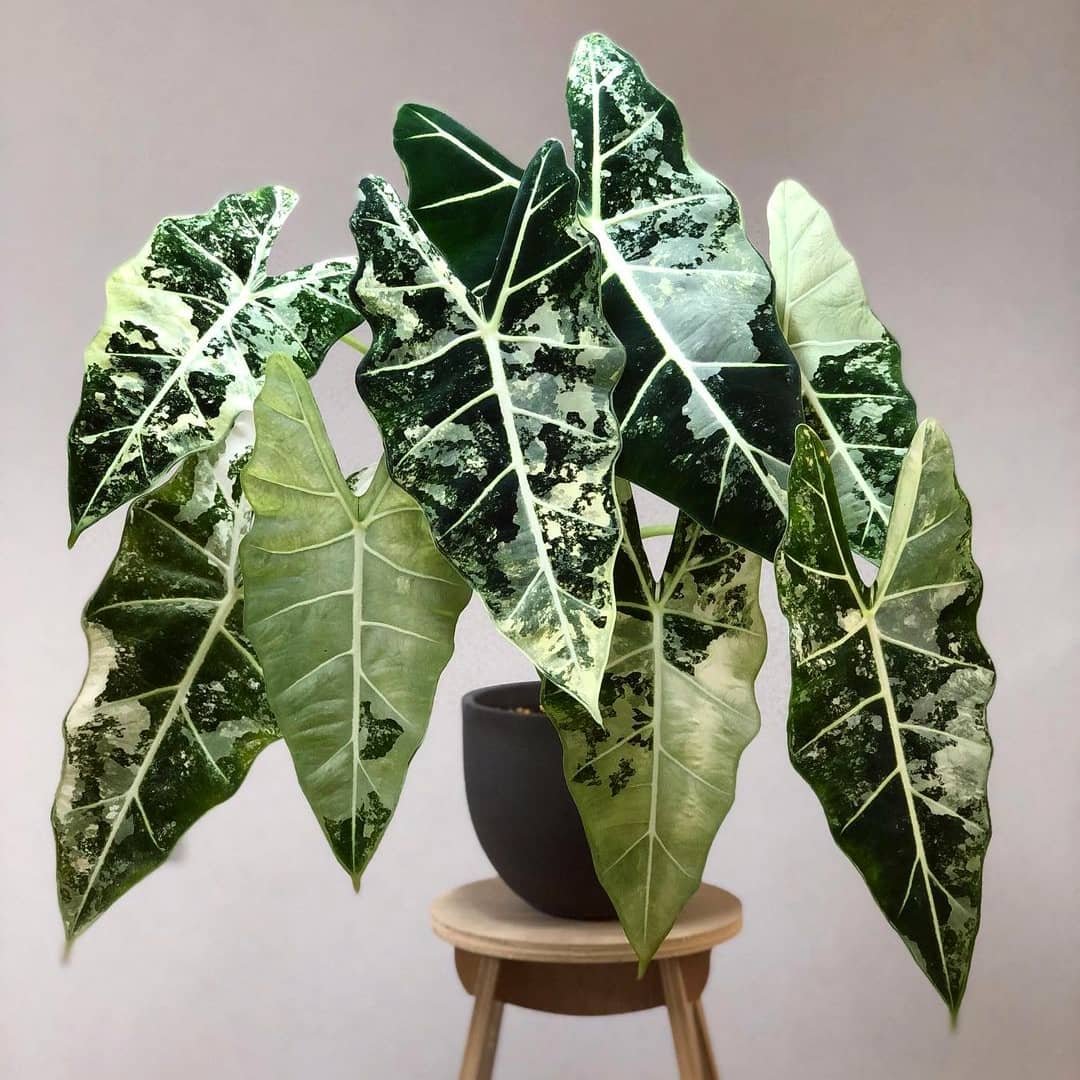
An exact-plant photograph is most useful when it is recent, taken in neutral light and includes the whole plant, several hardened leaves, the pot and a scale reference. For a representative batch, ask how variable leaf count, color, variegation and rooting may be. A mother-plant photo explains potential lineage or mature appearance only when the seller clearly labels it; it does not show what will ship.
Wet leaves, flash, black backgrounds and heavy editing can intensify contrast. For variegated material, compare multiple hardened leaves and growth points rather than the brightest sector. Pale tissue may brown during shipping or acclimation, and no photo can guarantee future pattern stability.
Use this table before adding an Alocasia to the cart.
| Listing field | Evidence to look for | Question if missing |
|---|---|---|
| Name | Botanical name plus cultivar/trade label kept separate | Is this accepted species, synonym, nursery line or phenotype label? |
| Images | Exact plant, representative batch or mother stock stated plainly | Which image matches the unit that will ship? |
| Format and roots | Pot/plug/division/in-vitro format, rooting stage and medium | Is it rooted, recently divided or still sealed in vitro? |
| Count and size | Units, pot/plug/vessel size and a useful measurement | Does “one” mean one plant, one cluster or one vessel? |
| Shipping and claims | Dispatch method, weather limits, documents and claim window | What must be photographed on arrival, and by when? |
Choose the plant format you can support
| Format | Useful evidence before purchase | First priority after arrival |
|---|---|---|
| Established potted plant | Exact foliage, pot size, root history and recent condition | Isolate; check moisture, roots and pests before repotting |
| Rooted plug or young plant | Plug dimensions, root coverage, leaf count and batch variation | Stabilize light, warmth and root-zone moisture |
| Bare-root division or offset | Basal growth point, firm tissue, roots and division date | Inspect for damage; pot to root volume, not leaf size |
| Tissue culture | Plantlet count, vessel status, contamination and mother/batch boundary | Use a prepared acclimation environment and gradual humidity change |
For in-vitro offers, compare the Tissue Culture Alocasia collection, then prepare the acclimation workflow before opening the vessel. Tissue culture is not simply a smaller established plant; its evidence, losses and time-to-display are different.
Compare total landed cost, not sticker price
Add the plant price, quantity, shipping, documentation, inspection or import charges, possible taxes, acclimation supplies and the cost of a failure. A cheap plant can become the expensive option if its name, count, root status or claims process is unclear. A higher-priced exact plant may reduce uncertainty, but it still cannot guarantee safe transit or future variegation.
For wholesale or multi-unit offers, calculate cost per viable unit only after confirming how “plant,” “pot,” “plug,” “cluster” and “vessel” are counted. Ask how batch substitutions work. Do not assume a mature hero image is included in every unit.
Check destination rules before international shipping
Import requirements vary by destination, commodity, origin and plant format, and they can change. The buyer—not a blog headline—must verify the current official rules before paying. For U.S. imports, USDA APHIS explains online plant-import responsibilities and directs buyers to current permit and commodity requirements.
Ask the seller which scientific name, quantity, country of origin, phytosanitary document, permit label, routing and growing-medium condition will appear with the shipment. Match those answers to the destination authority. “Door to door” or “fast and safe” is not a customs-clearance guarantee. Review Greenboog’s current shipping information for transaction details, then confirm any destination-specific obligations separately.
Inspect and document the arrival before changing it
- Photograph the unopened package, label and any visible damage.
- Record the full plant, leaves, petioles, basal tissue, roots, medium and count in neutral light.
- Compare what arrived with the exact listing, order and stated image type.
- Isolate from the collection and inspect leaf undersides and petiole junctions for pests.
- Check pot weight, depth moisture, root smell and tissue firmness before watering or repotting.
- Follow the seller’s current claim window and evidence rules without discarding the package early.
Shipping droop alone does not prove thirst. A light dry root ball and a cold saturated root ball can both produce droop but need different responses. Stabilize the format first; use the Alocasia growth diagnostic if recovery stalls.
When to walk away from an offer
Pause when the title, images and description name different plants; when the listing switches between one plant and a multi-plant package; when every photo is mother stock but no representative batch is shown; or when “rare,” “stable,” “disease-free” and “guaranteed” replace measurable evidence. Also pause if import responsibility, claim timing or substitution terms are unclear.
A good seller may still have natural batch variation and limited exact-plant photography. The important difference is whether uncertainty is disclosed before payment and whether the evidence matches the price and risk.
Buying Alocasia online FAQ
Should I choose by the most variegated leaf?
No. Compare several hardened leaves, growth points, plant vigor, roots and format. One pale leaf may be fragile and does not guarantee future pattern.
Is an exact-plant listing always safer?
It reduces image uncertainty, but transit, roots, weather and future growth still vary. Verify when the photo was taken and what happens if condition changes before dispatch.
Can I ask a seller to remove the plant from its pot?
Ask for recent root evidence, but do not require unnecessary disturbance of an established plant. A clear root-edge, plug or documented repot image may be enough.
Are tissue-culture Alocasias disease-free?
In-vitro production can reduce some field exposure, but a vessel is not a universal guarantee against contamination, mix-ups or acclimation loss.
Where should I compare live Alocasia stock?
Use the current Alocasia collection for live availability and format, then return to this checklist before choosing an offer.