Greenboog Alocasia field guide
That framework helps collectors separate an accepted botanical name from a nursery label, read leaf and growth structures accurately, and choose the right care or buying guide without treating every Alocasia as the same plant.
Alocasia is a genus, not a family
The family is Araceae, the arum family. Alocasia is one genus inside it, alongside other genera familiar to aroid growers. A species name narrows the identity further—for example, Alocasia melo—while a cultivar, nursery selection or trade label may describe cultivated material below or beside that botanical level.
Kew’s Plants of the World Online is the practical reference for accepted species and synonyms. Because taxonomy changes as evidence is reviewed, a current accepted record is safer than copying a fixed species count from an old article.
Read a label from the broadest rank to the most specific claim.
| Level | Example or meaning | What it can establish |
|---|---|---|
| Family | Araceae | Broad arum relationship; not an Alocasia identity |
| Genus | Alocasia | Shared botanical group and structural framework |
| Species | Alocasia melo | An accepted or published botanical identity to verify |
| Cultivar or trade label | Named cultivated selection or nursery line | Useful only with source history and consistent traits |
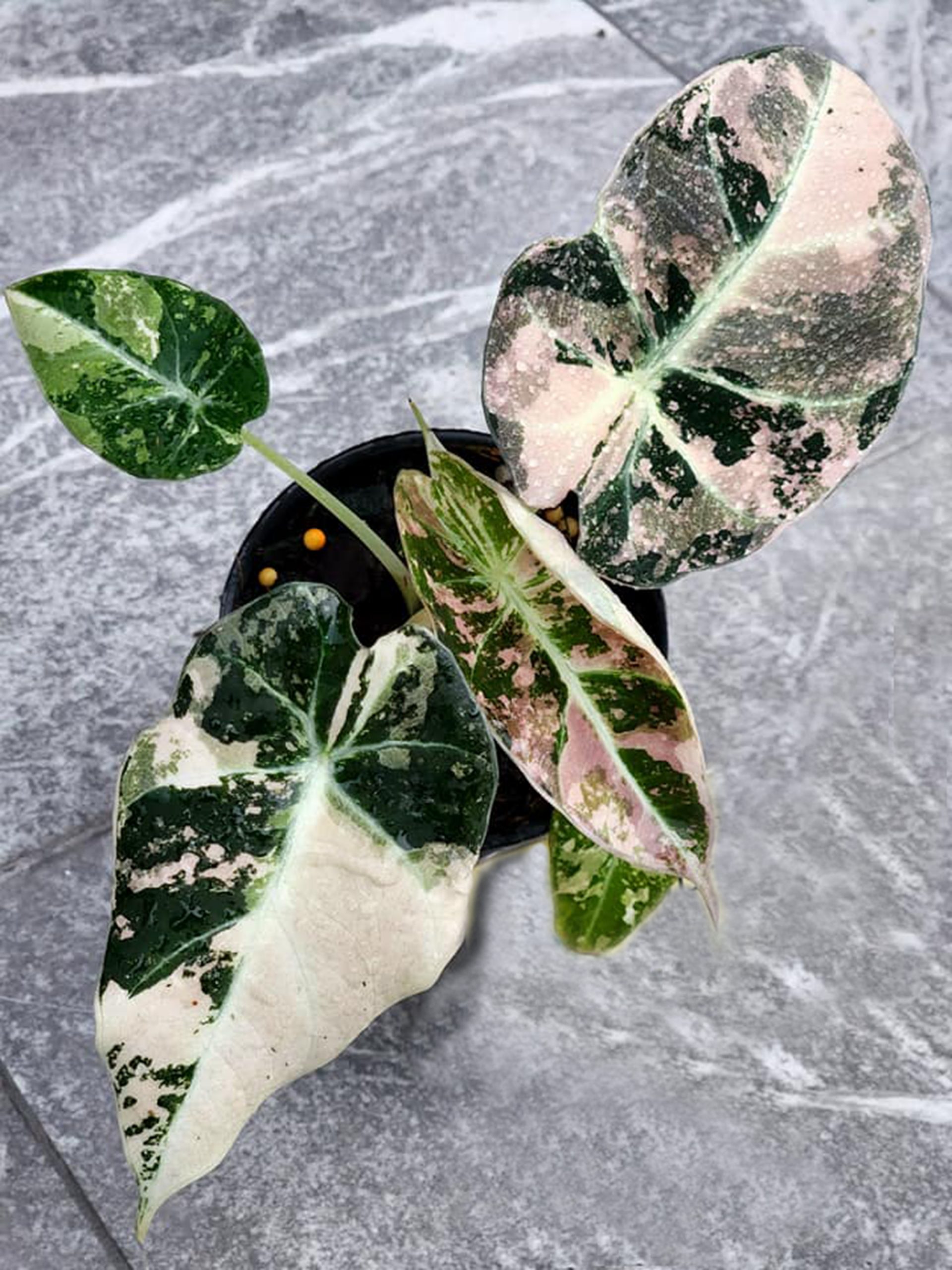
| Phenotype | Pink, aurea or sectoral variegation | A visible expression; not proof of a formal cultivar or lineage |
Native range and growth habit
Kew describes the genus as native from tropical and subtropical Asia to eastern Australia. Members occupy varied humid-forest settings and are primarily terrestrial or geophytic rather than universally epiphytic. Species differ in elevation, seasonal rhythm, mature size and exposure, so a broad map should not be converted into one indoor recipe.
Some remain evergreen when conditions stay favorable; others slow down or shed foliage during cool, dry or stressful periods. That does not make every leaf loss “dormancy.” Check root condition, temperature, moisture, pests and recent changes before assigning a seasonal cause. The Alocasia growth diagnostic shows how to separate a normal pause from a root-zone or environment problem.
Why Alocasia leaves look so different
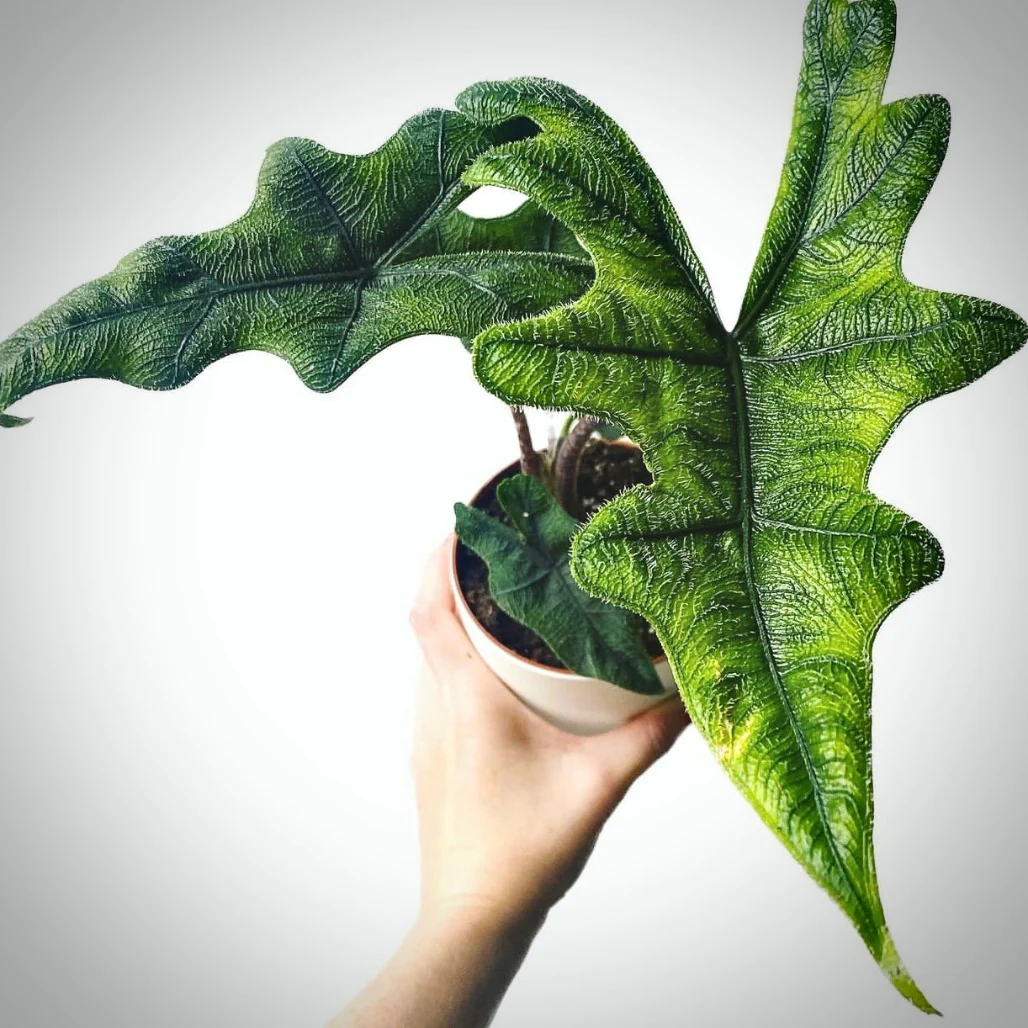
Alocasia blades may be shield-shaped, sagittate, rounded, narrow, bullate, deeply divided or strongly undulate. Petiole attachment and the sinus—the notch at the blade base—also vary. Juvenile foliage may differ from mature foliage, and some leaves become peltate, with the petiole attaching inward from the margin.
Color and texture can help describe a plant, but they are not a complete key. Light, leaf age, camera processing and water on the surface can change how green, silver or dark tissue appears. Leaf shape alone also does not reliably reveal whether a plant came from a brighter or shadier habitat. Compare several hardened leaves, basal growth, petiole characters and trustworthy provenance.
Leaf, stem and flower terms worth knowing
| Structure | What it is | Why it matters |
|---|---|---|
| Blade | The expanded leaf surface | Compare outline, texture, venation and hardened color across leaves |
| Petiole | The stalk supporting the blade | Attachment, pattern and repeated color can support—not prove—identity |
| Primary and secondary veins | The main and branching vascular network | Use pattern and relief with other traits, never as a one-feature diagnosis |
| Basal stem and growth points | The compact living base that produces roots, leaves and offsets | A viable division needs this tissue; a detached leaf does not |
| Offset or corm-like propagule | Basal propagating material produced by some plants | Confirm firmness, growth point and rooting stage before separating |
| Spathe and spadix | A bract surrounding the central flower-bearing axis | This is the characteristic arum inflorescence, not a conventional petaled flower |
Growth and propagation start at the base
New leaves arise from active growth tissue at the plant’s base. Depending on the species and individual plant, thick stems, stolons, offsets or bulbiferous/corm-like structures may be present. Sellers often use “corm” broadly, so inspect the actual unit rather than relying on the word alone.
A leaf with only a petiole cannot regenerate a complete Alocasia because it lacks a viable basal growth point. Division and offset handling therefore begin with root and stem anatomy. Follow the Alocasia propagation guide before cutting or separating material.
What an Alocasia inflorescence tells you
An Alocasia inflorescence consists of a spathe surrounding a spadix. The small true flowers sit on that central axis. Color, timing, scent and frequency vary, so “all Alocasias have fragrant flowers” is not a safe genus-level promise.
For most home growers, an inflorescence is evidence of a reproductive phase, not an emergency. Whether to keep or remove it depends on the plant’s condition and the grower’s goal. Do not cut solely because a generic article says flowering always steals growth; assess roots, leaf production and intended breeding or observation first.
Translate botany into safer indoor care
Genus-level care is a starting range, not a schedule. Use bright filtered light, stable warmth and a right-sized container with a medium that holds useful moisture while regaining air. Water thoroughly when depth moisture and pot weight show the root zone is ready, then drain. Dense, persistently saturated soil is not a genus requirement.
Humidity affects water loss, but it cannot compensate for cold roots, low light or poor drainage. Feed a rooted, actively growing plant according to the fertilizer label and nutrients already present in the medium. If a leaf curls, yellows or droops, pair the symptom with pot weight, root condition, temperature and pest evidence; use the leaf-curl diagnostic instead of diagnosing from color alone.
Identity, sourcing and safety
- Check an accepted botanical record and keep synonyms visible when they explain older labels.
- Ask whether photographs show the exact plant, a representative batch or only mother stock.
- Separate species, cultivar/trade label and visible phenotype in your records.
- For variegated material, inspect several hardened leaves and growth points; do not infer stability from one bright leaf.
- Confirm established pot, rooted plug, offset or in-vitro format before comparing price or care.
- Use the Alocasia types hub to compare identities, then check the current Alocasia collection for live formats.
- For in-vitro material, prepare the tissue-culture acclimation workflow before opening the vessel.
Alocasia tissues contain irritating calcium oxalate crystals. Keep plants away from chewing pets and children, wear gloves for division, and avoid sap contact with eyes or mouth. Seek veterinary or poison advice for chewing, oral pain, swelling, drooling, vomiting or difficulty swallowing.
Alocasia genus FAQ
What plant family does Alocasia belong to?
Araceae, the arum family. Alocasia itself is a genus.
Are Alocasia and Colocasia the same genus?
No. They are different genera in Araceae. Upward or downward leaf posture can be a useful field clue, but reliable separation uses several vegetative and reproductive characters.
How many Alocasia species are there?
The accepted total changes as names are published, synonymized and revised. Use a current taxonomic database rather than freezing an old count.
Can Alocasia grow from a leaf cutting?
No. A complete new plant needs viable basal stem or growth-point tissue, usually retained in a division, offset or corm-like propagule.
Is every Alocasia care routine the same?
No. Genus-level guidance provides a starting range; species, root mass, medium, light, warmth and growing format determine the actual rhythm.