Tissue culture delivery triage
A shifted gel block, a leaking cup and fuzzy growth are three different arrival states. Inspect before you act so you preserve evidence, protect the rest of your collection and move the plantlet into the correct next workflow.
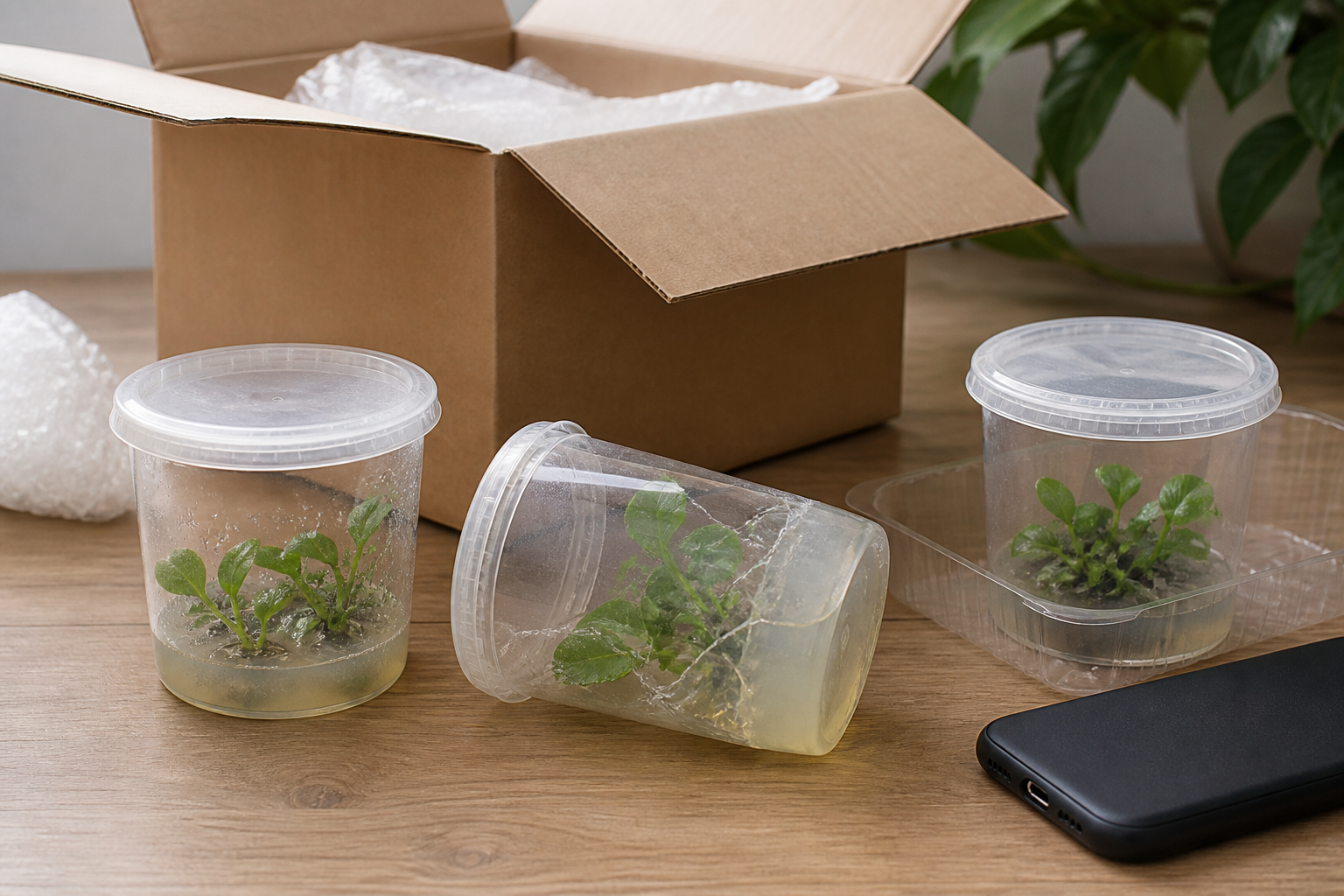
- Do not discard packaging until the arrival has been documented and the claim window checked.
- Do not open a sealed cup merely to get a clearer photograph.
- Keep a suspicious vessel physically separate from other in-vitro plants and established houseplants.
- Do not add a chemical treatment before you know which problem you are trying to solve.
What to do in the first ten minutes
- Photograph the unopened parcel if it is crushed, wet, punctured or unusually hot or cold.
- Record the label and all sides of the vessel, including the lid, seam, cracks, leakage and any loose packing.
- Take close and wide views of the gel, roots, crown and leaves without rotating the cup so aggressively that the contents move again.
- Separate the vessel in a clean tray away from the rest of the shipment and your plant collection.
- Check the time-sensitive seller instructions and send the evidence before opening when the vessel remains sealed and the plant is stable.
For Greenboog orders, use the current shipping information and arrival-contact route. A seller may need photographs of the original seal and packaging to distinguish courier damage from a later change.
Classify the arrival before choosing a response
The same “messy flask” description can conceal very different risks.
| Arrival state | What it means | Immediate action | Next route |
|---|---|---|---|
| Seal intact; gel shifted or cracked | A physical shipping event; not proof of microbial growth. | Document roots, crown and leaf damage while closed. | Ask whether to wait or deflask early based on tissue condition. |
| Cup cracked, lid loose or liquid leaking | The aseptic barrier may be lost and tissue may be drying or exposed. | Isolate, document immediately and contact the seller. | Prepare for a prompt deflasking workflow if instructed or if exposure is active. |
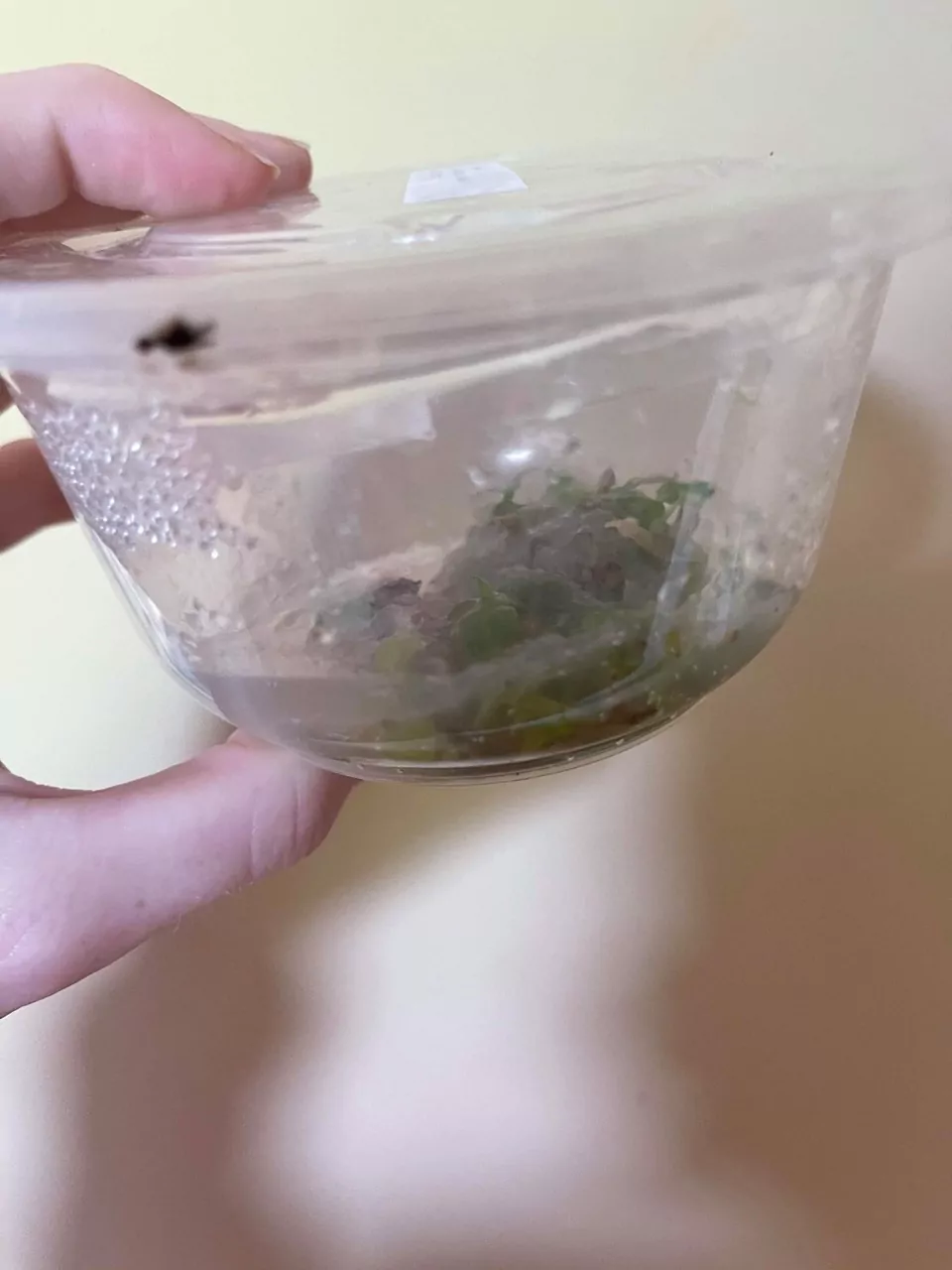
| Fuzzy, radial, slimy or cloudy growth | Visible microbial contamination is possible, but the organism is not identified. | Keep closed, isolate and photograph progression. | Seller/lab triage first; salvage is a separate risk decision. |
| Plant tissue bruised; medium remains clear | Mechanical or temperature injury may be more likely than visible contamination. | Track whether tissue stays firm or becomes translucent and spreading. | Seller advice, then normal protocol if the plant remains stable. |
Broken gel does not automatically mean a contaminated flask
Shifted gel is a shipping condition, not a microbial diagnosis. Agar or another gel can crack and slide when the parcel is dropped, inverted or exposed to temperature changes. The important follow-up questions are whether the seal is intact, whether the plantlets are crushed or buried, whether roots and crowns remain firm, and whether an opaque or filamentous area is expanding.
If the container remains sealed and plantlets are not trapped in a way that is causing rapid decline, preserve the closed-vessel evidence while you contact the seller. If a container is leaking, plant tissue is exposed or a crown is actively collapsing, waiting only to satisfy a calendar can reduce salvage options. Document first, then move deliberately.
What visible contamination can look like
UF/IFAS describes microbial contaminants on culture medium as white or opaque slime, variously colored colonies, black spores or filamentous mycelium. Research cultures also show that bacteria can form clouds, droplets, haze or sediment, while fungi can form radiating thread-like growth. Those patterns justify isolation and contact; they do not let a customer identify species or select a treatment from a photograph.
When to keep the vessel closed—and when opening becomes the next step
| Keep closed while contacting the seller | Prepare for prompt deflasking | Do not do |
|---|---|---|
| Seal intact, plantlets firm, gel only shifted. | Vessel cracked or leaking and aseptic barrier is lost. | Open a stable sealed vessel only to smell or touch a suspected spot. |
| Suspicious spot can be photographed and monitored without opening. | Plantlets are exposed, drying, buried or being crushed by displaced gel. | Attempt to pour new “sterile medium” into a retail cup at home. |
| Seller needs original-seal evidence for claim review. | Seller or nursery protocol directs immediate opening from the documented condition. | Place a suspicious open plant beside healthy plantlets. |
Do not default to Betadine, fungicide or rooting hormone
A universal dip cannot cover every fungus, bacterium, exposure time, plantlet size or legal product label. A concentration that is tolerated by one batch may injure another, and a chemical cannot repair heat damage, crushed tissue or an airless root zone. Laboratory surface disinfestation is performed with controlled materials and aseptic transfer procedures; it is not recreated by adding medicine to an opened retail cup.
If a seller supplies a batch-specific salvage protocol, confirm the exact product, concentration, contact time, rinse and local label status. Otherwise, use clean tools, isolate the plant and follow the physical deflasking workflow without inventing a treatment. Do not add antibiotics or pesticides “just in case.”
The next guide depends on whether the vessel must be opened
If the shipment can remain sealed, continue monitoring according to the supplier’s holding instructions. If the seller advises opening—or the damaged vessel has already lost its seal—follow Greenboog’s step-by-step deflasking and potting protocol. That page owns gentle gel removal, root inspection, potting and the initial protected setup.
Once plantlets are potted and stable, move to the tissue-culture hardening guide for ventilation, light, temperature and root-zone decisions. Do not repeat the arrival intervention every time a leaf softens; hardening is a different stage.
Sources and evidence boundaries
- UF/IFAS Propagation Garden: Aseptic Culture — visible microbial patterns and the controlled aseptic-transfer context.
- Izarra et al.: latent bacteria in in-vitro sweetpotato cultures — visual-detection limits and faint/latent bacterial contamination.
- Wang et al.: bacterial and fungal contamination during plant tissue culture — varied visible colony, cloud, sediment and hyphal patterns.
Evidence limit: research laboratory methods identify contaminants with culture, microscopy or molecular testing. This retail guide helps preserve evidence and choose a workflow; it does not diagnose an organism from an image.