
Monstera diagnostic hub
A yellow leaf, drooping plant or stalled vine is a symptom—not a complete diagnosis. The safest “fix” is to record what changed, inspect the whole plant and root zone, then choose the specialist route that matches the evidence.
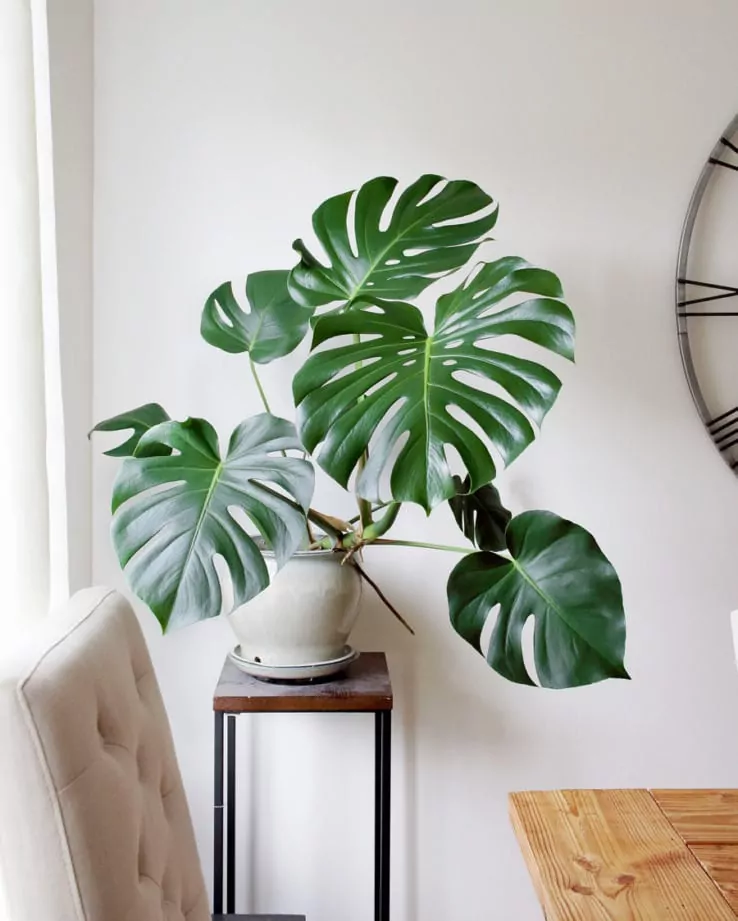
Know what is normal before calling it a problem
Penn State Extension’s diagnostic framework begins with correct identification and normal appearance. A juvenile leaf without holes, a stable old scar, a normal aerial root or the pale sector of a variegated plant can be mistaken for disease when viewed without species, cultivar and growth-stage context.
Use the healthy Monstera baseline to compare trends rather than idealized photos. Record the plant name or seller label, arrival date, repotting, moves, watering, feeding, temperature events and any treatment already applied.
Run a ten-minute evidence check
- Photograph the whole plant and both sides of affected and unaffected leaves.
- Mark where damage began: old or new leaf, edge or center, one side or the whole plant.
- Lift the pot and check drainage, dry-down, odor and root-zone temperature.
- Inspect the growth point, stem base, nodes, petiole bases and leaf undersides with bright light.
- Compare the timeline with the last move, watering, feed, repot, shipment or temperature event.
- Quarantine if pests or rapidly spreading lesions remain plausible; change nothing else until evidence is recorded.
Progression matters. Damage that appeared immediately after a move differs from lesions expanding across new tissue; a uniformly affected collection suggests a shared environmental event more readily than a pest confined to one plant.
Match the symptom to a second clue
| Symptom | Pair it with | Next route |
|---|---|---|
| Yellowing or widespread wilt | Heavy wet pot, odor and dark soft roots versus a light dry pot and firm roots. | Check watering evidence; use recovery only if decline is whole-plant. |
| Brown tips, edges or patches | Crisp versus soft texture, source-facing pattern, salts, roots and spread. | Use the brown-leaf pattern owner. |
| Small leaves or longer internodes | Light history, support contact, roots, recent stress and species stage. | Review light placement and support architecture. |
| Stippling, webbing or cottony material | Moving pests, leaf undersides, petiole bases and neighboring plants. | Isolate, document and identify the organism before selecting a labeled control. |
| Rapid whole-plant decline | Stem-base firmness, root condition, viable nodes, pest load and progression. | Use the dying-plant recovery owner. |
University of Maryland Extension places wilt under both too much and too little water and recommends root inspection when root rot is plausible. Dark soft roots, wet substrate and odor are stronger evidence than droop alone. The same caution applies to yellowing: pests, roots, salts and environmental stress can converge on a similar leaf response.
Avoid six automatic “fixes”
| Automatic action | Risk | Evidence needed first |
|---|---|---|
| Add water | Worsens an airless, already-wet root zone. | Pot weight, depth dry-down, drainage and roots. |
| Add fertilizer | Adds salts while roots are impaired or the plant is stressed. | Healthy roots, active growth and product-label need. |
| Repot larger | Creates excess wet volume and another disturbance. | Root density, mix collapse, drainage and stability. |
| Increase light fast | Adds heat or scorch to an unacclimated leaf. | Measured placement history and gradual response. |
| Mist or humidify | Masks the root/light issue and may prolong leaf wetness. | Actual humidity trend plus species and airflow context. |
| Spray a pesticide | Can injure stressed tissue and miss the actual organism. | Identified pest and a product labeled for the plant/site. |
Change one variable and preserve the timeline
Label the intervention date and judge the next growth or the spread boundary. Old damaged tissue often stays damaged even when the cause is corrected. Success means the problem stops advancing and roots or new growth stabilize—not that an old leaf becomes perfect.
Sources
- Penn State Extension: normal appearance, progression, patterns, history, symptoms and signs
- Penn State Extension: biotic/abiotic categories and whole-plant diagnostic sequence
- University of Maryland Extension: wet/dry wilt, root evidence, pests, scorch and salt boundaries
- NC State Extension: Monstera growth habit and general cultural context

My Monstera accidentally got knocked over and broke what can I do to revive it I put the leaves in water and left the rest of the plant in the soil help