Hybrid identity, velvet-leaf development and support-led care
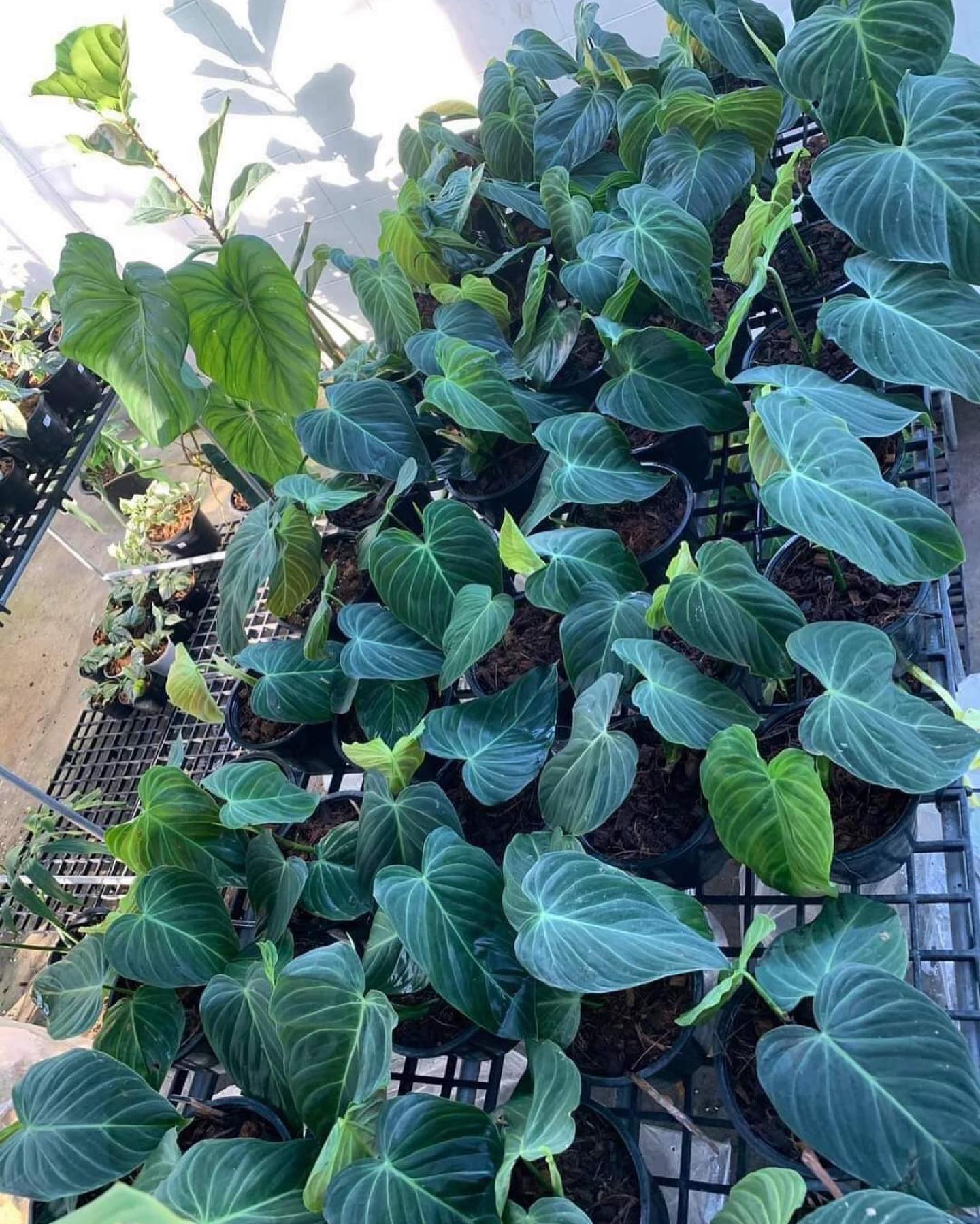
Philodendron ‘Splendid’ is the horticultural hybrid circulated as P. verrucosum × P. melanochrysum. It combines a climbing stem, velvety cordate foliage and strong pale venation; later leaves can lengthen as the stem establishes on a support.

Splendid is a cultivated hybrid, not a wild species
Regulated Hawaiʻi nursery records list Splendid as Philodendron verrucosum × P. melanochrysum. Kew accepts both parents as wet-tropical climbers: verrucosum ranges from Costa Rica to Peru, while melanochrysum is native to Colombia. Splendid itself does not have a native rainforest range.
Horticultural sources commonly attribute the hybrid to Keith Henderson, the name to Neil Crafter and release around 1990. No primary cultivar registration or patent was located during this review, so that history should remain an attribution rather than a proven chain of custody for every current clone.
Compare parent-derived traits without expecting a formula
Verrucosum contributes a broad cordate velvet-leaf context, conspicuous branching venation and, in the species, scaly or setose petioles with warm underside tones. Melanochrysum contributes a slender climbing architecture and a tendency toward longer dark velvet blades with pale venation. Splendid can show an intermediate mix, but one trait does not prove the label.
| Evidence | Splendid context | Boundary |
|---|---|---|
| Blade outline | Broad cordate base that can lengthen on supported growth. | Juvenile leaves may remain compact. |
| Surface and veins | Velvet-looking surface with strong pale primary veins. | Many velvet Philodendrons share this. |
| Petiole and underside | Warm tones or texture may echo verrucosum ancestry. | Expression varies with leaf age and line. |
| Stem | Climbing nodes and aerial roots; later leaves orient on support. | A stake cannot authenticate parentage. |
Use the dedicated verrucosum guide and melanochrysum guide when comparing the parent species. Those pages own species-level identity; this page owns the hybrid’s intermediate evidence.
Place support beside the active stem
Splendid is a climber, not a bush that becomes fuller from indiscriminate tip pruning. Place a board or pole beside the active stem, secure stem tissue loosely and leave petioles free. Guide the newest flexible section first, and let aerial roots contact a stable surface where practical.
Support cannot guarantee larger leaves, but it gives the stem a consistent climbing axis. If later growth shrinks or internodes stretch, check root health, usable light and temperature as well as attachment.
Use filtered light and read leaf hardening
Place Splendid in bright diffused light and acclimate increases gradually. Harsh direct exposure can bleach or scorch a fresh velvet surface; low usable light can slow growth and root-zone drying. A newly opening leaf may be lighter or warmer before it hardens.
The pale venation is not variegation, and care cannot switch it on or off like a painted pattern. Diagnose broad yellowing, tan patches or distorted growth from the full plant and recent conditions. The general Philodendron guide owns broader room-level care.
Water the rooted volume, not the calendar
Use an open, well-drained medium that still holds useful moisture and a pot only modestly larger than the roots. Water across the rooted volume, allow excess to leave, then check pot weight and moisture below the surface before repeating.
A top-inch rule ignores pot size, root density, medium, temperature, light and airflow. Routine misting and pebble trays do not replace room humidity or root watering. Feed modestly during active rooted growth; fertilizer cannot repair root loss or guarantee larger leaves. Use the watering guide for deeper diagnosis.
Diagnose before pruning or treating
| Signal | Check first | Measured response |
|---|---|---|
| New leaf is lighter | Hardening stage and prior connected leaves. | Let it harden before changing care. |
| Velvet surface turns tan | Sun, heat, spray and hydration shift. | Filter exposure and stabilize roots. |
| Plant is limp in a wet pot | Drainage, roots and crown depth. | Pause watering; inspect if recovery stalls. |
| Later leaves shrink | Support contact, roots, light and temperature. | Correct the verified bottleneck. |
| Newest leaf is distorted | Growth point, thrips, mites and damage. | Isolate and identify before stacking sprays. |
Propagate a viable node
A Splendid cutting needs stem tissue with a viable node and bud or active growth point; a leaf and petiole alone cannot rebuild the vine. Photograph the connected leaves, petioles, stem and label before cutting, and preserve aerial roots where practical.
- Choose a healthy node with useful leaf area.
- Use clean tools and avoid cutting a stressed shipment.
- Keep the base warm, airy and moist rather than saturated.
- Transfer after functional roots can support new growth.
- Retain the Splendid and parent-formula label.
Use the Philodendron propagation guide for top-cut, air-layering and transfer decisions.
Buyer checklist and live routes
- Confirm exact-plant versus representative gallery scope.
- Compare several connected leaves, petioles, nodes and the active point.
- Ask about rootedness, support history and recent propagation.
- Do not treat velvet texture or white-looking veins as unique proof.
- Verify current stock, option and shipment terms on the listing.
Safety and sources
Philodendron tissue contains insoluble calcium-oxalate crystals that can irritate the mouth and digestive tract when chewed. Keep plants and cut material away from children and pets, and seek appropriate medical or veterinary guidance after significant exposure.