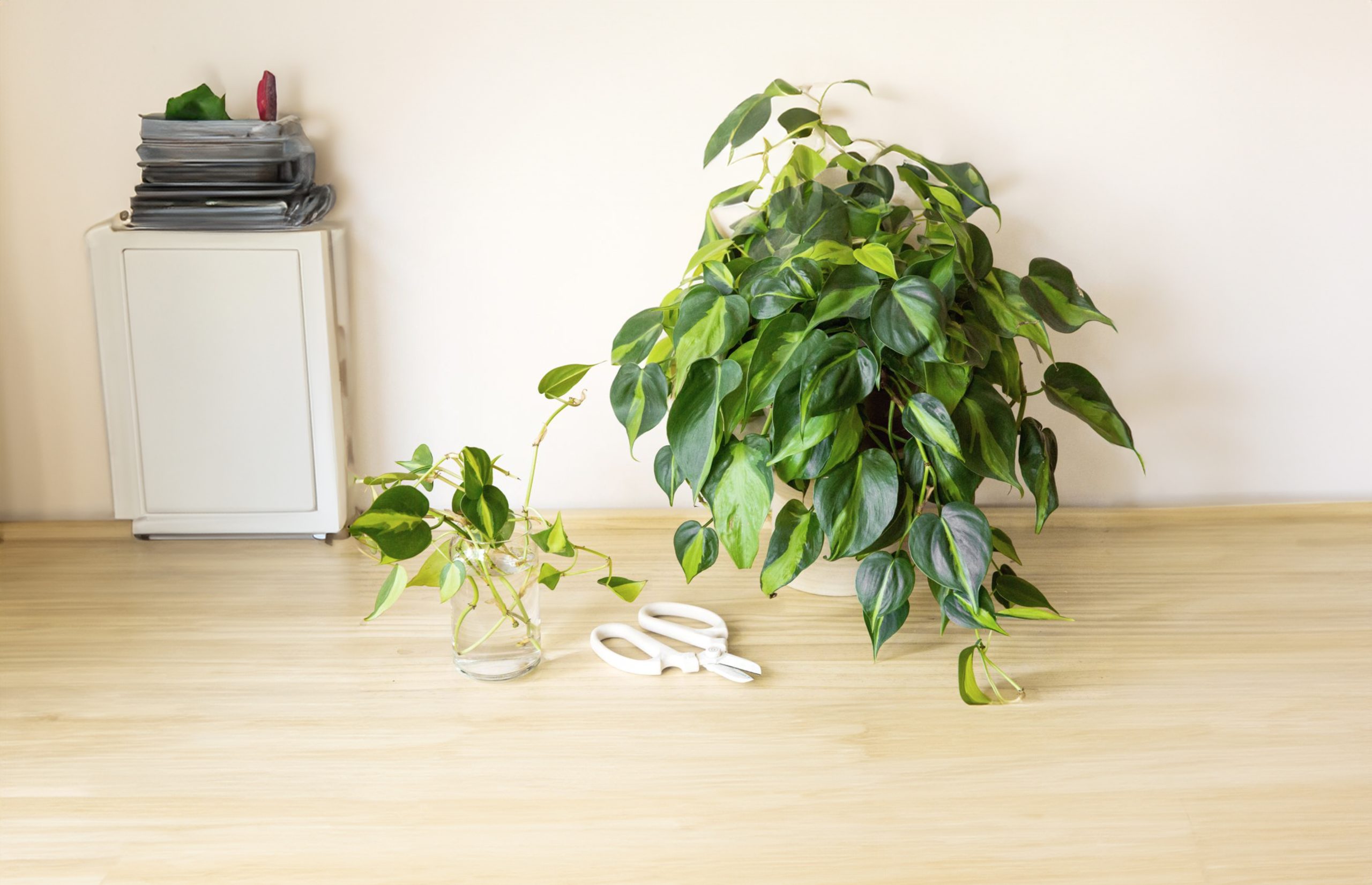
To propagate a climbing Philodendron, start with viable stem tissue that includes at least one node and an axillary bud or active growing point. A leaf and petiole may remain attractive in water, but without the right stem anatomy they are not a propagation-ready new vine.
The safest method depends on the plant and your tolerance for risk. A top cutting keeps the growing tip, a mid cut must activate a bud, water makes roots visible, an airy medium avoids a later water-to-medium transition, and air layering lets a candidate begin rooting while it is still attached.
Philodendron propagation at a glance
| Method or cutting | Useful when | Main tradeoff |
|---|---|---|
| Top cutting | You want the active tip and the mother plant can lose it | Largest visual change to the parent; valuable tip is separated immediately |
| Mid cut | A long vine has multiple documented nodes and buds | Must activate a bud; a rooted node can still pause before producing a shoot |
| Water propagation | You want to observe roots and clean the vessel easily | Requires a later transition if the plant will live in potting mix |
| Airy moist medium | You want roots adapted to a porous medium from the start | Root progress is less visible and saturation can cause decay |
| Air layering | The plant is valuable or the candidate node already has an aerial root | Slower setup and monitoring; the wrapped node must stay moist and aerated |
North Carolina Extension lists layering and stem cuttings as recommended Philodendron propagation strategies. The rest of this guide turns those categories into decisions without pretending that every species, hybrid or horticultural label behaves on one schedule.
Find the node, bud and growth direction before cutting
Node
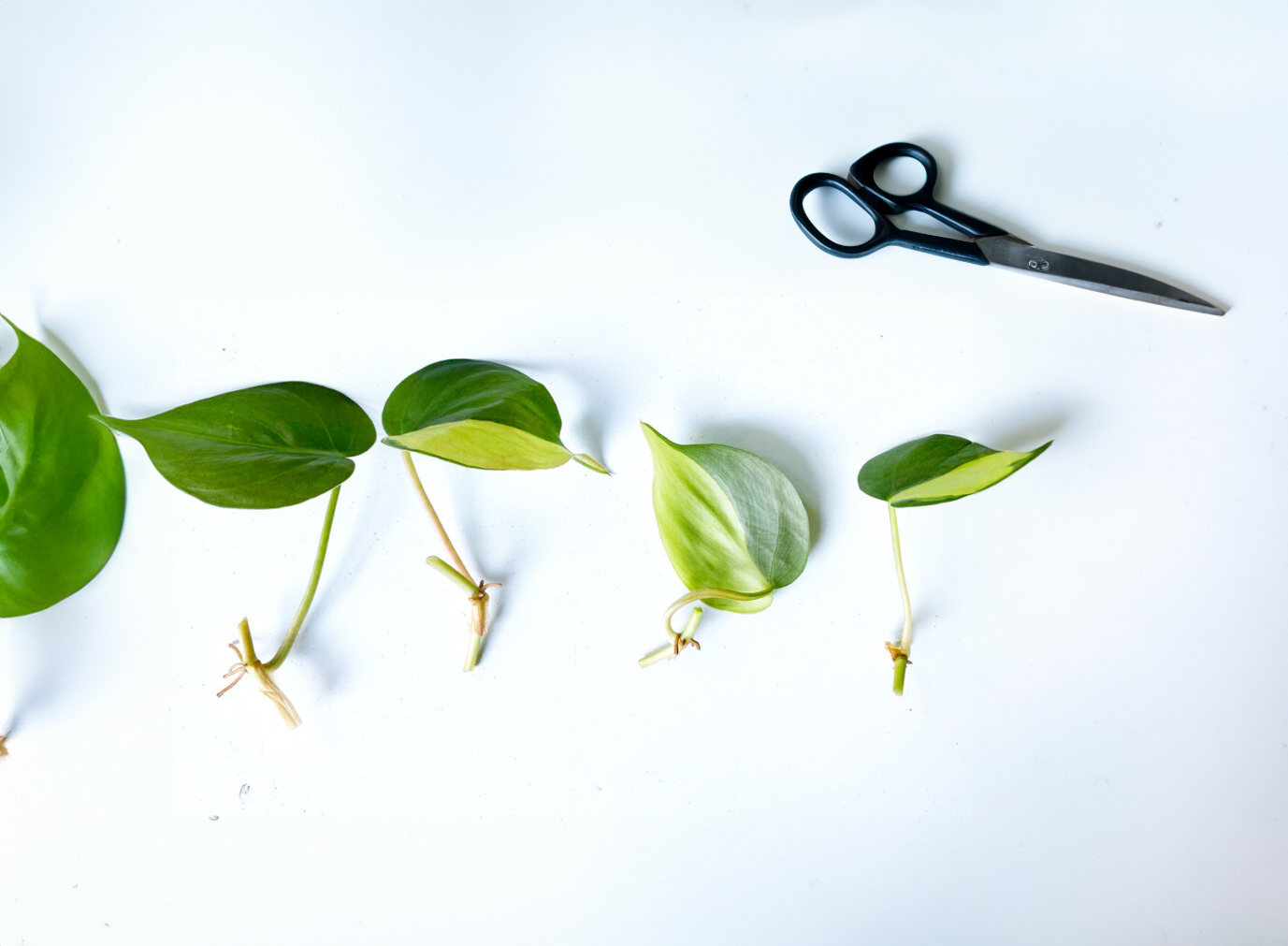
A node is the point on the stem associated with a leaf, bud and often an aerial-root feature. It is not the leaf blade and it is not the long petiole connecting a leaf to the stem. Trace the petiole back to the main stem before deciding where the node begins and ends.
Axillary bud or growth point
A top cutting already has an active tip. A mid cut depends on a bud at its node to make the next shoot. Photograph the bud and node from several angles; a root without a viable growth point is not the same as a new vine.
Internode and aerial root
The internode is the stem between nodes. Leave enough sound internode to handle the cutting without slicing into the node. An aerial root can help a cutting establish, but its presence does not replace the need for a bud/growth point.
Philodendron names and growth habits are not interchangeable. Use the Philodendron discovery and name guide before transferring a cutting method from one marketplace label to another.
Prepare the mother plant and your tools
- Start with active, firm tissue. Delay the cut if the mother plant is dehydrated, newly shipped, cold-damaged, pest-infested or losing roots.
- Inspect the whole route. Decide which node stays with the parent, which becomes the cutting and where the cut can be made without damaging either node.
- Clean the blade. Use sharp scissors, pruners or a knife suitable for the stem. Clean and disinfect between plants so one collection problem is not carried to another.
- Prepare the receiving system first. The clean vessel, moist medium, label and support should be ready before valuable tissue is detached.
- Record provenance. Photograph mother plant, label, leaf sequence, stem, node and bud. Assign each cutting an identifier instead of relying on memory.
Penn State Extension recommends healthy, unstressed source material, clean tools and sterile propagation media. Those controls matter more than a decorative vessel or an exact cutting length copied from another plant.
Take a top or mid cutting
- Choose a node with firm stem tissue and a visible or documented growth point.
- Support the vine so the blade does not tear the remaining stem as the cut releases.
- Cut through sound internode, leaving handling room around the node without sacrificing the next node on the mother plant.
- Remove only leaves that would be buried or submerged. Keep useful green leaf area when the cutting can support it.
- Inspect the cut surface and node. Discard or isolate material that is already soft, discolored through the stem or foul-smelling.
- Place suitable material into the prepared method. There is no universal multi-hour callus rule for every Philodendron cutting and environment.
Rooting hormone is optional. If used, choose a product labeled for the method, apply only as directed and avoid contaminating the stock container. Penn State notes that excessive hormone can slow root development.
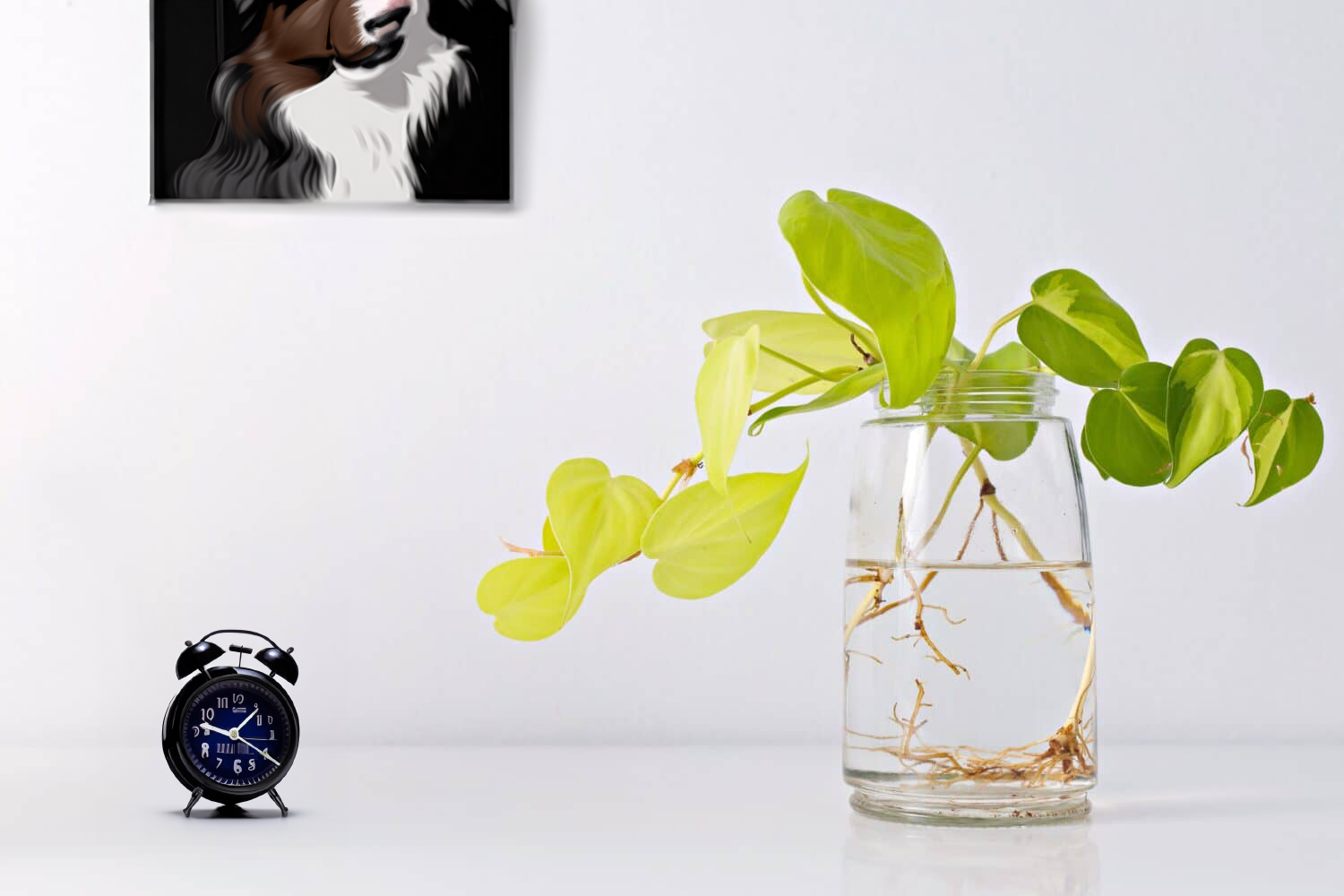
Method 1: root a Philodendron cutting in water
- Use a clean vessel that supports the cutting without crushing the node.
- Place the node/root feature in contact with water while keeping leaves and the axillary bud above the waterline when anatomy allows.
- Give bright filtered light and stable warmth; avoid intense sun heating a clear vessel.
- Top up for evaporation and replace water when it becomes cloudy, develops odor or accumulates debris. Do not turn one weekly number into a substitute for observation.
- Inspect the node and roots. Firm pale-to-tan roots are different from tissue that is dark, soft and collapsing.
The Philodendron watering and water-culture guide owns water quality, oxygen, reservoir management and the difference between a temporary cutting jar and a maintained nutrient system.
Method 2: root in an airy moist medium
Use a clean, low-density propagation medium that holds some moisture while preserving air around the node. Perlite, vermiculite, bark and other soilless components have different water/air behavior; choose a combination you can monitor instead of using dense garden soil.
- Moisten the medium evenly, then let surplus drain. It should not be waterlogged.
- Position the node in contact with the medium and keep the bud correctly oriented rather than burying the whole cutting.
- Support the stem so movement does not tear new root initials.
- Provide bright filtered light, warmth and moderate humidity with airflow.
- Check moisture by container weight and the medium, not by a fixed watering day.
Method 3: air layer before separating a valuable node
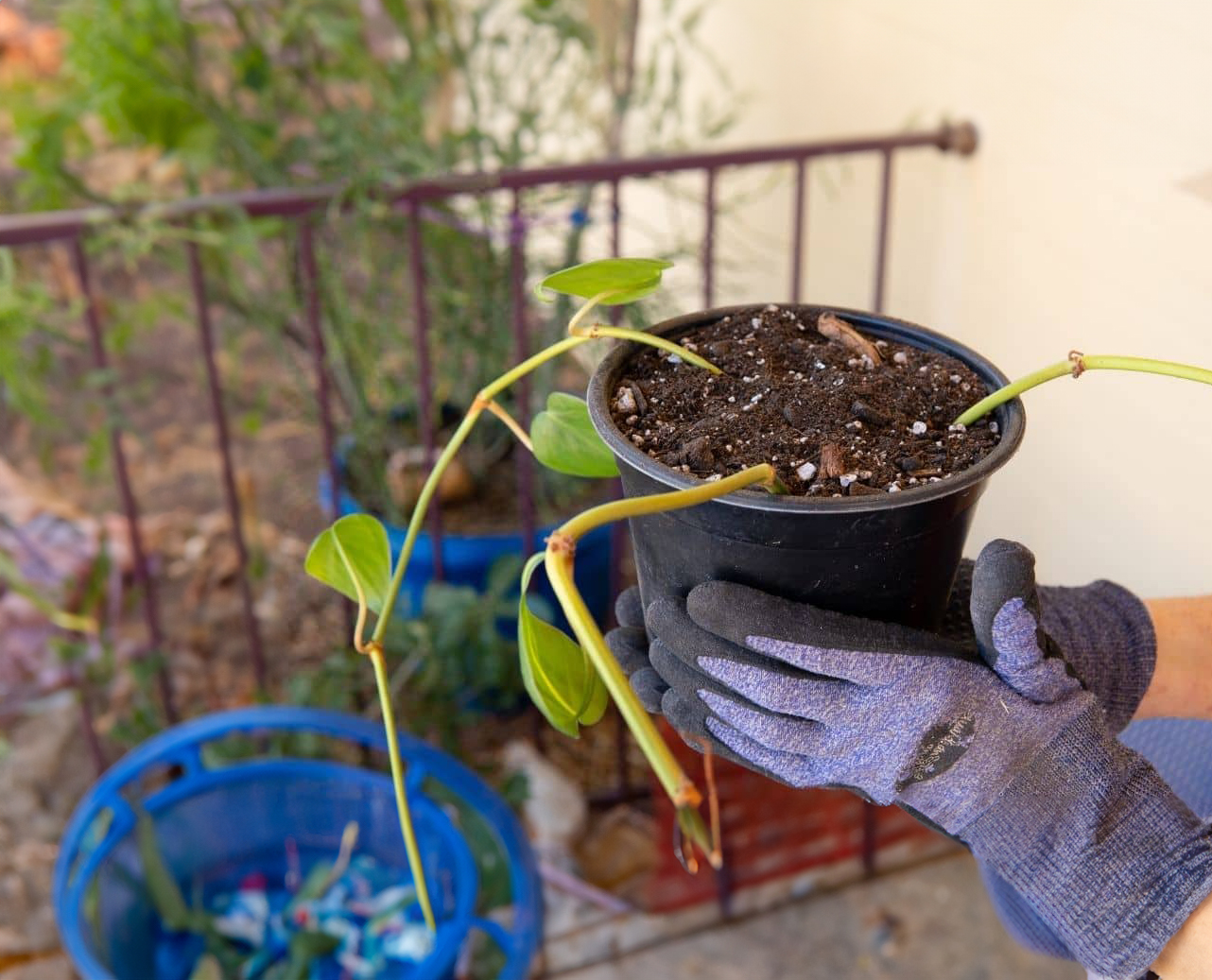
Air layering is useful when an aerial-rooted node can be wrapped with moist, airy material while it remains on the mother plant. Secure the material without constricting the stem, keep the wrap moist but not stagnant, and inspect rather than assuming roots from condensation alone.
Once the layered node has a healthy, branching root system that can support the intended top or section, cut through the planned internode and pot it with minimal disturbance. Do not make an incision in a high-value stem merely because a generic air-layering diagram shows one; Philodendron nodes with aerial-root activity may not need that extra wound.
Top cut versus mid cut
| Question | Top cutting | Mid cutting |
|---|---|---|
| Where does the next shoot come from? | Existing active tip | Axillary bud at the node |
| What is easiest to verify? | Growth point and direction | Node, bud and stem condition must all be documented |
| What can pause? | Rooting or adjustment after separation | Rooting plus bud activation; a rooted node may not leaf immediately |
| Main mother-plant effect | Removes the visible leader | Allows one vine to be divided across documented nodes |
Do not list a wet stick, leaf-only piece or root-only section as equivalent to a documented mid cut. For a narrow-lobed climbing example, the Philodendron pedatum ‘Glad Hands’ guide shows why stem, node, leaf sequence and source history belong together.
Propagating variegated Philodendron
Before cutting, record several leaves, the stem pattern around each node and the exact position of the axillary bud. A highly white leaf does not guarantee that the next shoot will have a useful green/variegated balance, and a mostly green leaf does not by itself document the bud’s sector.
- Prioritize a viable node and bud before choosing for leaf appearance.
- Retain enough chlorophyll-bearing tissue for the cutting to support itself.
- Label every cutting back to its mother node and date.
- Photograph the cutting before rooting media hides the stem.
- Describe outcomes as observed, not guaranteed; vegetative propagation can preserve source material while expression remains variable.
When is a rooted cutting ready to transfer?
Use root health and system readiness, not one magic root length. A cutting with several firm roots, some branching and stable or active top growth is better prepared than a cutting with one long fragile root. A mid cut may have roots before its bud has visibly activated.
- Choose a small container with drainage and an airy mix suited to the root mass.
- Handle water roots gently; arrange rather than sharply bend them.
- Water the new mix thoroughly and drain it.
- During transition, keep the mix more evenly moist than for an established plant, but preserve air and never leave it stagnant.
- Reduce extra humidity gradually and hold light stable while new roots adapt.
- Delay strong feeding until roots and active growth show that the cutting is functioning in the new system.
After establishment, route complete environment and support decisions to the Philodendron care guide.
Troubleshoot by tissue, not by timeline
- Roots but no new shoot: verify that the piece includes a viable bud. A mid cut can pause; more fertilizer will not create missing anatomy.
- Soft or darkening node: isolate it, remove collapsing tissue with a clean tool, refresh the system and correct stagnant moisture/oxygen conditions.
- Cutting wilts immediately: reduce water loss, stabilize warmth/light and check whether the remaining leaf area is too large for the rootless section.
- Leaf yellows during rooting: inspect node/root health before assuming hunger; a cutting may reallocate resources, but yellowing can also accompany decay or environmental stress.
- Roots fail after potting: check for an oversized pot, saturated mix, abrupt humidity/light change or damaged water roots.
- Fungus gnats or surface growth: remove debris, improve sanitation and stop keeping organic medium unnecessarily wet. Use UC IPM’s houseplant diagnostic guidance before applying a pesticide.
Buyer and seller checks for Philodendron cuttings
- Ask for the whole cutting, node and growth-point photos, not only the best leaf.
- Confirm whether the offer is a top cut, mid cut, rooted cutting or established plant.
- Ask what medium the roots developed in and how long the cutting has held active growth.
- Preserve the source label and avoid promoting an unverified marketplace name as a documented cultivar or hybrid.
- Do not copy a live price, root count or shipping format into an evergreen article. Current availability belongs in the Philodendron collection.
Philodendron propagation FAQ
Can you propagate Philodendron from one leaf?
For a climbing Philodendron, plan on a stem section with a node and viable bud/growth point. A detached leaf and petiole may remain alive temporarily but should not be represented as a cutting capable of making a new vine without the required stem anatomy.
Should a Philodendron cutting callus before rooting?
There is no universal multi-hour requirement for every Philodendron, stem thickness and rooting system. Use clean tools, inspect the cut and move suitable material into a clean, aerated method without leaving it to dehydrate for an invented fixed period.
Is water or medium faster?
Neither wins in every environment. Water is easier to observe; an airy medium avoids a later transition. Plant health, node quality, warmth, light, oxygen and sanitation matter more than a generic race.
How long until a mid cut grows a leaf?
Do not promise a date. A mid cut must establish roots and activate its bud, and those processes do not always happen together. Confirm that tissue remains firm and the bud is viable before changing the system.
Safety
Philodendron sap and tissues contain insoluble calcium oxalates. Wear gloves if sap irritates your skin, keep blades controlled, and keep cuttings and water vessels away from children and pets. The ASPCA advises contacting a veterinarian or poison-control service after a concerning pet exposure.
Sources
- Penn State Extension: Propagating houseplants
- North Carolina Extension Gardener Plant Toolbox: Philodendron
- Royal Horticultural Society: How to take cuttings from houseplants
- UC Statewide IPM: Houseplant problems
- Iowa State University Extension: How do I care for a Philodendron?