Colombian species identity, connected leaf development and climbing care
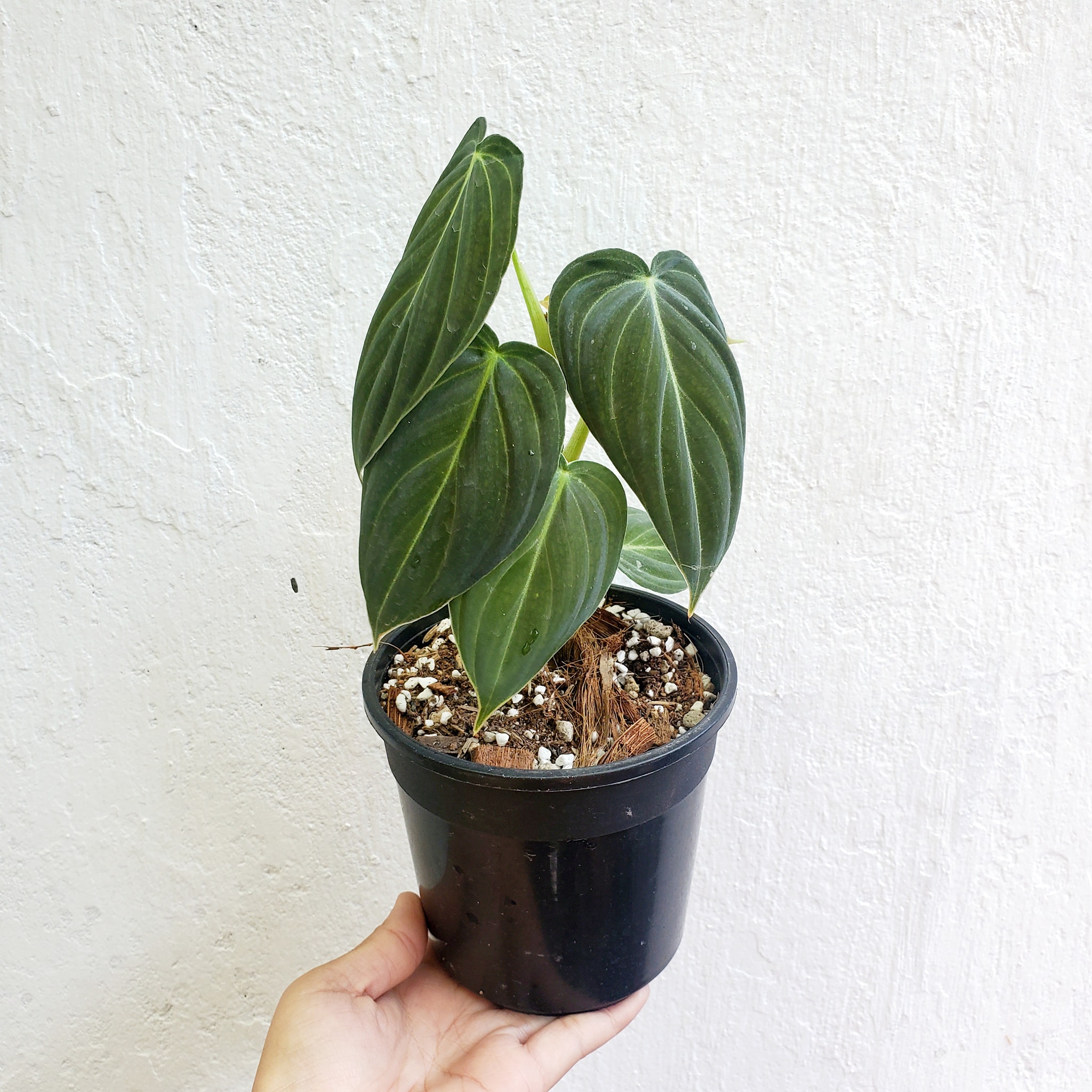
Philodendron melanochrysum is an accepted Colombian climbing species—not a hybrid and not native to Ecuador in Kew’s current record. Young leaves can open salmon-to-bronze before maturing dark green, while bright veins and a velvet-looking surface remain key connected traits.
An accepted Colombian climber
Kew accepts Philodendron melanochrysum Linden & André, published in 1873. Its recorded native range is Colombia, where it grows as a climber in the wet tropical biome. The Kew/CATE description gives a slender climbing stem, dark-green upper leaf surface, paler underside and bright yellow to glossy-silver veins.
That description also records salmon-red young leaves, oblong to ovate-oblong blades and a cordate base. “Black Gold Philodendron” is useful horticultural shorthand for the dark velvet effect and luminous veins; it should not be read as a promise of literally black foliage.
Read leaf development across the vine
| Trait | Normal development | Investigate when |
|---|---|---|
| Fresh leaf is salmon or bronze | Young colour can change as the blade expands and hardens. | The blade remains soft, deforms or the active point stalls. |
| Later leaf is darker green | Mature upper surfaces are described as dark green. | Several leaves bleach after a sudden light increase. |
| Bright veins | Yellow-to-silvery venation is part of the species description. | Interveinal yellowing spreads beyond the normal vein pattern. |
| New leaf is smaller | One transition leaf can vary. | Successive leaves shrink as internodes elongate. |
One pale fresh leaf does not prove deficiency, and one smaller leaf does not prove reversion. Compare at least several connected nodes, the root condition and recent support/light history.
Give the active stem a stable vertical path
Place a board or pole beside the newest climbing axis. Secure stem tissue loosely, keep petioles free and guide the flexible new section before it bends away. Where practical, let aerial roots contact the support. Attachment helps the plant maintain a climbing habit; it does not guarantee a fixed mature leaf size.
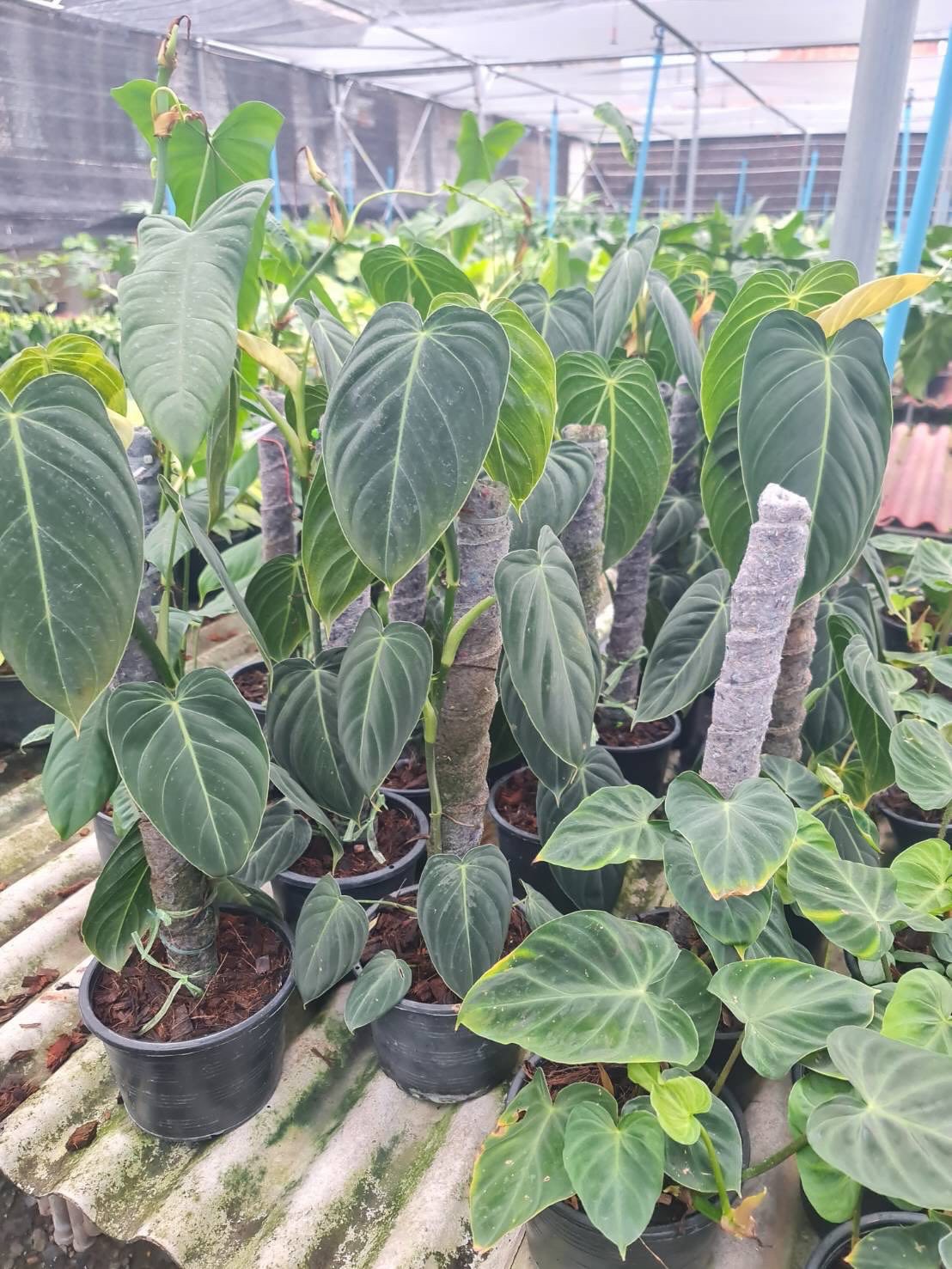
If later leaves become smaller, check functional roots, usable light, internode length and contact with the support before adding fertilizer. The general Philodendron guide owns broader room-level care.
Water the rooted volume, not a calendar
Droop alone cannot distinguish thirst from root failure. Check pot weight and moisture below the surface. Water across the rooted volume when it has partly dried, let excess leave and avoid leaving the crown buried in dense wet media. Do not let a stressed plant sit dry for weeks as a “cure.”
Humidity can slow edge drying, but a rigid 60% minimum does not diagnose brown margins. Dry–wet swings, soluble salts, heat at glass, damaged roots and low airflow can overlap. Use the watering guide for root-zone decisions.
Diagnose the pattern before treating
| Signal | Check first | Measured response |
|---|---|---|
| Yellowing plus a heavy wet pot | Root firmness, drainage, pot size and crown depth. | Correct the verified root-zone bottleneck. |
| Crisp edge or tip | Moisture swings, salts, hot light and roots together. | Stabilise the matched factor; avoid automatic humidity fixes. |
| Bleached tan patch | Whether it faces glass or followed a sudden light move. | Reduce the matched exposure and acclimate gradually. |
| Silvery scarring or distorted new growth | Tight growth and undersides for thrips and black specks. | Isolate and identify before choosing treatment. |
| Fine stippling or webbing | Leaf undersides with magnification for mites. | Use an indoor-labelled, pest-specific control if confirmed. |
| Dark limp tissue after transport | Cold timing, draft and contact with chilled glass. | Warm gradually and wait for the damage boundary. |
Do not wipe every problem with alcohol or spray insecticidal soap without identifying the target and checking the product label. Isolate suspect plants, inspect connected growth and protect the still-functional leaf area.
Propagate a viable node and preserve identity
A detached velvet leaf cannot rebuild the vine. A cutting needs stem tissue with a node and viable bud or active growth point. Photograph connected leaves and the original label before cutting, especially when green, variegated and tissue-culture forms share similar juvenile stages.
- Choose a healthy node with useful leaf area.
- Use clean tools and retain an aerial root where practical.
- Keep the base warm, airy and moist rather than saturated.
- Transfer only after functional roots can support new growth.
- Carry the exact green, variegated or tissue-culture label forward.
Use the Philodendron propagation guide for node, medium and transfer decisions.
Buyer checklist and live routes
- Confirm established plant, cutting, plug or tissue-culture format.
- Ask whether gallery images are exact or representative.
- Compare connected upper surfaces, undersides, stem and active point.
- Keep standard green and variegated Melanochrysum listings separate.
- Verify current option, stock and shipment terms on the live page.
Safety and sources
Philodendron tissue contains insoluble calcium-oxalate crystals that can irritate the mouth and digestive tract when chewed. Keep plants and cut material away from children and pets, and seek appropriate medical or veterinary guidance after significant exposure.