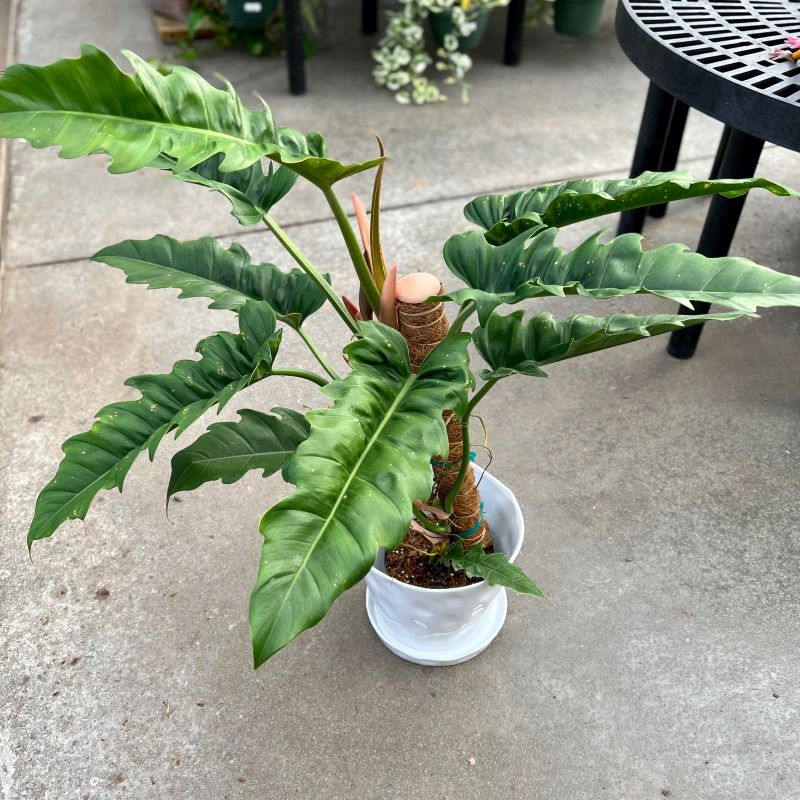
Greenboog cultivar field guide
Use repeated green, toothed leaves and the plant’s compact stem sequence—not one trade name—to identify Jungle Boogie and build a care routine that fits your room.
For the wider collector landscape, use Greenboog’s rare Philodendron varieties guide. This page owns the Jungle Boogie name and care boundary.
Jungle Boogie at a glance
| Question | Evidence-led answer |
|---|---|
| Name type | Horticultural cultivar/selection name, not a wild-species binomial |
| Market aliases | Henderson’s Pride, Tigertooth and Narrow Tiger are used by Costa Farms for this selection |
| Useful identity clue | A sequence of long, solid-green leaves developing deep, regular teeth along both margins |
| Growth presentation | Short central stem and upright petioles; support may steady a larger specimen but it is not a trailing basket vine |
| Root-zone goal | Moisture retention plus a reliable return of air after watering |
| Safety | Philodendron tissue contains irritating calcium-oxalate crystals |
Name it without inventing a species story
Write the plant as Philodendron ‘Jungle Boogie’: the quotation marks signal a cultivated name. A cultivar does not have its own wild native range, so “native to the South American rainforest” is not an identity certificate for this clone. Current seller pages also repeat conflicting parent formulas. Without a confirmed primary breeding record, a responsible label stops at the cultivated name and documented market aliases.
Costa Farms describes Jungle Boogie as a selection with long, toothed, dark-green leaves and lists Henderson’s Pride, Tigertooth and Narrow Tiger among the names used in trade. That is useful name continuity, but sellers apply shorthand inconsistently. Preserve the source label and compare the whole plant.
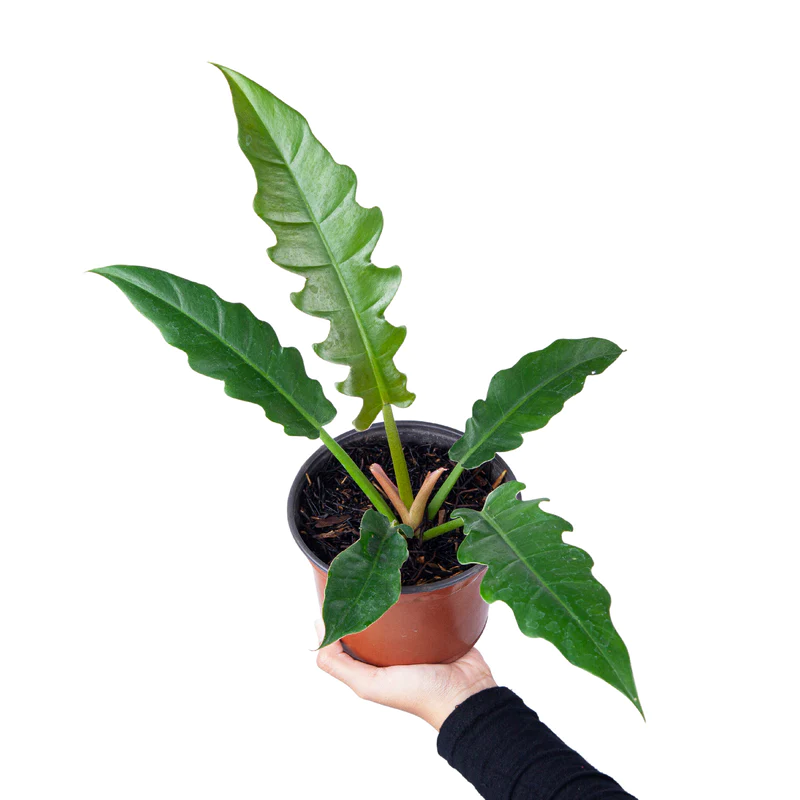
Strong and weak identity evidence
| Check | Stronger evidence | Weak evidence |
|---|---|---|
| Leaf sequence | Multiple hardened, elongated green leaves show increasingly strong teeth | One damaged or newly opened leaf |
| Plant center | Short visible stem, upright petioles and repeated central growth | A hanging-basket description that hides the stem |
| Color | Solid green foliage assessed in neutral light | A yellow cast caused by lighting or an old leaf |
| Source | Traceable mother plant and current whole-plant images | Price, “rare” copy or a single alias |
Understand its upright growth before adding support
The plant is often described online as climbing, self-heading or even trailing. The Greenboog specimens show an upright petiole arrangement around a short, visible central stem. A stake or pole can steady a heavy mature plant, but do not force petioles flat against it and do not treat the plant like a flexible hanging vine.
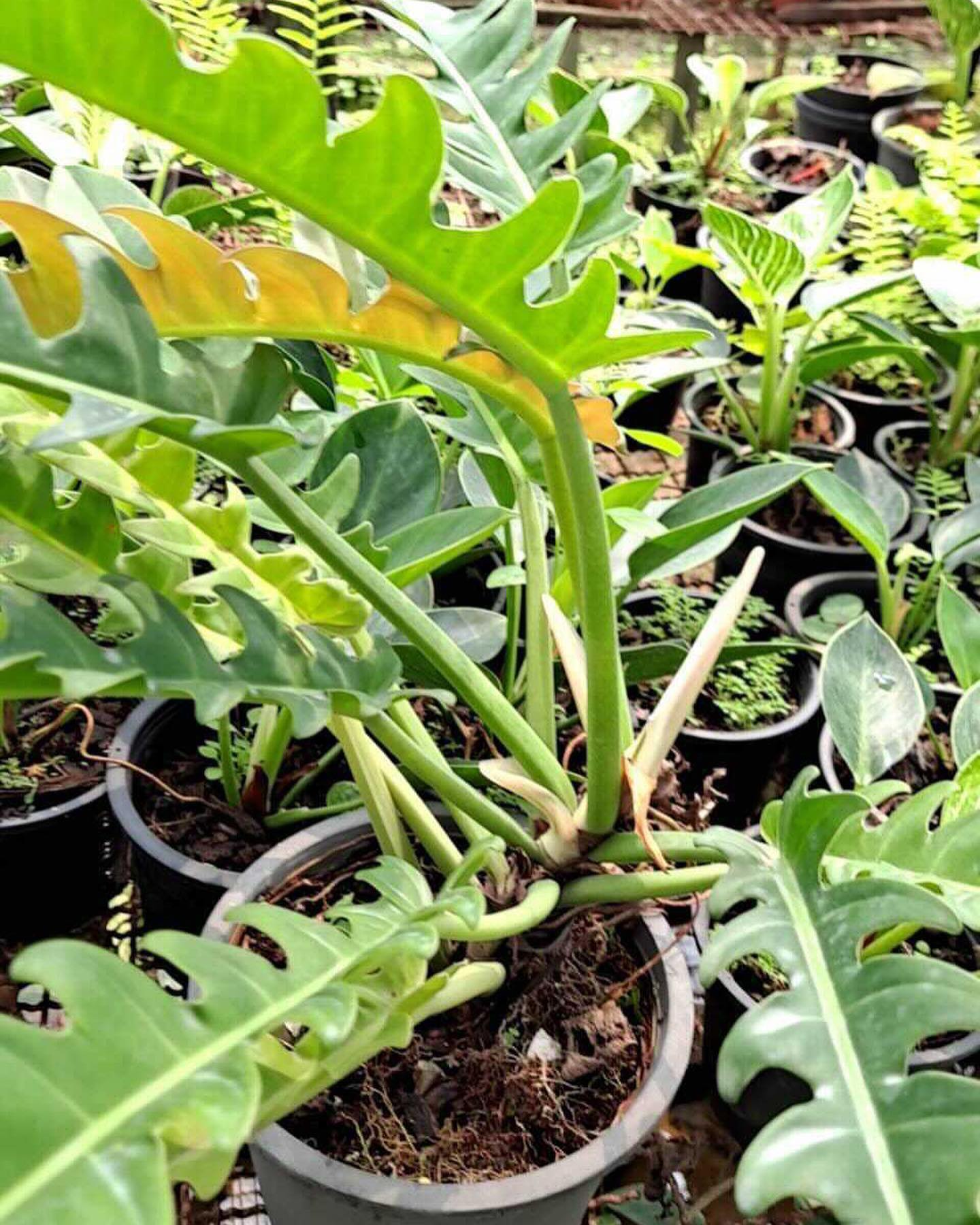
Rotate the container gradually if growth leans toward one light source. Keep the central growth point unobstructed and use soft ties around the stem only. A plant that sprawls because its pot is unstable may need a heavier cachepot or modest support before it needs pruning.
Give the leaf teeth usable light
NC State Extension recommends bright indirect light for Philodendron generally. In a real room, glass, season, latitude and distance from the window determine exposure. Jungle Boogie’s green leaves may tolerate a range, but tolerance is not the same as maintaining compact, well-shaped new growth.
- Possible low light: slower growth, stretched petioles and progressively smaller or less strongly shaped leaves after roots are checked.
- Possible excess light: bleached or crisp patches concentrated on the exposed side.
- Safer correction: adjust distance, filtering or lamp duration gradually and assess subsequent leaves.
The broader Philodendron care guide owns room-level light, temperature and acclimation methods.
Build an airy, evenly hydrated root zone
Use a container with open drainage and a medium that holds useful moisture without staying saturated. Bark, coarse mineral material and coco- or peat-based components can all work; proportions should match pot size, light, temperature and how quickly the rooted volume uses water. An oversized container of fine mix remains risky even when marketed as an “aroid mix.”
Water from evidence
- Learn the pot’s weight after thorough watering and full drainage.
- Check moisture below the decorative surface, within the rooted volume.
- Water when much of that volume is approaching dry, then let excess escape.
- If the pot stays heavy much longer than usual, inspect compaction, excess pot volume, lower light and root health before watering again.
Use Greenboog’s Philodendron watering guide for deeper wet-versus-dry diagnostics. Yellow leaves do not automatically mean “too much water,” and drooping does not automatically mean “thirsty.” Root condition and pot moisture decide.
Feed, repot and groom without a calendar
Feed modestly while the plant is actively producing new leaves, following the fertilizer label. Pause and investigate if growth has stopped because of low light, root damage or cold. Fertilizer is not a repair for those constraints, and accumulated salts can add marginal burn.
Repot when roots densely occupy the container, drainage changes, or the medium has collapsed—not automatically every spring. Move up conservatively. Remove only fully spent leaves with a clean tool; cosmetic cuts into the toothed margins leave permanent scars and can confuse later diagnosis.
Troubleshoot the pattern, not the symptom name
| Signal | Check first | Response |
|---|---|---|
| Lower yellow leaf | Age pattern, pot weight, roots, recent repot and feeding | Correct the confirmed cause; one old leaf may be normal turnover |
| Brown edge | Uneven hydration, salts, heat/light load and damaged roots | Stabilize one variable at a time |
| Soft dark center | Water trapped around new growth, cold, odor and spreading tissue damage | Keep the crown dry, isolate if disease is suspected and inspect promptly |
| Smaller, smoother leaves | Light, roots, nutrition and whether growth is juvenile | Improve the limiting factor and judge later hardened leaves |
| Fine stippling | Leaf undersides for mites or thrips | Isolate, identify the pest and use a label-compliant treatment |
Propagate only from viable stem tissue
A toothed leaf and petiole alone cannot rebuild the plant. A cutting needs viable stem node or growth-point tissue. On a compact plant, locate the node carefully before cutting; do not guess inside a tight crown.
- Choose healthy, pest-free material and expose the short stem enough to see the cut.
- Use a clean, sharp blade and preserve viable node tissue.
- Root in clean water or airy medium kept moist rather than saturated under bright indirect light.
- Pot on after roots branch and active new growth confirms function.
Penn State Extension defines the node as the stem area where a leaf or bud attaches and recommends clean tools plus moist, aerated propagation conditions. Greenboog’s Philodendron propagation guide compares methods and aftercare.
Buyer checklist
- Request a whole-plant image and a sequence of hardened leaves.
- Confirm solid-green foliage with repeated toothed margins in neutral light.
- Inspect the central stem, newest growth and root condition.
- Ask which alias and mother plant the seller uses; do not infer a parent formula.
- Separate identity evidence from rarity and price language.
The Philodendron collection owns current availability. Product pages own the live offer; this guide owns name literacy, identification and care.
Safety
ASPCA explains that Philodendron tissue contains insoluble calcium-oxalate raphides that can cause oral pain, drooling, retching and vomiting when chewed. Keep the plant, cuttings and sap away from children and pets. Wash tools and hands after pruning, and contact a veterinarian or poison service after suspected ingestion—especially if swallowing or breathing is affected.
Jungle Boogie FAQ
Is Jungle Boogie the same as Tigertooth Philodendron?
Costa Farms uses Jungle Boogie, Tigertooth, Narrow Tiger and Henderson’s Pride for the same marketed selection. Because seller labels vary, confirm the repeated leaf and stem evidence as well.
Is Jungle Boogie a species from South America?
No separate wild-species record is established by the cultivar name. It is a horticultural selection within Philodendron; do not assign the cultivar a native range.
Is Ring of Fire a variegated Jungle Boogie?
Do not use that shortcut as an identity claim. Ring of Fire has a separate variegated owner and should be assessed from its own repeated traits and provenance.
Does Jungle Boogie need a moss pole?
A larger plant may benefit from a stake or support for stability, but its short central stem and upright petioles should not be forced into a trailing-vine form.
Why are juvenile leaves less toothed?
Young and mature Philodendron foliage can differ. Judge several hardened leaves and verify light, roots and active growth before deciding the plant is mislabeled.
Evidence notes
Cultivar/name evidence: Costa Farms Jungle Boogie and Henderson’s Pride/Narrow Tiger records. General cultivation: NC State Extension Philodendron profile. Propagation: Penn State Extension, “Propagating Houseplants.” Safety: ASPCA Philodendron guidance. Parentage, native range and a formal registration record were not established for this cultivar in the reviewed primary layer, so this guide does not invent them.