Monstera Albo light audit
The useful question is not “which window?” but how much usable light reaches the green tissue, for how long, with how much heat—and how the newest growth responds after acclimation.
Measure four parts of the light environment
| Factor | Observe | Why it matters |
|---|---|---|
| Intensity | Meter reading or shadow strength at the actual leaf, morning/midday/afternoon. | Light falls quickly with distance and obstructions. |
| Duration | Hours of useful natural or supplemental light, not sunrise-to-sunset alone. | Moderate light for longer and brief strong sun are different exposures. |
| Direction | Which leaves face the source; whether the stem leans or petioles twist. | Uneven exposure changes architecture before it changes the seller label. |
| Heat/transition | Warm glass, hot leaf surface, recent move and pale/crispy exposed patches. | A sudden increase can injure leaves grown under softer light. |
Run a seven-day location audit
- Photograph the plant and mark the newest hardened leaf.
- Record light at leaf level three times on a clear day and once on a cloudy day.
- Note curtains, trees, overhangs, reflections and direct-sun duration.
- Check leaf temperature and exposed-side damage during the strongest period.
- Repeat when seasons, window coverings or plant distance change.
A phone sensor can compare two locations, but it is not a calibrated botanical prescription. A dedicated meter improves repeatability. The important result is a consistent record paired with the plant’s response.
Move toward brighter light gradually
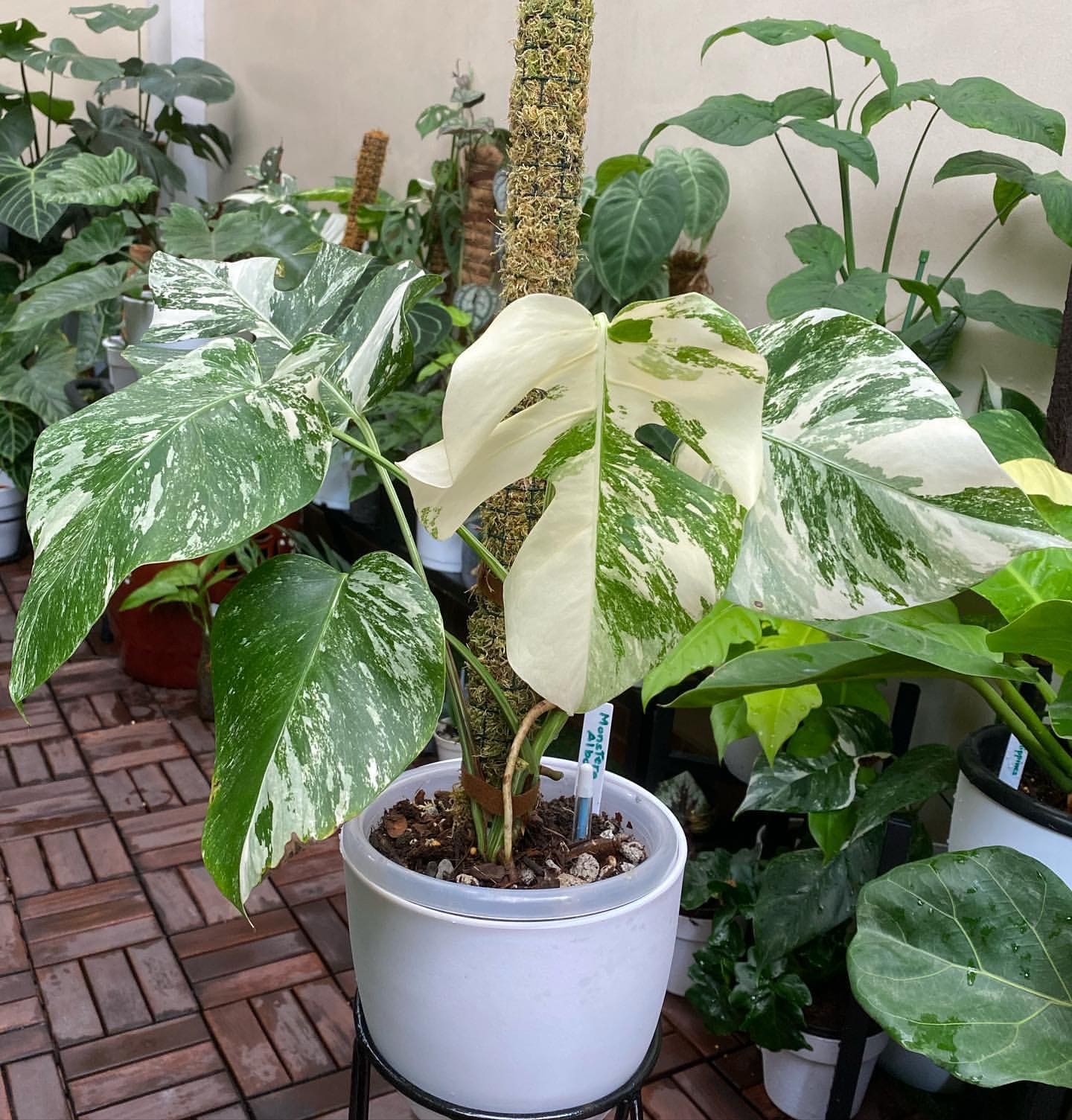
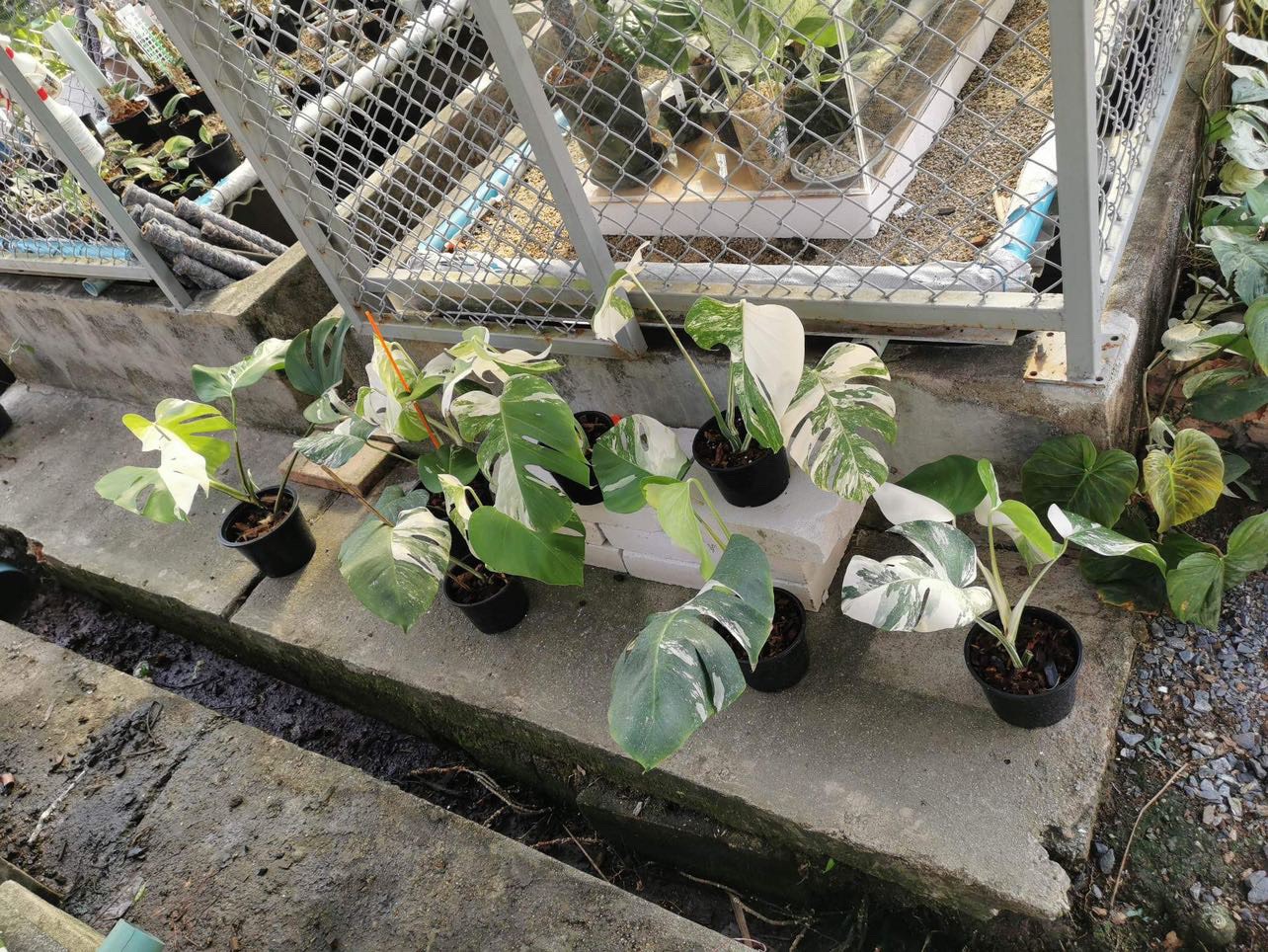
An Albo that grew in shipping shade, a greenhouse or another room carries leaves adapted to that history. Increase stronger window or outdoor exposure over days to weeks. Begin behind a filter or farther from the source, then adjust one step while watching the exposed leaf surfaces.
Old scorch will not turn green. Judge the move by whether damage stops and later growth hardens normally. Do not push the plant closer simply because the newest leaf has more green; pattern is not a light meter.
Separate low light, excess light and other stress
| Pattern | Light hypothesis | Also check |
|---|---|---|
| Longer internodes, smaller new leaves, persistent lean | Usable light may be limiting. | Roots, support, recent repot and pests. |
| Pale/crispy patches on source-facing tissue | Abrupt sun or heat exposure is plausible. | Dry root zone, salts and physical damage. |
| Brown white margins across several positions | Light may contribute but is not specific. | Watering, roots, humidity swing and fertilizer history. |
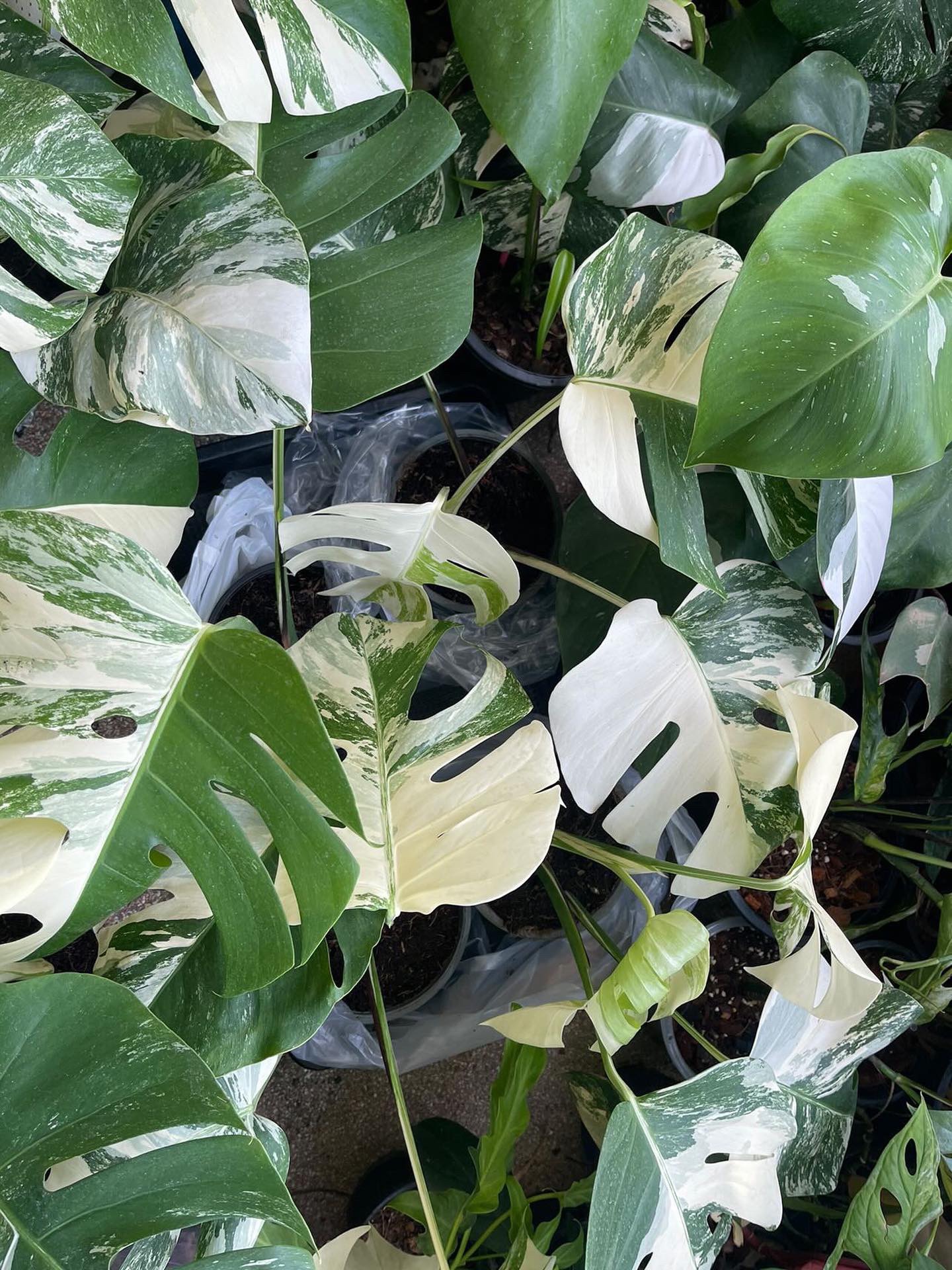
| One greener or whiter leaf | Not diagnostic by itself. | Stem pattern and several hardened leaves. |
Use the Monstera brown-leaf diagnostic when damage is the main query. The Monstera Albo pillar owns the complete root-zone, support and variegation workflow.
Using a grow light without inventing a recipe
Choose a fixture with a usable manufacturer intensity map at a stated distance. Position it so the canopy receives reasonably even coverage, manage heat and use a timer that preserves a dark period. Start below the final exposure and increase duration or intensity—not both at once—while recording the newest leaf and watering interval.
“Full spectrum” is a product description, not proof that a lamp is strong enough at the leaf. As light increases, water use may change; do not keep the old calendar automatically.
Keep the cluster roles clear
For node and cutting decisions, use the Albo propagation guide. Compare formats and pattern evidence in the Albo-versus-Thai guide or White Tiger-versus-Albo guide. Use the variegated Monstera price owner for offer comparison.
Sources and evidence boundaries
- NC State Extension: Monstera deliciosa — variegated-light and direct-sun context.
- Penn State Extension: Monstera — light, support and development.
- Illinois Extension: houseplant lighting — intensity, duration, measurement and season.
- UMN Extension: gradual light change.
- UGA Extension: growing indoor plants — location variables and low-light clues.
Evidence limit: no window direction, meter number, lamp distance or duration guarantees Albo variegation or fenestration in every room. Use measurements as a repeatable baseline and interpret them with roots, support, season and new growth.