Greenboog collector comparison
Both are cultivated forms of Monstera deliciosa, but they reward different buyers. Compare the actual plant, not just the label: pattern, stem, roots, growth format and seller evidence matter more than a dramatic show leaf.
The decision in four points
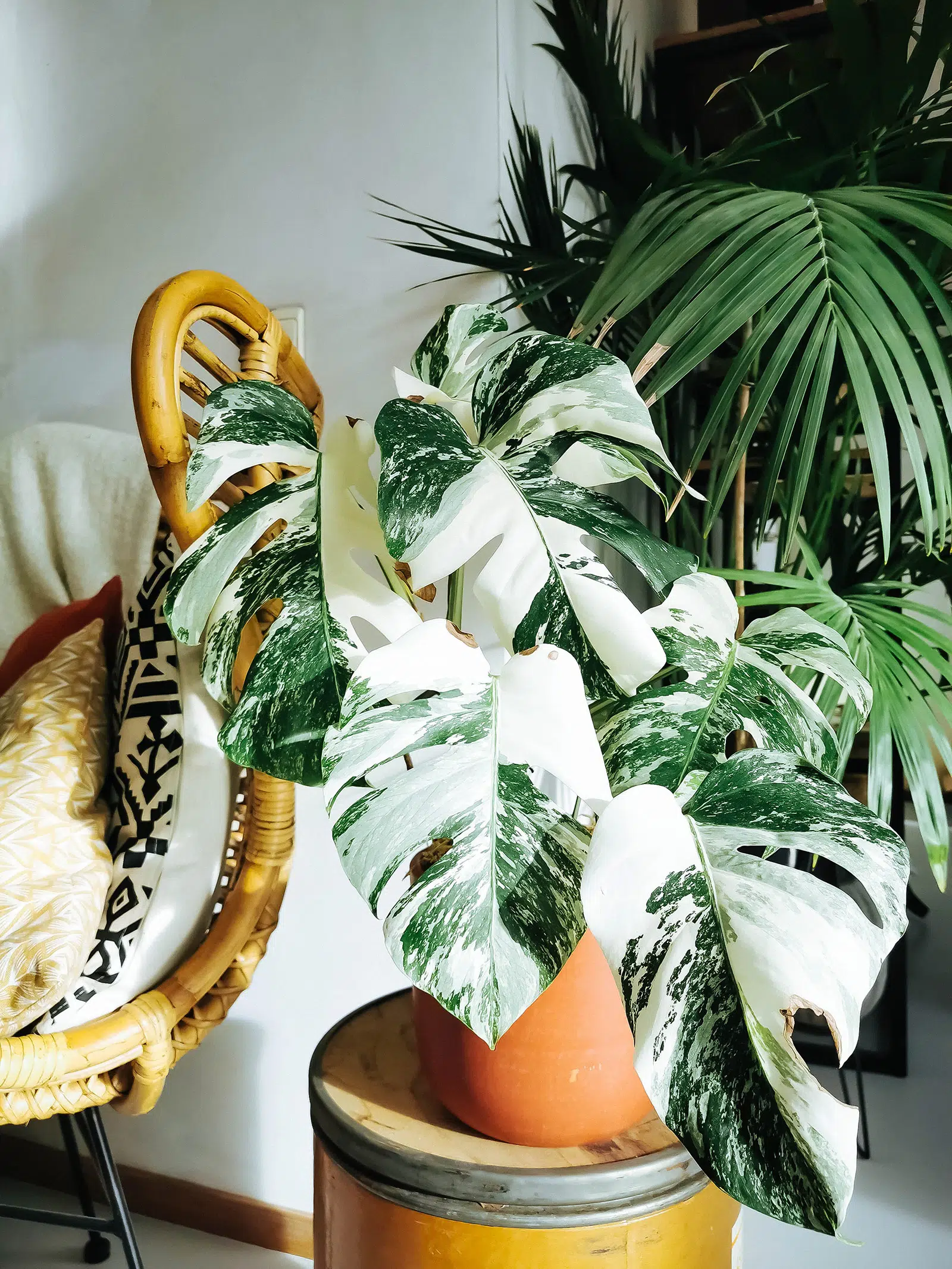
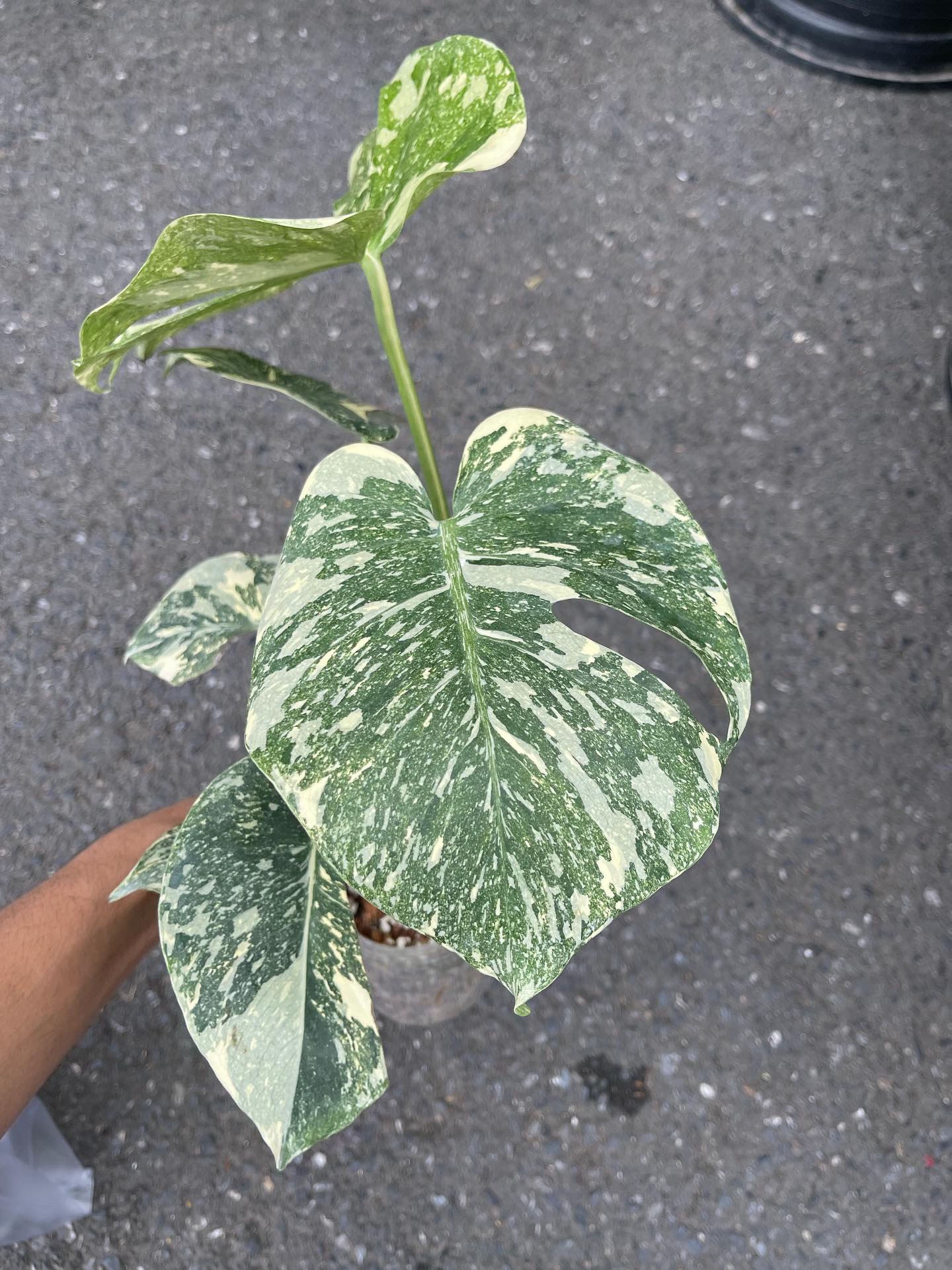
- Pattern: Albo commonly shows high-contrast marbling or sectors; Thai Constellation commonly shows cream flecking with larger splashes.
- Habit: Thai Constellation is often fuller-looking because its internodes are shorter; both remain climbing Monsteras that benefit from support.
- Risk: An Albo buyer should inspect variegation through the stem and active bud. A Thai label is more repeatable, but “never reverts” is too absolute.
- Value: Compare the exact format, roots, size, condition and landed cost in the same week. Old universal price ranges are not buying evidence.
Monstera Albo vs Thai Constellation at a glance
Use these as typical signals, then verify the actual plant and seller description.
| Decision factor | Monstera Albo | Thai Constellation |
|---|---|---|
| Common pattern | White-to-cream marbling, streaks or large sectors with high contrast | Cream flecks and streaks across green, sometimes with larger sectors |
| Pattern predictability | Read the stem, active bud and several leaves; greener or whiter runs can occur | Generally more repeatable across leaves, without guaranteeing density or sector size |
| Growth silhouette | Often sold as a cutting-grown vine with more visible spacing between leaves | Shorter internodes commonly create a fuller, more compact-looking plant |
| Common buying format | Actual plant, rooted cutting, top cut or node; the viable bud is critical | Established plant or tissue-culture plantlet; acclimation needs change by format |
| Best fit | High contrast Collector willing to inspect exact growth-point evidence | Repeatable look Buyer who prefers cream marbling and closer leaf spacing |
These are horticultural comparison signals, not a guarantee that every plant sold under either label will express the same pattern.
First, they are not two separate species
Monstera deliciosa is the accepted species. University of Connecticut Extension lists both Albo Variegata and Thai Constellation among cultivated forms of that species. “Albo” is widely used as a horticultural label for white-variegated material; Thai Constellation is a named cultivated form. A seller label still does not replace photographs of the exact plant or propagation batch.
If a listing uses Aurea, Mint, half-moon, marble or another nearby term, route through the variegated Monstera names and patterns guide first. This page compares only the Albo and Thai Constellation buying decision.
Words such as “half moon,” “full moon,” “marble,” “White Snow” and “Creme Brulee” can describe appearance or a seller line. They do not, by themselves, prove registered nomenclature, lineage or the next leaf. If the choice depends on a premium label, request provenance and recent multi-leaf images.
Pattern and color: compare more than one leaf
Albo often gives the sharpest visual contrast: white or cream flecks can merge into marbling or broad sectors against dark green. The pattern may change along the vine because the growing point draws from different tissues in the stem. That is why the stem around the node and active bud matters on a cutting.
Thai Constellation typically carries fine cream flecking through the green with irregular pale splashes. The background can read cream, warm white or pale yellow under different light and cameras; calling every Thai plant simply “yellow variegated” is not precise enough for identification.
Growth habit and care margin
Penn State Extension notes that Thai Constellation has shorter internodes, which can make it look fuller and more compact. That does not make it a tabletop plant: both forms are climbing M. deliciosa and can become large when roots, light and support permit.
Both start with the same care framework: bright filtered light, a draining and aerated root zone, thorough watering followed by condition-based dry-down, warm stable conditions and vertical support. The exact plant changes the margin for error. A specimen with large chlorophyll-free sectors has less green tissue doing photosynthetic work, while pale tissue can brown after abrupt sun, heat, root stress or large watering swings.
Do not assume Thai Constellation automatically grows faster. RHS describes it as slightly slower than the green species, and growth within either label varies with roots, leaf area, maturity, acclimation and environment. For complete Albo setup and diagnosis, use the Monstera Albo identification and care guide.
Which one is easier to buy well?
The better plant is the one whose evidence matches its price and format. Thai Constellation is now propagated and sold at far greater scale than the old article suggested; “only a handful of nurseries” and a universal four-figure price are obsolete. Albo is also widely circulated, but cutting-based offers create a specific risk: a dramatic attached leaf cannot replace a viable node, active bud, sound stem and working roots.
Ask for evidence that changes the decision; skip cosmetic questions that do not.
| Listing evidence | What acceptable evidence looks like | Why it matters |
|---|---|---|
| Photo scope | Clearly states actual plant, mother plant or representative batch | Prevents treating a show plant as the item that will arrive |
| Recent leaf sequence | Two or more hardened leaves plus the newest growth | Shows current pattern and vigor better than one leaf |
| Albo node and bud | Clear stem, node, axillary bud and surrounding variegation | A leaf-only piece cannot continue as a vine |
| Roots and medium | Firm roots, stated rooting medium and recent root image when practical | A rooted cutting, established pot and plantlet need different arrival care |
| Landed cost | Plant, packing, documents, shipping, fees and applicable taxes compared together | Sticker price alone cannot compare local and imported offers |
Choose Albo, Thai—or wait
- Choose Albo when high white-green contrast is the goal and the exact node, bud, roots and recent leaves are visible.
- Choose Thai Constellation when you prefer cream-speckled marbling, a more repeatable patterned look and closer leaf spacing.
- Choose by format when acclimation risk matters most: an established plant, rooted cutting and tissue-culture plantlet are not equivalent purchases.
- Wait when the listing hides whether photos are representative, the node or roots are unclear, or a seller promises an exact future pattern.
For Thai collector labels and a same-week price method, use the Thai Constellation varieties and price guide. For a seller-neutral Albo price breakdown, see why Monstera Albo prices vary. If you are close to paying for a cutting, run the Monstera Albo buyer checklist first.
Frequently asked questions
Is Monstera Albo rarer than Thai Constellation?
Do not use a universal rarity ranking. Availability changes by country, propagation format and week. Thai Constellation is now produced at scale, while some Albo clones and exact mature specimens remain expensive; neither label alone proves scarcity.
Can Thai Constellation revert?
Thai Constellation is generally treated as more reliable than the older white-variegated form, but “never” is an unsafe promise. Ask for several recent leaves and judge the actual plant or batch rather than relying on a guarantee.
Does Monstera Albo grow more slowly?
Highly white plants often have less chlorophyll-bearing tissue, which can reduce growth capacity, but there is no fixed Albo-versus-Thai rate. Root health, leaf area, light, support, maturity and acclimation can outweigh the label.
Which one is more expensive?
There is no durable winner. Compare current offers of the same format and maturity, then include roots, actual-plant status, packing, shipping, documents and fees. A small plantlet and a rooted multi-leaf specimen are not comparable simply because they share a name.
Bottom line
Thai Constellation is the calmer choice for buyers who value cream marbling, shorter internodes and a generally more repeatable patterned look. Albo is the higher-contrast choice for collectors willing to evaluate the exact growth point and accept more pattern uncertainty. Whichever you choose, buy the documented plant and format—not a promise attached to one dramatic leaf.
Sources and evidence boundaries
- Kew Plants of the World Online: accepted species, native range and climbing habit
- University of Connecticut Extension: cultivated forms of Monstera deliciosa
- Penn State Extension: Thai Constellation internode and growth-habit comparison
- Royal Horticultural Society: Thai Constellation description, habit and cultivation
- University of Minnesota Extension: variegation, seed limits, nodes and propagation
- University of Missouri: 2025 availability context for Thai Constellation