
Greenboog collector-name and buying-evidence guide
Before paying a premium, find out what the seller is promising. A documented line, an actual-plant photograph and several hardened leaves are useful evidence. One dramatic leaf plus a label is not proof that the next leaf will look the same.
Use collector names as comparison labels, then verify the exact plant and evidence behind the price.
| Name seen in listings | What the label usually signals | What to verify |
|---|---|---|
| Thai Constellation | Cream-to-yellow speckles and marbling on green | Several leaves, actual plant, roots and growing point |
| Legacy | A selected line marketed for a bolder pattern | Lineage plus a sequence of hardened leaves |
| Creme Brulee | Warm cream or yellow-toned, often higher-color variegation | Daylight color, leaf age and documented source |
| Green Snow | Fine, dense mottling or speckling | Close photographs and persistence across new leaves |
| Medusa | A collector line associated with unusual pattern or leaf form | Whole-plant structure, not one damaged or unfurling leaf |
| White Snow | High white/cream contrast | Enough green tissue, healthy roots and recent growth |
| Platinum/Mint | Pale silver, mint or platinum-toned foliage | Natural-light images, lineage and mature color |
Media evidence: the seven photographs below are Greenboog’s own real catalog images. They document particular plants or stock in our nursery; they do not establish a universal definition for every plant sold under the same label.
Species, cultivated names and seller labels are different
Kew’s Plants of the World Online accepts Monstera deliciosa as the species. A cultivated plant can then carry a cultivar name, Group name or a marketing designation. The Cultivated Plant Code provisions reproduced by IP Australia make an important distinction: a trade designation is a marketing device, not a name governed as a cultivar name.
That does not make a collector label useless. A label can identify a real nursery selection or a traceable line. It means the buyer should ask which evidence comes with that name. If provenance is missing, evaluate the plant in front of you and describe its observable phenotype rather than assuming the label proves a distinct mutation.
Variegation also changes how a plant grows. Michigan State University’s horticulture overview of variegation explains that white tissue has less or no chlorophyll and that heavily variegated plants can have less photosynthetic capacity. More pale tissue may be visually valuable, but it is not automatically the healthier purchase.
Thai Constellation: the baseline for comparison
A typical Thai Constellation combines green tissue with cream-to-yellow speckles, flecks and larger marbled sectors. Leaf shape and fenestration depend heavily on maturity and climbing conditions, so a juvenile plant should not be rejected merely because its leaves are still entire.
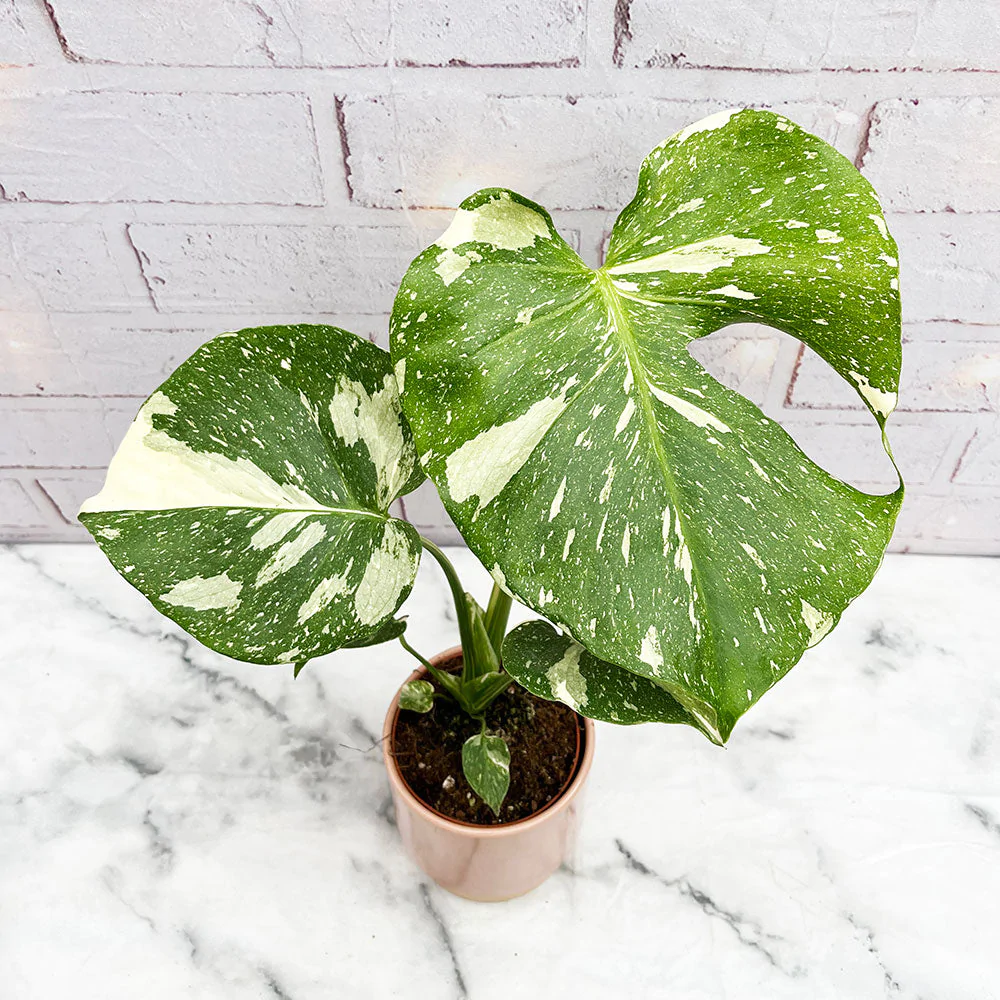
Use this baseline when comparing premium names: are you paying for documented lineage, a repeatable phenotype, plant size and condition, or only a more exciting listing title? See the current Thai Constellation listing for the exact terms and images attached to Greenboog’s standard stock.
Monstera Thai Constellation Legacy
Legacy is used in the collector market for selected Thai Constellation material with a conspicuous pattern. Sellers may emphasize broader pale areas, strong contrast or a particular growth line. Those features can overlap with unusually variegated standard Thai Constellations, especially in a single photograph.
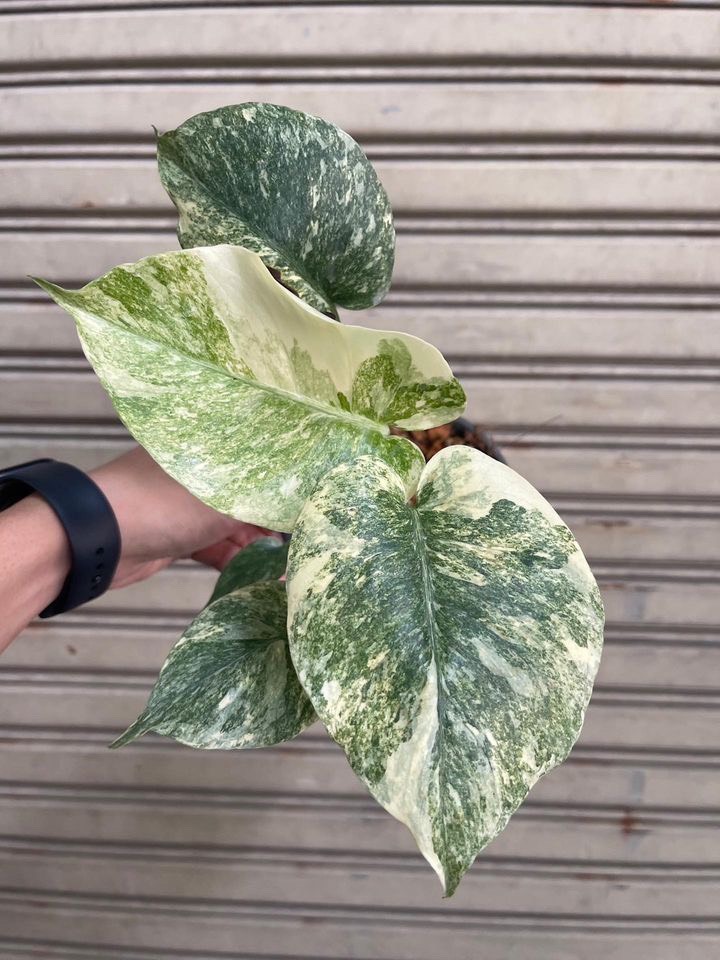
If the Legacy name changes the price, request the source or mother-line history and images of at least the last three hardened leaves. Compare them with the Legacy plant listing; do not use a single show leaf as the definition.
Monstera Thai Constellation Creme Brulee
Creme Brulee is generally used for a warm cream-to-yellow, often high-color Thai Constellation selection. Color is easy to misread online: a newly unfurled leaf, warm indoor lighting, white balance and editing can all make cream tissue appear more golden.
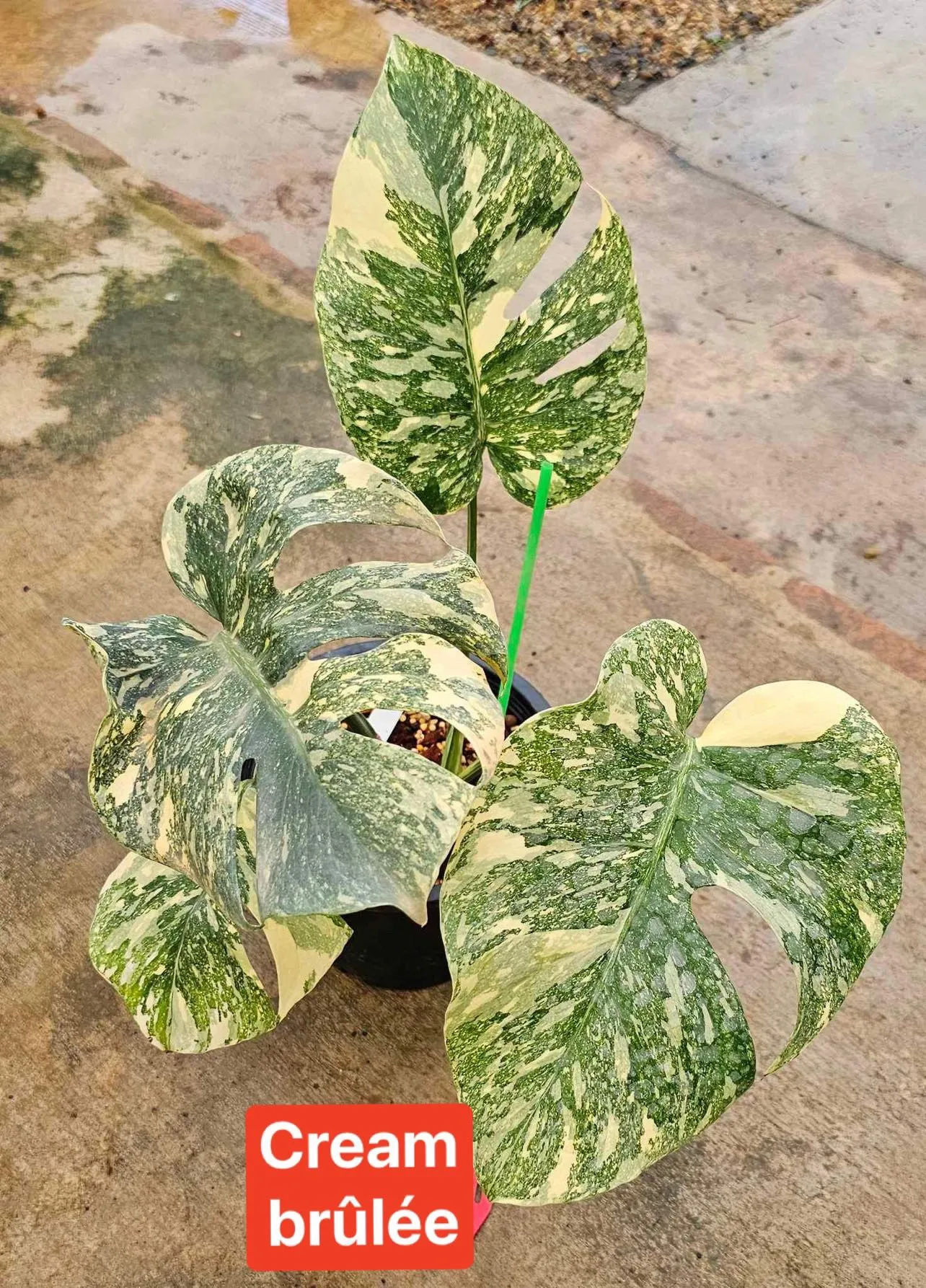
Ask for a current daylight photograph beside a neutral object, plus an older hardened leaf. If the seller claims a specific Creme Brulee line, ask for provenance rather than accepting “high variegation” as proof. Greenboog’s current example is shown on the Creme Brulee actual-plant listing.
Monstera Thai Constellation Green Snow
Green Snow is used for material with fine, dense mottling that can read as pale green, cream and darker green across the blade. The useful question is not whether one photograph looks “snowy,” but whether that pattern persists as the plant grows.
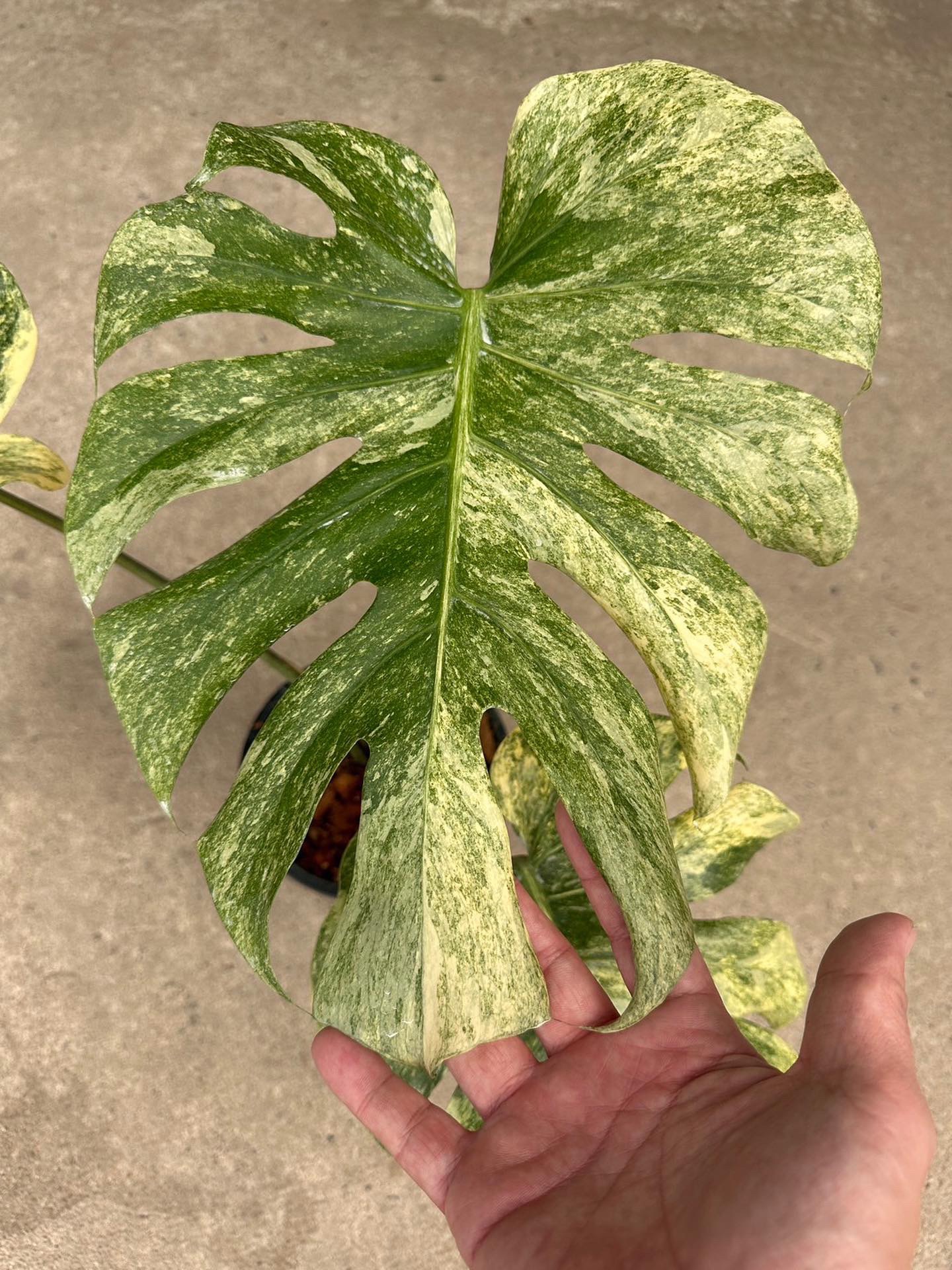
Request close images of hardened leaves and the newest growth, then compare plants of similar age. A juvenile leaf and a mature fenestrated leaf are poor price comparables. The direct current example is the Green Snow actual-photo listing.
Monstera Thai Constellation Medusa
Medusa is associated in collector listings with a distinctive pattern, structure or rippling around the leaf and veins. Shape claims need whole-plant evidence. Shipping damage, low humidity during unfurling, pests and mechanical pressure can also distort one leaf.
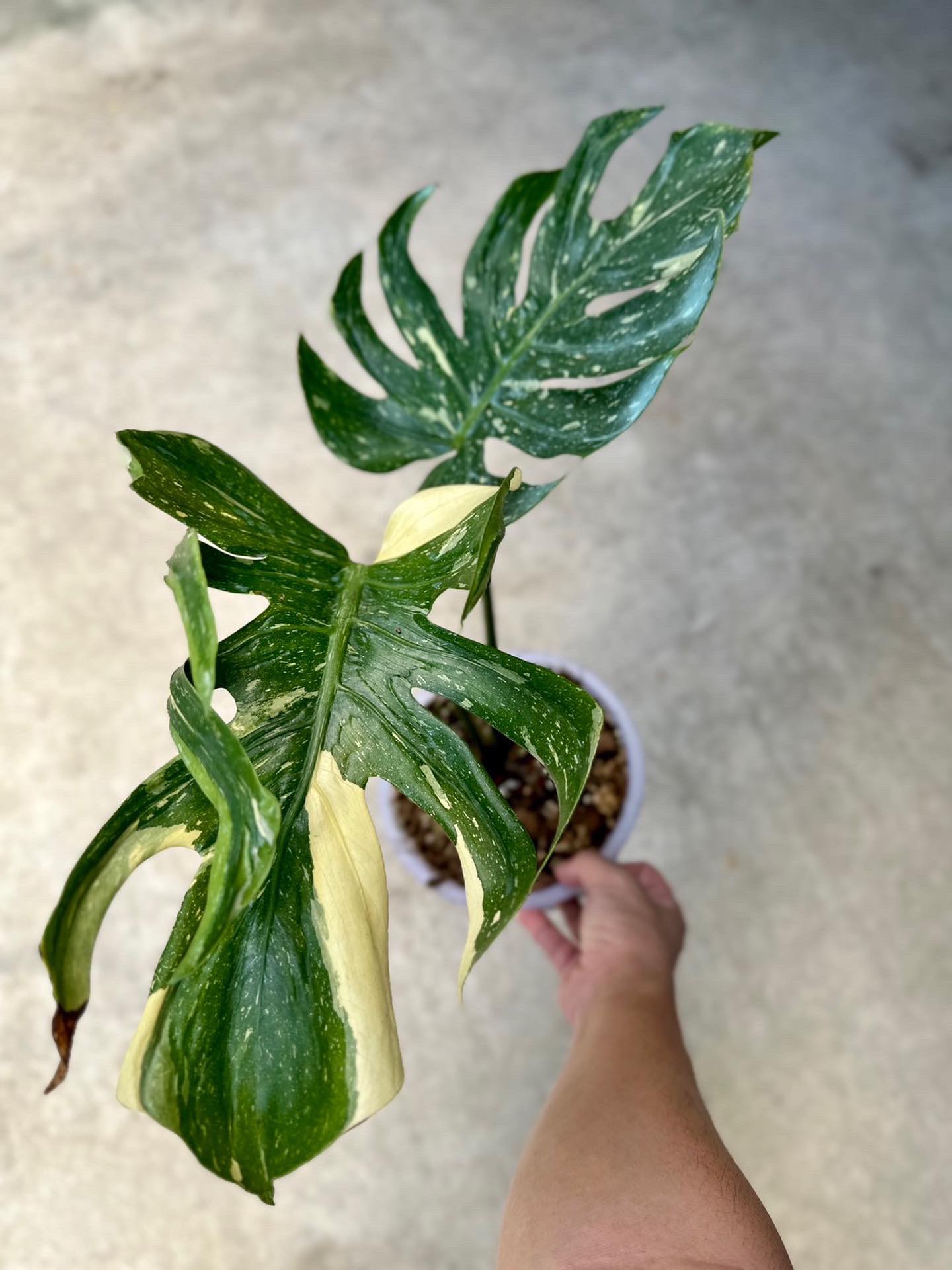
Look for the feature across successive leaves and inspect leaf backs, petioles and the active growth point. The Monstera Medusa actual-plant page shows the exact specimen attached to Greenboog’s listing.
Monstera Thai Constellation White Snow
White Snow is marketed for strong white-to-cream contrast. A high-white plant can be beautiful, but pale tissue contributes less photosynthesis and is less forgiving when roots, light or shipping conditions are poor. “Whiter” should not be the only buying criterion.
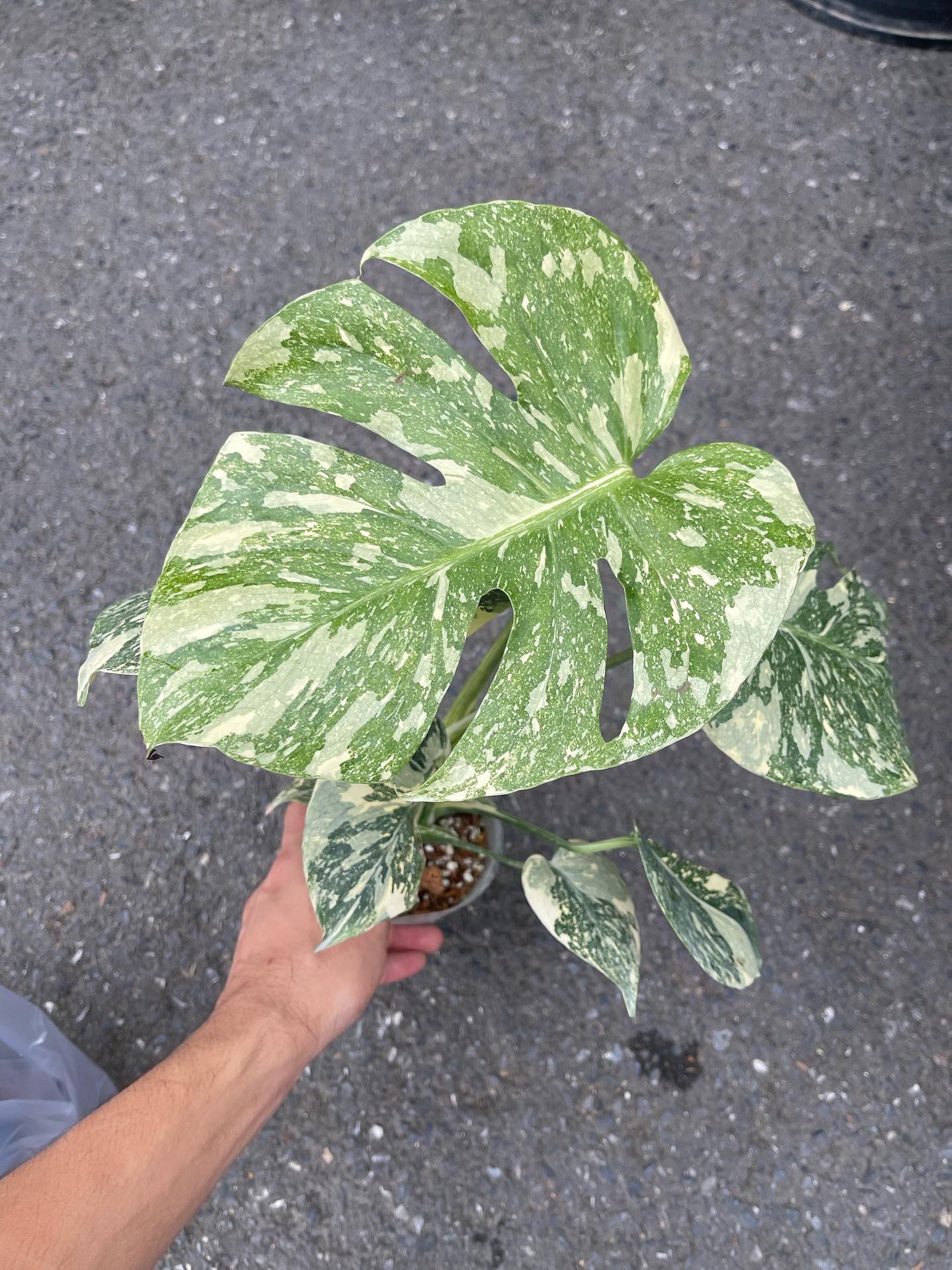
Prefer a plant with healthy green tissue, firm roots and active growth over a nearly white specimen with a weak root system. Compare the available plant and terms on the White Snow listing.
Monstera Thai Platinum or Mint
Platinum, Mint and Platinum Mint are color terms that can overlap between sellers. They usually signal pale silver-green, mint or platinum-toned foliage, but camera exposure and the color of a new leaf can exaggerate the effect.

Ask which line the seller means, whether the image is the actual plant and how the last hardened leaves look in daylight. The Thai Platinum Mint listing provides Greenboog’s current usage of that name.
How to compare Thai Constellation prices
A fixed price table becomes unreliable quickly. Supply can change when growers scale a line: Costa Farms, for example, publicly documented its attempt to produce Thai Constellation in large numbers through tissue culture. Price also changes by country, season, plant stage, shipping method and seller support.
Build a same-week comparison instead
- Use the same market and currency. Do not compare a local pickup with an international import as though they carry the same cost and risk.
- Match the growth stage. Separate unrooted cuttings, rooted cuttings, acclimated tissue-culture plants, juvenile pots and established specimens.
- Match the evidence. A documented line with actual-plant root and growth-point photographs is not equivalent to a representative image with no provenance.
- Match size and condition. Record leaf count, largest leaf, fenestration, root mass, active growth, cosmetic damage and pest history.
- Compare sold or currently available equivalents. An ambitious asking price is not proof of market value.
- Calculate landed cost. Add applicable shipping, phytosanitary/permit handling, inspection, tax or duty and the seller’s live-arrival terms.
Treat price as evidence with a scope, not as a timeless number.
| Price evidence | Use it for | Main limitation |
|---|---|---|
| Current asking price | Finding what is available now | May never sell at that amount |
| Recent sold comparable | Estimating realized local value | Condition and terms may be hidden |
| Nursery actual-plant listing | Matching price to a visible specimen | One plant does not define the whole line |
| Total landed cost | Comparing local purchase with import | Rules and fees depend on destination |
Evidence to request before buying
- Actual-plant photographs. Ask for the full plant, both leaf surfaces, petioles, stem, newest growth and a size reference.
- A hardened-leaf sequence. New leaves change color as they harden. Three successive leaves reveal more than one edited hero image.
- Lineage when the name carries a premium. Request the source, mother plant or batch information. If none exists, price the observable plant rather than the story.
- Node and growth point. A cutting needs viable stem tissue and an active or potential bud; a leaf and petiole alone will not produce a new vine.
- Root evidence. Ask for current root photographs and rooting medium. Firm pale or tan roots and active tips are more useful than the word “established.”
- Pest and condition disclosure. Inspect for stippling, webbing, scale, cottony residue, thrips damage, soft stem tissue and black or hollow roots.
- Exact terms. Confirm whether the image is representative, what arrives, live-arrival limits and which damage is excluded.
If you are deciding between two broader forms rather than named Thai lines, use the dedicated Monstera Albo vs Thai Constellation comparison. For the Albo side of that decision, the Monstera Albo identification and buying guide explains node, stem and variegation checks in detail.
International buyers: check import rules before checkout
Rules depend on the destination and exact plant material. For U.S. buyers, USDA APHIS guidance for buying plants online says the buyer is responsible for import compliance and directs buyers to confirm permit/exemption and phytosanitary requirements before purchase. Do not assume a small parcel, tissue-culture plant or seller-provided certificate removes every buyer obligation.
Ask the seller for the botanical name, quantity, country of origin, growing medium, certificate arrangement, shipping route and what happens if authorities hold or reject a shipment. Check the current destination rules, not an old social-media post.
After the plant arrives
Photograph the unopened parcel and plant, verify the listing, isolate it from the collection and inspect leaves, petioles, stem and roots. Avoid stacking several stressful interventions on the first day. Change the medium immediately only when its condition or import protocol requires it; otherwise stabilize light, temperature and moisture while watching the root zone.
If the plant develops brown or soft areas, diagnose the pattern with the Monstera leaf-browning guide. Use the separate Thai Constellation propagation guide for a viable node cutting, or the Thai Constellation tissue-culture guide for deflasked or recently acclimated plants.
FAQ
Are all seven names separate Monstera species?
No. The botanical species is Monstera deliciosa. The collector names describe cultivated selections, lines, phenotypes or trade usage; the evidence and naming consistency vary.
Can a photograph prove a Creme Brulee, Legacy or Green Snow?
A photograph can show the specimen’s appearance. It cannot by itself prove lineage or guarantee the next leaf. Ask for source history and a sequence of hardened leaves when the name changes the price.
Which Thai Constellation variety is the rarest?
There is no durable answer without defining the line, market, date and available supply. “Rarest” is often a sales claim. Compare traceable material and current equivalent listings instead.
Does more white mean a better plant?
Not automatically. High contrast may increase collector appeal, but the plant still needs enough green tissue and healthy roots to support growth.
Will the next leaf repeat the same pattern?
No seller can guarantee an identical leaf. Genetics, growing tissue and plant condition influence the sequence; light can support growth but cannot paint a chosen pattern onto the next leaf.
Sources and buyer-reference boundaries
- Kew Plants of the World Online: accepted species record for Monstera deliciosa
- Cultivated Plant Code provisions: trade designations versus cultivar names
- Michigan State University: horticultural variegation and photosynthetic trade-offs
- Costa Farms: Thai Constellation production scaling and tissue culture
- USDA APHIS: current buyer responsibility for online plant imports
