
Greenboog buyer method
A price means very little until you know which plant, which sale format, which evidence and which delivery costs sit behind it. Use this method to compare variegated Monstera offers without freezing a fast-changing market into an unreliable price table.
Start with the plant you are actually comparing
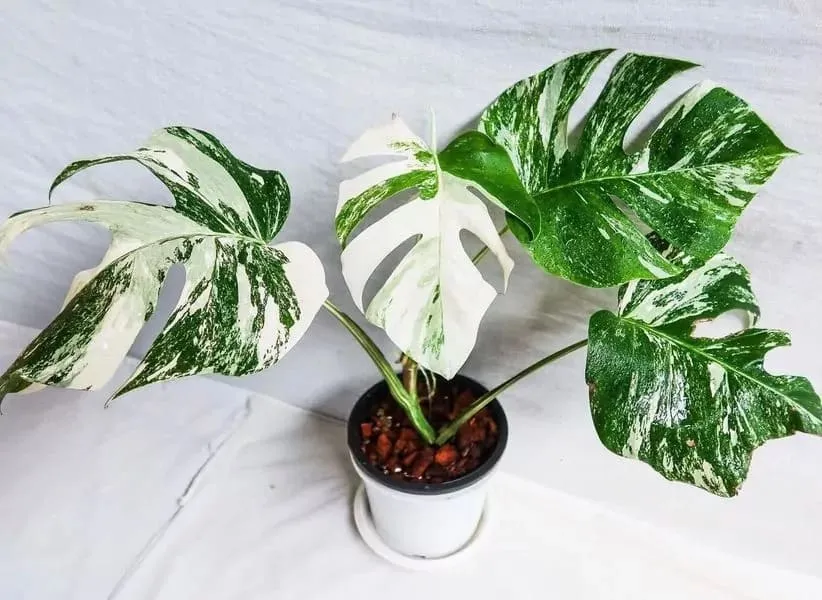
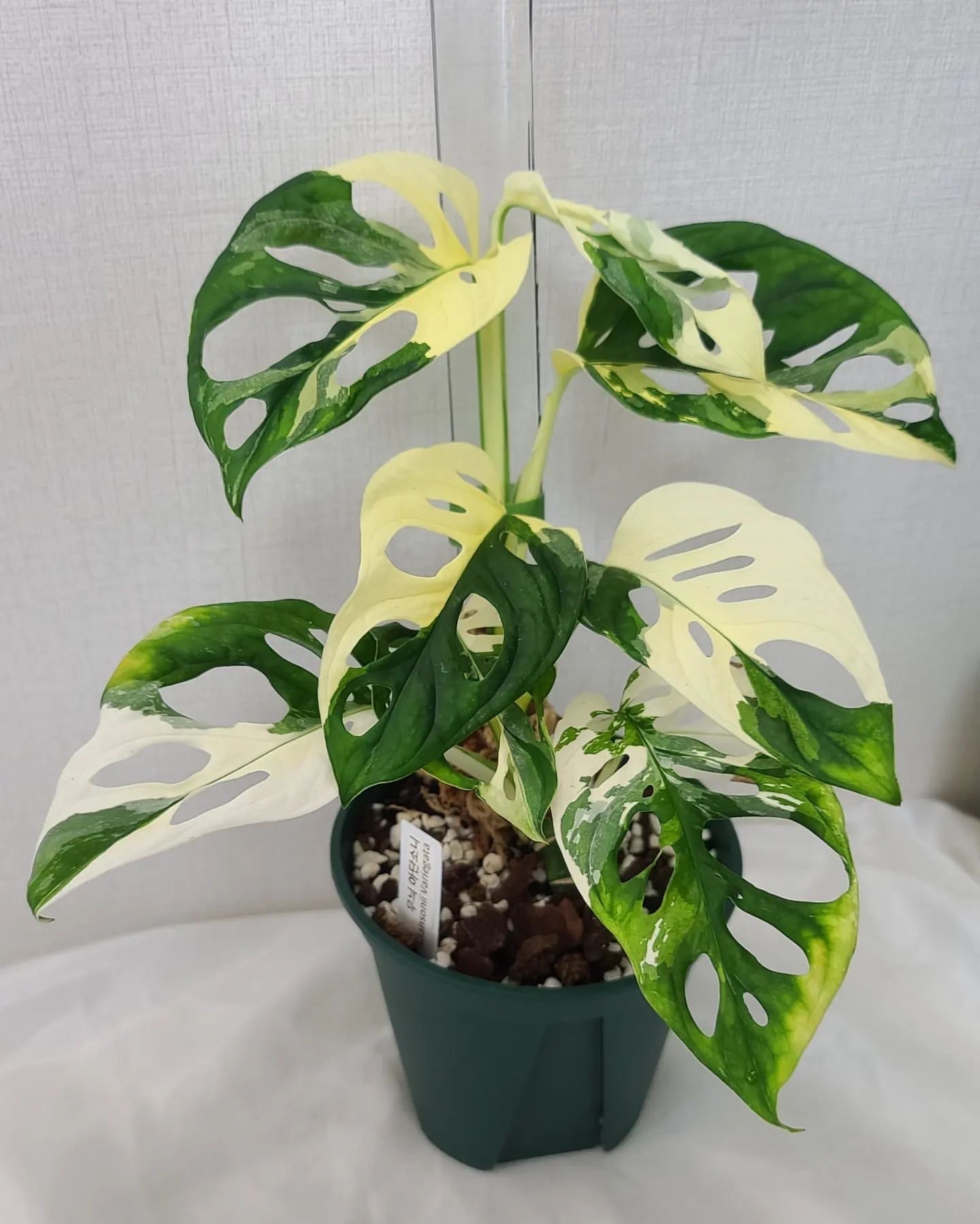
“Variegated Monstera” covers more than one species and many horticultural or trade labels. A variegated M. adansonii is not a valid price comp for an Albo M. deliciosa, and a plant sold as Monstera Peru should not be normalized against either. Rhaphidophora tetrasperma is not a Monstera at all, even when a marketplace calls it mini Monstera.
Use the variegated Monstera names and patterns guide to establish the identity level first. Then compare the same species and supported label. A fashionable name without provenance is weaker evidence than a traceable mother line, but provenance still does not guarantee condition or future leaves.
Normalize the sale format before comparing price
The cheapest listed unit can require the most skill and carry the highest failure risk. The most established unit can cost more to pack and ship. Neither is automatically the better value; the right comparison depends on your experience, destination and risk tolerance.
Read across the row before comparing one offer with another.
| Sale format | Evidence to request | Cost that may be hidden | Main risk |
|---|---|---|---|
| Tissue-culture plantlet | Line, supplier or lab, plant count, sealed/opened state, leaves and roots | Acclimation supplies, space, time and possible off-types or losses | Transition from sterile vessel to ordinary growing conditions |
| Unrooted node or cutting | Viable node, axillary bud, stem condition and cut surfaces | Rooting setup and replacement after rot or a nonviable growth point | No established roots; a leaf alone cannot produce a new vine |
| Rooted cutting | Current roots, medium, active bud, stem and newest leaf | Transition from water or propagation medium to the buyer’s setup | “Rooted” may describe very different root quantity and quality |
| Acclimated juvenile | Exact or batch disclosure, pot, roots, active growth and acclimation period | Repotting, support and recovery after a second environment change | Representative photos may hide size and pattern variation |
| Established exact plant | Dated whole-plant video, scale, roots, stem, growth point and all leaves | Larger packaging, freight, pruning and transit damage exposure | The most impressive leaf can distract from roots or active growth |
| Wholesale or multi-plant lot | Total units, batch range, representative selection method and packing plan | Documents, freight minimums, acclimation capacity and uneven losses | Low listed unit cost can hide a high viable-unit cost |
Exact-plant evidence changes what an offer is worth
An exact-plant listing lets the buyer value a real set of roots, nodes, leaves and defects. A representative listing values a batch promise. Both can be legitimate, but they should not carry the same confidence unless the seller explains selection and allowable variation.
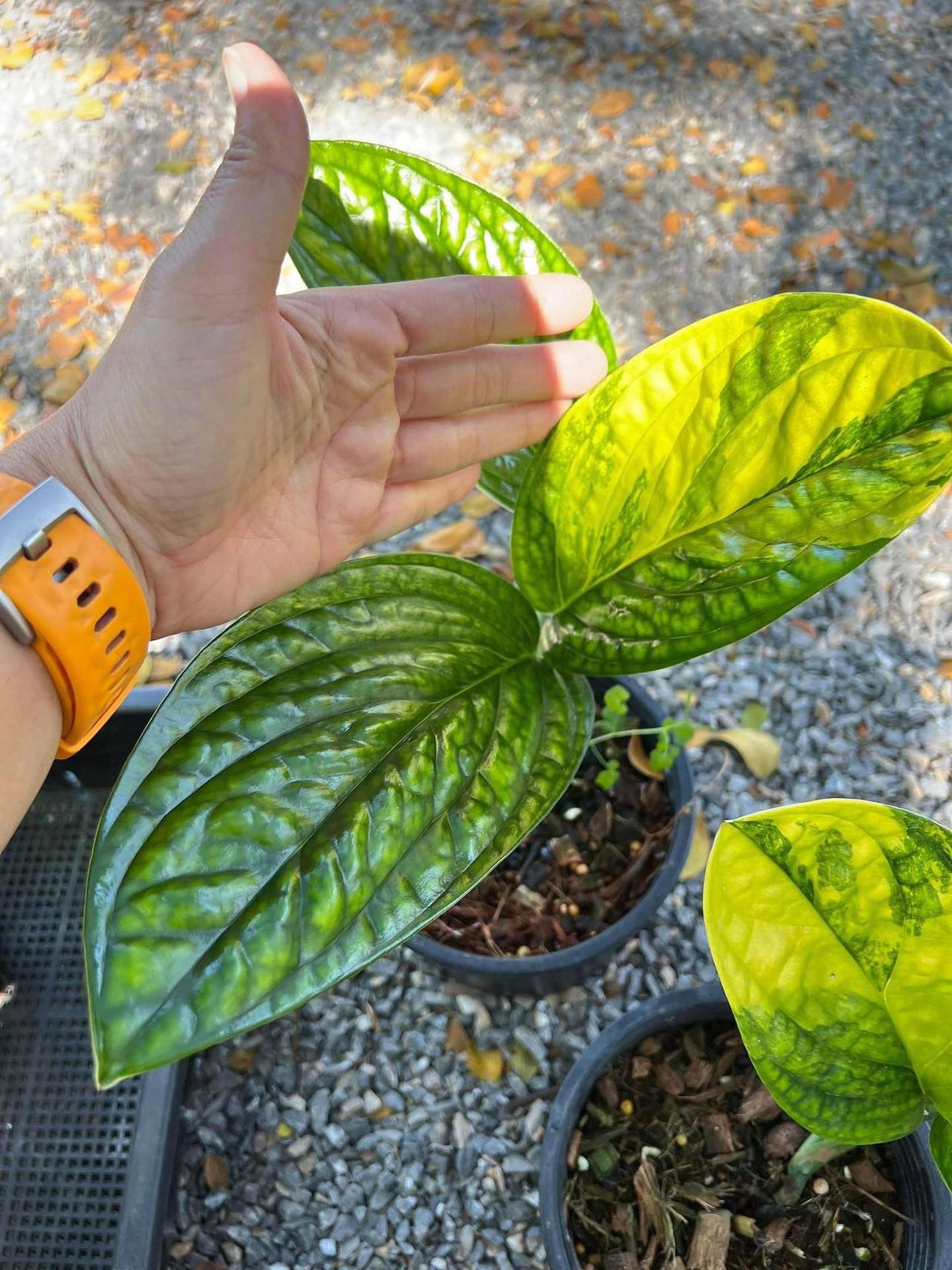
A spectacular leaf is not a complete valuation record. Ask for an uncropped view of the whole plant, then move from foliage to stem, active growth and roots. A ruler, hand or pot size gives useful scale only when the image is current and the object is clearly identified.
Evidence is valuable because it reduces uncertainty, not because photography makes the plant healthier.
| Evidence | Strong version | Why it matters |
|---|---|---|
| Photo disclosure | Clearly marked exact plant, representative batch or mature reference | Defines which visual promises belong to the unit received |
| Current scale | Dated whole-plant view with pot dimensions or a ruler | Reduces cropping and forced-perspective errors |
| Stem and growth point | Node, axillary bud, active tip and stem pattern in focus | Shows whether the sale unit can continue growth and where variegation occurs |
| Roots and medium | Recent root view plus current substrate and rooting history | Separates rootedness from root quality and transition risk |
| Consecutive leaves | Several connected hardened leaves in neutral light | Shows pattern range instead of one selected leaf |
| Condition disclosure | Pests, cosmetic damage, pruning and recent treatment stated plainly | Makes rehabilitation and quarantine costs visible |
| Provenance | Traceable mother line, supplier record or consistent source history | Supports a collector name without replacing condition evidence |
Variegation can raise an asking price—and the care risk
Color, contrast, pattern balance and continuity through the stem can influence demand. They do not act alone. High variegation can raise an asking price while lowering the plant’s photosynthetic margin. A very pale plant may grow more slowly or carry more cosmetic-browning risk than a greener, strongly rooted plant from the same line.
Do not pay by white percentage, leaf count or half-moon language alone. Value the whole growth system: usable green tissue, viable node, active growth, healthy roots, hardening, pest status and the seller’s evidence. A buyer who wants a resilient grower may rationally prefer a less dramatic plant.
Calculate the landed cost before calling an offer cheap
The listing price is only one line in the landed-cost calculation. Which additional lines apply depends on the destination, plant format, route and current regulations. Ask the seller for a written checkout breakdown and check your own import authority before payment.
Landed-cost lines to confirm
- Plant unit: exact plant, selected representative, cutting, plantlet or lot.
- Delivery: carrier, route, billable weight or box, remote-area and seasonal surcharges.
- Documents: phytosanitary certificate, permit, inspection or required labels for the destination and format.
- Border charges: duties, taxes, brokerage, inspection or treatment where applicable.
- Payment: currency conversion, card or platform fees and refund currency risk.
- Weather packing: insulation, heat or cold protection and any route delay.
- Recovery capacity: substrate, quarantine space, acclimation equipment and time.
- Claim boundary: what is covered, what evidence is required and which charges are non-refundable.
Read Greenboog’s current shipping information and order and claim terms at the time of purchase. When documents apply, confirm the exact order through the phytosanitary documentation listing. Rules and seller terms can change, so this evergreen guide deliberately does not copy their current numbers or country notes.
International buyers must verify destination rules
Plant import requirements vary by country, origin, species, format and quantity. They can also change after a pest or disease event. For U.S. buyers, USDA APHIS directs online plant importers to check current commodity requirements and any permit, phytosanitary and shipping-label conditions. Buyers elsewhere should use the equivalent national plant-protection and customs authorities.
A seller saying that a route worked before is not the same as current admissibility for your shipment. Confirm rules before payment, and treat seizure, treatment, return or delay exposure as part of the purchasing decision.
A practical offer-comparison workflow
Compare two offers in this order
- Write the accepted species and the supported horticultural or trade label.
- Normalize both offers to the same format and number of units.
- Record exact versus representative image disclosure.
- Score roots, node, active growth, consecutive leaves, condition and provenance.
- Add every landed-cost line for the same destination and payment method.
- State a separate risk allowance for transit and acclimation.
- For lots, calculate expected viable-unit cost.
- Choose the offer that fits your skills and loss tolerance, not merely the lowest product-card price.
Frequently asked questions
How much is a variegated Monstera worth?
It is worth what a buyer can justify for the verified species, label, sale format, exact-plant evidence, condition and total landed cost in the current market. A global fixed range cannot normalize those inputs.
Why are some variegated Monsteras more expensive?
Supply, demand, propagation capacity, source-line provenance, plant size, roots, condition, variegation and sale format can all influence an asking price. None makes an offer fair without comparison evidence.
Is a tissue-culture Monstera always the cheapest option?
It may have a lower listed plant price, but acclimation supplies, time, off-types, loss risk, shipping and documentation can change the viable-unit cost. Compare the full landed and acclimation cost.
Is a rooted cutting worth more than an unrooted cutting?
Established healthy roots usually reduce one stage of uncertainty, but “rooted” is not a quality grade. Ask to see the roots, medium, node, active bud and transition history before valuing the difference. The Monstera propagation guide explains why the node and growth point matter.
Does a half-moon leaf make a Monstera more valuable?
It may increase demand for that photographed plant, but half-moon is a leaf pattern, not a guarantee for the next leaf. Check the stem, growth point, several leaves, roots and overall green tissue before paying a premium.
Should I compare marketplace asking prices?
Use them only as leads. Normalize the date, country, currency, species, format, evidence, shipping and whether the listing actually sold. An unsold asking price is not proof of market value.
