
Syngonium care hub
Healthy Syngonium growth comes from reading the plant and its root zone—not obeying a fixed weekday. Use light, pot weight, moisture depth, new growth and root condition together, then decide whether the vine needs water, support, pruning or recovery time.
- Light: note intensity, duration and any recent move.
- Root-zone moisture: check below the decorative surface and compare pot weight.
- Roots and crown: look for firmness, oxygen and drainage before adding more water.
- Growth stage: a fresh cutting, compact juvenile and supported vine use water differently.
- Trend: one leaf is a clue; several leaves and dated observations form evidence.
Care at a glance
| Factor | Working target | Adjustment signal |
|---|---|---|
| Light | Bright filtered or dappled light; acclimate after shipping or relocation. | Bleaching/scorch after a move suggests excess exposure; weak stretched growth suggests insufficient usable light. |
| Water | Water the full root ball, drain excess, then allow measurable use before repeating. | Pot weight, moisture depth and recent water use matter more than a weekday. |
| Root zone | A mix that holds useful moisture while leaving air around roots. | Persistent saturation, sour odor or declining roots require diagnosis—not more fertilizer. |
| Support | Guide the stem upward without trapping petioles. | Long unsupported internodes or a top-heavy vine need training, pruning or a larger support. |
| Feeding | Conservative, label-compliant feeding during active rooted growth. | Pause when roots are damaged, the plant is newly shipped or growth has stopped for stress. |
Why leaf shape changes as Syngonium climbs
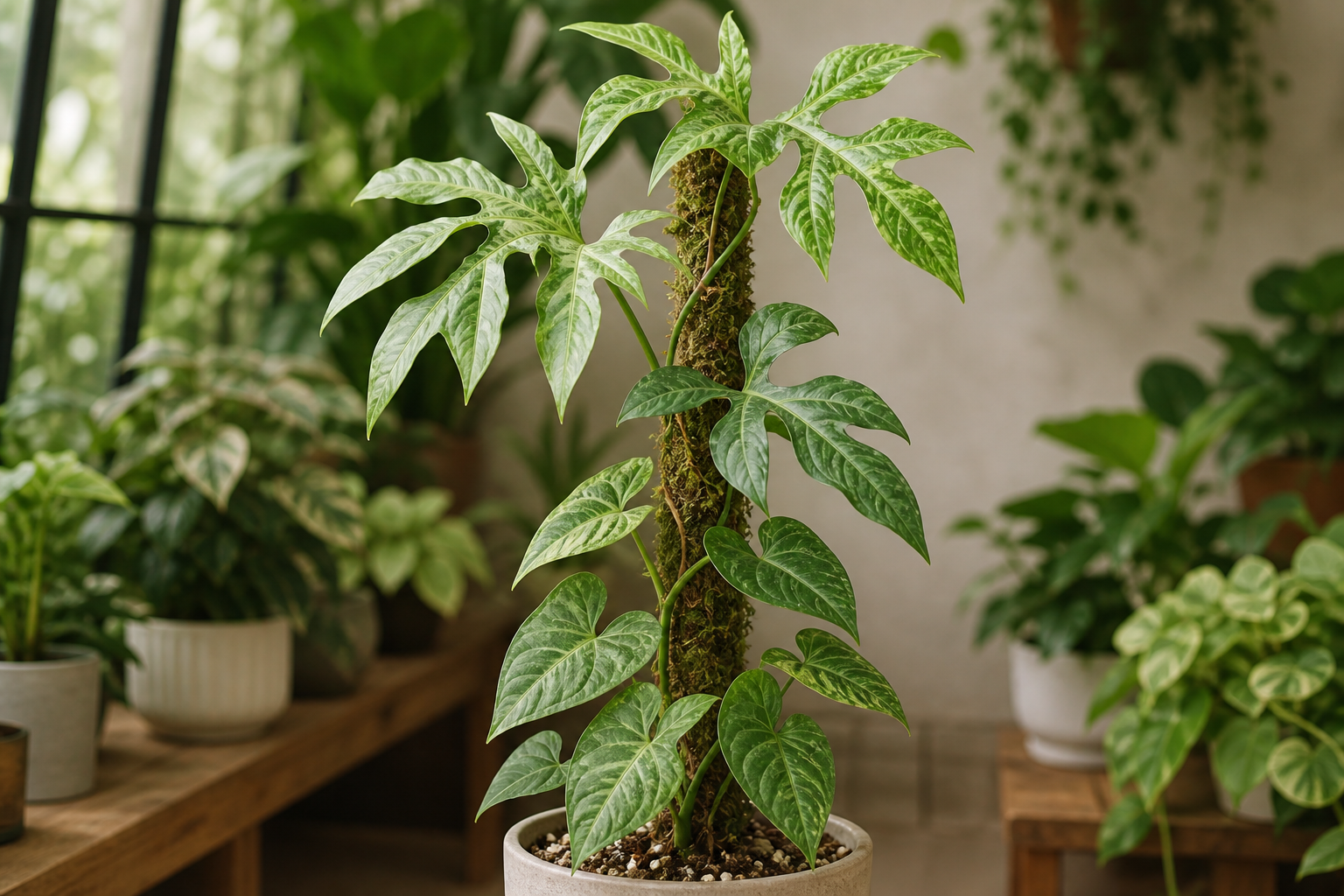
Kew recognizes Syngonium podophyllum as a tropical American liana. NC State describes young plants as bushier, with arrowhead-shaped juvenile leaves, while older climbing stems can form progressively divided foliage and adventitious roots. That developmental change is part of the plant’s growth habit—not automatically a new cultivar or a problem.
Support does not force an exact leaf size or pattern, but it gives the vine a route upward and helps preserve climbing momentum. Keep the active stem close to a stable pole or board, attach it loosely and leave petioles free to reposition their leaves toward light.
Water the root zone, not the calendar
A dry-looking top layer does not describe the whole pot. Push a clean probe or finger deeper where practical, lift the pot to learn its wet and partly used weights, and consider temperature, light, root quantity and substrate. A newly rooted cutting in an oversized pot may stay wet long after an established vine has used its water.
When watering is due, wet the root ball evenly and allow free drainage. Do not leave the pot standing in drained water. If the mix remains saturated while foliage declines, stop treating thirst as the only explanation: inspect drainage, roots and crown, then correct the cause gradually.
Drooping is a symptom, not a watering instruction
| What you see | Check next | Low-risk response |
|---|---|---|
| Droop + light pot | Moisture at depth; root ball pulling from pot edge. | Water thoroughly if the root zone is genuinely dry, then observe recovery. |
| Droop + heavy wet pot | Drainage, root/crown firmness, odor and recent cold stress. | Do not automatically add water; stabilize conditions and inspect roots. |
| Pale stretched growth | Distance from light, shading and recent feeding. | Increase usable light gradually before increasing fertilizer. |
| Brown crisp margin | Abrupt sun/heat, uneven moisture, damaged roots and residue. | Protect from extremes and correct the identified stress without chasing one humidity number. |
| Yellow lower leaf | Whether it is isolated or spreading; root status and recent changes. | Record the trend. One aging leaf and a plant-wide decline require different responses. |
Pruning, repotting and propagation
Prune for a specific reason: remove damaged tissue, shorten an unmanageable vine or create a node-bearing cutting. A leaf and petiole without viable stem/node tissue cannot make a new vine. Use clean tools, preserve enough healthy foliage on the parent and avoid a major cut immediately after shipping or root stress.
Repot when evidence supports it—crowded or declining roots, a damaged mix, unstable support or a pot that no longer handles the plant’s water use. Annual repotting is not mandatory. Choose a container only modestly larger than the functioning root system and keep the crown at a sensible depth.
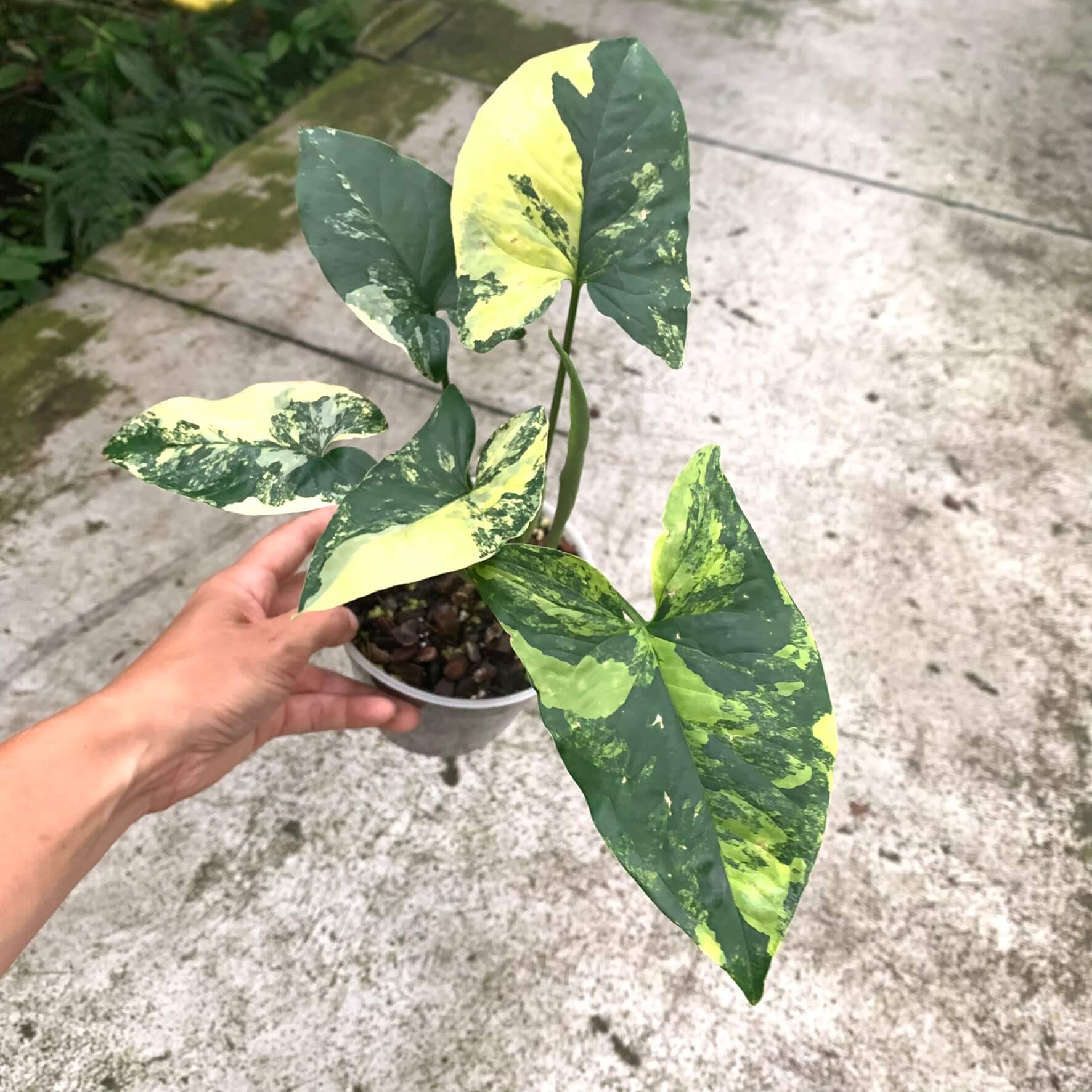
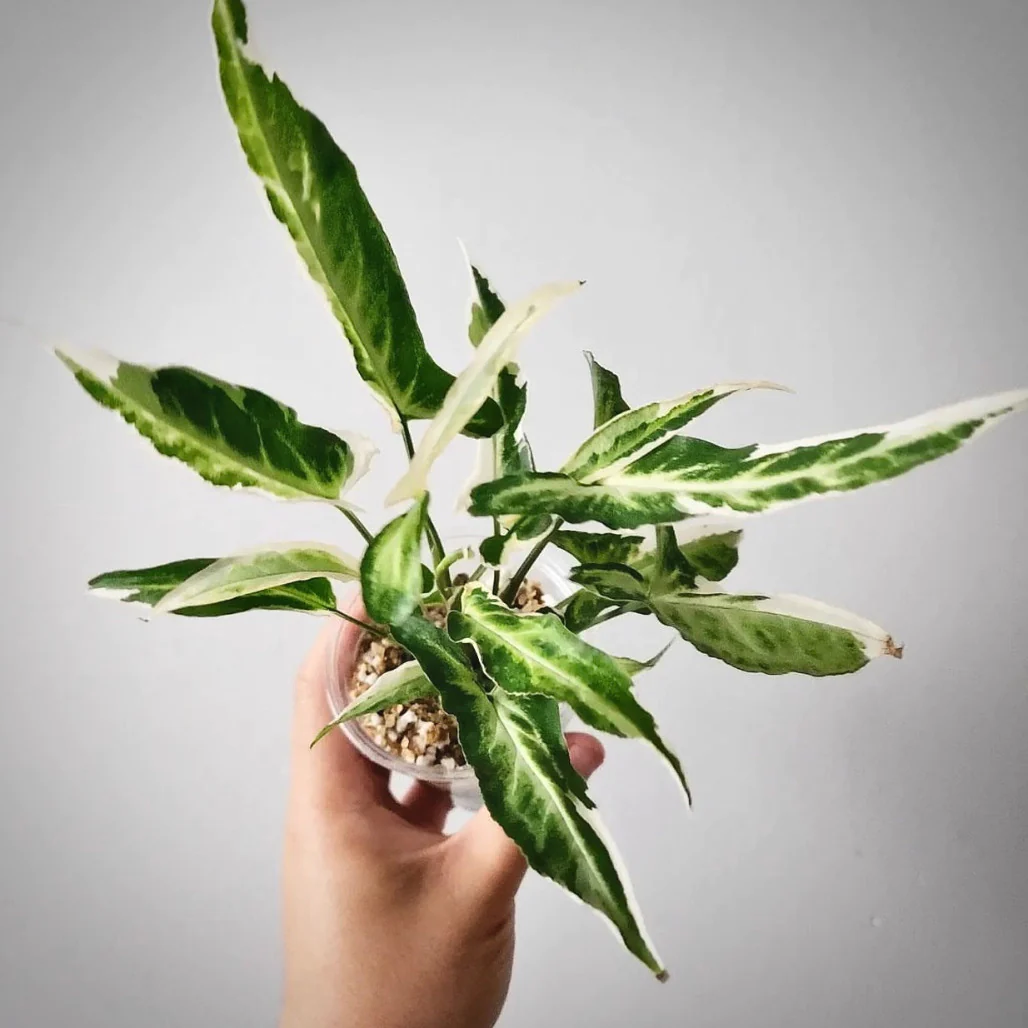
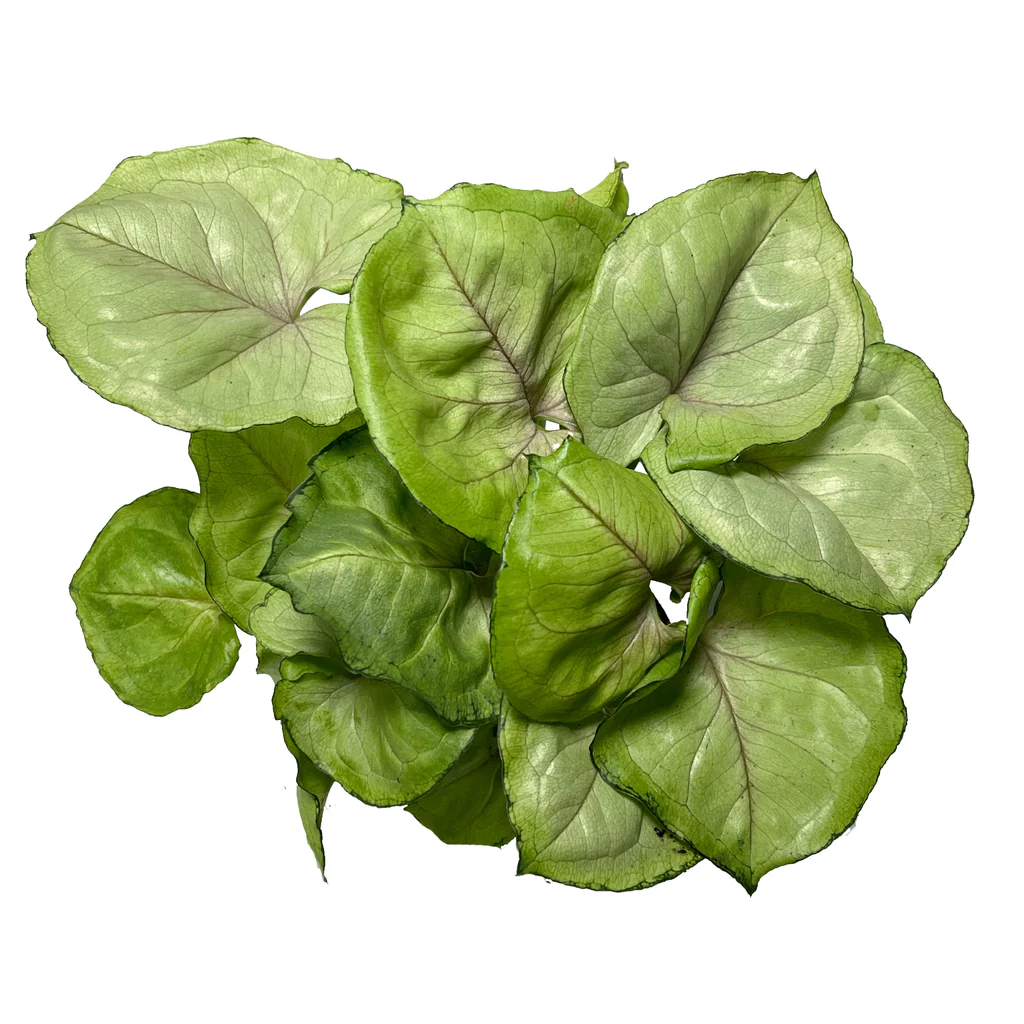
Authentic Syngonium examples
These Greenboog nursery photographs show different trade selections and juvenile presentations. They are useful visual examples, but each name, current lot and product format should be confirmed on its own live listing.
Move from the care hub to the right decision page
This article owns general care and symptom diagnosis. Use the Syngonium Albo guide for white/green pattern and node decisions, the Syngonium Batik guide for that named selection, and the Red Spot Tricolor guide for its cultivar-specific evidence. Current price, format and availability belong to the live collection.
Sources and evidence boundaries
- Kew Plants of the World Online: Syngonium podophyllum — accepted name, liana habit, native range and wet-tropical context.
- NC State Extension: Syngonium podophyllum — juvenile/adult foliage, climbing habit, propagation, cultural context and calcium-oxalate hazard.
Evidence limit: species references explain general growth habit; they do not authenticate every commercial cultivar name, predict variegation or describe a current Greenboog lot. The live category and product pages remain the source for offer-specific details.

1 thought on “Syngonium Care: Light, Water, Support & Troubleshooting”