
Horticultural label, colour sequence and climbing care
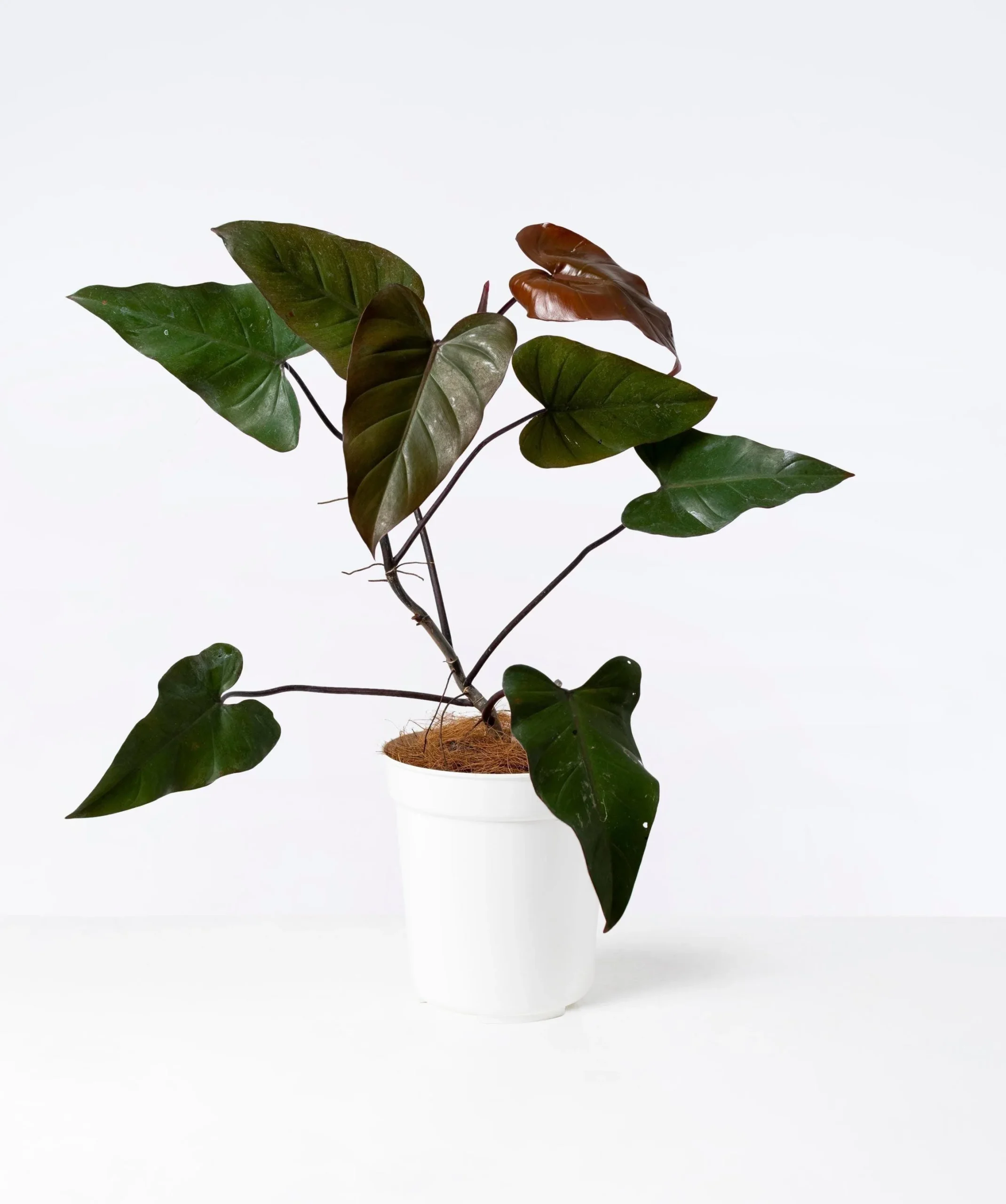
Philodendron Dark Lord is a climbing horticultural plant sold with bronze-red emerging growth, red petioles and dark hardened leaves. Use its label, leaf sequence and stem architecture together; do not turn the trade name into an undocumented wild species or guaranteed black finish.
Separate the species framework from the trade label
Kew accepts Philodendron erubescens as a Colombian wet-tropical climber with reddish stems and cataphylls and triangular-sagittate foliage. Commercial grower records also place Dark Lord under that species name. This makes P. erubescens a useful comparison framework, but it does not provide a breeder, patent or parentage record for the Dark Lord line itself.
No traceable breeder publication or formal parentage record was located in this research batch. Keep Dark Lord as a cultivar or horticultural label and keep the wild Colombian range attached to the accepted species, not to an invented story about where the cultivated selection originated.
Read colour as a sequence across the plant
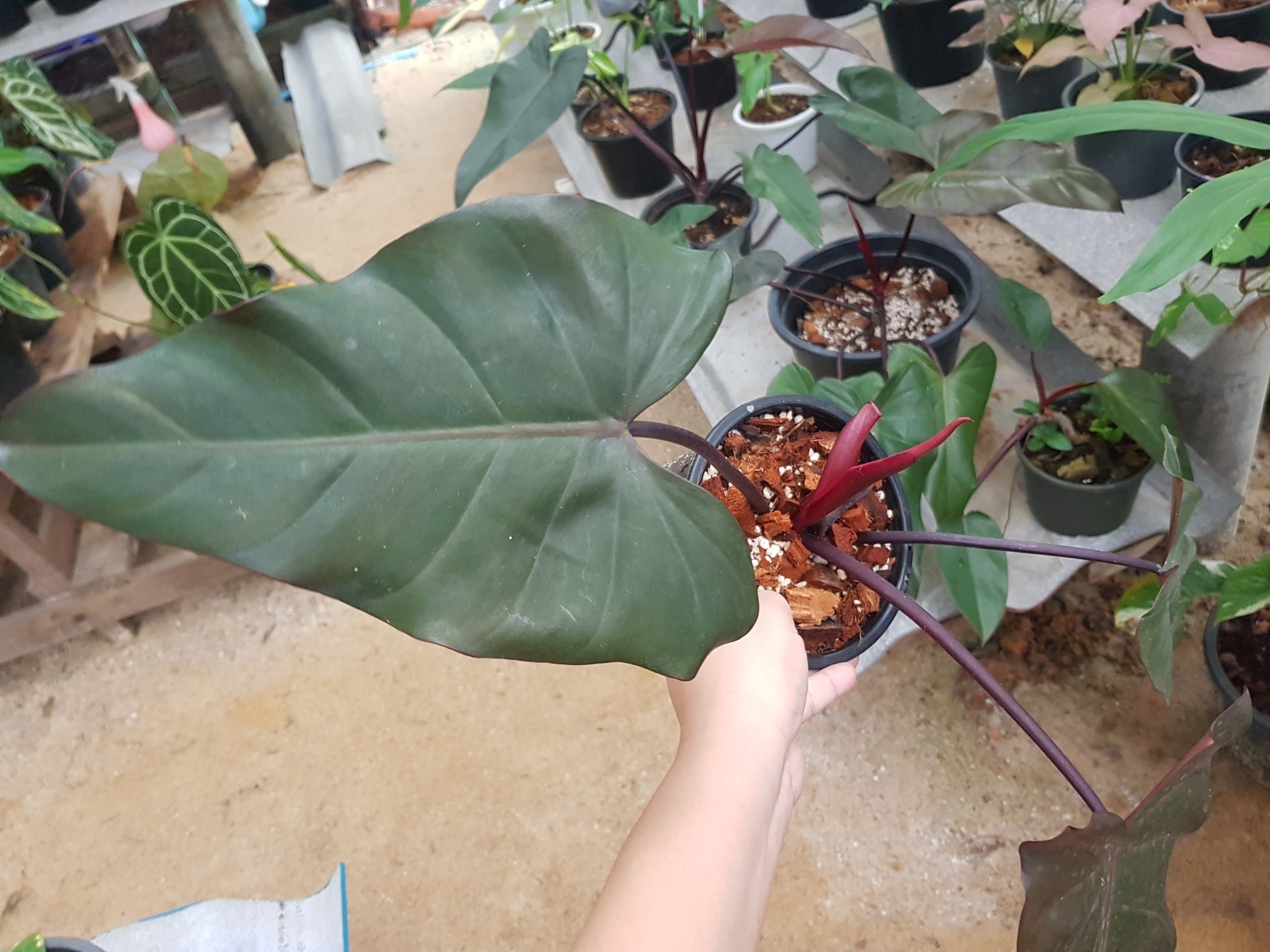
Compare an expanding leaf, the newest hardened leaf and at least one older leaf. Dark Lord seller records and Greenboog images show bronze, copper or red emerging tissue beside darker green-to-burgundy hardened foliage. The exact endpoint is not fixed, and almost black is a visual description rather than a botanical measurement.
| Evidence | What it supports | Boundary |
|---|---|---|
| Traceable nursery label | The line sold as Dark Lord. | It does not establish breeder or parentage. |
| Several connected leaves | The bronze-red-to-dark hardening sequence. | One leaf cannot guarantee later colour. |
| Stem, cataphyll and petioles | Climbing architecture and red structural traits. | Colour alone overlaps other dark cultivars. |
| Whole plant and roots | Current vigour, format and support need. | A mature reference may not match a shipped juvenile. |
Do not identify the plant only by a dark leaf. Black Cardinal, Imperial Red, Bloody Mary and other red-to-dark Philodendron labels circulate with overlapping colour language. Stem extension, internode spacing, petiole colour, blade outline and source history are stronger together than a retailer adjective.
Support the active stem without binding petioles
Place a pole, plank or other vertical surface beside the active stem. Tie the stem loosely and leave petioles free to turn toward light. Aerial roots need contact near a node; fastening only an old leaf does not train the next section of growth.
If a long stem has already sprawled, guide the newest flexible section rather than forcing the older base upright in one move. Closer support, adequate light and functional roots work together; a pole alone cannot correct weak growth.
Balance light, warmth and root-zone air
Start with bright indirect light. Increase exposure gradually if internodes lengthen or later leaves become smaller. Abrupt hot sun can mark foliage, while a dim site slows water use and keeps the medium wet for longer. Darker colour should never be pursued by starving the plant of usable light.
Use a loose, free-draining medium and a pot only modestly larger than the root ball. Check below the surface and lift the container. Water the full root zone after it has partly dried, then let excess drain. Root mass, pot material, light and temperature determine the interval; once a week is not a universal rule.
Keep the plant warm and away from cold drafts. Feed lightly only during active rooted growth. Fertilizer cannot replace weak light or repair rotted roots, and routine misting does not substitute for airflow and a functioning root system.
Diagnose the whole pattern before treating
| Pattern | Check first | Measured response |
|---|---|---|
| New leaf remains lighter | Leaf age, light trend and root health. | Let it harden before changing several variables. |
| Smaller leaves and long gaps | Support contact, light and root condition. | Correct the limiting factor and judge later nodes. |
| Yellowing with wet medium | Drainage, pot size, temperature and root texture. | Restore warmth and aeration; remove only confirmed rot. |
| Distorted new growth | Growth point, thrips, mites, roots and recent sprays. | Isolate and identify before stacking treatments. |
Philodendron tissue contains calcium oxalate crystals. Keep the plant away from children and pets that chew foliage, wear gloves when sap contact is likely, and seek appropriate medical or veterinary guidance for significant mouth swelling, drooling or swallowing difficulty.
Propagate a node and preserve the source history
A climbing vine is normally propagated from a stem cutting that includes a real node. A leaf and petiole alone may remain presentable for a time but cannot produce a new vine. Division only applies when a pot contains separate rooted stems; cutting a single crown into rootless pieces is not division.
- Photograph the mother plant, label and leaf sequence before cutting.
- Locate a node, growth point and usable section of stem.
- Use a clean tool and keep the base warm, airy and not saturated.
- Pot only after functional roots are present.
- Judge identity and colour across later connected leaves.
Use the rare Philodendron guide for broader cultivar comparison, the general Philodendron care guide for shared root and light decisions, and the propagation guide before cutting a node.
Sources
- Kew Science: accepted Philodendron erubescens record and morphology
- NC State Extension: Philodendron erubescens growth, propagation and safety
- RHS: Philodendron light, root-zone, watering and support guidance
- Little Prince of Oregon grower availability: market use of Philodendron erubescens Dark Lord

1 thought on “Philodendron Dark Lord: Identity, Color & Care”