Golden leaf hardening, fiddle-shaped development and climbing care
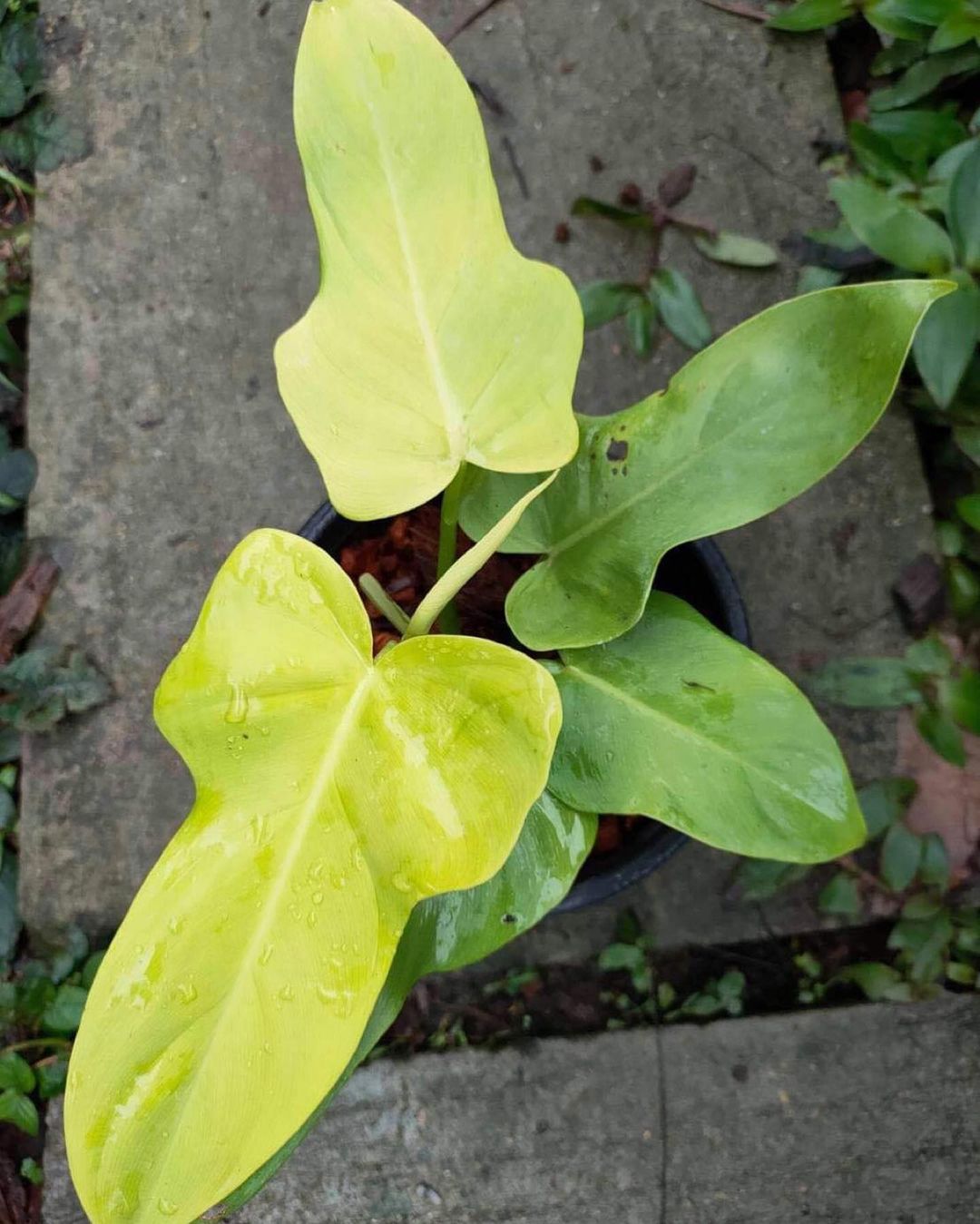
Greenboog’s Philodendron Violin is the golden/aurea horticultural line associated with Philodendron bipennifolium. New foliage can open yellow to chartreuse, harden greener and become more distinctly fiddle- or horsehead-shaped as supported climbing growth develops.
What “Philodendron Violin” means here
Kew accepts Philodendron bipennifolium as a wet-tropical climber native from southern Venezuela to northern and eastern Brazil. UF/IFAS calls the species horsehead or fiddleleaf philodendron because mature leaves can resemble a violin or horse’s head.
Greenboog’s own 2024 potted-plant list connects “Philo. violin aurea” with P. bipennifolium, and the live product gallery shows the expected yellow/chartreuse foliage and developing lobes. Hawaiʻi certified-nursery records and established growers also circulate the line as P. bipennifolium aurea or Golden Violin. No authoritative origin or cultivar-registration record was located, so Golden Violin and ‘Aurea’ are useful horticultural labels rather than a documented wild variety.
Read leaf age and climbing stage together
Kew’s species description records substantial leaf-shape variation: lower leaves can be simpler, while upper leaves become panduriform, hastate or three- to five-lobed. On Golden Violin, new leaves can open bright golden-yellow, then deepen toward lime and green as they harden. A juvenile plant may therefore look less “violin-shaped” and more uniformly bright than an established climber.
| Stage | Expected evidence | What to check |
|---|---|---|
| Newly opening | Yellow to chartreuse, soft blade, simple or lightly lobed outline. | Has the leaf hardened yet? |
| Recently hardened | Deeper lime or green; firmer surface; outline easier to compare. | Does it match the same stem’s sequence? |
| Supported climbing growth | Larger blade; narrower waist and clearer posterior lobes may develop. | Are nodes contacting the support? |
| Stress signal | Tan bleaching, collapse, root odor or distorted active growth. | Separate exposure, roots and pests from normal colour. |
Support the stem, not the petioles
This is a climber with visible internodes, not a self-heading rosette. Place a board or pole beside the active stem, secure stem tissue loosely and leave petioles free to orient. Guide the newest flexible section first instead of forcing older growth.
A support cannot guarantee a specific leaf size or shape, but stable node contact and adequate growing conditions give later leaves the opportunity to express a stronger mature outline. If growth becomes smaller or more widely spaced, check roots and usable light as well as attachment.
Light supports golden growth; it does not diagnose every pale leaf
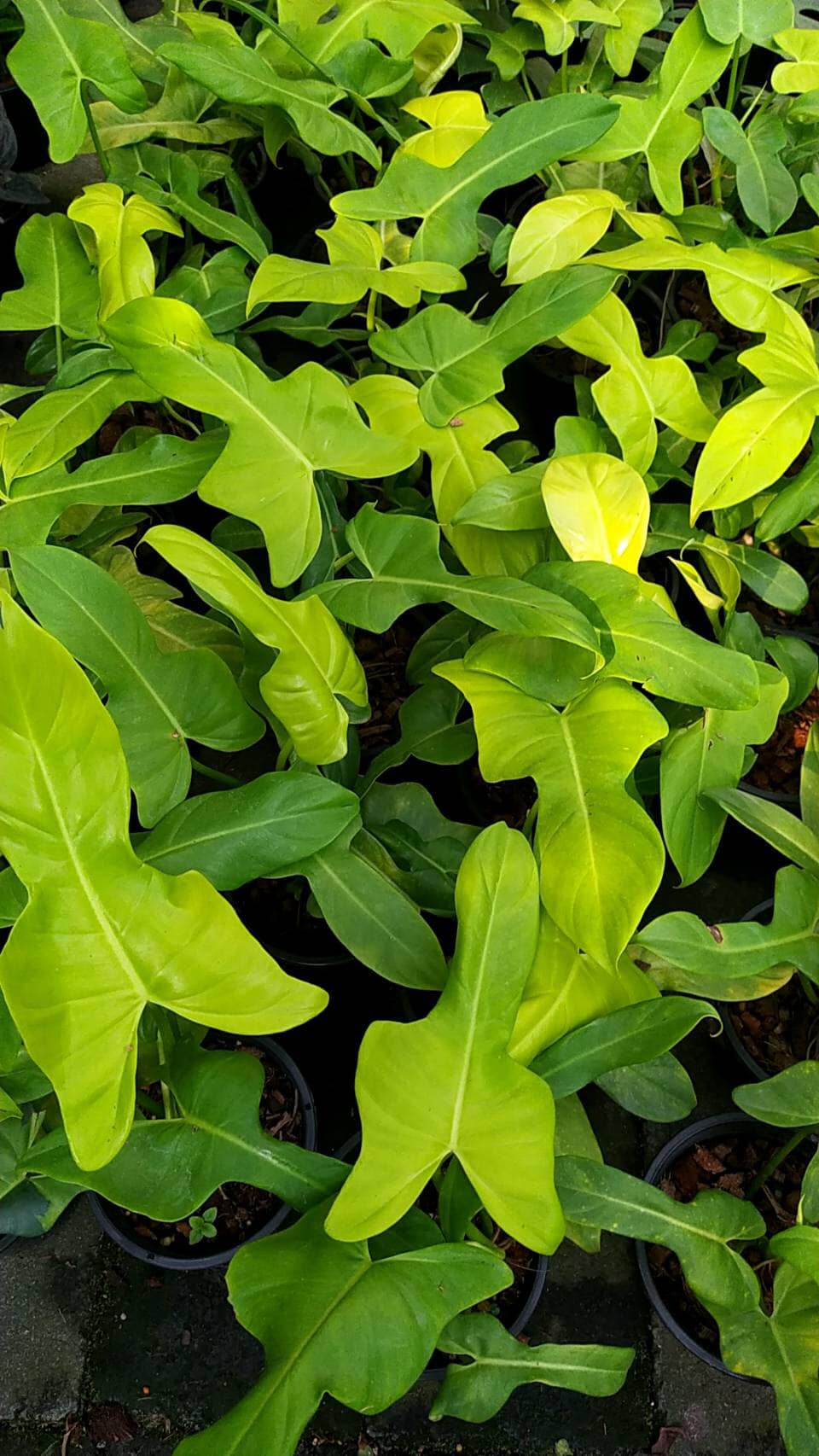
Use bright diffused light and acclimate increases gradually. Adequate light supports the green tissue that powers growth and helps the plant maintain a compact, productive sequence. Harsh direct exposure can bleach or crisp a fresh yellow leaf; low usable light can slow growth and root-zone drying.
Colour normally changes during hardening, so do not diagnose from one leaf. A greener mature leaf can be expected; broad yellowing that begins on older foliage, especially with a wet heavy pot, needs a root-zone check. The general Philodendron care guide owns the broader room-level framework.
Water from pot and root evidence
Use an open medium that drains freely while retaining useful moisture, and a pot only modestly larger than the roots. Water across the rooted volume, let excess escape, then check pot weight and moisture below the surface before watering again.
A fixed five-, seven- or ten-day schedule ignores root density, medium, light, temperature and airflow. Daily misting and pebble trays do not replace root watering or room-level humidity. Feed modestly during active rooted growth; fertilizer cannot force golden colour or repair damaged roots. Use the Philodendron watering guide for deeper wet-versus-dry diagnosis.
Diagnose before changing several variables
| Signal | Check first | Measured response |
|---|---|---|
| New leaf opens yellow | Leaf age and same-stem sequence. | Allow it to harden before judging. |
| Pale area turns tan | Recent sun, heat, spray or hydration shift. | Filter exposure and stabilize the root zone. |
| Plant is limp in a wet pot | Drainage, root texture and crown depth. | Pause watering and inspect if recovery stalls. |
| New leaves stay small | Support contact, roots, light and temperature. | Correct the verified bottleneck. |
| Newest leaf is distorted | Growth point, thrips, mites and mechanical damage. | Isolate and identify before stacking sprays. |
Propagate a viable node
A Golden Violin cutting needs stem tissue with a node and viable bud or active growth point; a leaf and petiole alone cannot rebuild the vine. Photograph the mother plant, connected colour sequence and label before cutting. Keep aerial roots where practical and use clean tools.
- Choose a healthy node with useful green tissue.
- Keep the base warm, airy and moist rather than saturated.
- Transfer only after functional roots can support new growth.
- Retain the Golden Violin or aurea label through hardening.
- Judge identity over later connected leaves, not the display leaf alone.
Use the Philodendron propagation guide for cutting, layering and transfer decisions.
Buyer checklist and live routes
- Confirm exact-plant versus representative gallery scope.
- Compare several leaf ages, the stem, nodes and active growth point.
- Ask about rootedness, pot or cutting format and recent propagation.
- Do not confuse normal golden hardening with sectoral variegation.
- Verify current stock, selected options and shipment terms on the listing.
Safety and sources
Philodendron tissue contains insoluble calcium-oxalate crystals that can irritate the mouth and digestive tract when chewed. Keep plants and cut material away from children and pets, and seek appropriate medical or veterinary guidance after significant exposure.
- Kew POWO: accepted Philodendron bipennifolium record
- UF/IFAS: horsehead/fiddleleaf morphology and climbing habit
- Greenboog 2024 potted list: violin aurea / bipennifolium label
- Hawaiʻi certified nursery: bipennifolium aurea Gold Violin
- Costa Farms: Golden Violin horticultural profile
- NC State Extension: Philodendron care and safety