Accepted wet-tropical climber, basal-lobe evidence and measured care
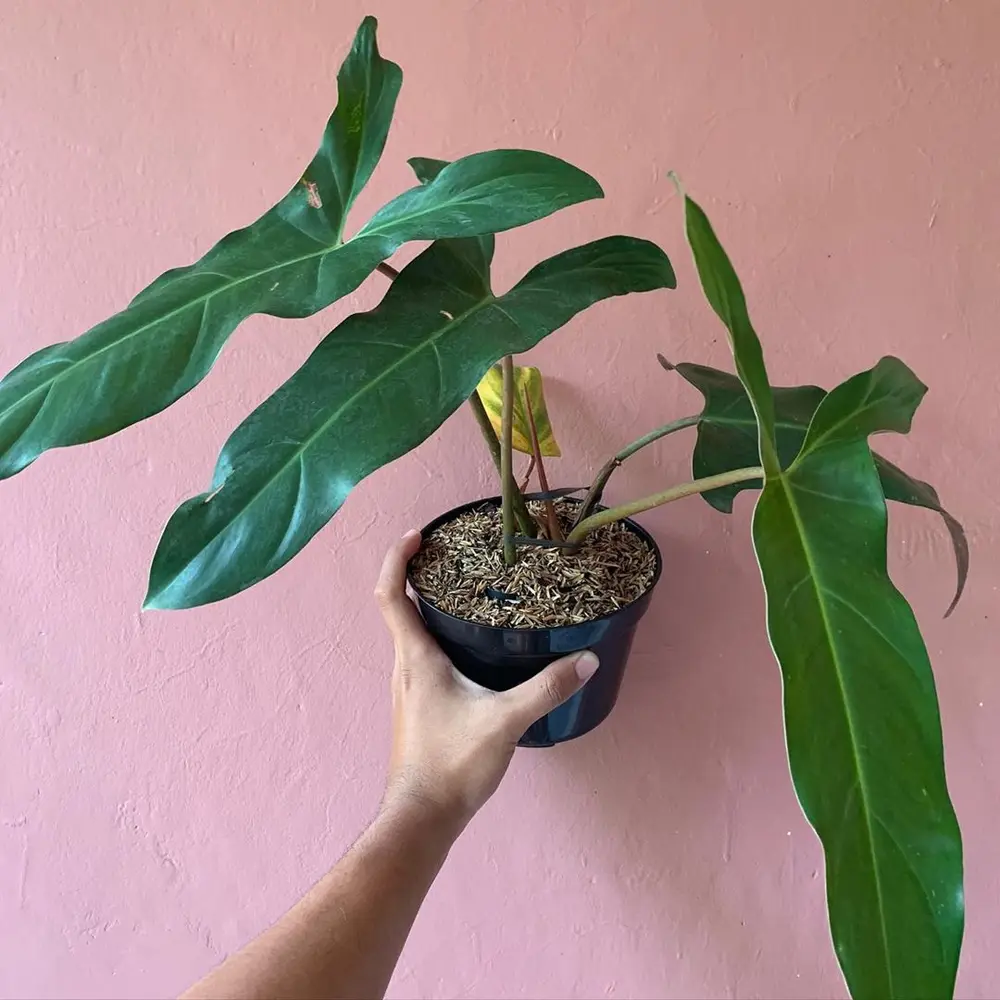
Philodendron mexicanum is an accepted climbing species from Mexico to western Colombia. Its useful identity pattern combines a narrow triangular blade, distinct posterior lobes at the base, a climbing stem and petiole/cataphyll details. Read a connected leaf sequence before separating it from fiddle-shaped or distinctly divided Philodendron.
Start with the accepted species record
Kew accepts Philodendron mexicanum Engl., first published in 1878. The recorded native range extends from Mexico through Central America to western Colombia. It is a climber of the wet tropical biome, so the article should not describe it as an undefined hybrid.
Croat records a climbing or hanging stem, elongated internodes, deciduous spongy cataphylls without strong ribs, petioles flattened on the upper side and convex below, and narrowly triangular-sagittate to triangular-hastate blades. These characters work together; none should be turned into a single-photo shortcut.
Read the blade base before the long central section
The eye is often drawn to the long anterior section, yet the base carries stronger comparison value. Follow each side of the blade back to the petiole and note the posterior lobes, the sinus between them and the continuous triangular outline. Check the underside, but do not treat red or purple colour alone as proof because age, light and camera processing change colour.
Compare the newest expanding leaf, a recently hardened leaf and an older blade. Shape can become clearer as the vine establishes support. A juvenile or transport-stressed leaf may be narrower, folded or damaged, so delay renaming until several connected leaves agree.
| Owner | Useful distinction | Do not reduce it to |
|---|---|---|
| Mexicanum | Narrow triangular sagittate-hastate blade with posterior basal lobes. | Any long green leaf with a red underside. |
| Panduriforme | Pandurate or fiddle-like outline with lateral constrictions. | A synonym for Mexicanum. |
| Holtonianum | Distinct three-part mature outline in its own species context. | Any blade with two basal projections. |
| Distantilobum | Mature pinnatipartite blade with repeated lateral lobes. | A three-point silhouette. |
Use provenance and the connected plant
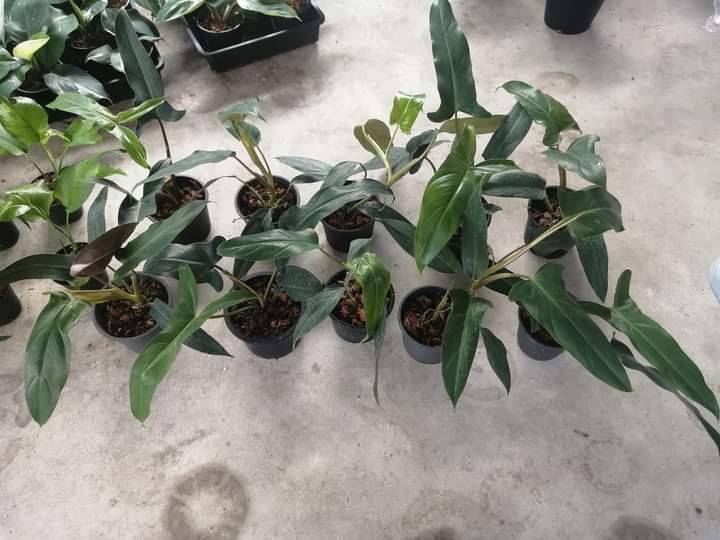
A source label, several connected leaves, stem nodes and cataphyll remains are stronger evidence than a marketplace name placed under one image. When buying, ask whether the image shows the exact plant, a representative juvenile or a mature reference. Request a full-pot photo when format or rootedness is unclear.
Place support beside the active stem
Position a pole, plank or other vertical surface beside the active stem. Tie stem tissue loosely and leave petioles free to orient the leaves. Aerial roots need contact near a node; tying only a petiole does not guide the next internode.
If the vine has sprawled, guide the newest flexible section first rather than forcing old hardened growth. Support, usable light and functional roots work together. A pole cannot compensate for a failing root zone or a very dim location.
Balance diffused light and root-zone air
Start with bright diffused light. Increase exposure gradually if later internodes lengthen sharply or leaves become progressively smaller. Pale crisp patches that follow a move can indicate heat or an abrupt sun increase; damaged tissue will not turn green again.
Use an open, well-drained but moisture-retentive mix and a pot only modestly larger than the roots. Check below the surface and lift the container before watering. Water thoroughly after part of the root zone has dried, then let excess drain. Pot material, roots, airflow, light and temperature determine the interval; a top-inch or once-weekly rule cannot.
Keep the plant warm and away from cold drafts. Feed lightly only during active rooted growth. Fertilizer cannot repair rot, and frequent misting does not replace root watering or airflow.
Diagnose patterns before treatment
| Pattern | Check first | Measured response |
|---|---|---|
| Long gaps and smaller later leaves | Support contact, light trend and roots. | Correct the limiting factor and judge later nodes. |
| Yellowing with wet medium | Drainage, pot size, temperature and root texture. | Restore warmth and aeration; remove only confirmed rot. |
| Pale crisp areas | Recent sun, heat or spray change. | Move back from stress and acclimate gradually. |
| Distorted newest growth | Growth point, thrips, mites and roots. | Isolate and identify before stacking treatments. |
Philodendron tissue contains calcium oxalate crystals. Keep the plant away from children and pets that chew foliage, wear gloves when sap contact is likely, and seek appropriate medical or veterinary help for significant mouth swelling, drooling or swallowing difficulty.
Propagate a node and preserve the label
A climbing stem cutting needs a real node and viable stem tissue. A leaf and petiole alone cannot restart a Mexicanum vine. Division applies only when a pot contains separate rooted stems.
- Photograph the mother plant, label and connected leaf sequence.
- Locate a healthy node, growth point and usable stem section.
- Use a clean tool and keep the base warm, airy and not saturated.
- Pot only after functional roots are present.
- Retain the Mexicanum label while later leaves develop.
Use the rare Philodendron guide for broader comparison, the general care guide for shared decisions, and the propagation guide before taking a cutting.