
Accepted Brazilian species, swollen-petiole evidence and short-stem care
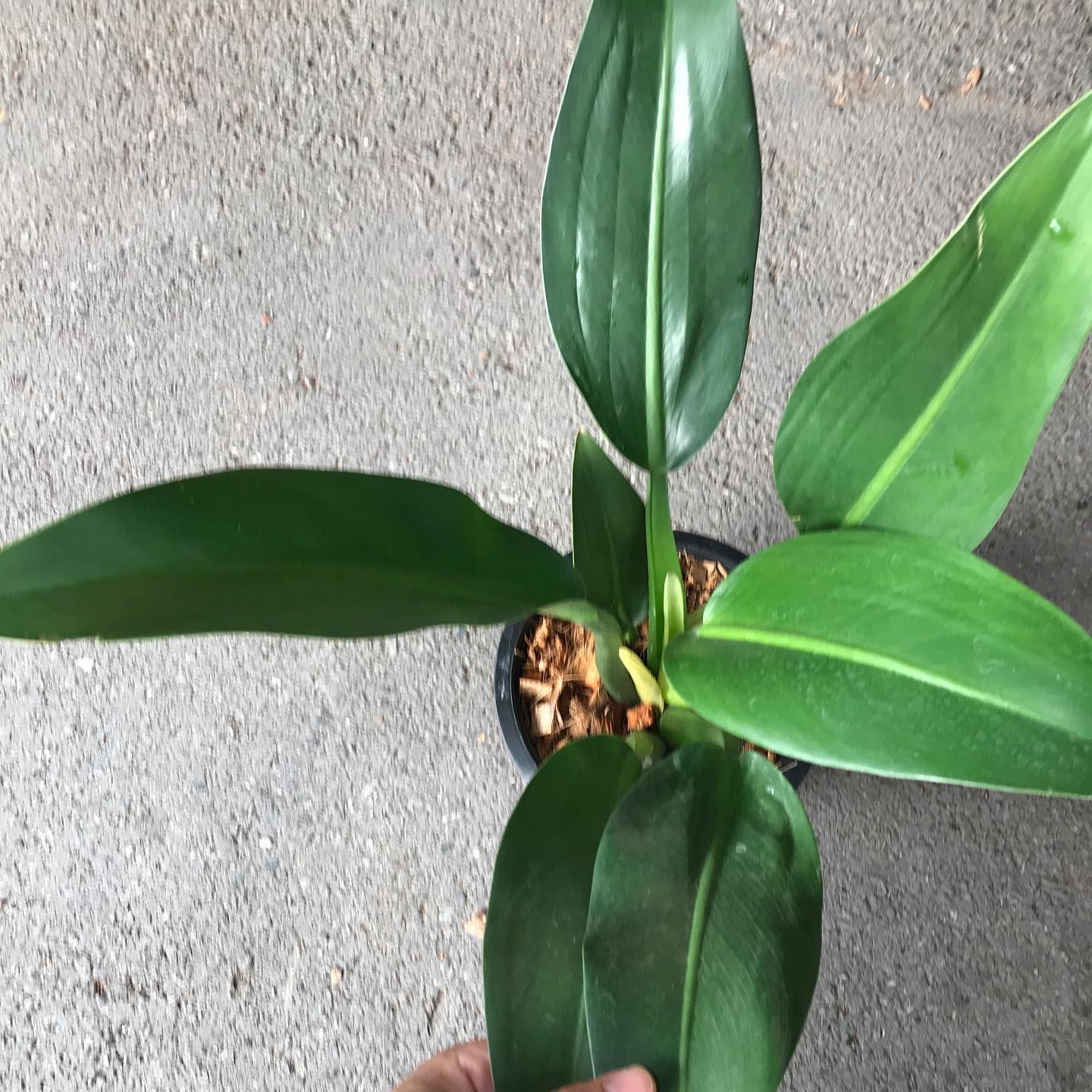
Philodendron martianum, often sold as Fat Boy, is an accepted epiphytic species from eastern and southern Brazil. Its useful identity pattern combines a short thick stem, densely arranged leaves, strongly swollen petioles and glossy lanceolate blades. Care should match that compact architecture rather than copy instructions for a long climbing vine.
Use the accepted name and the whole structure
Kew accepts Philodendron martianum Engl., published in 1899. Its native range is eastern and southern Brazil, and the species is recorded as an epiphyte in a seasonally dry tropical biome. Martianum is an accepted epiphytic species, not a generic hybrid label.
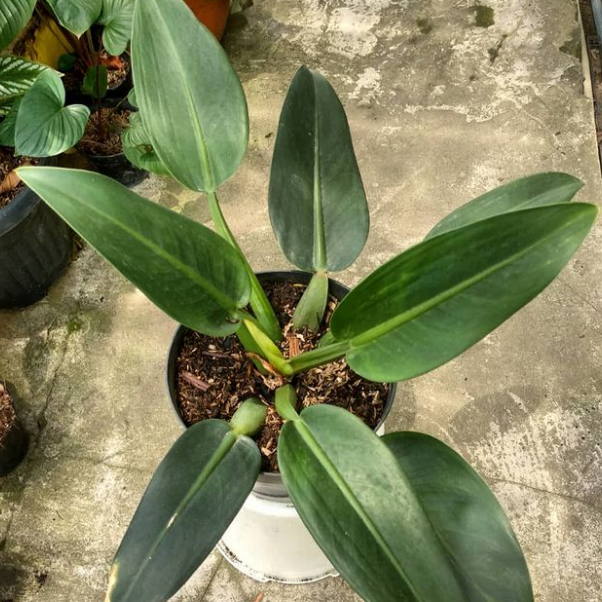
The taxonomic description records a short, very thick, procumbent stem with dense leaves. Petioles are swollen and semi-terete, while blades are thick, glossy and lanceolate to lanceolate-oblong. The descriptive Fat Boy trade name points to the petioles, but the nickname is not a botanical diagnosis.
Do not identify Martianum from one thick petiole
Self-heading hybrids, Congo-type plants and other species can produce robust petioles and plain green blades. Camera angle can also exaggerate thickness. A swollen petiole is useful evidence only when the short stem, dense leaf arrangement and blade shape agree.
Compare several connected leaves and expose the central architecture without damaging it. Check whether the blades are entire, thick and lanceolate, whether petiole bases are consistently inflated, and whether the plant remains compact rather than extending as a long vine.
| Evidence | What it supports | Boundary |
|---|---|---|
| Traceable nursery label | Continuity of the sold Martianum line. | A label cannot rule out a nursery mix-up. |
| Swollen semi-terete petioles | A key Martianum character. | Thickness alone is not exclusive. |
| Short stem and dense leaves | Compact species architecture. | A top photo can hide stem extension. |
| Glossy lanceolate blades | Agreement with the formal description. | Leaf shape alone overlaps with other plants. |
Pot the roots without burying the crown
Use a container with drainage and a loose mix that holds some moisture but preserves air around the roots. Size the pot to the root mass rather than the leaf spread. An oversized container stays wet longer and makes root-zone evidence harder to read.
Keep the short stem and crown at a stable level. Do not bury the swollen petiole bases as if they were roots. Deep planting can trap moisture around tissues that need air. Repot when roots are crowded, the medium has collapsed or drainage no longer behaves normally, not by a fixed two-year rule.
Balance light, warmth and water use
Start in bright indirect light. Strong hot sun can bleach or scorch blades, while a dim position slows water use and can reduce later growth. Adjust exposure gradually and judge new leaves rather than expecting damaged tissue to recover.
Check below the surface and lift the pot before watering. Water thoroughly after part of the root zone has dried, then let excess drain. The correct interval changes with pot material, roots, airflow, light and temperature. A weekly summer rule and two-week winter rule can both fail when those conditions change.
Keep the plant warm and away from cold drafts. Feed lightly only during active rooted growth. Fertilizer cannot correct saturated roots, and misting does not replace root watering or airflow.
Diagnose patterns before treating
| Pattern | Check first | Measured response |
|---|---|---|
| Yellow lower leaves, wet mix | Drainage, pot size, roots and temperature. | Restore warmth and aeration; remove only confirmed rot. |
| Limp leaves, light dry pot | Whether water bypasses a dry root ball. | Rehydrate evenly, drain and observe recovery. |
| Pale crisp patches | Recent sun, heat or spray history. | Move back from stress and acclimate gradually. |
| Distorted newest growth | Growth point, thrips, mites and roots. | Isolate and identify before stacking treatments. |
Philodendron tissue contains calcium oxalate crystals. Keep the plant away from children and pets that chew foliage, wear gloves when sap contact is likely, and seek appropriate medical or veterinary help for significant mouth swelling, drooling or swallowing difficulty.
Propagate viable stem tissue, not a petiole
Martianum has a short dense stem, so generic long-vine cutting instructions can be misleading. A leaf and its swollen petiole do not make a new plant without viable stem tissue. Divide only when there are genuinely separate rooted growth points, or take a stem section only when a visible viable growth point can be preserved.
- Photograph the mother plant and source label before cutting.
- Expose the structure gently and identify a real growth point.
- Use a clean tool and avoid cutting swollen petioles by mistake.
- Keep the base warm, airy and not saturated while roots establish.
- Retain provenance and judge identity from later connected growth.
Use the rare Philodendron guide for comparisons, the general care guide for shared decisions, and the propagation guide to review node and growth-point evidence.

In the mornings I see water on the leaves of my philodendron. Is that normal?