
Philodendron label, colour and care
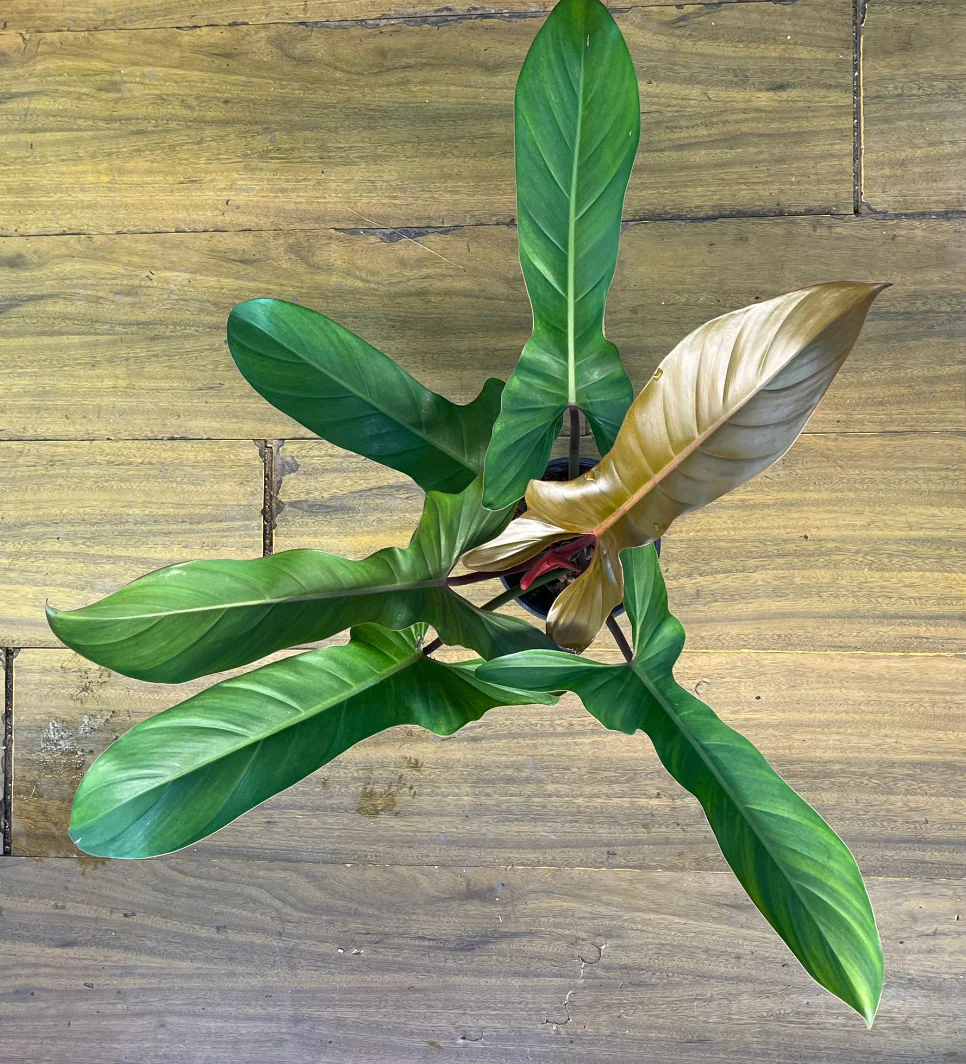
Florida Bronze is a horticultural label, not a wild species. Read the label beside the plant: document its leaf sequence and provenance first, then match light, support and root-zone care to the growth you actually have.
Identify the label before copying a care recipe
Kew accepts Philodendron pedatum and Philodendron squamiferum as wild South American species. Those records are valuable parent/species context, but they do not make Florida Bronze a wild taxon or prove that any unrecorded seller plant descends from them.
The strongest public record for a bronze Florida-type plant is patent `PPIPHFB014`. It names `Florida Green` and `Black Cardinal` as parents and describes a reddish-brown-to-dark-green leaf transition. Greenboog currently uses the broader Florida Bronze label without a cultivar code in the article. Treat it as seller evidence until a supplier or propagation record connects the plant to a documented cultivar.
| Evidence shown | What it supports | What still needs checking |
|---|---|---|
| Florida Bronze only | A trade label for the offered plant or batch. | Whole plant, leaf sequence, stem, roots, source and propagation history. |
| `PPIPHFB014` with traceable source | The patented `Florida Green` × `Black Cardinal` cultivar record. | That the offered plant is correctly propagated and labelled. |
| A parent-species name | Taxonomic facts about that accepted species. | A breeding record before transferring the species story to a hybrid. |
Read bronze as a stage, not a permanent finish
A fresh leaf can open copper, reddish brown or olive and deepen toward green as it expands and hardens. Light and temperature can change how the colour appears, while camera exposure and white balance can exaggerate it. Compare several consecutive leaves under stable conditions rather than judging one dramatic photograph.
Let architecture choose the support
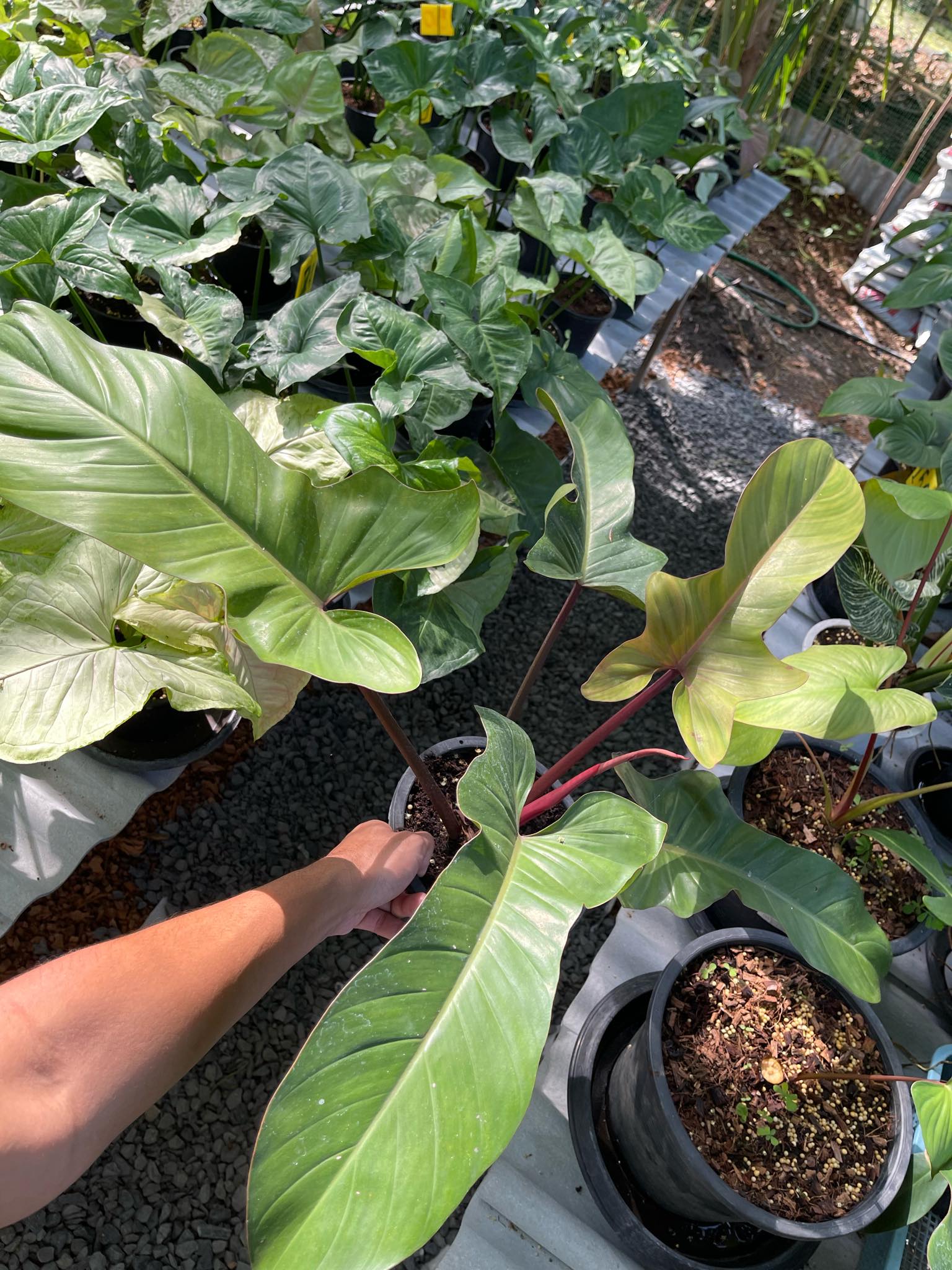
Florida labels circulate across plants with different form claims. The patent describes `PPIPHFB014` as upright to outwardly spreading with a single basal shoot, while Florida-type trade plants are often presented as climbers. Inspect the actual stem. Longer internodes, a directional growth point and aerial roots favour a close pole or plank; a compact basal plant may only need room and a stable pot.
Let the stem decide whether support is useful. Tie only the stem loosely and keep petioles free to move. Support should improve balance and stem contact, not force a self-heading plant into an invented climbing story.
Build care around usable light and root oxygen
RHS guidance places Philodendron in bright indirect light, warm rooms and a moisture-retentive but well-drained medium. Introduce stronger light gradually and watch the next leaf, not an instant colour response. Direct hot sun can scorch; weak light can stretch growth and slow use of water.
Check moisture below the decorative surface and lift the pot. Water thoroughly when the upper root zone has dried somewhat and the container is lighter, then let excess drain. The correct interval changes with root mass, pot material, light, warmth and season. A small root ball in a large pot can remain wet long after the surface looks dry.
Use a structured mix with coarse bark plus water-holding and mineral-aeration components in proportions that fit the room. Feed lightly only during active rooted growth. Routine misting and pebble trays are not required for a Philodendron to function in a normal home; stable roots and usable light matter more.
Diagnose patterns before acting
| Pattern | Check first | Measured response |
|---|---|---|
| Fresh bronze leaf becomes green | Normal hardening across the leaf sequence. | Document several leaves; do not force colour with fertilizer. |
| Yellow leaf and wet mix | Drainage, root smell/texture, pot size and cold exposure. | Restore warmth and oxygen; remove only confirmed rot. |
| Brown margin | Recent sun move, dry root zone, salts and root damage. | Correct the observed cause; do not assume low humidity. |
| Long leaning stem | Light direction, internodes, aerial roots and support contact. | Increase light gradually and support the stem if its form calls for it. |
Philodendron sap and tissues contain calcium oxalate. Keep the plant away from children and pets that chew foliage, wear gloves when pruning, and seek appropriate medical or veterinary guidance if exposure causes mouth swelling, drooling or difficulty swallowing.
Buy the evidence that belongs to this plant
- Confirm whether the images show the exact plant, a representative batch or a parent/reference.
- Ask whether Florida Bronze is only the seller label or is connected to a cultivar code and supplier record.
- Request a current whole-plant image showing fresh and hardened leaves, stem, growth point, roots or pot, and scale.
- Check whether the selected option is a rooted pot, cutting or another format.
- Read the destination, shipping and arrival terms before checkout.
Match the sale claim to the plant in front of you. Use the rare Philodendron hub for broader comparison, the general Philodendron care guide for shared care decisions and the propagation guide before cutting a node.
Sources
- US Plant Patent PP34,671: `PPIPHFB014` parentage, selection and leaf-colour sequence
- Kew POWO: accepted Philodendron pedatum record
- Kew POWO: accepted Philodendron squamiferum record
- RHS: Philodendron light, root-zone, support and humidity guidance
- NC State Extension: Philodendron calcium-oxalate safety

Not pet-safe