Monstera species guide
A plant sold as Monstera obliqua “Peru” needs more than spectacular holes to support that name. Start with provenance and a connected growth sequence, then use the plant’s roots, nodes and response to conditions to guide care.
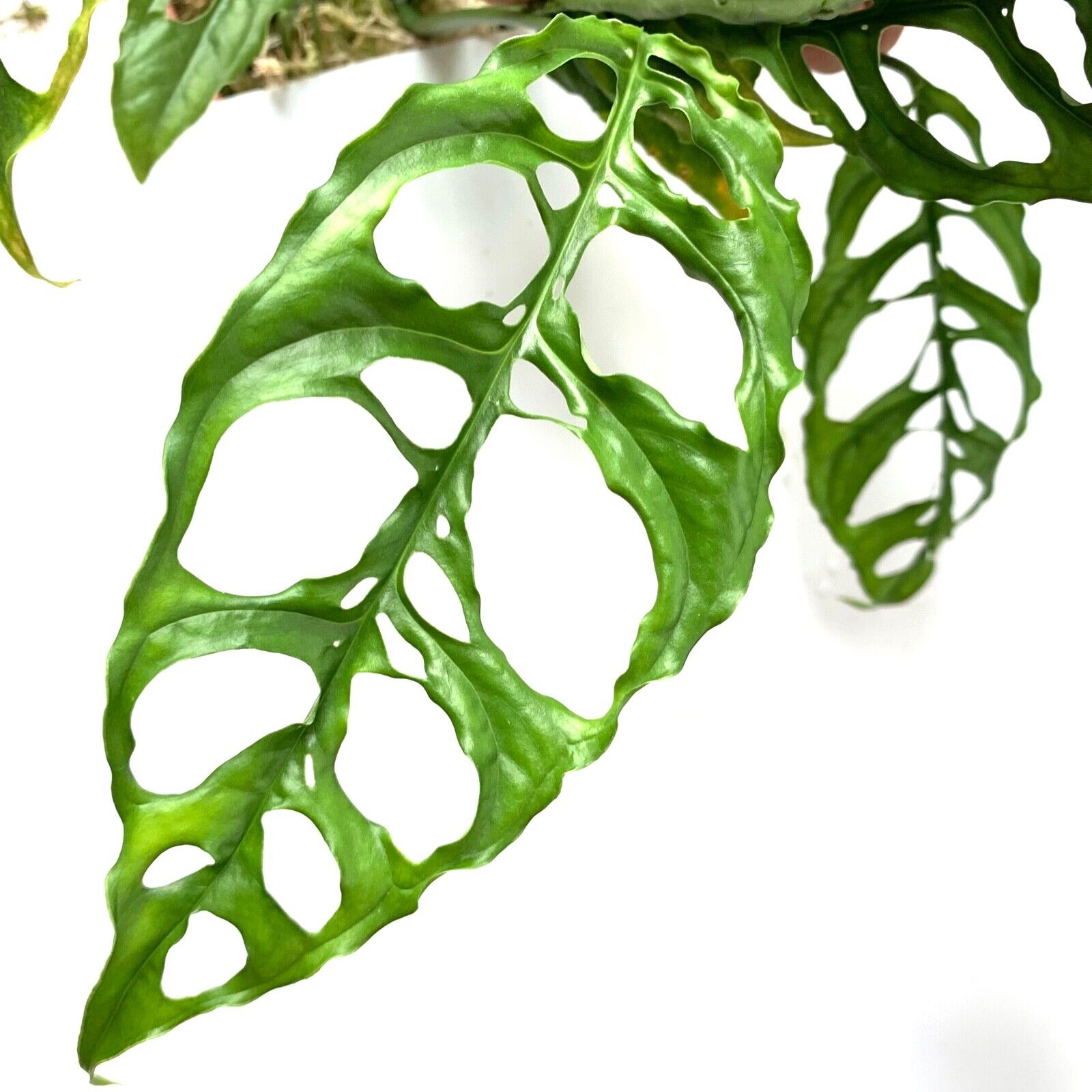
What the accepted name actually tells you
Kew’s Plants of the World Online accepts Monstera obliqua Miq. and records its native range from Costa Rica through South Tropical America and Trinidad. It is a climber associated with the wet tropical biome. That establishes a broad taxon and range; it does not validate every commercial plant carrying the name.
Historic revision work describes a slender, variable vine. Juvenile foliage may be entire. Adult blades can also be entire or perforated, and the amount and shape of perforation varies. This is why a viral rule such as “a true obliqua is 90% holes” is not a dependable identification key.
Screen identity before comparing care tips
| Evidence | What it can support | What it cannot prove alone |
|---|---|---|
| Documented provenance | A traceable history from collection, accession or established mother plant. | That every propagated or resold plant stayed correctly labeled. |
| Connected growth sequence | How blades, petioles, nodes, internodes and runners behave on one plant. | Accepted identity without comparative taxonomic evidence. |
| One highly perforated leaf | The morphology of that individual blade. | Species, maturity, origin or the next leaf’s form. |
| Seller name or tag | The commercial identity under which the plant is offered. | A herbarium-level determination or Peruvian provenance. |
Compare the whole plant with accepted species and documented look-alikes. Monstera adansonii, M. lechleriana and the cultivated plant sold as Monstera sp. “Esqueleto” can all enter a collector’s comparison set. The Esqueleto identity guide owns that cultivar’s evidence boundary; the Monstera comparison guide helps route broader variety questions.
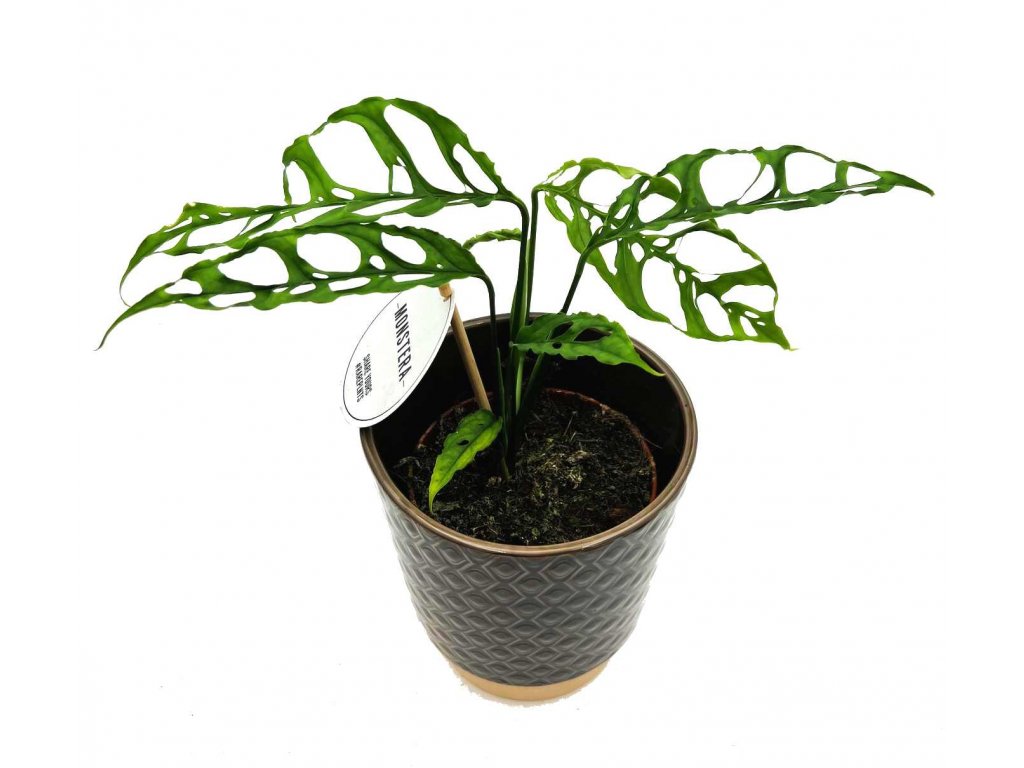
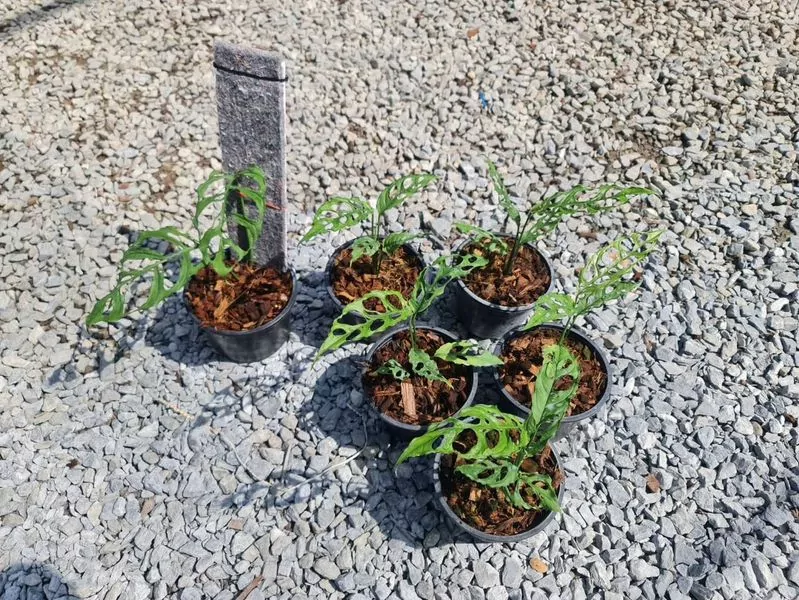
Build care around the specimen you actually have
Do not make the plant prove its label by pushing extreme light, constant wetness or heavy feeding. Start conservatively, record the response of new growth and change one factor at a time.
- Light: use bright filtered light and acclimate gradually. Read leaf temperature, bleaching, source-facing scorch and internode change instead of chasing a fixed window direction.
- Root zone: use an airy, moisture-retentive aroid mix in a pot with open drainage. Fine roots need oxygen as well as moisture.
- Water: water thoroughly, drain, then reassess using upper-layer dry-down, pot weight and root condition. A calendar cannot see a dense core or a cool week.
- Air and warmth: protect thin foliage from cold drafts and drying heat while maintaining air movement. High humidity without airflow can extend leaf-wetness and disease risk.
- Support: give climbing growth a stable pole, plank or trellis. Keep petioles free, and guide a runner only after identifying its nodes and direction.
Use Greenboog’s condition-led watering guide and support guide for the full workflows. The Monstera care pillar owns the shared whole-plant baseline.
Read a runner or stolon before cutting it
Monstera obliqua can produce slender flagelliform shoots or stolon-like growth. A long section with reduced leaves is not automatically a failure. It may be exploring for support or a new rooting point. Trace it back to the parent, locate nodes and axillary buds, and decide whether to guide, layer or cut.
- Confirm there is stem tissue with a viable node; a detached leaf and petiole cannot continue as a vine.
- Inspect the node for firmness, discoloration, rot and an identifiable bud or growth point.
- Use a sterile sharp blade and leave enough internode for handling without crushing the bud.
- Root in clean water or an airy medium you can monitor, keeping the bud out of stagnant saturated material.
- Pot only after functional branching roots support stable uptake—not at the first tiny white tip.
The Monstera propagation guide compares methods and pot-up signals. A valuable name does not change the biological requirement for a viable node.
Diagnose changes as a pattern
| Signal | Check first | Safe first response |
|---|---|---|
| Yellowing plus a heavy pot | Drainage, root texture and dry-down history. | Pause watering and inspect the root zone before feeding. |
| Crisp margins or translucent patches | Direct sun, heat, rapid dry-down and mineral buildup. | Correct the evidenced stress gradually; do not assume humidity is the only cause. |
| Long runner with small leaves | Node health, support contact and usable light. | Guide or layer it before deciding to remove it. |
| Spots spreading between leaves | Leaf backs, airflow, splash pattern and nearby plants. | Isolate, document progression and identify the cause before choosing a treatment. |