
Horticultural label, mature form and care
Philodendron ‘Bob Cee’ is a climbing horticultural plant known for glossy, deeply lobed leaves. Its published parentage is unclear, so identify the label through source records and a sequence of leaves—not a heartleaf story copied from another Philodendron.
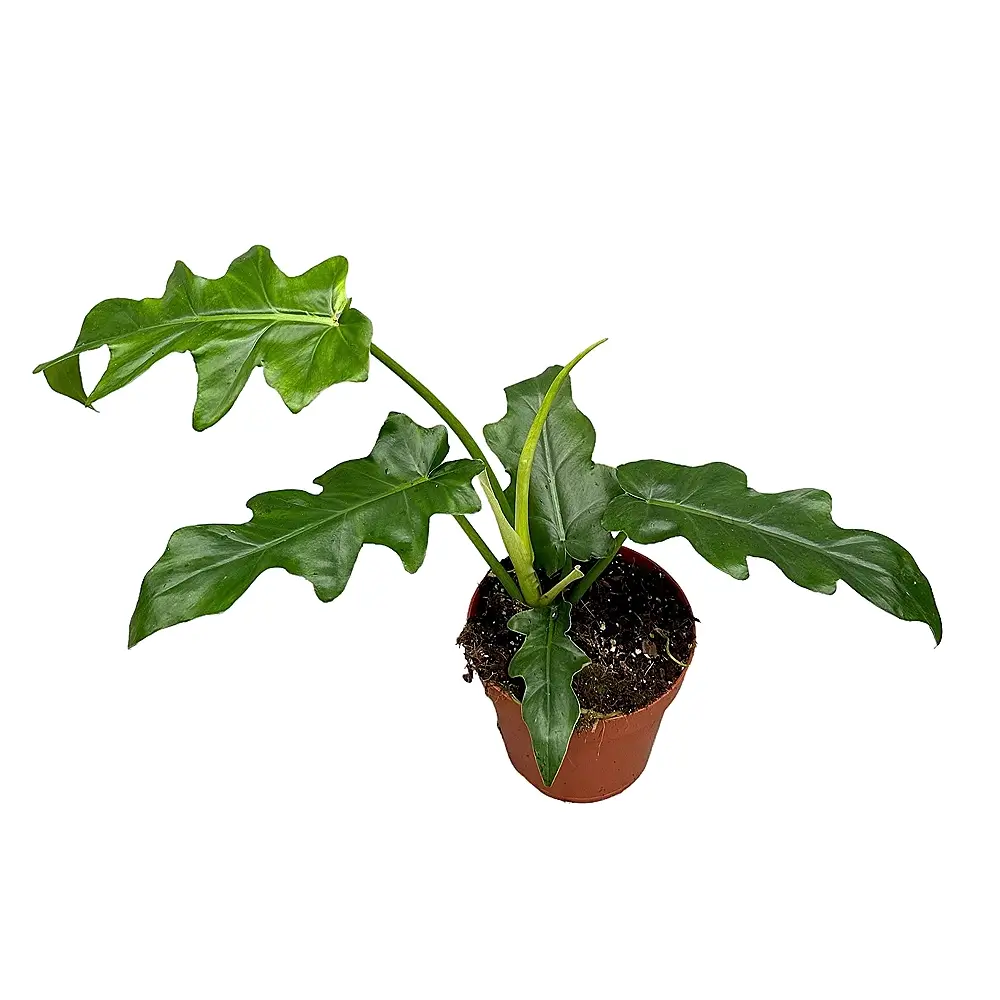
Treat Bob Cee as a horticultural label
No accepted species record, patent or primary parentage publication for ‘Bob Cee’ was found in this research batch. That does not make the plant unreal; it limits what the label can prove. Write the name as a cultivar or horticultural label, and do not turn it into a wild heartleaf species with an invented native range.
Fairchild provides the strongest institutional horticultural reference located here: a large climbing aroid with glossy lobed leaves. Its sale specimen is described with 1–2-foot foliage, but that measurement belongs to the documented plant and conditions—not a guaranteed indoor size for every juvenile or shipment.
| Evidence | What it supports | Boundary |
|---|---|---|
| Traceable nursery label | The propagation line sold as ‘Bob Cee’. | It does not establish wild origin or parentage. |
| Several mature lobed leaves | Visible consistency with the horticultural form. | Juvenile leaves may be simpler. |
| Whole plant and climbing stem | Architecture, scale, support need and current condition. | A cropped leaf cannot show these. |
Read the leaf sequence before naming the plant
Compare an expanding leaf, the newest hardened leaf and at least one older leaf. Bob Cee labels are associated with long, glossy blades that develop deep lobes or toothed margins. The exact outline can change with maturity, support and growing conditions, so one small or recently stressed leaf is weak evidence.
Also compare the petiole attachment, stem, cataphylls, aerial roots and direction of growth. These features help distinguish a true climber from a self-heading plant and show whether the photographed specimen is established enough for meaningful comparison.
Place support next to the active stem
Use a sturdy pole, plank or other vertical surface and place it close enough for the stem or aerial roots to contact. Tie only the stem loosely. Petioles must turn freely toward light, and forcing them against a pole can damage emerging leaves.
Support the next node, not the last dramatic leaf. An unsupported stem can sprawl, twist and produce smaller or less stable growth. If an old section is stiff, guide the new growth rather than bending the whole vine sharply during one repot.

Balance light, warmth and root-zone air
Start with bright indirect light. Increase exposure gradually if internodes lengthen, the stem leans strongly or later leaves become smaller. Abrupt hot sun can mark foliage, while weak light slows water use and leaves a wet mix risky for longer.
Use a structured medium that retains some moisture while keeping air spaces after watering. Check below the surface and lift the pot. Water the full root ball when it has partly dried, then let excess drain. Root mass, pot material, recent light and warmth determine the interval; a top-inch or weekday rule cannot.
Keep the root zone warm and feed lightly only during active rooted growth. More fertilizer cannot replace missing light or damaged roots. Routine misting and pebble trays do not substitute for airflow and a functioning root system.
Diagnose patterns before applying a cure
| Pattern | Check first | Measured response |
|---|---|---|
| Smaller or simpler new leaves | Roots, light trend, support contact and recent move. | Correct the limiting factor and judge later nodes. |
| Yellowing with wet mix | Drainage, pot size, temperature and root texture. | Restore warmth and aeration; remove only confirmed rot. |
| Brown patch or margin | Sun change, dry root zone, salts and handling damage. | Correct the observed cause; do not assume low humidity. |
| Distorted new growth | Growth point, pests, roots and recent sprays. | Isolate and identify before stacking treatments. |
Philodendron tissues contain calcium oxalate. Keep the plant away from children and pets that chew foliage, wear gloves when sap contact is likely, and seek appropriate medical or veterinary guidance for significant mouth swelling, drooling or swallowing difficulty.
Match the listing to the plant and format
- Confirm whether images show the exact plant, a representative batch or a mature reference.
- Request the current whole plant, newest and older hardened leaves, stem, growth point and root or pot format.
- Ask for source-label history when a juvenile plant has not developed diagnostic lobing.
- Check whether the option is potted, a cutting or tissue culture before applying established-plant care.
- Review destination and arrival terms before checkout.
Use the rare Philodendron guide for broader label comparison, the general Philodendron care guide for shared root and light decisions, and the propagation guide before cutting a node.

Thanks for the great advice!