Philodendron label and variegation evidence
White Princess Tricolor is best read as a horticultural label for a green, white and pink-patterned Philodendron. Verify the plant and its leaf sequence before repeating a pedigree story or promising a fixed pattern.

Separate the name, pattern and plant
The RHS record confirms that White Princess is used horticulturally, while its unresolved status sets a clear evidence boundary. A separate US patent application documents a selection called White Ice Philodendron within White Princess material, but that selection has its own history and traits. It cannot be used as proof that every White Princess shares the same breeding or self-heading architecture.
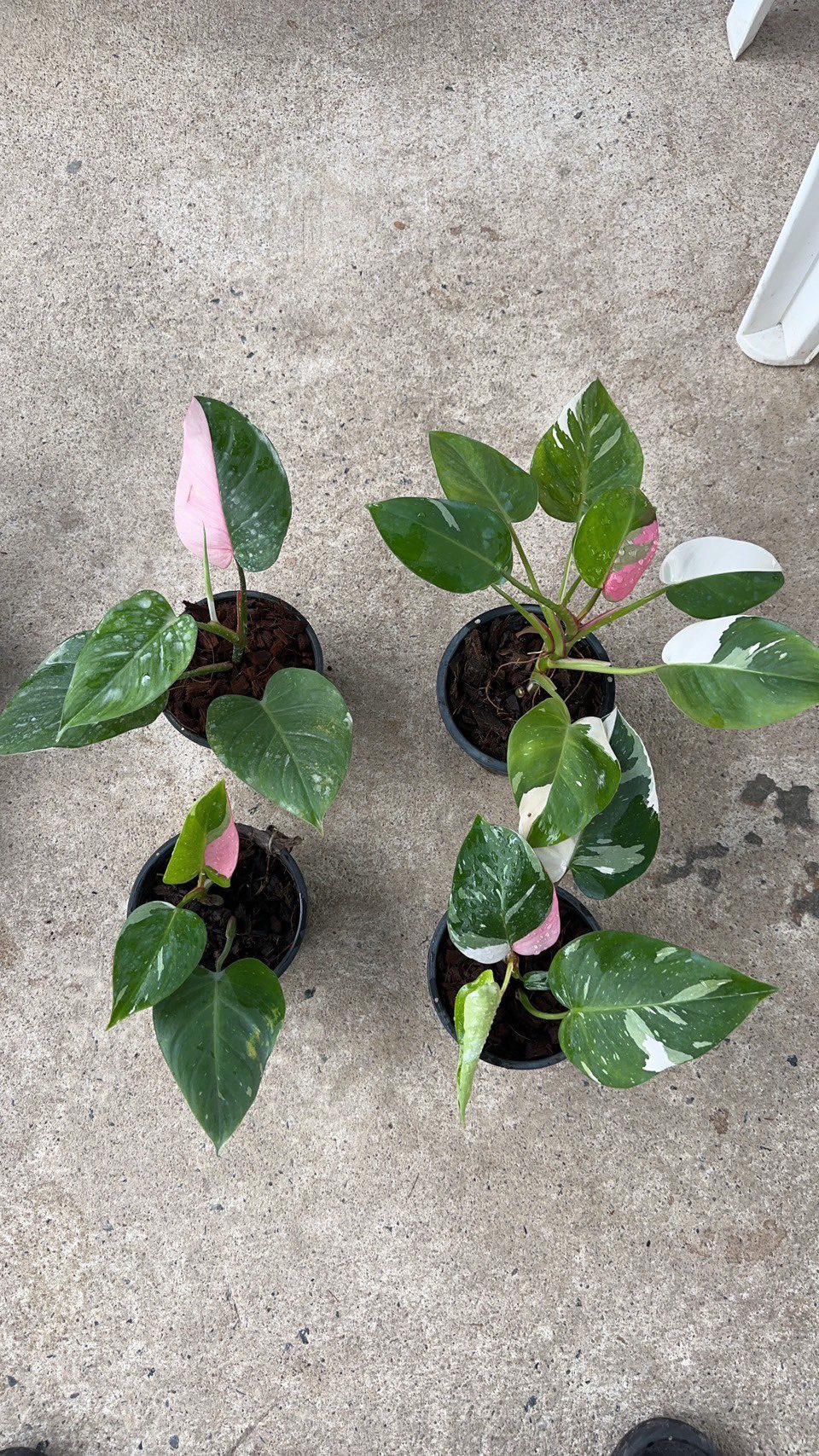
Tricolor describes the photographed pattern, not a separate botanical rank. Pink may occur in leaf sectors, petiole sheaths or stem tissue; white and green distribution can change from leaf to leaf. A seller should show the actual plant or make clear that the image represents a batch.
| Label or evidence | What it supports | What remains unknown |
|---|---|---|
| White Princess | A recognized horticultural name in trade and the RHS database. | Accepted pedigree, origin story and uniform architecture. |
| Tricolor | The seller expects green, white and pink expression. | The pattern of the next leaf or every propagated plant. |
| Named documented selection | Only the traits and lineage in that traceable record. | Whether an unqualified White Princess listing is that selection. |
Use a leaf sequence, not one hero leaf
Photograph several consecutive leaves, the growth point and the stem. Record whether white or pink is sectoral, speckled or concentrated along one side. This sequence helps distinguish a stable-looking pattern from one unusually colourful leaf and reveals whether the next growth point still carries mixed tissue.
Plant Physiology studies of model variegated plants show that white sectors can lack normal photosynthetic chloroplast development while green sectors carry the photosynthetic load. That is useful physiology context, not proof of the genetic mechanism in White Princess. Green tissue is the working reserve. Do not remove healthy green leaves merely to chase more white.
Let the observed stem define the form
Some White Princess material grows compact and upright; other plants may elongate with age or after propagation. Inspect internodes, the growth point, aerial roots and how the plant balances in its pot. The stem and growth point decide the next move.
Use a short stake only when the stem needs balance, or a closer support when internodes and aerial roots show climbing behaviour. Tie the stem loosely, never the petioles. Avoid promising a cascading vine or transferring the self-heading description of White Ice to an undocumented plant.
Protect roots first, then colour
RHS Philodendron guidance favours bright indirect light, warmth and a moisture-retentive but well-drained medium. Move toward stronger light in steps; pale tissue can scorch quickly in hot direct sun. Rotate only if the plant receives very one-sided light and the stem remains stable.
Check moisture below the surface and lift the pot. Water thoroughly when the upper root zone has dried somewhat and the container is lighter, then let excess drain. A small root mass in an oversized pot stays wet longer. Build an airy mix from coarse bark, water-holding material and mineral aeration in proportions that fit the room and watering habits.
Feed lightly only during active rooted growth. Fertilizer does not create variegation and should not be the first response to yellowing. High humidity is not a substitute for functioning roots; routine misting and pebble trays are optional, not core requirements.
Troubleshoot the pattern before cutting
| Pattern | Check first | Safer next step |
|---|---|---|
| Mostly green new leaves | Several nodes, growth-point pattern and recent light change. | Stabilize care; prune only if a viable patterned node is clearly mapped. |
| Mostly white new leaf | Remaining green tissue and health of the next growth point. | Protect green leaves and avoid sun or fertilizer stress. |
| Yellowing with wet mix | Roots, drainage, pot volume and cold exposure. | Restore warmth and oxygen; remove only confirmed rot. |
| Brown pale sectors | Recent sun move, dry roots, salts and physical damage. | Correct the measured cause; damaged tissue will not recolour. |
A propagation piece needs viable stem with a node/growth point; a leaf and petiole alone cannot make a complete Philodendron. Use the Philodendron propagation guide before cutting and never promise that every new plant will repeat an identical pattern.
Philodendron contains calcium oxalate. Keep foliage away from chewing children and pets, wear gloves when cutting and seek appropriate medical or veterinary guidance for mouth swelling, drooling or difficulty swallowing.
Buy the current plant, not a royal story
- Confirm whether the image is the exact plant, a representative batch or a parent/reference.
- Ask what White Princess Tricolor means in that listing and whether any selection record is available.
- Request current whole-plant, consecutive-leaf, stem, growth-point, pot/root and scale views.
- Check the selected size/format and the amount of functional green tissue.
- Read shipping, destination and arrival terms before checkout.
Use the rare Philodendron hub to compare broader collector options and the general Philodendron care guide for shared care decisions.
Sources
- RHS: White Princess horticultural record and unresolved name status
- US patent application: distinct White Ice selection and architecture boundary
- Plant Physiology: green and white sector chloroplast/photosynthesis model
- RHS: Philodendron light, root-zone and support guidance
- NC State Extension: Philodendron calcium-oxalate safety