Cultivar record, pattern evidence and care
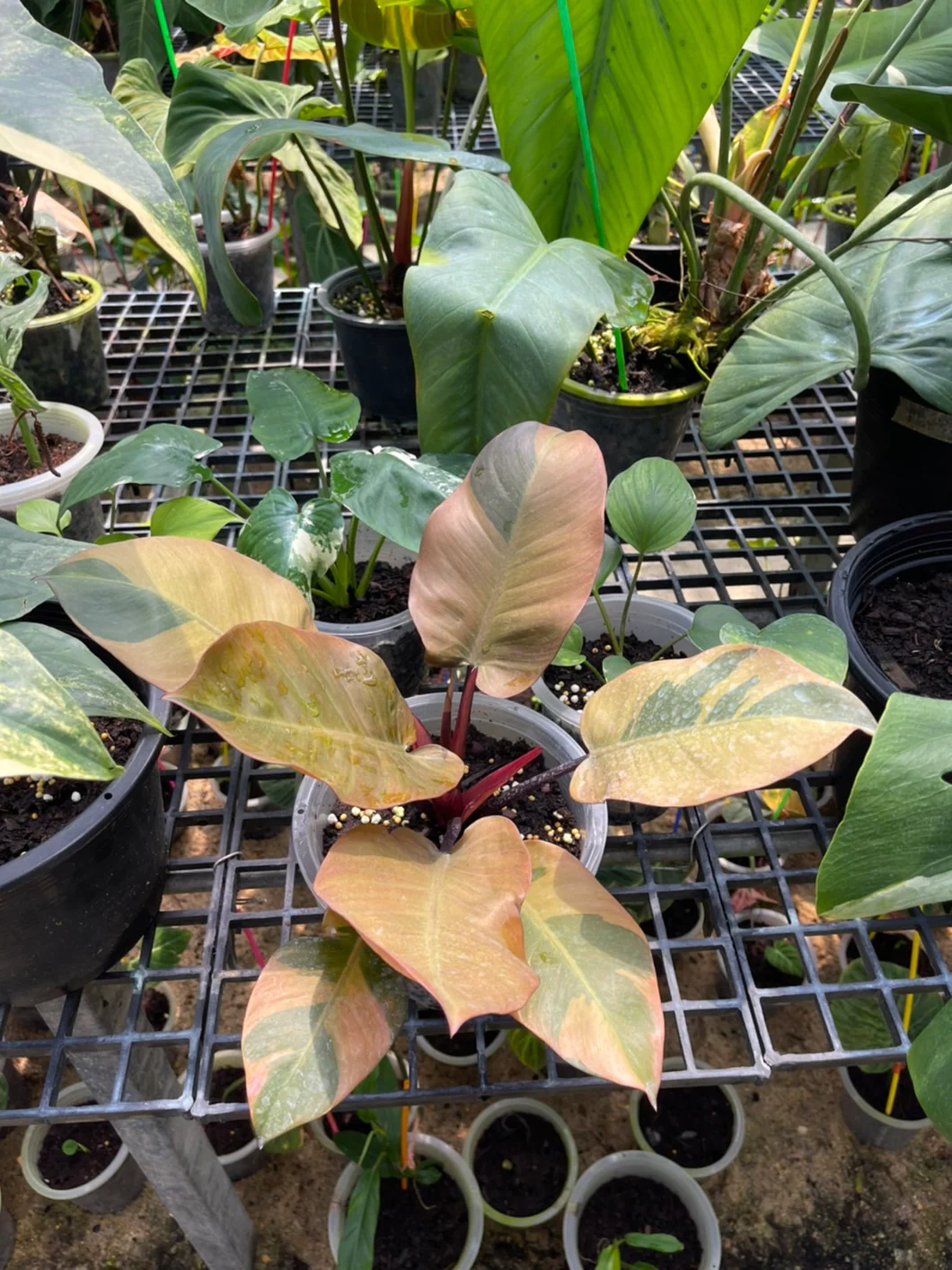
The original ‘Black Cardinal’ is a patented compact, self-heading Philodendron hybrid. “Black Cardinal Variegated” adds a pattern claim that must be evaluated separately through lineage, several leaves and the live plant being offered.
Separate the base cultivar from the variegated claim
‘Black Cardinal’ came from a complex Philodendron breeding program and was patented in 1984. The patent selected it for compact form, broad leathery foliage and a brick-red-to-black-red colour transition. RHS accepts the cultivar name, and University of Florida IFAS describes it as a patented self-heading hybrid with dark reddish-black elliptical leaves.
That record is a reliable baseline for growth habit and normal colour development. It does not document cream, peach, mint or sectoral variegation. Variegation is a seller claim until its lineage is documented. A sport or propagated selection may be genuine, but the evidence belongs to the actual line being offered.
| Evidence | What it supports | Boundary |
|---|---|---|
| USPP5355 / ‘Black Cardinal’ | Compact self-heading form and brick-red-to-black-red leaf sequence. | The patent does not describe variegation. |
| Current multi-leaf photographs | Pattern, condition and form of the photographed plant or batch. | The image scope must be stated. |
| Stable propagation history | Repeated pattern within a named line or sport. | Future leaves still vary; no fixed percentage is promised. |
Read colour and pattern across time
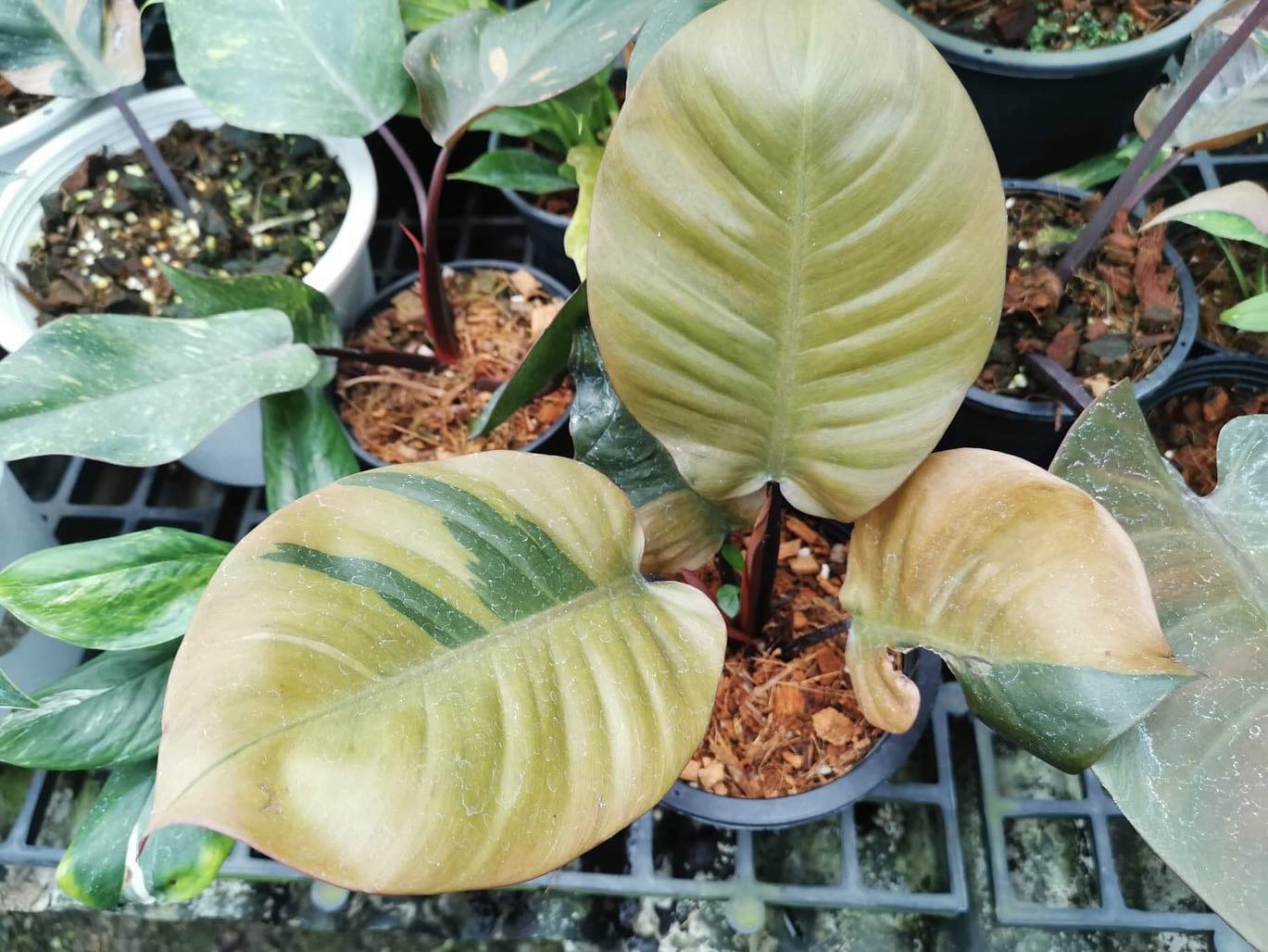
Black Cardinal already changes colour as a leaf expands and hardens. On a plant sold as variegated, compare the newest expanding leaf, the newest hardened leaf and at least one older leaf. Separate normal copper or deep-red development from tissue that remains visibly different after hardening.
Photographs must show the offered variation, not only the cultivar name. Ask whether the listing uses an exact specimen, a representative batch or a parent/reference image. If a selected variation is offered, make sure the selected option actually maps to the photographed plant.
Keep the self-heading structure stable
The patent describes a compact plant, not a trailing vine. New leaves arise around a short central structure, so a moss pole and hanging basket are not default requirements. Use a stable pot that resists tipping, keep the crown above the medium and leave room for petioles to open without rubbing a wall.
Let the rosette keep its centre of gravity. Rotate only when uneven light makes the plant lean, and avoid forcing petioles upright with ties. Remove only damaged or declining leaves when necessary; excessive pruning reduces the photosynthetic area supporting the central growth point.
Use light to support growth, not force pattern
Start with bright indirect light and change exposure gradually. Very weak light slows water use and may reduce growth; abrupt hot sun can scorch pale or recently unfurled tissue. Light can change leaf colour and plant performance, but it cannot safely manufacture a stable variegated lineage.
Use a well-aerated medium that retains some moisture. Check deeper than the decorative surface and lift the pot. Water the full root ball when it has partly dried, then let excess drain. Pot size, root mass, temperature and recent light determine the interval; avoid a fixed weekday or top-inch rule.
Feed lightly only during active rooted growth. A high fertilizer dose cannot restore green tissue to a mostly pale leaf or guarantee stronger sectors. Routine misting and pebble trays do not replace functioning roots, usable light and airflow.
Diagnose pattern and stress separately
| Pattern | Check first | Measured response |
|---|---|---|
| New copper leaf darkens | Normal patent-documented hardening sequence. | Wait for full hardening before judging pattern. |
| Mostly pale new growth | Green area across several leaves and growth-point trend. | Protect from harsh sun; do not promise recovery by feeding. |
| Yellowing with wet medium | Root texture, drainage, pot size and temperature. | Restore root-zone air and warmth; remove only confirmed rot. |
| Distorted or stippled leaf | Pests, growth point, root stress and recent sprays. | Isolate and identify before stacking treatments. |
Philodendron tissues contain calcium oxalate. Keep the plant away from children and pets that chew foliage, use gloves when sap contact is likely, and seek appropriate medical or veterinary guidance for significant mouth swelling, drooling or swallowing difficulty.
Buy the exact pattern and format
- Confirm exact-plant, representative-batch or reference-image scope.
- Request a current whole plant, central growth point, newest and older hardened leaves, pot and root format.
- Ask how the variegated line was propagated and whether pattern has repeated across nodes.
- Do not accept trailing or climbing descriptions copied from unrelated Philodendron.
- Check selected variation, destination rules and arrival terms before checkout.
Use the rare Philodendron guide for cultivar comparison, the general Philodendron care guide for shared root and light decisions, and the propagation guide before cutting a self-heading plant.