Cultivar identity, variegation and care
Philodendron Cream Splash is a variegated cultivar of the heartleaf species Philodendron hederaceum. Read several leaves, the stem and the source label together; then manage light and roots for steady growth rather than chasing a fixed cream percentage.
Start with the accepted species and cultivar label
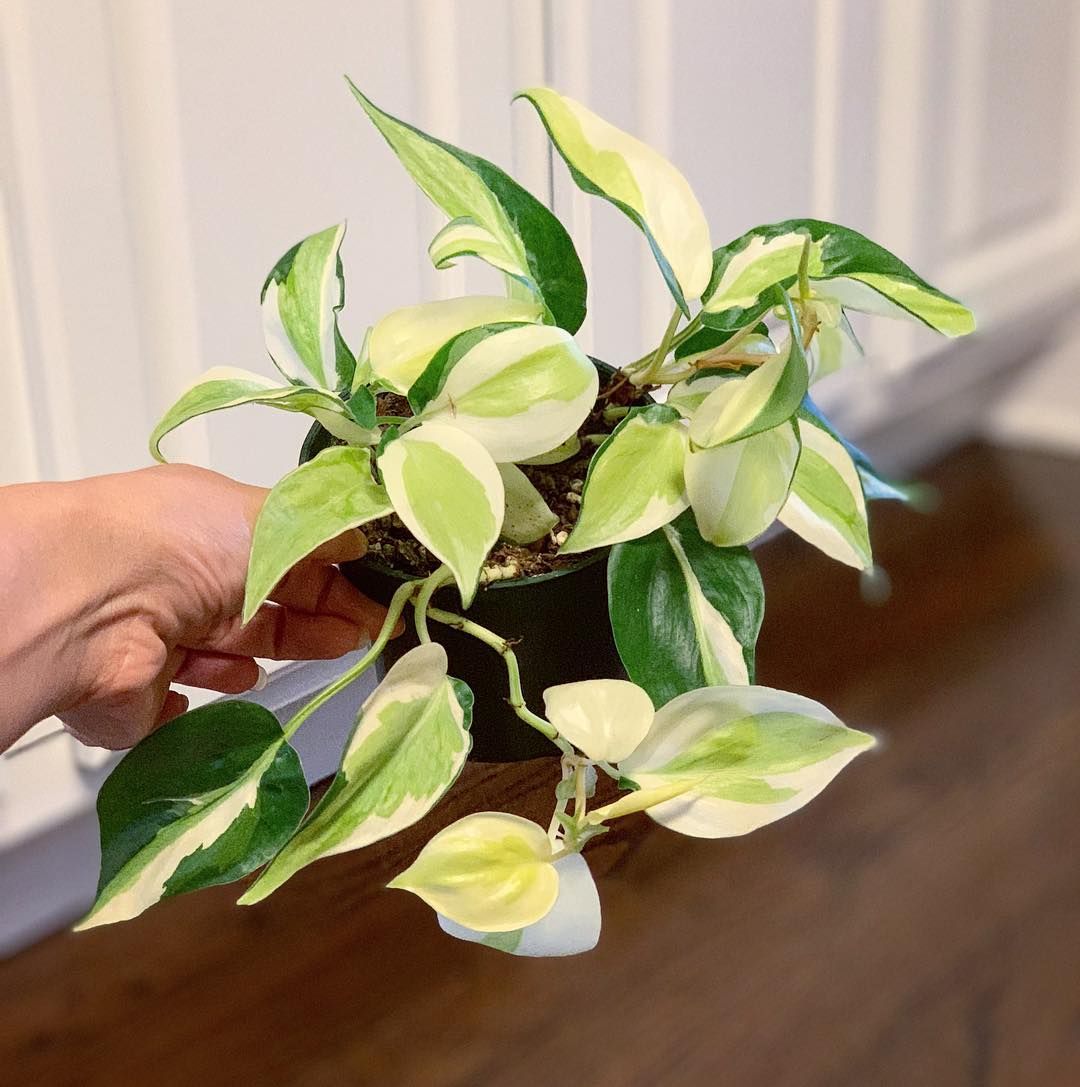
NC State Extension lists Cream Splash among cultivars of Philodendron hederaceum. Kew accepts that species as a climbing epiphyte from Mexico through tropical America. The species record supports the heartleaf growth habit and broad botanical background; it does not document where the Cream Splash selection first appeared or prove an invented hybrid parentage.
This distinction matters because the old article called the plant a generic hybrid and transferred a rainforest-origin story directly to the cultivar. A defensible label is simpler: Cream Splash is a horticultural selection within the accepted heartleaf species unless stronger provenance accompanies a particular line.
Identify Cream Splash from a sequence, not one leaf
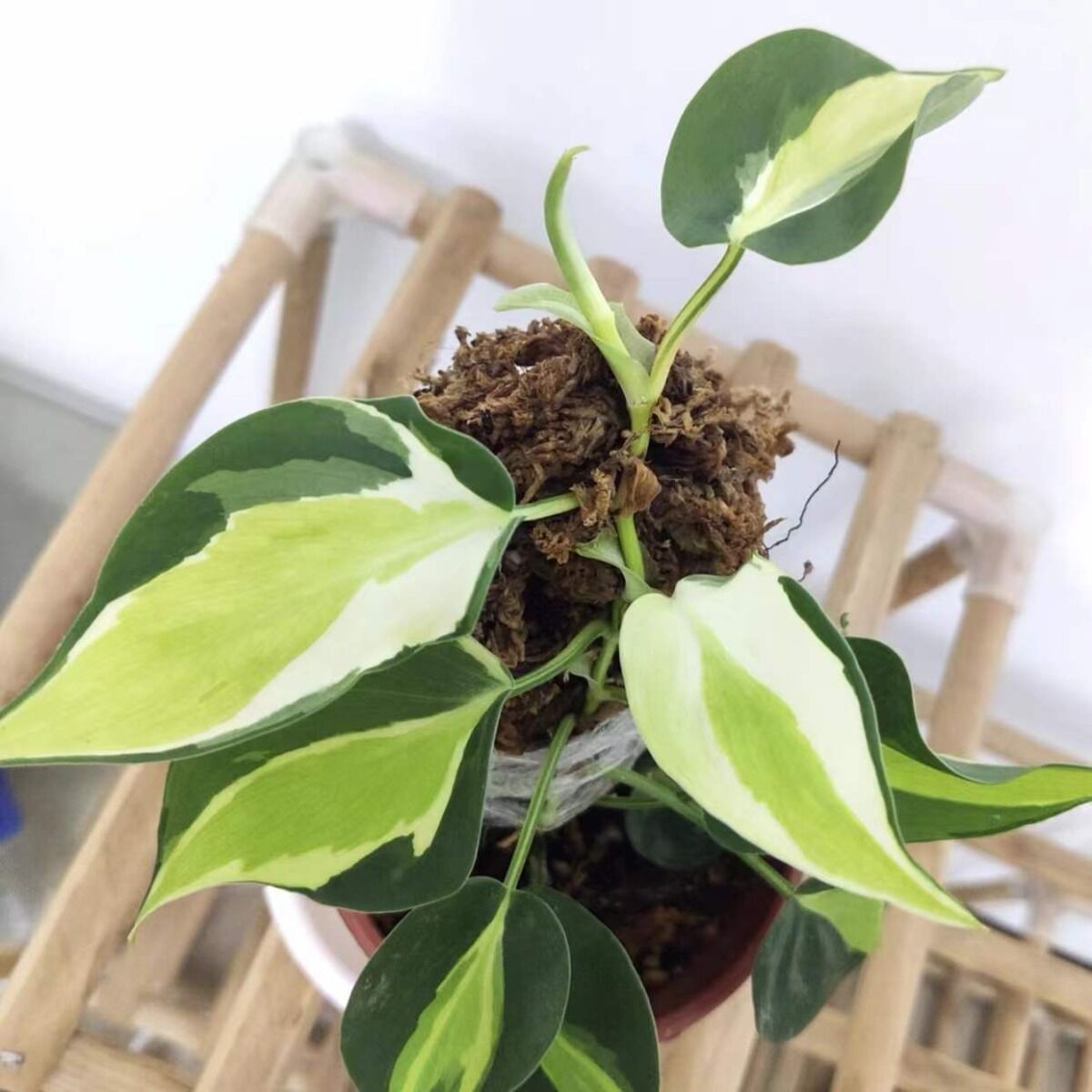
Look across an expanding leaf, the newest hardened leaf and at least one older leaf. Green, light green and cream can appear as central bands, irregular sectors or blended areas. The proportions change from node to node, so a dramatic single-leaf cutting is weaker evidence than a connected stem with several leaves.
| Evidence | What it answers | What it cannot promise |
|---|---|---|
| Traceable source label | The propagation line sold as Cream Splash. | Formal origin or parentage without documentation. |
| Three connected leaves | Pattern consistency and change across nodes. | Future colour percentage. |
| Whole stem and growth point | Architecture, health and active direction. | Root condition hidden inside a pot. |
| Roots or current pot | Whether care should begin as a cutting or established plant. | Long-term performance after a new environment. |
Do not identify Cream Splash only by the word tricolor. Several heartleaf cultivars circulate with overlapping green, lime, silver or cream descriptions, and retailer names are not always applied consistently. Preserve the exact nursery label and compare the actual stem rather than forcing a match from colour adjectives.
Use light to support growth, not force white leaves
Start with bright indirect light and watch the plant over several nodes. If growth stretches, new leaves become smaller and the pot stays wet much longer, the site may be too dim. If pale areas develop dry tan patches soon after a move, the increase may have been too abrupt or hot.
Variegated tissue contains less chlorophyll, but more intense light does not reliably command a fixed pattern. Move the plant gradually, keep leaves away from hot glass and judge the response from new growth. An older leaf will not gain green tissue after conditions change.
Match watering to roots, pot and recent light
Use a loose, free-draining medium with enough structure to retain moisture without collapsing around the roots. Choose a pot only slightly larger than the root ball. A large jump in pot volume leaves unused medium wet for longer and makes a calendar schedule especially risky.
Check below the surface and lift the container. Water the entire root ball after it has partly dried, then let excess drain. Light, temperature, pot material, root mass and the amount of foliage all change the interval. Weak light or a recent cold move slows water use; warm active growth usually shortens it.
Keep the plant warm and away from cold drafts. Feed lightly during active rooted growth, not as a cure for pale variegation or damaged roots. Average household humidity can work when water balance and airflow are sound.
Train the vine and propagate only a real node
Cream Splash can trail or climb. A pole or plank placed beside the active stem helps keep growth organised and gives aerial roots a contact surface. Attach the stem loosely and leave petioles free to turn toward light.
For propagation, a cutting needs a node because the node carries the growth and rooting structures. A leaf with only a petiole may remain attractive for a time but cannot produce a new vine. Take clean cuttings from a healthy plant, keep the original label with each division and do not select only from one unusually pale leaf.
- Locate the node and active growth point before cutting.
- Use a clean tool and retain enough stem to handle safely.
- Root in a warm, airy setup and avoid keeping the base saturated.
- Pot up only after functional roots are present.
- Judge colour and vigour across later leaves, not the first stressed leaf.
Diagnose the pattern before changing everything
| Pattern | Check first | Measured response |
|---|---|---|
| Smaller green new leaves | Light trend, roots, stem support and recent stress. | Correct the limiting factor and evaluate later nodes. |
| Tan marks on cream tissue | Recent sun increase, dry roots, salts and handling. | Remove the observed stress; the old mark will remain. |
| Yellowing with wet medium | Drainage, pot size, temperature and root texture. | Restore warmth and aeration; cut only confirmed rot. |
| Distorted new growth | Growth point, mites, thrips, roots and recent sprays. | Isolate and identify before stacking treatments. |
Philodendron tissue contains calcium oxalate crystals. Keep it away from children and pets that chew plants, wear gloves when sap contact is likely, and seek appropriate medical or veterinary guidance for significant mouth swelling, drooling or swallowing difficulty.
Match the listing to the plant you will receive
Before checkout, confirm whether the photographs show the exact plant, a representative batch or a mature reference. Ask for the current whole plant, several connected leaves, the growth point and the root or pot format. A rooted pot, fresh cutting and tissue-culture plant require different first-week handling.
Use the rare Philodendron guide for broader label comparison, the general Philodendron care guide for shared root and light decisions, and the propagation guide before cutting a node.