Accepted species, fiddle-like leaf evidence and climbing care
Philodendron panduriforme is an accepted wet-tropical climbing species native across northern Brazil, Colombia, Ecuador, Peru and Venezuela. Read its fiddle-like outline across connected leaves, and keep the accepted variety names separate unless provenance supports one.
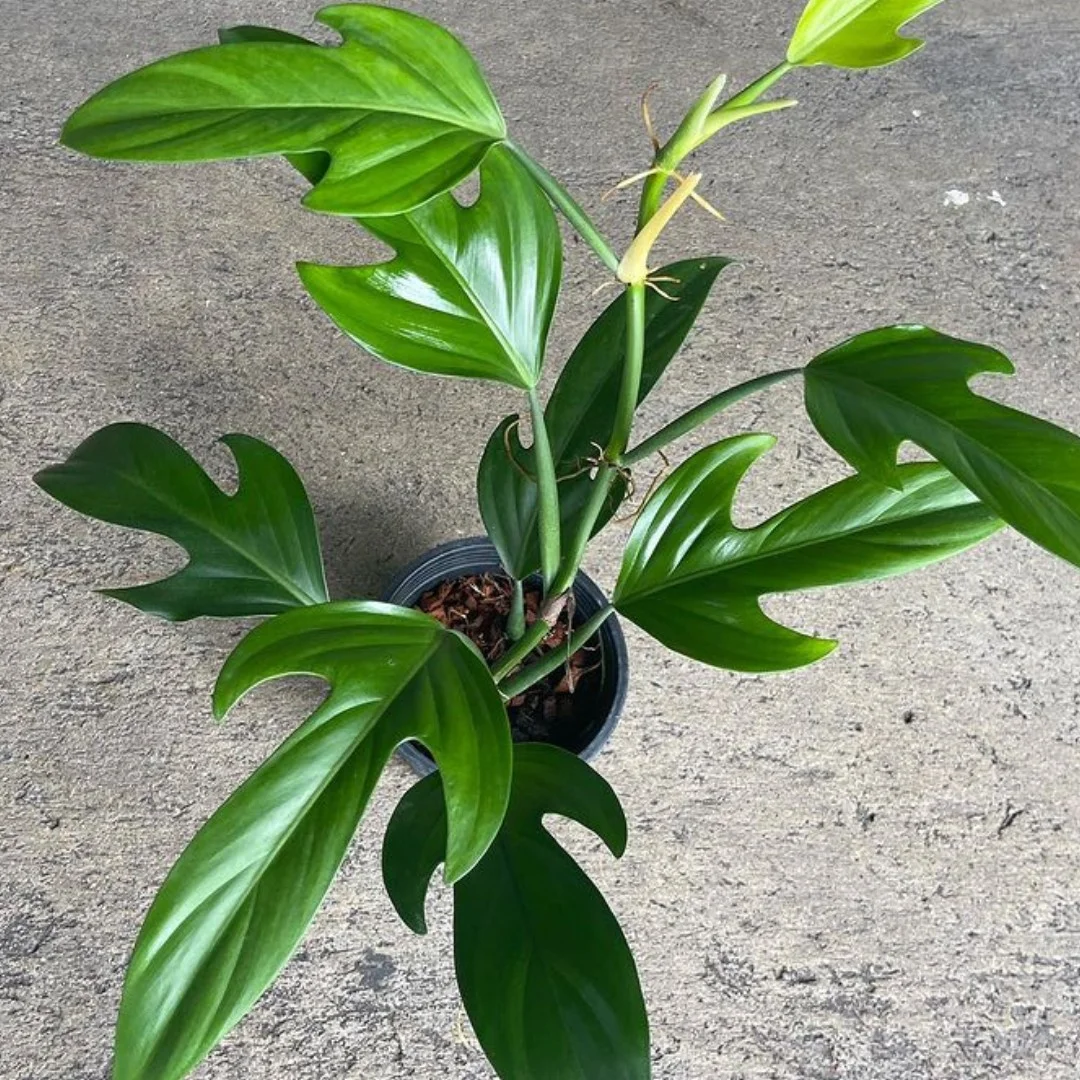
Start with the accepted species and range
Kew accepts Philodendron panduriforme (Kunth) Kunth and records it as a wet-tropical climber native to northern Brazil, Colombia, Ecuador, Peru and Venezuela. This wild range does not establish where a cultivated cutting was propagated.
Kew also accepts two infraspecific names: var. panduriforme and var. reichenbachianum. A product label that says only Panduriforme should remain at species level unless a traceable record supports the variety. Do not convert a seller image into an infraspecific determination.
Read the outline instead of counting tips
Panduriform means fiddle-shaped. Follow the midrib from petiole to apex: the blade broadens, narrows through a waist and expands around its lateral basal lobes. The outline can look three-part, but the useful evidence is how those sections remain connected as one blade.
Croat describes the typical variety with a proportionally longer medial lobe and shorter lateral lobes than var. reichenbachianum. That comparison belongs to mature botanical material. A young, folded or damaged leaf cannot carry the same weight.
| Evidence | What it supports | Boundary |
|---|---|---|
| Traceable seller label | The propagated line sold as Panduriforme. | Species-level wording does not prove a variety. |
| Connected leaf sequence | Recurring fiddle-like outline through growth. | One juvenile leaf may be simpler. |
| Medial waist and lateral lobes | Compatibility with the panduriform blade. | Other Philodendron leaves can look superficially similar. |
| Stem, nodes and aerial roots | Climbing architecture and present condition. | A detached leaf hides this evidence. |
Separate lookalikes without inventing synonyms
Holtonianum, Pedatum and other lobed Philodendron names can overlap in casual image results. They are not automatic synonyms of Panduriforme. Compare the entire connected blade, petiole, stem and source record rather than matching the number of visible points.
A stable label history is especially important when a juvenile plant has not developed a strong waist. Preserve the original name while later leaves mature instead of relabelling after every new image search.
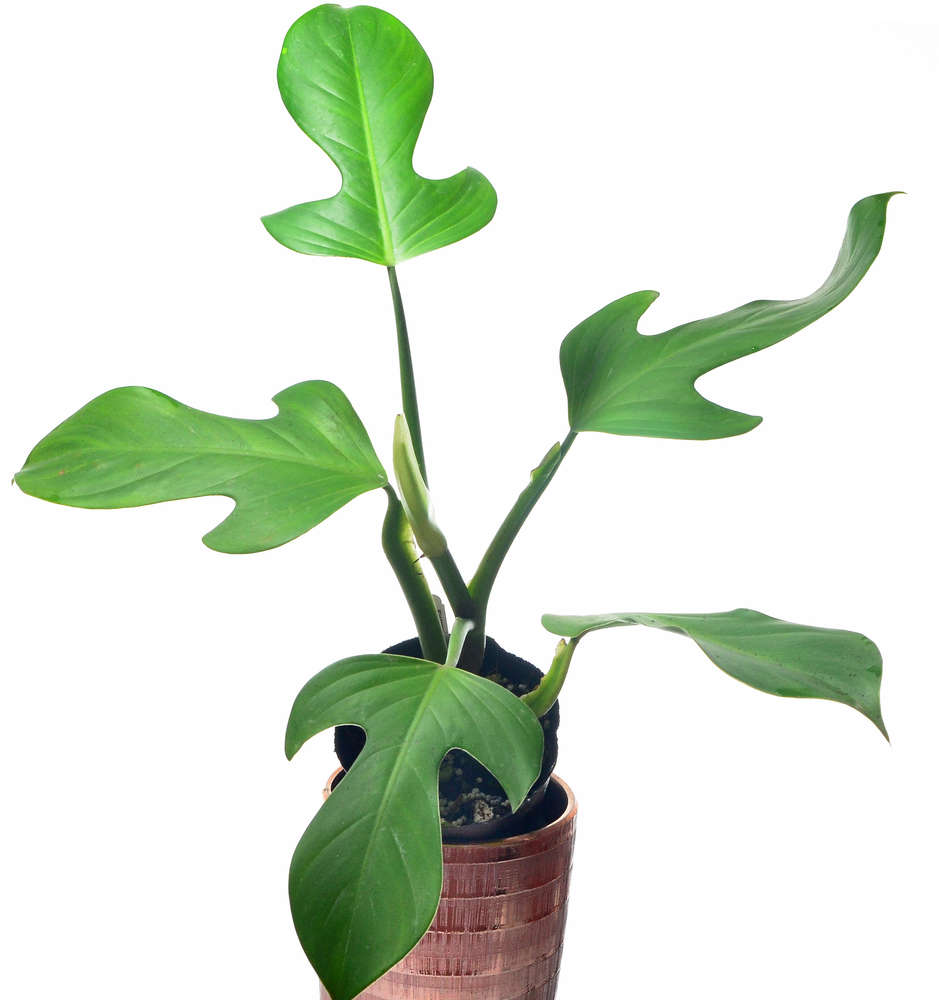
Place support beside the active stem
As an accepted climber, Panduriforme benefits from a vertical surface beside the active stem. Tie the stem loosely and leave petioles free to orient leaves. Aerial roots need contact near a node; fastening a petiole does not train the next internode.
Guide the newest flexible section first if the vine has sprawled. Support, usable light and functional roots work together, so a pole alone cannot correct weak roots or a dim position.
Balance light with root-zone air
Start with bright indirect light. Increase exposure gradually if later internodes stretch or leaves become smaller. Abrupt hot sun can scorch tissue; a dim site slows water use and leaves the pot wet for longer.
Use a loose, free-draining medium and a pot only modestly larger than the root mass. Check below the surface and lift the container. Water thoroughly after part of the root zone has dried, then let excess drain. Pot material, roots, airflow, light and temperature determine the interval; one dry-inch or weekly rule cannot.
Keep the plant warm and away from cold drafts. Feed lightly only during active rooted growth. Fertilizer cannot replace usable light or repair rotted roots, while pebble trays and routine leaf polishing do not solve a root-zone problem.
Diagnose patterns before treatment
| Pattern | Check first | Measured response |
|---|---|---|
| Simpler or smaller later leaves | Support contact, light trend and roots. | Correct the limiting factor and judge later nodes. |
| Yellowing in wet medium | Drainage, pot size, temperature and root texture. | Restore warmth and aeration; remove only confirmed rot. |
| Crisp pale patches | Recent sun increase, heat and spray history. | Move back from stress and acclimate gradually. |
| Distorted new growth | Growth point, thrips, mites, roots and recent products. | Isolate and identify before stacking treatments. |
Philodendron tissue contains calcium oxalate crystals. Keep the plant away from children and pets that chew foliage, wear gloves when sap contact is likely, and seek appropriate medical or veterinary guidance for significant mouth swelling, drooling or swallowing difficulty.
Propagate a node and preserve provenance
A climbing stem cutting needs a real node and usable stem tissue. A leaf and petiole alone cannot produce a new vine. Division applies only when a pot contains separate rooted stems.
- Photograph the mother plant, label and connected leaf sequence.
- Locate a healthy node, growth point and usable stem section.
- Use a clean tool and keep the base warm, airy and not saturated.
- Pot only after functional roots are present.
- Retain the source label while later leaves develop.
Use the rare Philodendron guide for broader comparison, the general Philodendron care guide for shared decisions, and the propagation guide before cutting a node.