
Greenboog jewel Alocasia guide
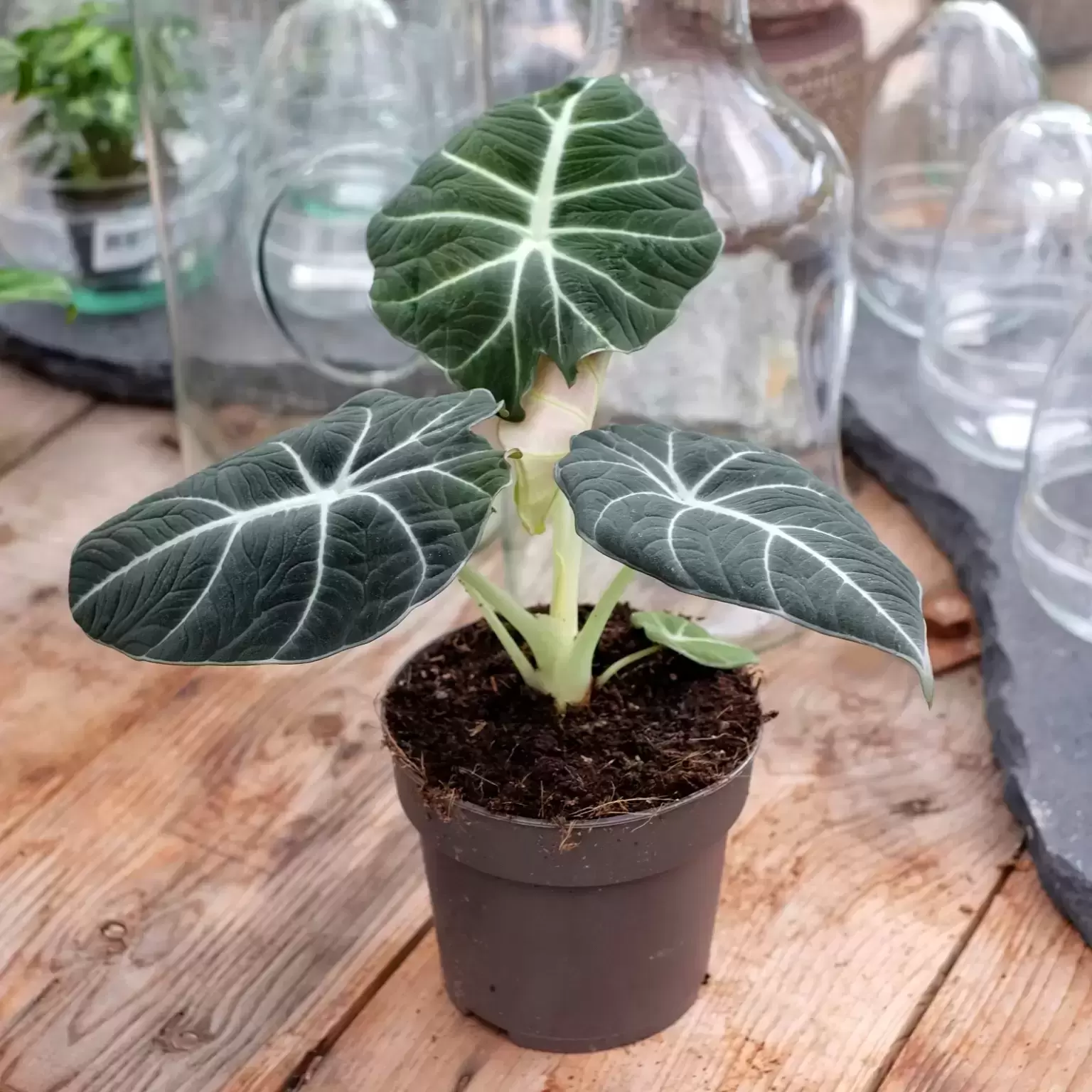
Black Velvet earns its name from the contrast between a light-absorbing leaf surface and bright structural veins. The safest care protects that texture and the small root zone instead of trying to make leaves “blacker” with stronger sun.
Black Velvet identity: Alocasia reginula, not a hybrid story
Kew accepts Alocasia reginula A.Hay and gives its native range as likely Borneo. IPNI records its 1998 publication and a cultivated type specimen. The old claim that Black Velvet was created by cross-pollinating two species in Thailand is unsupported.
Black Velvet is not Polly. Alocasia x amazonica `Polly` generally has longer arrow-shaped leaves with strongly lobed, wavy margins. Black Velvet has broader ovate-to-cordate blades, a compact basal habit and a softer-looking dark surface. Use several leaves and the source label—not “dark Alocasia” alone.
Separate ordinary Black Velvet from two nearby intents before choosing care or a product page.
| Plant/label | Look for | Correct next page |
|---|---|---|
| Ordinary Black Velvet | Broad dark velvet surface with repeatable pale veins | Stay here for established-plant care |
| Variegated Black Velvet | Irregular cream, pink, yellow or light-green tissue beyond the vein network | Variegated Black Velvet buyer guide |
| Polly/amazonica type | Longer, strongly lobed arrow shape and wavy margins | Do not relabel from dark color alone |
Why the leaves look velvet, black, green or glossy
A hardened leaf can look charcoal, deep green or nearly black depending on angle, surface condition and exposure. The soft-looking texture comes from the way the surface scatters and absorbs light; it should not be described as a permanent purple-black gloss or iridescent overlay.
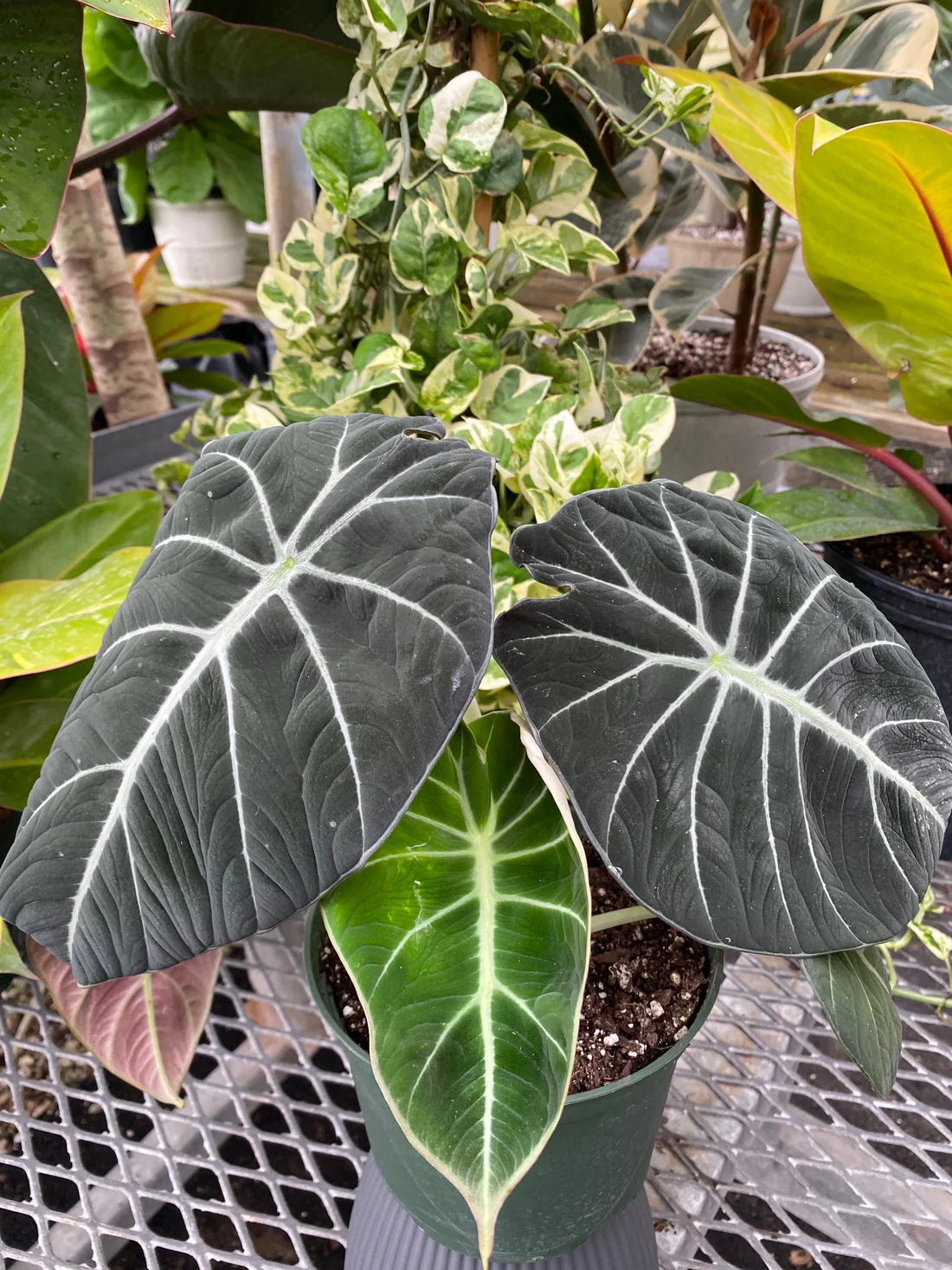
Water droplets can temporarily make the surface glossy and photographs can deepen contrast. Inspect a clean, dry, hardened leaf in neutral light. Do not mist to create shine; persistent wet foliage can complicate disease and pest observation.
Light: preserve compact growth and leaf texture
Provide bright filtered or indirect light. Very dim placement can slow growth and keep the small pot wet longer. Abrupt direct sun can heat and bleach the dark surface. Increase exposure gradually and judge the newest hardened leaf rather than choosing a window direction by rule.
A grow light can help when distance and duration are controlled. Stronger light does not guarantee darker leaves. If a new leaf is smaller, first review roots, temperature, moisture and pests with the Alocasia growth diagnostic.
Watering and the compact root zone
Water thoroughly when the root zone is ready, then let excess drain. Check below the surface and compare pot weight over time. A top inch can dry while the center remains saturated, so checking two or three times per week is observation—not an instruction to water.
Use an open-draining container and a mix that holds useful moisture while regaining air. Match pot volume to the root system. A compact Black Velvet in an oversized slow-drying pot is more vulnerable than the same plant in a right-sized airy container.
Warmth, humidity, airflow and feeding
Keep the plant in stable indoor warmth away from cold glass, air-conditioning and abrupt drafts. Do not use a space heater close to the leaves; it can create hot, dry airflow even when the room feels cool.
Humidity can slow water loss, but a 50%, 60% or 80% target does not diagnose every room. Pebble trays and daily misting do not reproduce a controlled enclosure. If edges crisp, review heat, light, roots, water supply and airflow together.
Feed a rooted plant during active growth at the fertilizer label rate. Fresh medium may already contain nutrients. Do not fertilize every four to six weeks automatically or treat one older yellow leaf as deficiency.
| Observed pattern | Check first | Safer next action |
|---|---|---|
| Droop + light dry pot | Dryness at depth and water bypass | Rehydrate evenly, drain and reassess |
| Droop + heavy wet pot | Cold, drainage, odor and root texture | Restore warmth/air; inspect if decline spreads |
| Crisp margin | Rapid drying, heat/light and root injury | Stabilize supply; do not rely on misting |
| Pale or tan patch | Recent light increase and leaf temperature | Reduce abrupt exposure; acclimate gradually |
| Curled/distorted new leaf | Pests, moisture swing, heat, mechanical damage | Use the leaf-curl diagnostic |
| Fine stippling/webbing | Mites under leaves and at petiole junctions | Isolate, identify and treat the pest |
Propagation: keep the basal growth tissue
Use a rooted offset, viable corm-like storage organ or division with basal growth tissue. A detached leaf cannot rebuild a complete Black Velvet. The Alocasia propagation guide explains the structure to find before cutting.
A recently divided plant may pause while roots recover. Preserve healthy leaves and avoid repeated cutting of a small crown. If your material is variegated or still in vitro, use the dedicated variegated/tissue-culture guide instead of this established-plant routine.
Buyer checklist for an ordinary established Black Velvet
- Confirm several dry, hardened leaves with broad shape and repeated pale venation.
- Check whether photos show the exact plant, a representative batch or a mother plant.
- Ask for root/medium status, pot scale and recent treatment.
- Separate ordinary Black Velvet from Polly and irregularly variegated material.
- Use the ordinary Black Velvet product page for current stock, size, price and shipping facts.
- Use the Alocasia collection only to compare current formats.
Safety
Alocasia contains irritating insoluble calcium oxalates. Keep it away from chewing pets and children, wear gloves when dividing, and avoid sap contact with eyes or mouth. Seek veterinary or poison advice for chewing, oral pain, swelling, drooling, vomiting or difficulty swallowing.
Alocasia Black Velvet FAQ
What is the scientific name of Black Velvet?
Black Velvet is the familiar horticultural name associated with the accepted species Alocasia reginula A.Hay.
Is Black Velvet a hybrid or Alocasia Polly?
No. The accepted species record and publication evidence do not support the old Thai-hybrid story. Polly belongs to a different amazonica-type horticultural group.
How often should I water it?
There is no safe universal interval. Check moisture below the surface, pot weight, drainage, warmth and root volume, then water thoroughly when the root zone is ready.
Why is a new leaf greener?
Young leaves can change as they harden, and lighting changes perception. Compare the same dry leaf over time before diagnosing a problem.
Does it need very high humidity?
It benefits from stable conditions, but no single percentage guarantees success. Use leaf edges, root moisture, heat and airflow together; do not rely on misting alone.
