
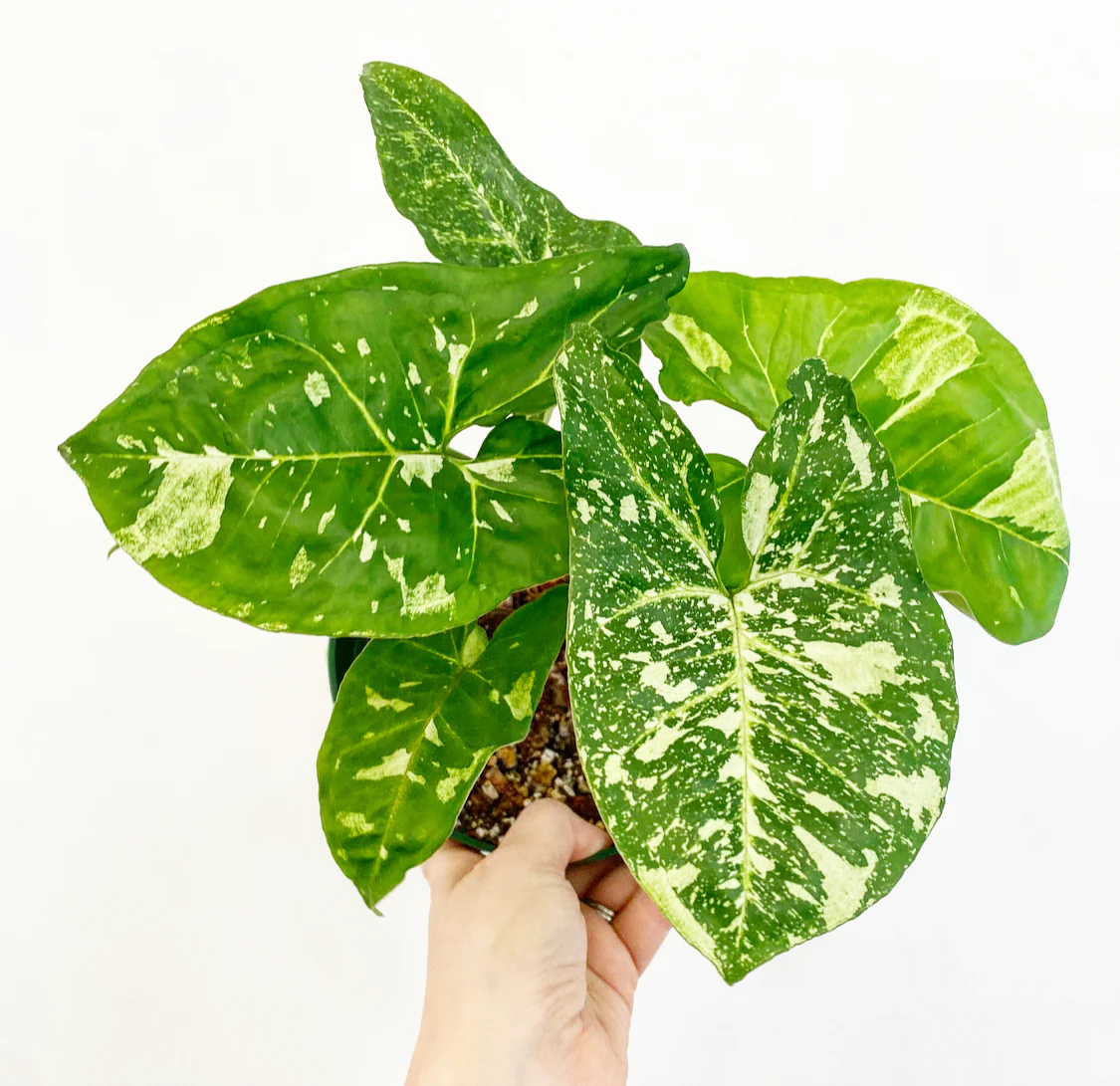
Evidence-led houseplant guide
The strongest benefits of Syngonium are practical and visible: one climbing plant can be trained, trailed or pruned; juvenile foliage changes as stems mature; named selections provide distinct pattern choices; and viable nodes make propagation possible. It should not be sold as an air purifier or allergy treatment.
- Compact, trailing or climbing display from one growth architecture.
- Arrowhead juvenile leaves that can transition toward divided adult foliage.
- Green, cream, silver, pink and mottled commercial pattern choices.
- Propagation through viable stem nodes, tips or air layers.
- Observable growth signals that support condition-led care decisions.
Benefit 1: flexible display
Kew records Syngonium podophyllum as a liana, while NC State Extension explains that young plants can look shrubby before developing a vine-like habit. That structure gives the owner real choices: prune for a denser juvenile presentation, let stems trail from a shelf, or guide them onto support.
This is not a promise that every plant stays compact or suits a dark corner. Space, usable light, stem length and support decide whether the same vine looks full, stretched, trailing or upright. Use the Syngonium growth and support guide for the measurement framework.
Benefit 2: foliage changes with the plant
NC State documents simple arrowhead juvenile leaves, transitional lobed leaves and more divided adult foliage. A supported plant can therefore offer a developmental sequence rather than one static leaf shape. For collectors, that makes stem age, node spacing and new-leaf development part of the display.
Benefit 3: pattern choice without a one-leaf diagnosis
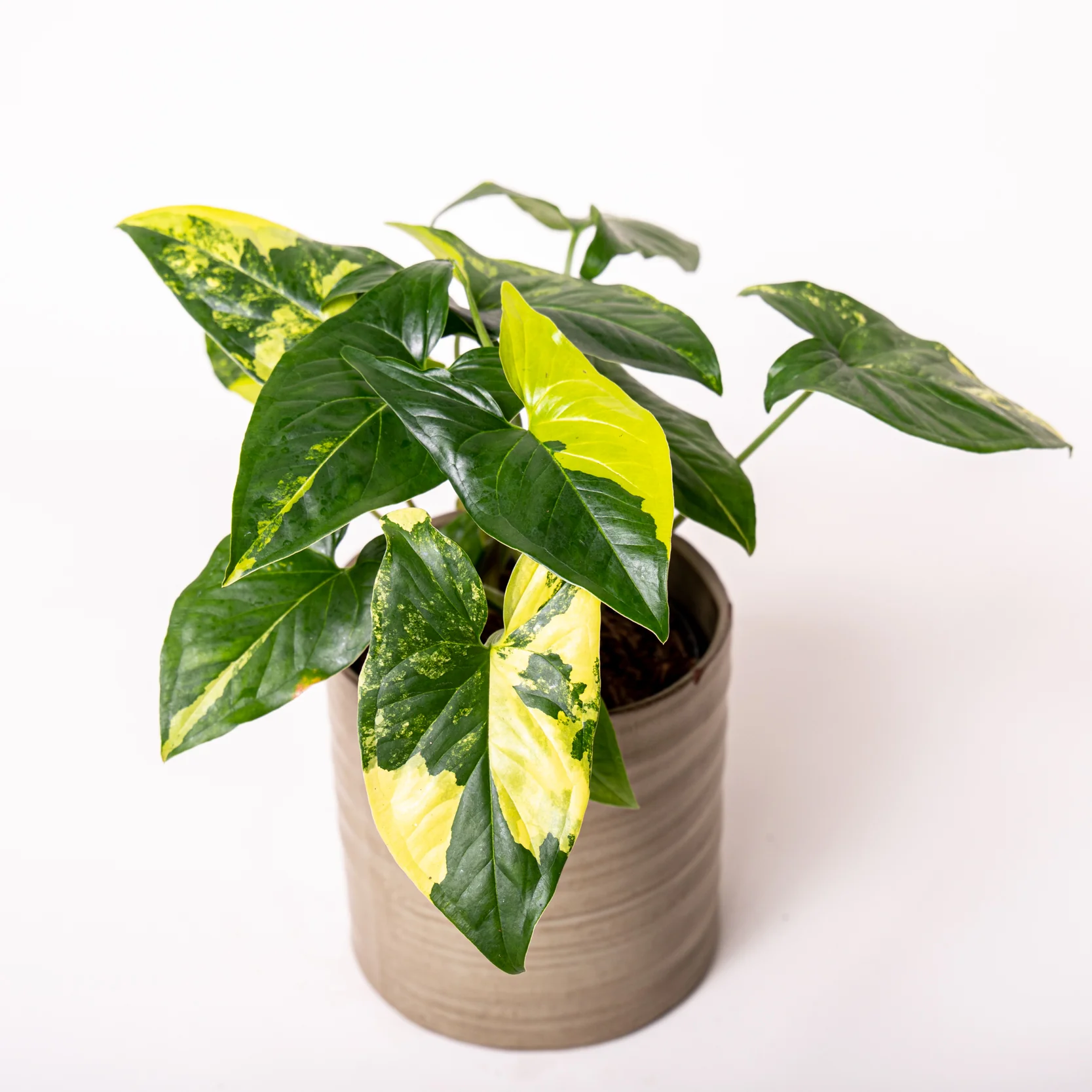
Commercial Syngonium selections span green, cream, silver, pink, yellow and mottled pattern families. That variety lets buyers choose graphic venation, soft color, sectoral contrast or a species phenotype. The benefit is choice—not certainty from one edited image.
Use the Syngonium types and identification hub to compare several hardened leaves, stem structure, provenance and seller-image scope before naming an unfamiliar plant.
Benefit 4: node-based propagation
UF/IFAS documents nodal cuttings, tip cuttings and air layers for Syngonium. This makes a healthy vine divisible when it has viable stem tissue, a node and a growth point. The same structure also makes pruning material traceable: parent image, label, node and new growth can travel together.
Do not translate “propagates from nodes” into guaranteed rooting speed or a leaf-only promise. The Syngonium propagation guide owns media choice, node mapping, transfer and troubleshooting.
Benefit 5: signals you can read
| Signal | What it can tell you | Useful next step |
|---|---|---|
| Longer internodes | The current support/light/space combination is changing form. | Measure first; adjust exposure or training gradually. |
| Active aerial roots | The stem is expressing its climbing architecture. | Offer support or deliberately retain a trailing form. |
| New divided foliage | Development may be advancing on a supported stem. | Separate maturity from pattern diagnosis. |
| Soft roots or wet lesions | This is a condition problem, not a benefit or cultivar trait. | Use the care hub’s differential checklist. |
What Syngonium does not replace
The U.S. EPA says laboratory publicity about chemical removal does not establish that a reasonable number of houseplants removes significant pollutant quantities in real homes or offices. It also notes that overly damp potting media may encourage microorganisms that affect allergic people. Do not use Syngonium instead of source control, ventilation, filtration or medical advice.
Safety also changes the value decision. ASPCA lists S. podophyllum as toxic to cats and dogs because of insoluble calcium oxalates. A flexible vine is not a benefit if it hangs into a chewing pet’s reach.
Choose the next page by intent
Sources and evidence boundaries
- U.S. EPA: The Inside Story — Indoor Air Quality — real-room houseplant and damp-media boundary.
- NC State Extension: Syngonium podophyllum — juvenile/adult form, growth habit and uses.
- UF/IFAS: Commercial Production of Syngonium — propagation and support context.
- ASPCA: Arrow-Head Vine — calcium-oxalate pet safety.
Evidence limit: ornamental preference and ease are personal and environment-dependent. This page does not promise medical, air-quality, growth-speed or low-maintenance outcomes.

1 thought on “Syngonium Benefits: 5 Real Uses, 3 Claims to Skip”