Syngonium growth planning
A Syngonium does not have one useful “final height.” It is a climbing vine: stem length, vertical display height and leaf envelope can diverge. Support, pruning, light at the leaf zone and root capacity determine whether the same plant stays compact, trails over a shelf or develops larger, more divided foliage.
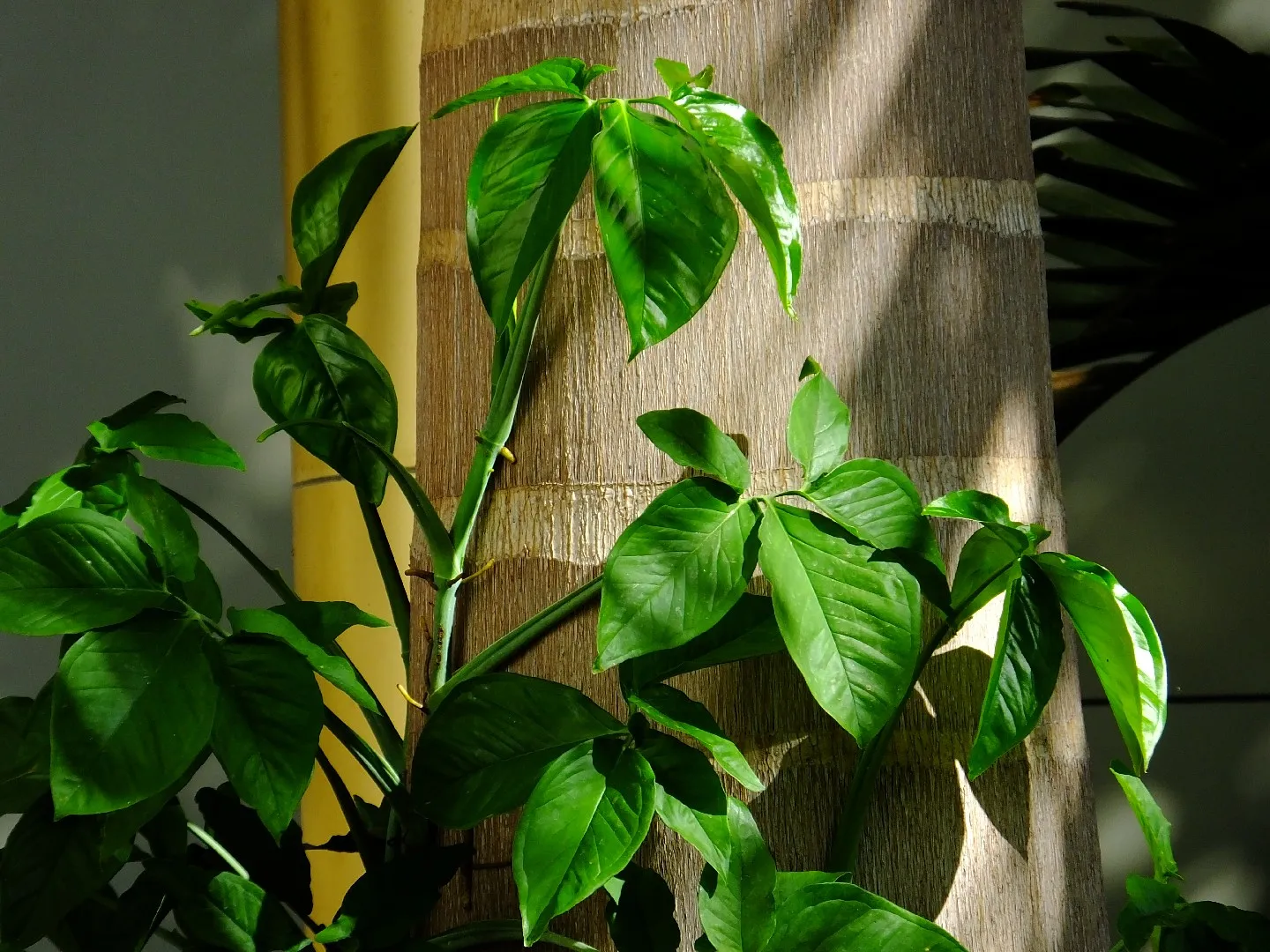
- Stem length: measure along the vine, not only floor-to-tip height.
- Internodes: record spacing between nodes to distinguish compact growth from extension.
- Leaf sequence: compare blade size and division along supported versus trailing sections.
- Attachment: note active roots/nodes and whether the support stays within reach.
Why Syngonium size is a moving target
Kew describes Syngonium podophyllum as a liana. NC State documents a juvenile bush-like/arrowhead phase and a climbing phase with more lobed or pedate leaves. UF/IFAS likewise records adventitious roots at nodes and a major change from simple juvenile blades to compound mature foliage.
That architecture explains why “height” alone misleads. A 2 m stem can loop around a pot, hang below a shelf or occupy less than 1 m of vertical support. Conversely, a shorter supported stem may present a wider leaf envelope. The meaningful answer combines stem length, support height, canopy width and leaf phase.
Choose the display outcome first
| Goal | Training choice | What to monitor |
|---|---|---|
| Compact tabletop plant | Prune above viable nodes; rotate gradually; avoid oversized jumps in container volume. | Internode length, crown density, roots and new-leaf size. |
| Trailing shelf or basket | Let selected stems descend while keeping access for inspection and watering. | Bare intervals, abrasion, leaf orientation and attachment points. |
| Vertical mature display | Install a stable support early and guide nodes close enough to attach. | Support stability, active attachment roots and light across upper leaves. |
| Reset a long vine | Prune with a viable node plan; root selected sections and preserve the parent growth point. | Node viability, root initiation and parent recovery. |
Measure growth without chasing a calendar
Photograph the same stem monthly against a fixed ruler or support mark. Record new nodes, average internode length, largest hardened leaf and whether roots are actively exploring the pot. These signals reveal whether the plant is building structure, merely extending toward light, or pausing after environmental change.
Do not schedule a bigger pot simply to force a bigger plant. Repot when roots, water movement and substrate structure justify it. Excess unused wet volume can create a larger risk zone without producing stronger climbing growth.
Care handoff and outdoor boundary
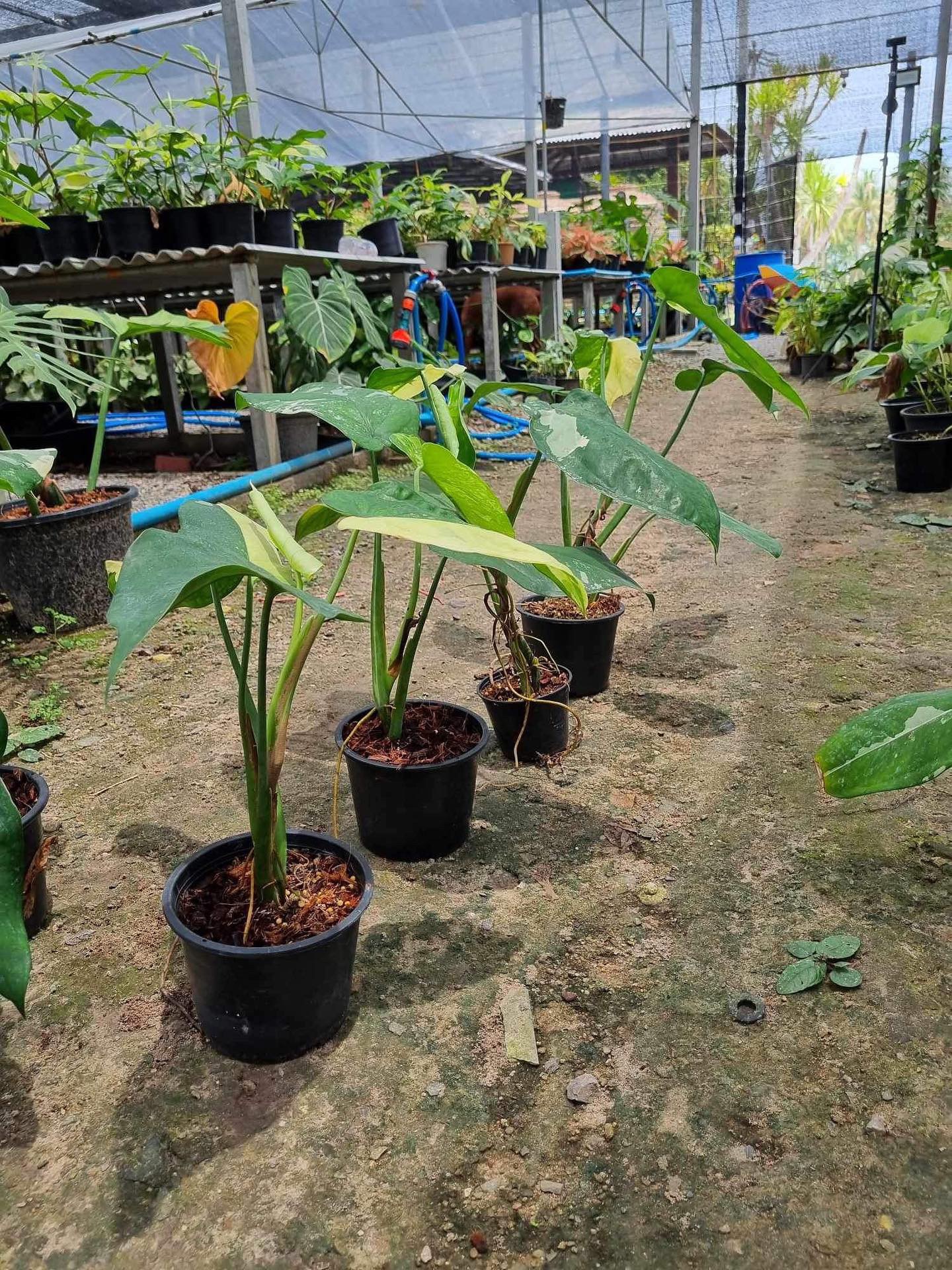
The Syngonium care hub owns light, watering, support and troubleshooting. Use it to correct the limiting condition rather than applying more fertilizer to every slow plant. A weak root system or abrupt light change will not be solved by feeding.
In warm outdoor climates, do not assume unrestricted climbing is harmless. UF/IFAS classifies arrowhead vine as invasive in Florida and recommends controlled disposal. Check local rules and keep pruned stems or rooted nodes out of natural areas.
Choose the next page by intent
Sources and evidence boundaries
- Kew Plants of the World Online: Syngonium podophyllum — accepted species and liana habit.
- NC State Extension: arrowhead vine — horticultural height reference and juvenile-to-adult leaf transition.
- UF/IFAS: commercial production of interiorscape Syngonium — node roots and juvenile/adult leaf architecture.
- UF/IFAS: Wildland Weeds—arrowhead vine — outdoor invasive/disposal boundary for Florida.
Evidence limit: species profiles describe a framework, not a guaranteed size or maturation date for every selection, room or container.