
Philodendron care questions, answered from plant evidence
Most Philodendron problems cannot be solved by a calendar or a window label. Start with growth habit, usable light and the rooted volume; then choose the smallest change that matches the evidence.
Start with the question behind the symptom
| Question | First evidence | Best next step |
|---|---|---|
| Does it need more light? | Long internodes, smaller new leaves, slow drying and a one-sided lean. | Move gradually toward brighter filtered light; watch leaf temperature. |
| Is it thirsty? | A lighter pot and partly dry rooted volume, not droop alone. | Water through evenly and drain; recheck whether firmness returns. |
| Is it overwatered? | A pot staying heavy, sour medium, declining roots or a soft crown. | Inspect drainage and roots before watering again. |
| Why is it leggy? | Growth habit, light history and spacing between nodes. | Improve light gradually; prune a climber above a viable node if fuller growth is wanted. |
| Does it need humidity? | Measured room conditions, heat load, roots and airflow. | Use a humidifier only when the room is genuinely dry; do not rely on misting. |
How much light does a Philodendron need?
NC State Extension recommends bright indirect light while noting that requirements vary among the many species and cultivars. “Low-light tolerant” means a plant may persist with less light; it does not mean darkness produces compact growth. Use the plant’s response, not north/east/west labels alone.
A suitable position gives enough diffuse light for steady leaf production without persistent hot exposure through glass. A suddenly pale or crispy exposed patch after a move suggests scorch; long gaps between leaves and progressively smaller growth suggest insufficient usable light. University of Minnesota Extension advises gradual light changes because a plant moved abruptly from winter shade can burn.
How often should a Philodendron be watered?
There is no universal seven-day schedule. Pot size, medium, root mass, temperature, light and season all change water use. Check the pot’s weight and moisture below the decorative surface. Water when much of the rooted volume is approaching dry, then wet it evenly and let excess drain.
If water runs down a dry gap without wetting the root ball, apply it slowly in passes. If the pot stays heavy for much longer than usual, inspect compaction, a large unrooted soil buffer, low light and root condition. Empty cachepots and saucers; Penn State Extension warns that trapped excess can waterlog the mix.
Top watering or bottom watering?
Either method can hydrate a healthy, draining root ball. Top watering makes runoff and the medium’s intake easier to observe and helps move dissolved salts through the pot. Bottom watering can rewet a very dry mix, but remove the pot after moisture rises and let it drain. Do not leave roots standing in water or use bottom watering to avoid inspecting the surface, stem base and pests.
The complete diagnostic method belongs in Greenboog’s Philodendron watering guide.
Should I mist my Philodendron?
Not as a humidity strategy. Penn State Extension explains that the humidity rise after misting lasts only until the droplets evaporate, often minutes. Wetting leaves repeatedly can also complicate spotting where airflow is poor. If measured room humidity is persistently low, use a humidifier sized for the room and keep air moving gently.
Brown tips are not a humidity meter. Check recent heat or direct exposure, roots, moisture swings, fertilizer salts, water quality and spray residue before changing the room. Damaged tissue will not turn green again; judge the correction from later growth.
How do I make a Philodendron fuller?
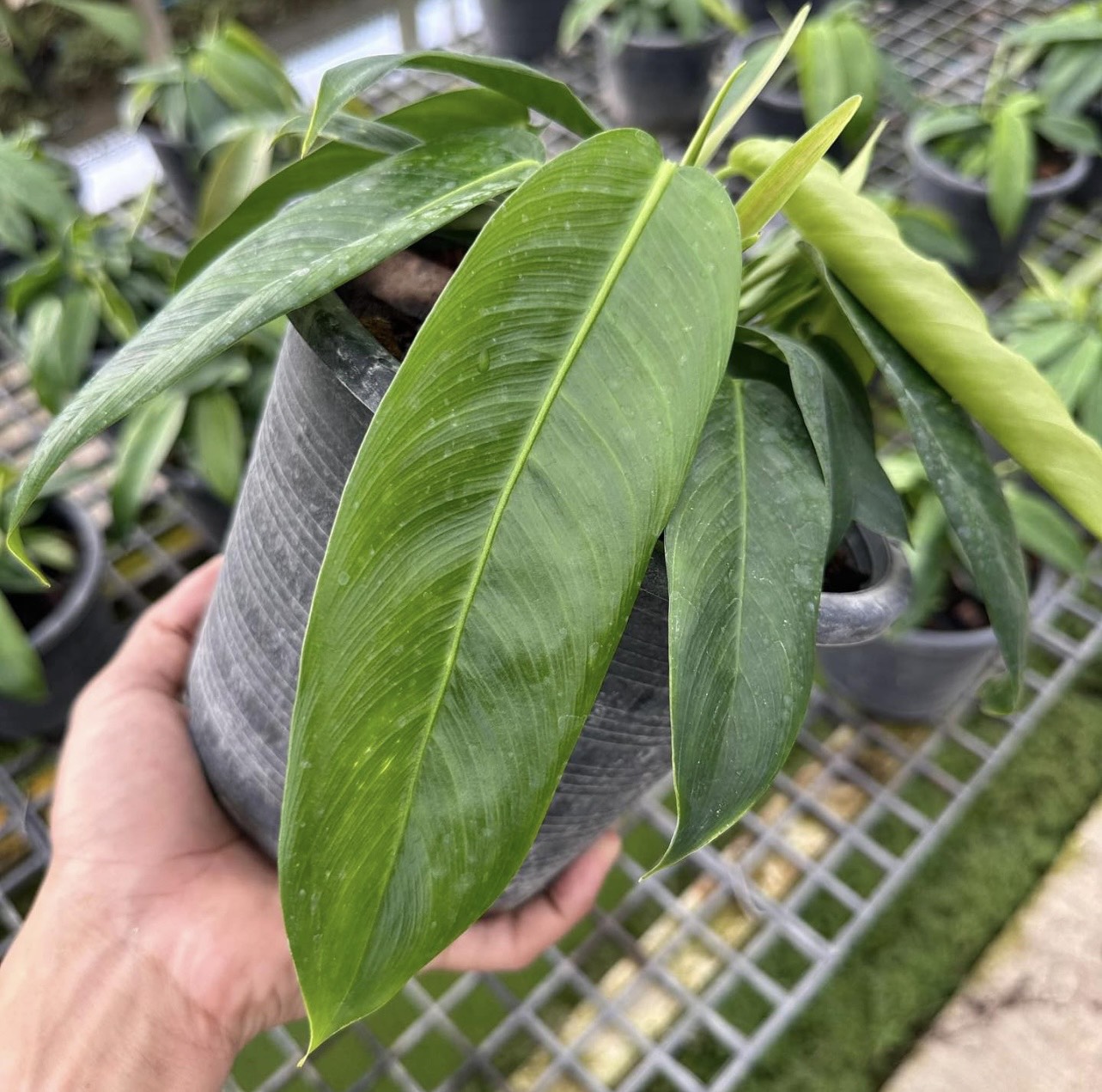
First identify its architecture. A climbing Philodendron has a stem with nodes and internodes; it can be trained upward, allowed to trail or cut above a viable node to redirect growth. A self-heading Philodendron produces leaves from a compact crown and should not be treated like a vine.
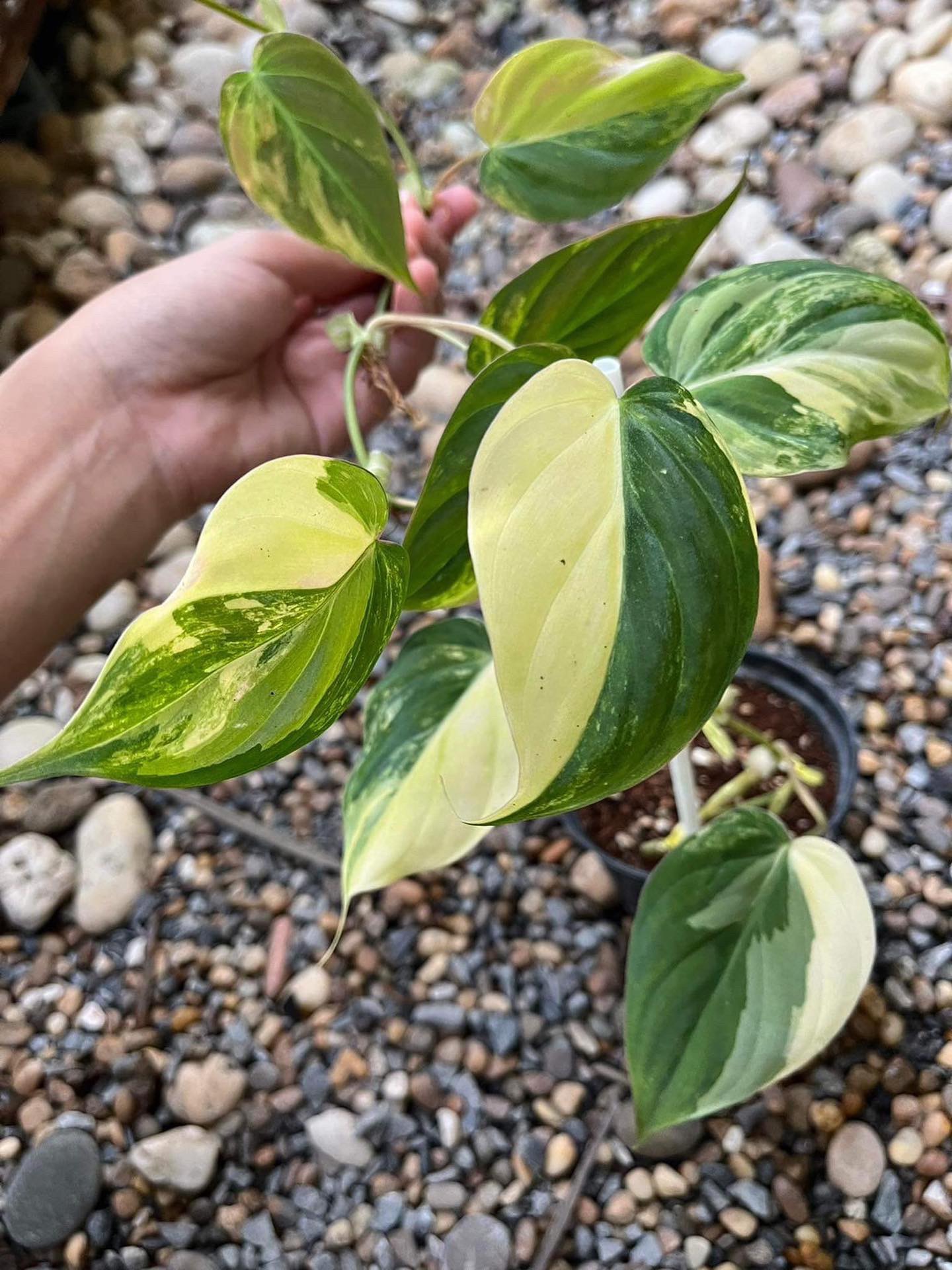
For a sparse climber, improve light before making many cuts. University of Minnesota Extension recommends trimming a leggy stem just above a leaf node to encourage fuller growth. Root selected node-bearing cuttings and plant them back only after they establish; a detached leaf without viable stem tissue will not rebuild a climbing Philodendron. See the Philodendron propagation guide for method and aftercare.
Can a Philodendron live in water?
A node-bearing cutting can root in water, and some plants can be maintained hydroponically, but this is not the same as leaving a soil-grown root system submerged. Water roots and substrate-grown roots develop under different oxygen conditions. Keep propagation water and the vessel clean, monitor the node for rot and transfer only when the chosen long-term system is ready.
If moving a rooted soil plant to semi-hydro or hydroponics, expect root turnover and monitor new root quality rather than assuming every yellow leaf is failure. The container, aeration, nutrient solution and water-change routine become part of the root environment; “Philodendron in water” is a growing system, not a no-care shortcut.
Are Philodendrons rare, and what should a buyer verify?
Philodendron is a large genus, so rarity cannot be assigned to the genus as a whole. A wild species may be uncommon in cultivation, while a once-scarce cultivar can become widely propagated. Variegation, seller-line names and a high price do not prove botanical rarity.
- Confirm the accepted species name or preserve the cultivar/seller-line label.
- Ask whether photos show the exact plant or a representative batch.
- Verify the rooted format, pot or tissue-culture stage and current size.
- Inspect several connected leaves, stem/crown and newest growth point.
- Keep transaction details on the live listing rather than copying stale prices into a guide.
Philodendron safety and quick FAQ
ASPCA identifies Philodendron tissue as containing insoluble calcium-oxalate raphides. Chewing can cause oral pain, drooling, retching, vomiting and difficulty swallowing. Keep plants, cuttings and sap away from children and pets; contact a veterinarian or poison service after suspected ingestion, especially if swallowing or breathing is affected.
Why is one Philodendron leaf yellow?
One old lower leaf can be normal. Several yellowing leaves require a pattern check: root firmness, wet duration, light change, cold, pests and whether the affected leaves are oldest or newest.
Do Philodendrons grow up or down?
Climbing types can grow upward on support or trail, while self-heading types build a crown. Identify the stem architecture before choosing a pole, hanging position or floor space.
Should I fertilize a struggling Philodendron?
Not until roots, light and temperature support active growth. Fertilizer cannot repair rot or inadequate light, and salts can compound stress. Feed modestly according to the product label after the cause is corrected.
When should I repot?
Repot when roots densely occupy the container, the medium has collapsed, drainage behavior changes or the plant is unstable. Move up conservatively; a large unrooted buffer can stay wet too long.
Sources
- NC State Extension: Philodendron habit, light, root-zone care, pests and safety
- Penn State Extension: humidity and the limits of misting
- Penn State Extension: drainage, cachepots and repotting evidence
- Penn State Extension: nodes and vegetative propagation
- University of Minnesota Extension: light acclimation, watering and pruning
- ASPCA: Philodendron calcium-oxalate exposure

2 thoughts on “Philodendron Care FAQ: Light, Water, Growth & Safety”