Syngonium buyer guide
Buying a Syngonium online is easiest when the listing answers three questions before payment: what exact plant or lot the photos represent, what living format will arrive, and which shipping, claim and import terms apply. Compare evidence and total risk—not just the brightest leaf or lowest headline price.
- Seller label and any provenance behind it.
- Whether images show the exact plant, current lot or reference stock.
- Several hardened leaves, not only the newest or most variegated leaf.
- Viable node, active growth point and current root status.
- Quantity and format that will actually arrive.
- Total landed cost, dispatch window and weather/hold policy.
- Import documents, arrival evidence and claim deadline.
Start with image scope, not the cultivar name
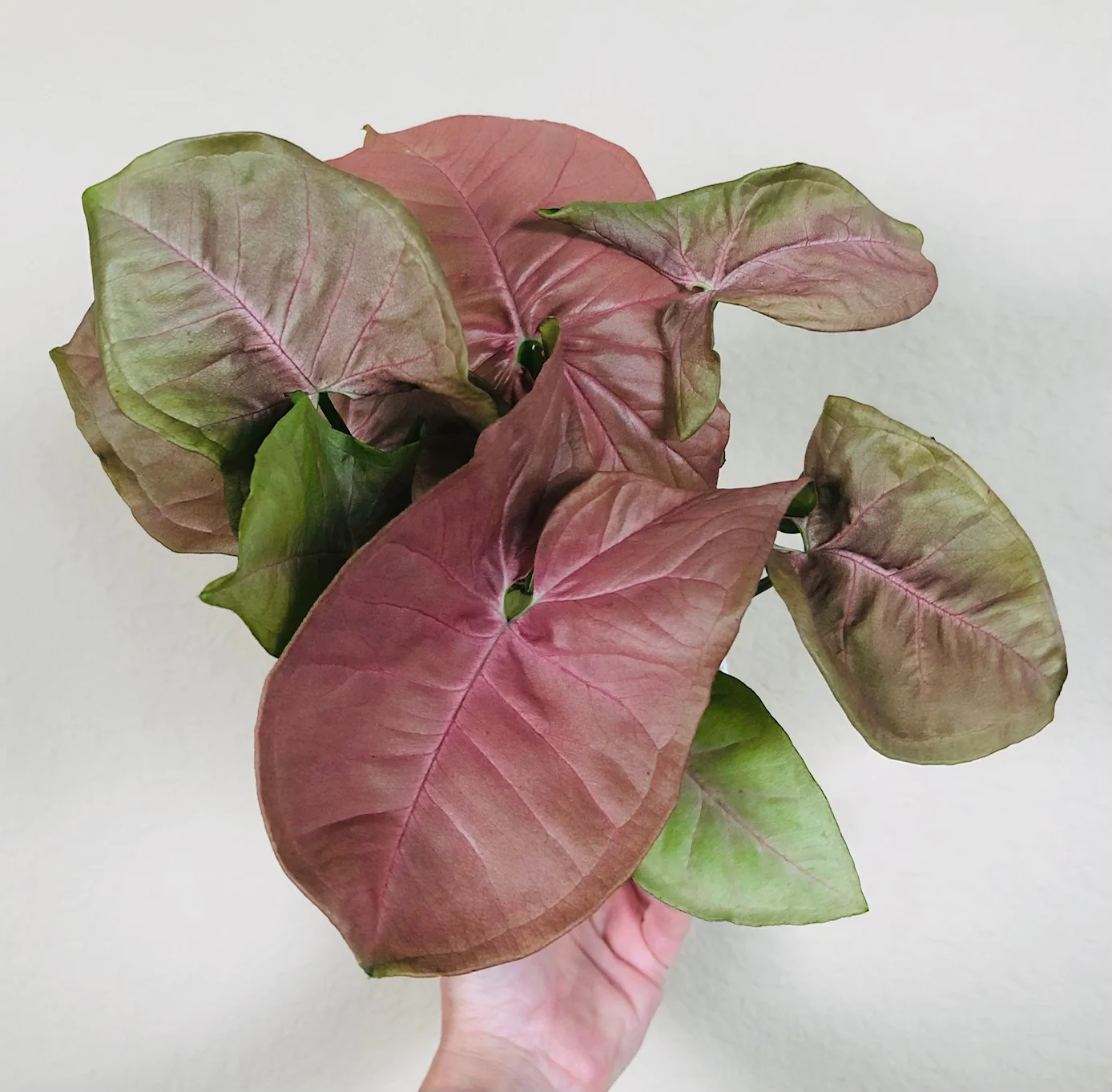
A trade label can help you search, but it does not prove that the pictured phenotype belongs to the plant you will receive. Request current neutral-light photographs of the whole plant or lot, several hardened leaves, stem, nodes, active growth point and roots. If the photo is illustrative, ask what variation the seller considers normal.
The U.S. Federal Trade Commission advises marketplace buyers to look closely at whether a listing provides several views of the actual item or only stock photos. For plants, make the scope explicit in writing: exact plant, representative current-lot plant or mother/reference plant.
Match the format to your risk tolerance
| Offer format | Evidence to request | Main uncertainty |
|---|---|---|
| Established plant | Current canopy, pot/root condition, active stem and scale reference. | Shipping size and cosmetic damage can differ from a studio image. |
| Rooted cutting | Node, bud/growth point, root amount, medium and date rooted. | A few roots do not equal an established root system. |
| Fresh cutting | Viable node, growth point, cut timing and hydration plan. | Rooting and new growth remain the buyer’s risk unless terms say otherwise. |
| Tissue-culture plantlet | Quantity, container/flask status, deflasked or in-vitro state and acclimation stage. | Small plantlets need a staged transition; a mother-plant photo is not the delivered size. |
UF/IFAS documents tissue-culture liners, rooted cuttings and potted plants as distinct commercial Syngonium pathways. Treat format as part of the product—not as a footnote—and avoid comparing prices until quantity, root status and acclimation stage match.
Read policies before the weather becomes a problem
Check the seller’s dispatch window, hold policy, carrier service, tracking, weather limitation, live-arrival language and claim deadline. Ask whether cosmetic leaf damage, root loss, delay, cold/heat exposure and total loss are treated differently. Save the listing, written answers, order confirmation and tracking record.
The FTC recommends reviewing seller terms, shipping fees and return policies, keeping messages, using payment methods with buyer protection and watching dispute deadlines. Those are general transaction safeguards; the seller’s written live-plant terms determine what evidence it requests for a plant claim.
International orders need a destination check
Do not assume a seller’s ability to export means the plant is automatically admissible at your destination. Requirements can depend on country, plant taxon, origin, quantity, growing medium and intended use. Confirm the rules with the destination authority before payment and ask who obtains each document and label.
For U.S. buyers, USDA APHIS directs online plant buyers to check the Agricultural Commodity Import Requirements database, determine whether a permit or exemption applies, and confirm phytosanitary and routing requirements before purchase. This is a U.S.-specific checkpoint, not a universal promise for every Syngonium shipment.
Document arrival before changing the plant
- Record the sealed package, shipping label and opening sequence.
- Photograph the full contents, quantity, roots, nodes and growth points.
- Compare the delivered format with the saved listing and written answers.
- Separate transit bruising from wet lesions, pests, rot or missing plant material.
- Contact the seller within the stated claim window before trimming, repotting or discarding evidence unless immediate plant safety requires action.
After documentation, route cultivation questions to the Syngonium care hub. It uses root-zone and plant signals instead of a fixed weekday watering rule. The Syngonium types hub helps screen label and pattern families without treating one photo as authentication.
Choose the next page by intent
Sources and evidence boundaries
- FTC Consumer Advice: Buying From an Online Marketplace — seller, listing-image, policy, payment and claim safeguards.
- USDA APHIS: How To Buy Plants and Seeds Online — current U.S. permit, phytosanitary and buyer-responsibility checkpoints.
- UF/IFAS: Cultural Guidelines for Commercial Production of Syngonium — commercial propagation and sale-format context.
Evidence limit: policies and import rules can change. Check the current seller terms and destination authority for the exact order before payment.