Greenboog trade-name & care evidence guide
The useful question is not “Which fixed schedule should I copy?” It is whether the plant’s identity, roots, light and recent growth all tell the same story.
Start here before changing care or paying for a mature label.
| Question | Practical answer |
|---|---|
| Best-supported name | Philodendron Golden Crocodile; Golden Saw and Crocodile Golden Saw also circulate in trade |
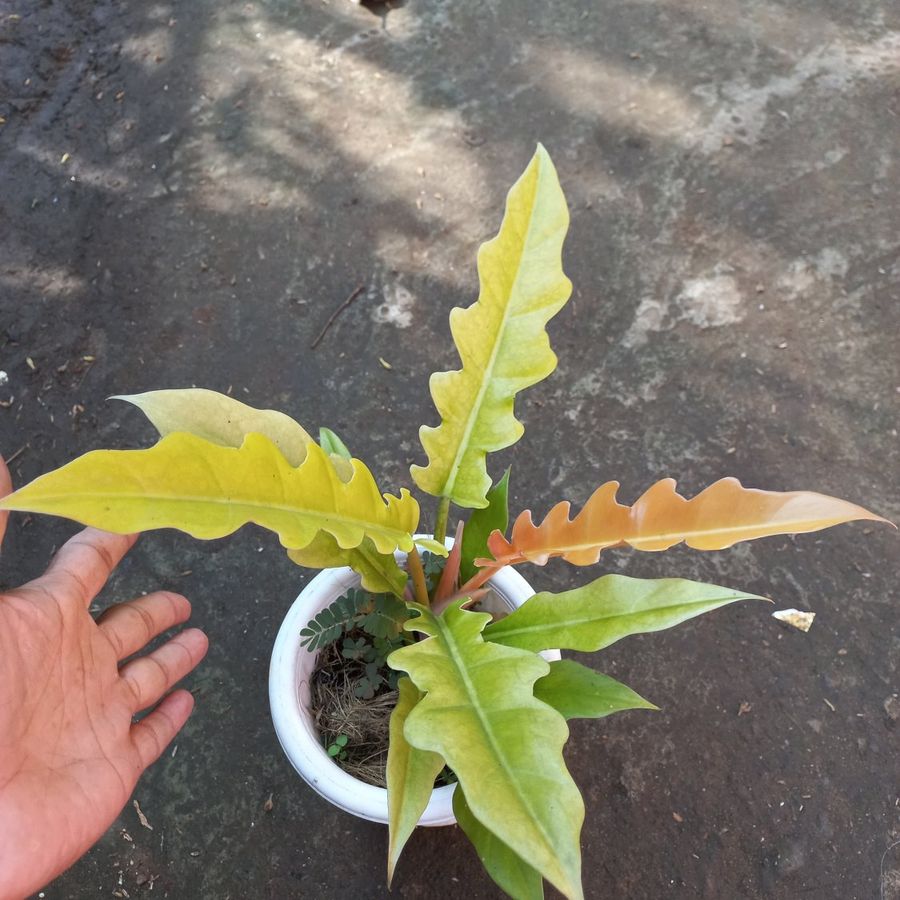
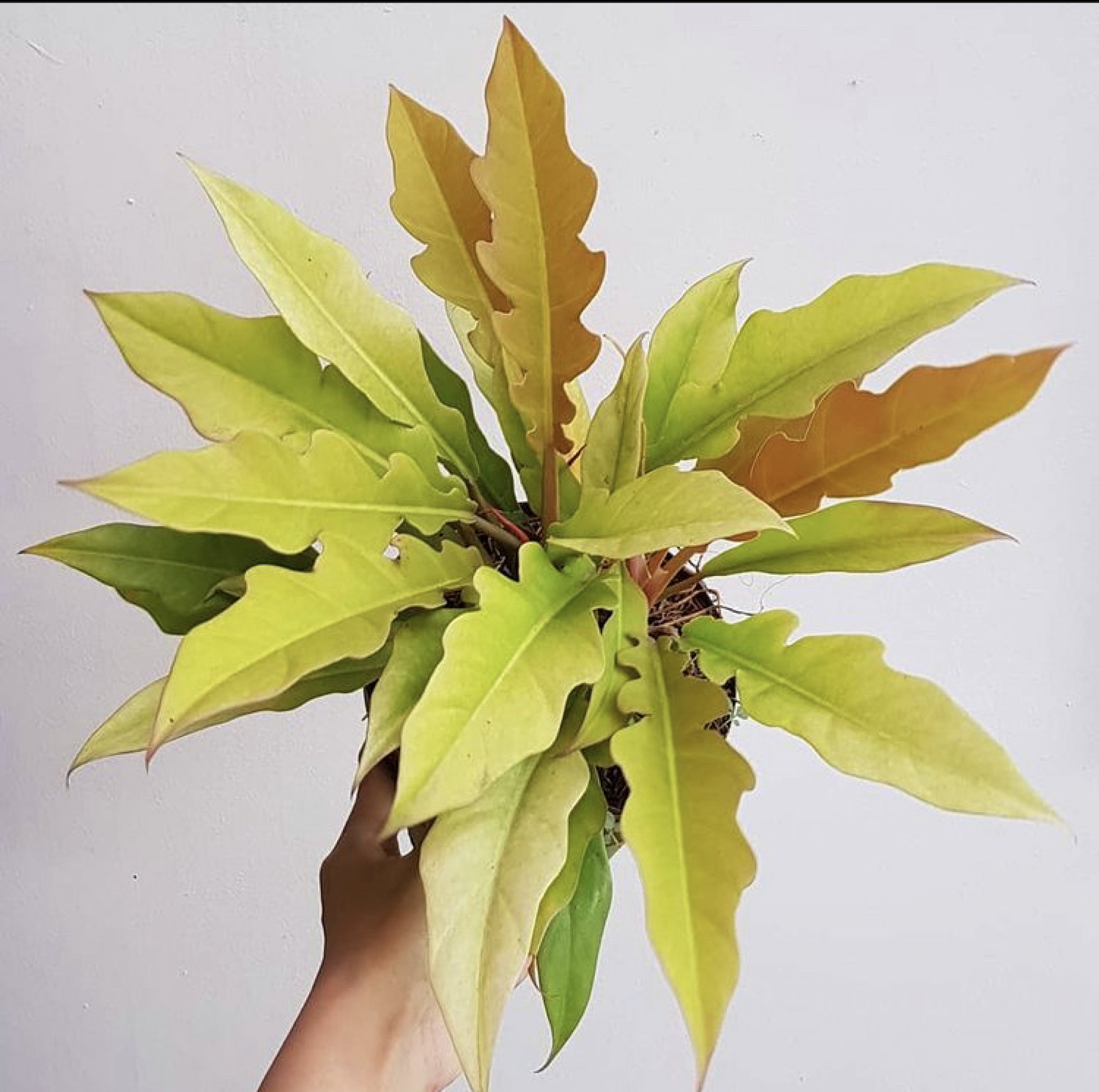
| Foliage | Elongated chartreuse leaves with increasingly wavy/lobed margins; copper-bronze emerging growth |
| Growth | Compact upright presentation with short internodes in Greenboog’s photographed plants |
| Light | Bright indirect or filtered light, introduced gradually |
| Water | Water thoroughly after the upper root zone dries somewhat, then drain |
| Main buyer risk | Paying for a name or mother-plant photo without verifying the exact plant, roots, format and source |
What is Philodendron Golden Crocodile?
The safest evidence-led description is a cultivated Philodendron sold under a trade name. Greenboog’s first-party photographs show an upright plant whose narrow leaves become irregularly lobed along the margins. Established foliage is lime to yellow-green, while some emerging leaves are bronze or copper before changing as they mature.
We did not locate an authoritative cultivar record that verifies a breeder, parentage, introduction date or species assignment for Golden Crocodile. That matters because listings sometimes upgrade a market label into a Latin name or native-range story without a primary source. For example, Kew recognizes Philodendron pinnatifidum as an accepted species with its own botanical description and range, but that record does not identify Golden Crocodile as the species. Do not borrow that identity without documented provenance.
Are Golden Crocodile and Golden Saw the same plant?
They are often applied to similar chartreuse, lobed Philodendrons in the plant trade. That makes them useful search and shopping labels, not guaranteed botanical synonyms. On this page, both names refer specifically to the type shown in Greenboog’s photographs. When comparing another seller’s plant, check the exact specimen, mature foliage and source rather than assuming every “Golden Saw,” “Golden Gator” or “Crocodile” label represents an identical clone.
How to identify the pictured plant
Use a pattern across young and mature growth. Juvenile leaves can be narrower and less deeply cut, so a small plant may not yet display the pronounced “saw” outline seen on an established specimen.
- Color: foliage reads as chartreuse, lime or yellow-green rather than dark green with cream sectors.
- New growth: a leaf can emerge copper-bronze and shift toward yellow-green as it hardens.
- Shape: blades are elongated; the margins become wavy to irregularly lobed rather than developing Monstera-like holes.
- Structure: leaves arise closely around a compact central stem in the pictured plants. An older top-heavy specimen may need stabilization, but it should not be sold as a fast trailing vine.
- Limits: color changes with leaf age, light, nutrition and camera processing. One photo or one smooth juvenile leaf cannot settle identity.
Golden Crocodile vs Ring of Fire
A jagged silhouette is not enough; compare color pattern, name evidence and provenance.
| Trait | Golden Crocodile / Golden Saw | Ring of Fire |
|---|---|---|
| Main color pattern | Chartreuse to yellow-green across most of the blade; new leaves may open copper-bronze | Variable green, cream, yellow, copper or orange sectors and marbling |
| Leaf outline | Elongated, increasingly wavy or lobed margins | Elongated blades whose margins become irregularly and deeply lobed |
| Name evidence | Trade labels vary; formal parentage/species assignment is not verified here | RHS accepts the cultivar name and lists Henderson’s Pride as a synonym |
| Best buying evidence | Exact plant, several leaves, roots, growth point and source | Exact plant, repeated sectoral pattern, roots, growth point and source |
For the variegated plant’s own identity and care, use the Philodendron Ring of Fire guide. The two plants can have a similar jagged silhouette, but a label should not override the color pattern and provenance in front of you.
Light: keep the color without scorching
Start with bright indirect light or filtered window light. The Royal Horticultural Society’s Philodendron guide recommends bright indirect light and warns that direct summer sun can scorch foliage. Acclimate a plant gradually after shipping, moving rooms or bringing it indoors; pale leaves can show heat and scorch damage quickly.
A darker mature leaf is not automatically a wrong plant or a “reversion.” First compare its age with the copper and lime leaves around it, then review light duration, distance from the window, root health and recent feeding. Do not respond to one greener leaf by putting a stressed plant into harsh sun.
- Likely too little usable light: weak leaning growth, smaller new leaves, unusually long spacing or a root-healthy plant that repeatedly stalls.
- Likely too much/too fast: pale tan patches, crispy margins or damage concentrated on the window-facing side after a move.
- Better adjustment: change distance or filtering in small steps and judge the next several weeks of growth.
Water the root zone, not the calendar
Insert a finger or wooden skewer below the surface and lift the pot to learn its wet and dry weight. When the upper portion has dried somewhat and the container feels lighter, water the whole root ball until excess exits the drainage holes; empty the saucer. A small root system in a large or dense pot may remain wet even when the top looks dry.
Use a loose, free-draining mix that still holds some moisture. A practical starting point is quality potting mix or coco/peat combined with coarse bark and mineral aeration such as perlite or pumice. Adjust the blend to the room: warm bright airflow dries faster than a cool dim shelf. Choose a pot only modestly larger than the healthy roots.
Temperature, humidity and airflow
Keep the plant warm and stable. RHS advises keeping Philodendrons above 15°C/59°F and away from hot radiators and cold drafts. Average household humidity is often workable when roots and light are balanced. A pebble tray or frequent misting cannot repair a cold saturated root ball; if the room is truly dry, measure it and use a room humidifier with airflow rather than leaving foliage constantly wet.
Feeding, repotting and pruning
Feed during active growth according to the fertilizer label, starting conservatively. Do not fertilize a dry, rotting, freshly shipped or newly repotted root system to force yellow color. Excess salts can injure roots and create confusing leaf symptoms.
Repot when roots are crowded, the mix has collapsed or water no longer moves evenly—not because a calendar date arrived. Remove only tissue that is dead, diseased or obstructing inspection. The photographed plant grows from a compact central stem, so a cut can remove the active growth point; locate nodes and buds before pruning.
How to propagate Golden Crocodile
A complete new shoot needs viable stem tissue with a node and growth point. A detached leaf and petiole are not a dependable way to rebuild a Philodendron. Short internodes can hide nodes beneath old cataphylls, so do not cut until you can identify the structure.
- Start with a hydrated, pest-free plant that is actively growing.
- Locate a node, axillary bud and enough stem to cut without damaging the remaining growth point.
- Use a clean, sharp blade; keep the cut and work surface clean.
- Root the cutting in clean, airy, lightly moist medium under warmth and bright indirect light.
- Maintain humidity without sealing saturated media around the stem.
- Pot up after roots branch and new growth is stable, not at an arbitrary week count.
Penn State Extension recommends healthy source material, clean tools and media, and notes that roots and shoots form at nodes in stem-cutting methods. If the plant has no safely accessible node, wait for more stem rather than sacrificing the only growth point.
Troubleshooting by pattern
Confirm the root zone and recent change before treating the leaf.
| Pattern | Check first | Next action |
|---|---|---|
| Yellowing plus wet mix | Root color/smell, drainage, oversized pot and cold | Restore oxygen; remove only confirmed rot; do not add fertilizer |
| Dry brown edges | Dry root ball, salts, hot glass/vent or abrupt light increase | Correct the measured cause; flush salts only with sound roots/drainage |
| Pale tan window-side patches | Recent move into stronger sun | Return to filtered light and reacclimate gradually |
| Curled new leaf | Roots, moisture swing, thrips, mites and physical trapping | Use the leaf-curling diagnostic before spraying |
| Greener leaf than expected | Leaf age, lighting, roots and label provenance | Observe successive leaves; do not scorch or prune by color alone |
| No growth after shipping | Root viability and acclimation stage | Hold conditions steady; avoid repotting, feeding and pruning together |
Inspect leaf backs, petiole bases and new growth for thrips, mites, scale and mealybugs. Isolate a new arrival from the collection. Treat only an identified pest with a product legally labeled for that use, following the label exactly.
Does Golden Crocodile purify indoor air?
Grow it for its foliage, not as a health device. The US Environmental Protection Agency says there is no evidence that a reasonable number of houseplants removes significant quantities of pollutants in homes and offices. EPA prioritizes source control and ventilation for indoor-air problems. Overwatering decorative plants can also support microorganisms in damp media.
Safety around pets and children
Treat this plant as unsafe to chew. ASPCA Animal Poison Control explains that Philodendron tissue contains insoluble calcium oxalate crystals, which can cause oral irritation, drooling, retching, vomiting and, in severe cases, swallowing or breathing difficulty. Keep leaves, cuttings, sap and pot debris out of reach; contact a veterinarian or local poison-control service after an exposure rather than improvising treatment.
What to check before buying
- Is the photo the exact plant, a current batch example or only a mature mother plant?
- Does the listing show several leaves, the central growth point and the present root system?
- Is it a rooted potted plant, cutting or tissue-culture plantlet, and is it already acclimated?
- Which label is on the invoice, and can the seller document its source rather than only repeating a species story?
- Are pests, cold/heat protection, phytosanitary documents and arrival terms addressed in writing?
The rare Philodendron comparison hub explains how to separate botanical status, cultivated supply, phenotype and temporary market scarcity. Greenboog’s Philodendron Golden Crocodile product page owns current format, stock and transaction details; this guide does not promise availability, price or a plant identical to an old photograph.
FAQ
Is Philodendron Golden Saw the same as Golden Crocodile?
The labels are often used for similar chartreuse, lobed plants in trade, including Greenboog’s pictured stock. They are not enough to prove every seller is offering an identical clone. Verify the exact plant and source.
Why are new leaves bronze or orange?
Greenboog’s plants show copper-bronze emergent foliage that changes toward yellow-green as it hardens. Judge the repeated pattern across multiple leaves, not one temporary shade.
Is Golden Crocodile a climbing Philodendron?
The pictured plants present as compact and upright with short internodes, not as hanging-basket trailers. An older, top-heavy stem may benefit from stabilization, but it does not need to be described as a fast vine.
How often should I water it?
There is no safe universal interval. Check moisture below the surface, pot weight, root mass, light and temperature; water thoroughly after the upper root zone has dried somewhat, then drain.
Can I grow it outdoors?
Only where temperatures remain warm and the plant can be sheltered from harsh sun, wind and cold. Acclimate gradually and bring it inside before conditions approach the 15°C/59°F minimum in the RHS guidance.
Can I propagate a single leaf?
Not reliably. A complete new plant needs viable stem with a node and growth point; a leaf-only piece is not a dependable propagation unit.
Is Golden Crocodile pet-safe?
No. Treat it like other Philodendrons containing insoluble calcium oxalates and keep it away from pets and children who may chew it.
Sources and evidence boundaries
- Kew Plants of the World Online: accepted P. pinnatifidum record, which does not authenticate the Golden Crocodile trade label
- Royal Horticultural Society: Philodendron light, temperature, watering and humidity
- Penn State Extension: household humidity, misting and pebble-tray limits
- Penn State Extension: healthy stock, clean tools and propagation environment
- US EPA: source control and ventilation for indoor air quality
- ASPCA Animal Poison Control: insoluble calcium-oxalate exposure signs