Greenboog variegated shingle guide
Variegated Rhaphidophora hayi combines two systems that must work together: a stem that climbs flush against a surface and a pattern that leaves less green tissue to power each new node. Manage the route and the pattern together.
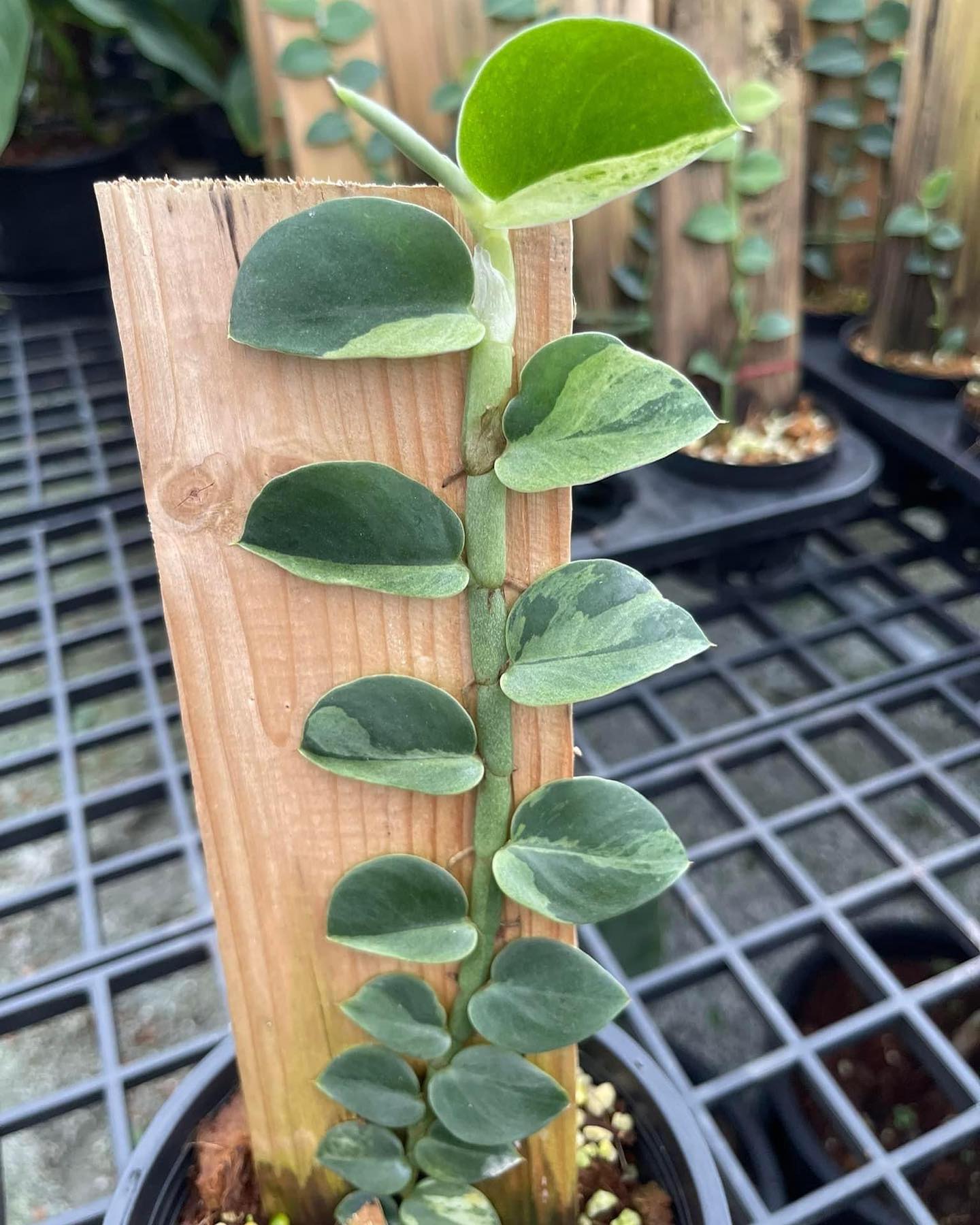
Species first, cultivated pattern second
Kew accepts Rhaphidophora hayi P.C.Boyce & Bogner as a species native from Papuasia to northern Queensland. It is a wet-tropical climber with ascending, shingling leaves on stems that cling to a surface. The botanical description also notes occasional searching shoots and detachable side shoots.
The variegated plant is not a different accepted species in the official sources reviewed. “Variegated,” “albo” and similar labels describe cultivated appearance or a seller’s line unless provenance establishes more. Evaluate the exact stem and growth point instead of assuming a label guarantees stability.
The legacy article called this plant “Dragon Tail” and described it as a trailing vine with elongated leaves. That framing belongs elsewhere. Hayi’s defining indoor display is an ascending shingle pattern on a usable support.
Build the surface before the vine reaches it
Use a stable, plant-safe board wide enough for the next leaves and tall enough to extend beyond the active tip. Fix it before the vine grows; repeated wobble interrupts root contact. Guide only the stem with soft ties between nodes, leaving petioles, leaf blades and the growing tip free.
A flat board gives the cleanest shingle presentation and is easy to inspect. A broad-faced moss pole may work but adds moisture management. Avoid sticky, flaking or freshly treated material, and use a removable support rather than letting clasping roots attach directly to a finished wall.
If the stem begins a long open runner, first check whether the board ends, bends away or sits beyond reach. Redirect the flexible stem gently. Do not tape the leaf itself flat: older leaves may remain lifted, while only future nodes reveal whether the route has improved.
Light supports green tissue—it does not create a pattern
Green sectors contain chlorophyll; cream or pale sectors contribute less photosynthetic capacity. Place the board in bright, filtered light and acclimate gradually. Judge usable light through new internode spacing, leaf size and the vine’s ability to maintain a compact climb.
Low usable light can weaken a low-green plant, but more light is not a guaranteed reversion cure. An all-green growth point remains a node-level question. At the other extreme, hot direct exposure can mark pale tissue first. Watch which side is damaged and whether the mark repeats on new leaves before changing several variables at once.
Read pattern, attachment and root condition together across consecutive nodes.
| Observation | Boundary | Check next | First response |
|---|---|---|---|
| One green leaf | Normal fluctuation or the start of a greener run | Stem pattern and next active bud | Wait; keep the useful green leaf |
| Several plain-green nodes | A green reversion may be established | Last mixed node with a viable bud | Plan one conservative cut only after confirming the growth point |
| Several nearly pale leaves | Too little green area to support strong growth | Roots and a lower bud with mixed tissue | Protect from scorch; consider returning to a balanced node |
| Tip leaves the board | The climbing route is missing or too far away | Gap, angle and support height | Redirect the flexible stem; do not tie the tip |
| Tan pale edge | Light, heat, root or physical damage | Exposure side, pot moisture and roots | Correct the confirmed stressor; old tissue will not recolor |
| Whole leaf yellows | Not automatically a variegation change | Root-zone moisture, roots, pests and age | Diagnose before feeding or pruning |
When an all-green run deserves a cut
Extension guidance notes that green reversions can outgrow slower variegated tissue. Do not translate that into removing every green leaf. First confirm several plain nodes, then locate the last mixed stem section with a viable axillary bud and healthy roots.
Make one clean cut with sterile tools above the node you intend to keep. A cut changes which bud grows next; it does not command a white, cream or green percentage. The removed top can be propagated only if it contains a viable node, and its future pattern remains uncertain.
Water the root system that carries the display
Variegation does not require a special calendar. Check below the surface and compare pot weight; water thoroughly after the upper portion has partly dried, then let excess drain. Permanent wetness is not a shortcut to larger leaves and gives a low-green plant less margin for root damage.
Use a structured medium with durable air space and a pot sized to the roots. Particle size, pot depth and climate matter more than a fixed recipe. The Rhaphidophora soil owner covers substrate choices; the genus care owner covers seasonal routines.
When an entire leaf yellows, use the Rhaphidophora yellow-leaf diagnostic. Do not assume the pattern is reverting or add fertilizer before checking roots and moisture.
Humidity and leaf care
Stable moderate humidity can help new leaves expand, but misting does not create a controlled climate and can keep appressed foliage wet against a board. Use measured conditions and a clean humidifier only when repeated new-leaf problems justify it, with gentle airflow around the support.
Skip leaf shine and oils. Inspect behind accessible leaves with a small light, support the blade while cleaning with water and a soft cloth, and check the board edge and pot rim for pests. Pale tissue that turns brown will not become green again; judge the next growth.
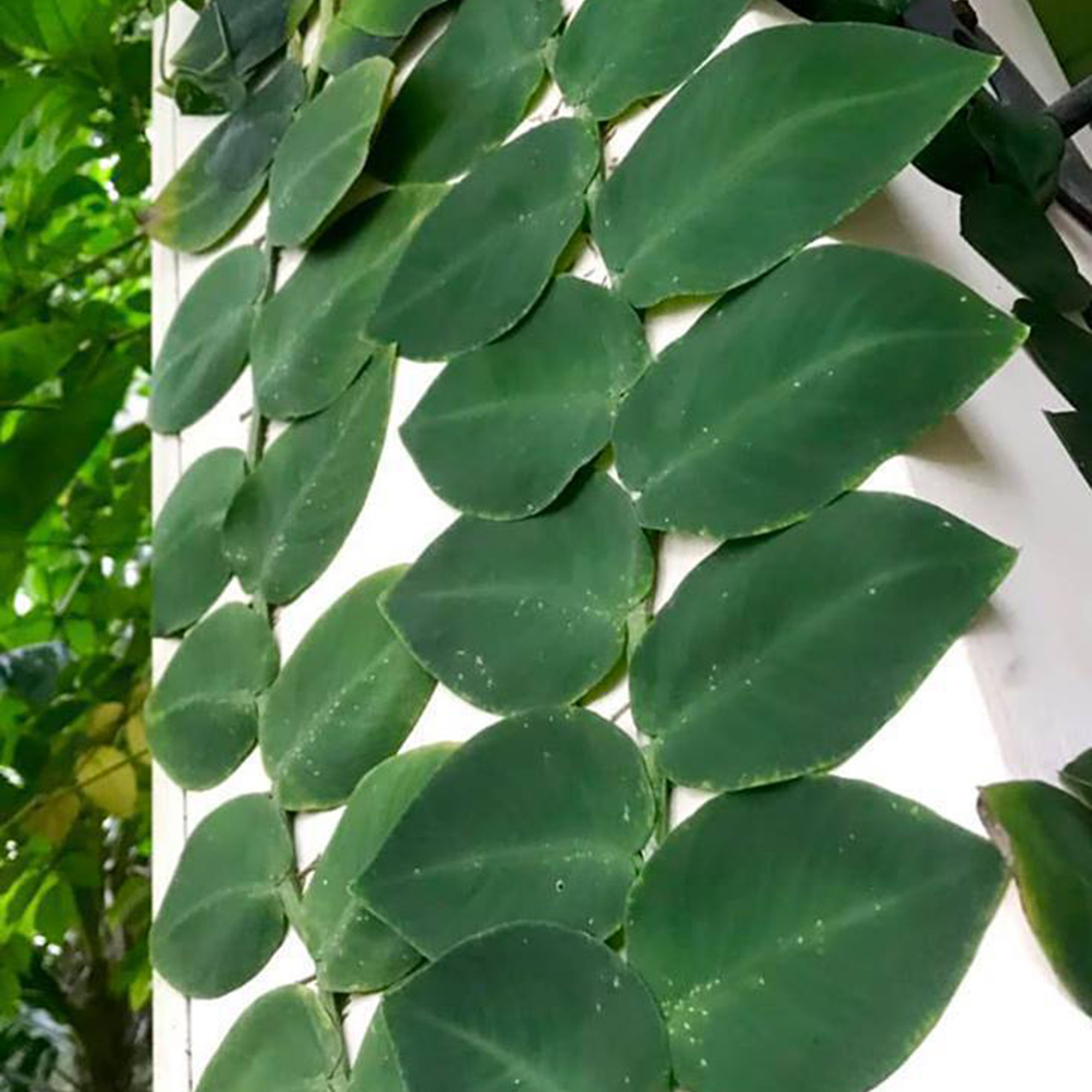
Do not confuse hayi with cryptantha
Both are accepted shingling species. Kew’s descriptions separate them through leaf/stem architecture and flowering structures; in cryptantha, inflorescences arise behind the appressed leaves, while hayi has free flowering shoots and a different leaf/venation profile. Seller use of “shingle plant” is therefore not enough for identification.
Use the Rhaphidophora cryptantha owner for its silver-reticulate, concealed-inflorescence architecture. For an expensive variegated hayi, ask for full-vine photos, the newest node and documented source rather than a cropped leaf.
Propagation: preserve a viable patterned route
A cutting must contain a viable node. Photograph the stem and bud before cutting, keep track of which side faced the board, and establish the new plant beside a fresh support so the emerging shoot has somewhere to attach.
Do not promise a rooting time or repeated pattern. Use the Rhaphidophora propagation owner for media and transition mechanics; this page owns only node/pattern selection and restoration of board contact.
Before paying a variegation premium
Evaluate the plant, pattern and support as one system.
| Evidence | Why it matters | Useful proof | Weak substitute |
|---|---|---|---|
| Exact plant | Connects the listing to the specimen shipped | Current full-vine image and label | Mother-plant photo only |
| Three-node sequence | Shows the direction of the active pattern | Newest leaves, stem and bud in one view | One high-pale leaf |
| Active tip and board | Predicts whether shingling can continue | Tip, attachment and remaining support height | Old lower foliage |
| Roots and medium | Low-green growth has less transition margin | Rooted status, drainage and current medium | “Easy care” claim |
| Provenance | Trade labels and shingling species are confused | Documented source and consistent botanical name | “Albo shingle plant” alone |
A weekly pattern-and-route check
- Photograph the newest three nodes, stem and active bud in neutral light.
- Confirm the support continues above the tip and ties touch only the stem.
- Compare internode spacing and leaf contact with the previous week.
- Check moisture below the surface and pot weight before watering.
- Inspect pale sectors, roots and pests before changing light or feeding.
Frequently asked questions
Does brighter light create more variegation?
No. Strong filtered light supports growth with reduced green tissue, but it cannot reliably alter an all-green active bud. Acclimate gradually and protect pale sectors from hot direct exposure.
Should I remove one green leaf?
Not automatically. It still feeds the vine and may be followed by patterned growth. Inspect several nodes and the stem beside the active bud before declaring reversion.
Why has the vine stopped shingling?
Check the physical route first: the board may end, bend away or sit beyond the newest roots. Also review usable light and root health. Redirect only the flexible stem and judge future nodes.
Can I tape leaves to the board?
No. Tape can damage the blade and trap moisture. Attach the stem loosely between nodes and let future clasping roots establish the relationship naturally.
Is variegated Rhaphidophora hayi a separate species?
No separate accepted species was found in the official sources reviewed. Kew accepts *R. hayi*; “variegated” describes a cultivated pattern or line unless provenance says more.
Is it the same as Rhaphidophora cryptantha?
No. Both shingle, but Kew accepts them as separate species with different leaf, shoot and flowering architecture. Use multiple traits and provenance rather than the shared common name “shingle plant.”
Sources and further reading
- Kew POWO: accepted status, range, habit and morphology of R. hayi
- Singapore Botanic Gardens: taxonomic treatment and species boundary
- UF/IFAS Extension: chlorophyll, variegation and green-reversion principles
- University of Connecticut Extension: plant-reversion causes and management boundary
- University of Florida propagation program: chimeral reversion