Greenboog diagnostic guide
A yellow Rhaphidophora leaf is a symptom, not a diagnosis. The safest response is to map where yellowing began, check the moisture and roots, compare recent environmental changes and inspect for pests before watering, feeding or treating.
Start with the pattern, not the cause list
Rhaphidophora is its own genus; it is not another name for golden pothos. Different species carry different mature leaves, but the same diagnostic rule applies: compare the affected leaf with the rest of the vine and with its recent history.
Record which leaf changed first, whether the yellowing is even or patchy, how quickly it spread and what changed in the preceding weeks—repotting, relocation, temperature, watering, fertilizer, pest treatment or shipping. One old lower leaf declining slowly is a different case from every leaf paling at once.
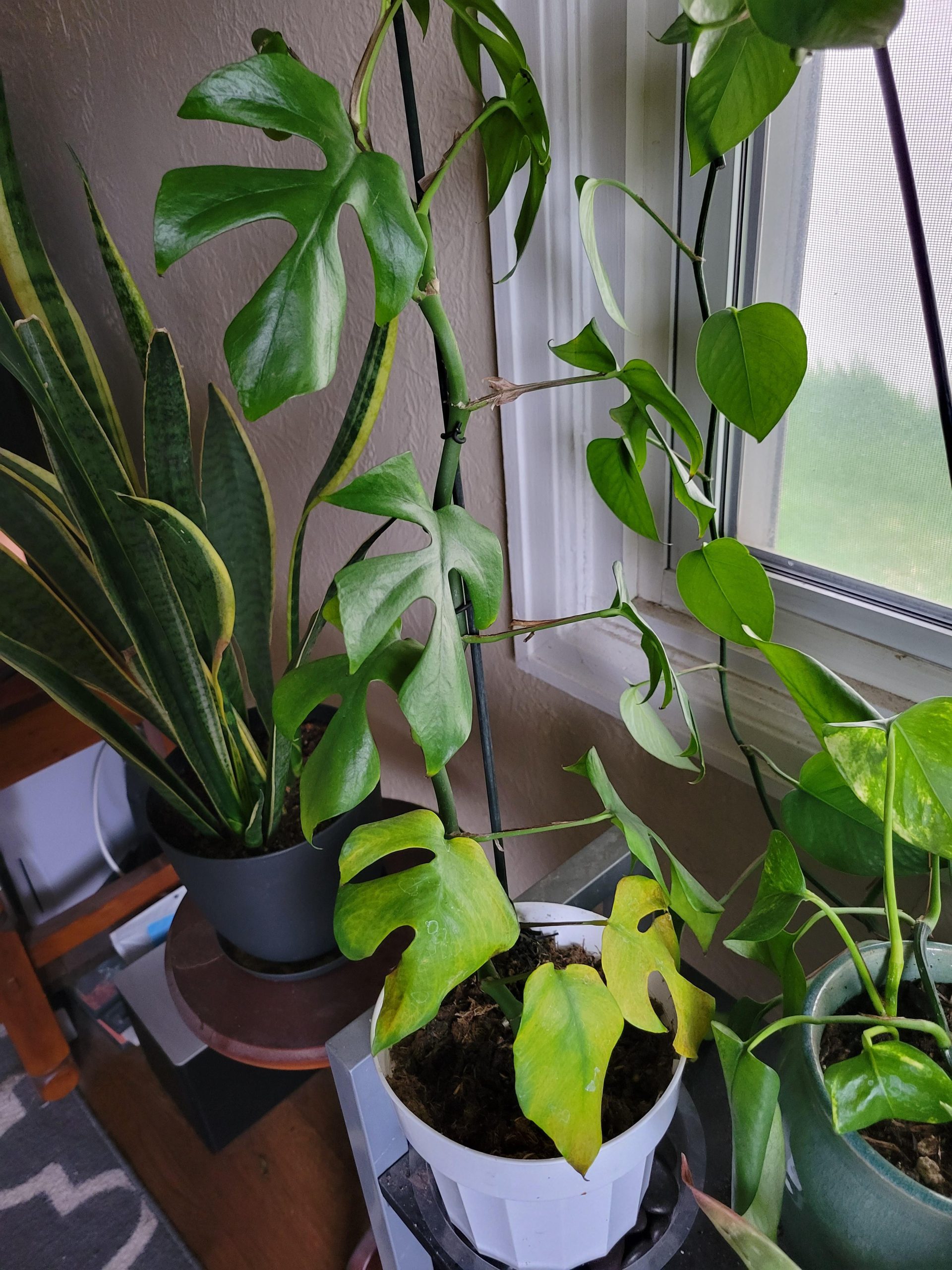
Use a four-check diagnostic sequence
| Check | Observe | What it narrows | Safe first action |
|---|---|---|---|
| 1. Leaf sequence | Old/new, one/many, even/spotted | Normal turnover vs shared stress | Photograph and mark the date |
| 2. Root zone | Depth moisture, pot weight, drainage | Dryness, saturation or blocked flow | Pause until evidence supports water |
| 3. Environment | Sun path, cold/heat, recent move | Exposure and acclimation injury | Correct gradually, one variable |
| 4. Living/chemical agents | Webbing, stippling, honeydew, lesions, residues | Pest, disease or treatment injury | Isolate before treating |
Watering problems can look alike above the soil
Both chronically wet roots and severe dryness can produce yellowing, wilting and leaf loss. That is why adding water to a wilted plant without checking the root zone can make the wrong problem worse.
Push a finger or wooden probe below the decorative surface and compare the pot’s weight. Check whether water can leave the nursery pot and whether a cachepot holds runoff. If the mix is dry through much of the root ball and the pot is light, water thoroughly and drain. If it remains wet for many days, inspect drainage, root volume and substrate before watering again.
Water demand changes with light, temperature, humidity, pot material and root health. The Rhaphidophora care owner covers the routine; the soil owner covers long-term substrate trade-offs.
When root inspection is justified
Unpot carefully when several leaves continue yellowing, the plant wilts despite a wet mix, the lower stem softens, the pot smells sour or growth has stalled while the medium stays saturated. Slide the root ball out without stripping every particle away.
Healthy root color varies, so use texture and structure too. Firm roots that hold their outer layer are different from dark, soft tissue that collapses or leaves a thread-like core. Root rot is not proven by yellow leaves; it is supported by damaged root/crown evidence and poor function.
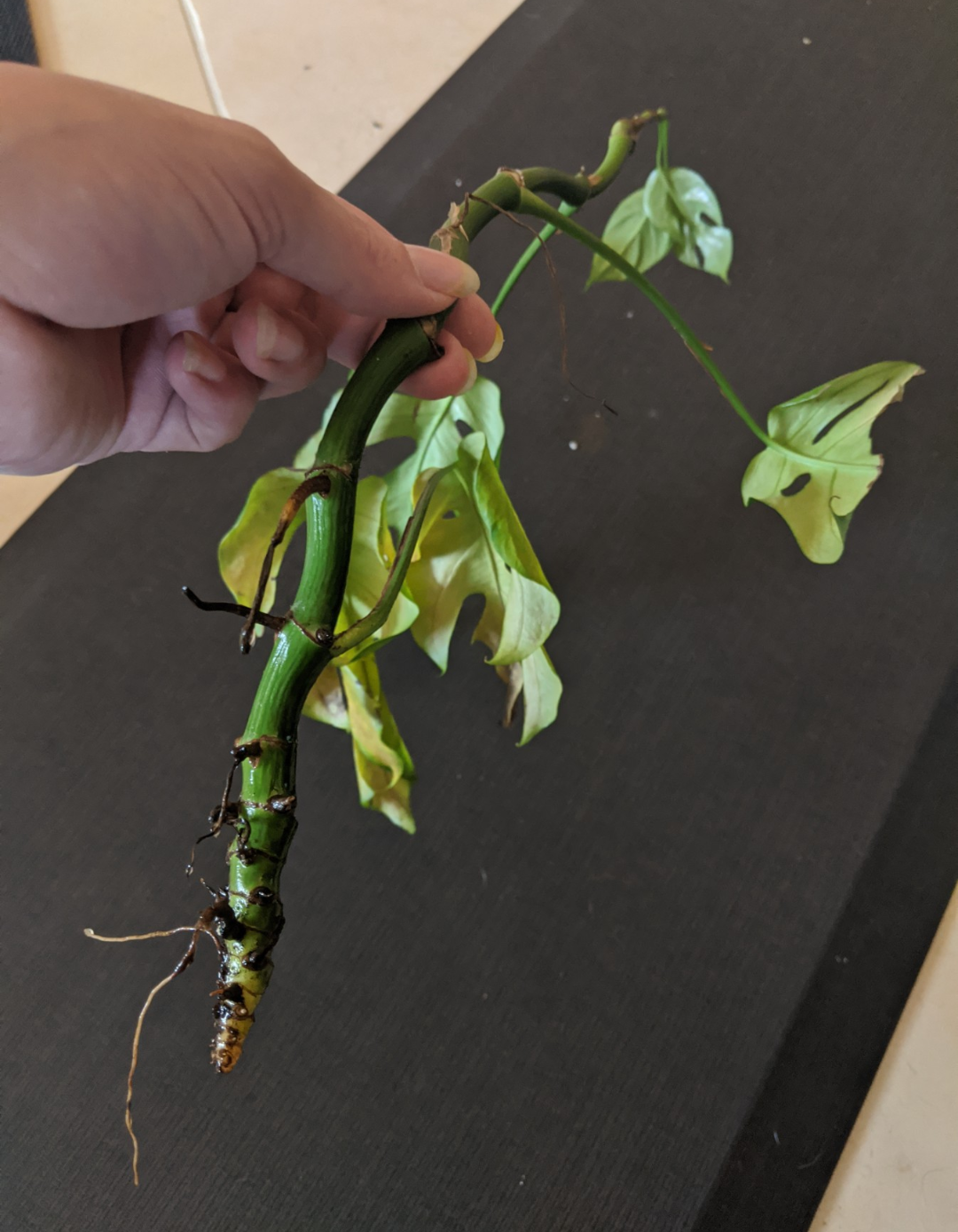
If most roots are compromised but firm healthy stem nodes remain, take only clean salvage material. Use the Rhaphidophora propagation owner for node-to-pot mechanics. Do not propagate visibly soft or diseased tissue.
Light, temperature and movement leave patterns
Sudden direct sun often marks the exposed side while shaded leaves remain unchanged. Low usable light can reduce water use, slow growth and indirectly keep the mix wet longer. A cold pane, hot vent or rapid relocation may produce yellowing or drop without a root pathogen.
Map the sun path and compare the affected side of the plant. Move gradually; old yellow tissue will not turn green again, so judge the next leaves. Do not combine a major light move, repot and fertilizer treatment on the same day.
Nutrients: diagnose availability before adding more
Uniform pale growth can be related to nutrient availability, but low fertility is only one possibility. Damaged roots, an unsuitable pH, dense wet medium, excess salts or weak light can prevent normal uptake even when fertilizer is present.
Check the fertilizer history, salt crust, roots and growing conditions. Feed only an actively growing plant with functioning roots and follow the product label. Extra fertilizer can burn roots and create another cause of yellowing.
Pests and lesions need a different response
Inspect leaf undersides, petiole junctions and folded new growth with a light or magnifier. Fine webbing, stippling, sticky honeydew, cottony residue or scale-like bumps support a pest hypothesis. Isolate first; then identify the pest and follow an indoor-use treatment label.
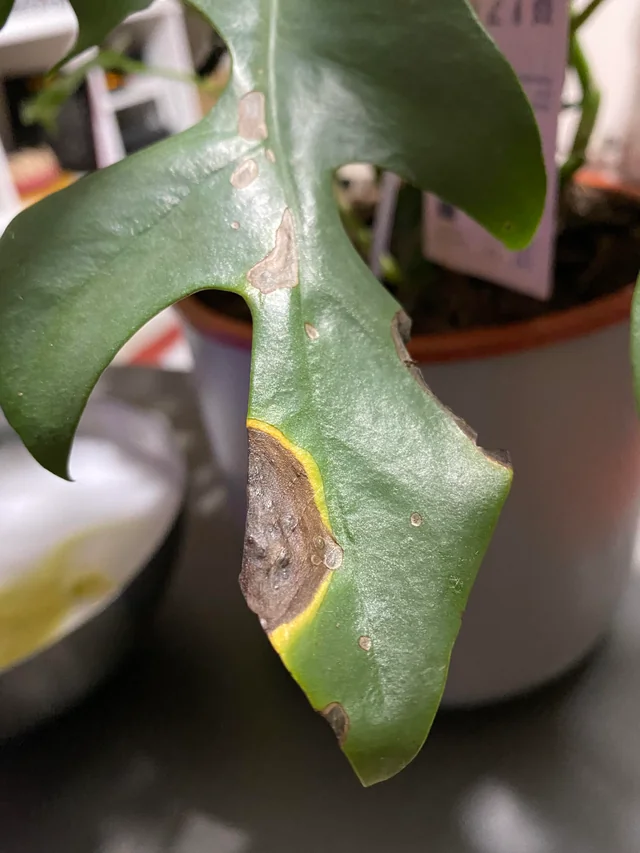
A spot with a yellow halo can reflect infection, physical damage, cold, sun or a chemical splash. Photograph its edge and watch whether it expands or repeats on new leaves. Keep foliage dry, improve air movement and avoid home mixtures while the cause remains uncertain.
Match the response to the evidence
| Pattern | Check next | Safe first response | Avoid |
|---|---|---|---|
| One old lower leaf | New growth and roots | Monitor; remove when fully spent | Automatic repot or feeding |
| Multiple leaves + wet mix | Drainage and root firmness | Pause watering; inspect if worsening | Calendar watering |
| Limp plant + dry root ball | Depth dryness and root condition | Rehydrate thoroughly, then drain | Small surface sips |
| Exposure-side bleaching | Sun/heat path | Reduce exposure gradually | Treating as nutrient loss |
| Stippling/webbing | Undersides and nearby plants | Isolate and identify pest | Blind pesticide rotation |
| Expanding wet/dark spots | Spread, foliage wetness, airflow | Isolate; remove severely affected tissue cleanly | Misting or splashing |
Before changing care
- Photograph the whole plant and the affected leaf in neutral light.
- Record which leaf changed first and how quickly.
- Check moisture below the surface, pot weight and runoff path.
- Inspect roots when the pattern and root-zone evidence justify it.
- Change one confirmed factor and judge new growth.
Frequently asked questions
Does one yellow leaf mean root rot?
No. An old leaf may be completing normal turnover. Root rot needs root/crown evidence such as dark soft tissue, loss of outer root layers and impaired function.
Should I water a yellowing Rhaphidophora?
Only after checking moisture below the surface and the pot’s weight. Both too-wet and too-dry roots can produce similar foliage symptoms.
Should I fertilize immediately?
No. Confirm functioning roots, active growth and the fertilizer/salt history first. More fertilizer can worsen root injury or salt stress.
Will a yellow leaf turn green again?
Usually not once chlorophyll is lost extensively. Correct the cause and evaluate the next leaves rather than chasing old color.
When should I isolate the plant?
Isolate when you see pests, webbing, honeydew, repeating spots or expanding wet/dark lesions, or while a contagious cause remains plausible.
Does leaf position matter?
Yes. One old lower leaf, several lower leaves, only new growth and exposure-side patches point to different evidence paths, though none proves a cause alone.