Accepted species, seller-line evidence and support-led care
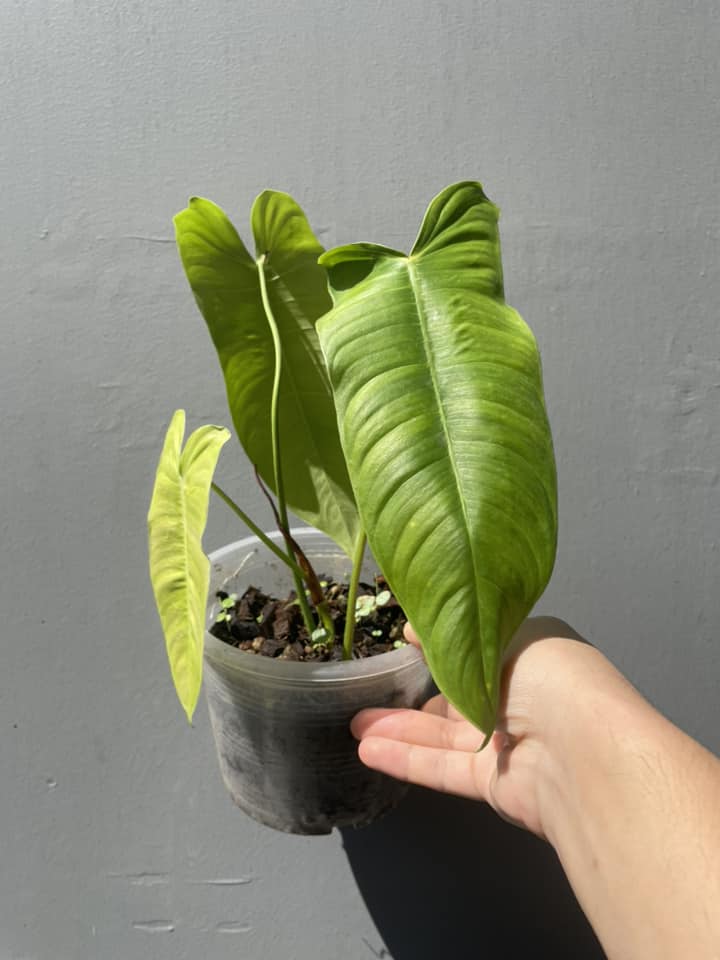
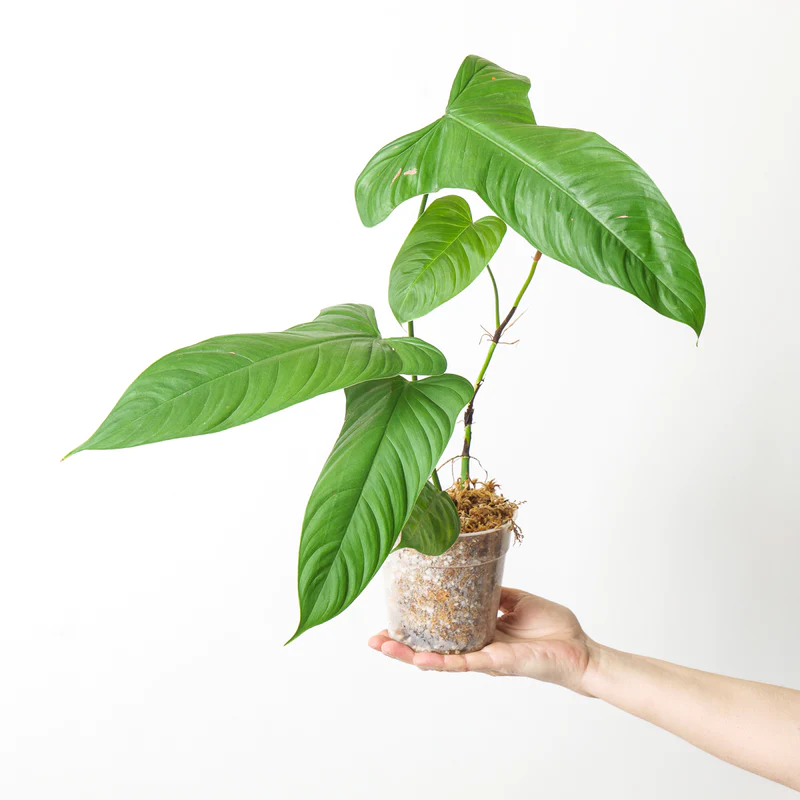
Philodendron sharoniae is an accepted wet-tropical species from Colombia and Ecuador. Collectors grow it for long, arrow-like leaves with a strongly pleated surface. “Mosquera” is a trade label, not a separate accepted species, so provenance and connected growth matter more than one dramatic leaf.
Sharoniae is an accepted species
Kew accepts Philodendron sharoniae Croat and records its native range from Colombia to Ecuador in the wet tropical biome. IPNI records its formal publication in Aroideana in 2016. The type was collected by Thomas Croat and Geneviève Ferry in Carchi, Ecuador, at about 1,350 metres; the species name honours Sharon Christoph.
This corrects several legacy claims. Sharoniae is not defined by pink speckles or variegation, and its long blades are not “deeply lobed.” Juvenile leaves can be compact, while established supported growth can express a longer, more pleated blade.
Read the plant across connected growth
A single leaf cannot establish a Sharoniae or Mosquera label. Compare a sequence from the active point down the stem: blade outline, surface folding, basal lobes, petiole proportions, node spacing and aerial-root behaviour. Light, root condition, leaf age and support can all change the appearance of one leaf.
| Evidence | What it can support | What it cannot prove alone |
|---|---|---|
| Long arrow-like blade | Consistent development on established growth. | Species or seller line from one leaf. |
| Pleated surface | A repeated Sharoniae-like leaf character. | A registered “Mosquera” cultivar. |
| Basal lobes | Connected changes from juvenile to later leaves. | That juvenile proportions are permanent. |
| Stem and nodes | Climbing architecture and viable propagation points. | Exact geographic provenance. |
| Original label/history | Traceability of the commercial line. | Botanical rank without authoritative records. |
Keep the original invoice, seller label and connected-plant photographs. They provide stronger continuity than a marketplace nickname copied onto a detached leaf.
Place support beside the active stem
Sharoniae is a climbing Philodendron. Put a board, pole or other stable surface beside the active stem, fasten stem tissue loosely and leave petioles free. Guide the newest flexible section first; do not twist older hardened growth around a support.
Support does not mechanically create large leaves, but it provides a consistent climbing axis while roots, light and warmth support new growth. If later leaves shrink, inspect the root zone, usable light, temperature and attachment before adding fertilizer.
Use light and leaf hardening as evidence
Start with bright diffused light and acclimate any increase. A fresh leaf may open lighter and softer before it hardens; harsh direct exposure can mark the tender surface, while low usable light can slow growth and root-zone drying. Do not interpret every pale new leaf as variegation or nutrient deficiency.
Move the plant only after observing a pattern across several days and connected leaves. The Philodendron care guide owns broader room-level light, temperature and airflow decisions.
Water from the rooted volume
Use a loose medium that drains freely but retains useful moisture, and keep the pot close to the rooted volume. Water thoroughly across the root zone, let excess leave, then recheck pot weight and moisture below the surface before repeating. A weekly or top-inch rule ignores root density, pot size, medium, temperature, light and airflow.
Humidity can slow leaf-edge drying, but daily misting and pebble trays do not replace stable room conditions or root watering. Feed modestly during active rooted growth; a fixed two-to-four-week schedule cannot correct damaged roots. Use the Philodendron watering guide for deeper root-zone diagnosis.
Diagnose the signal before changing care
| Signal | Check first | Measured response |
|---|---|---|
| New leaf is pale | Hardening stage and prior connected leaves. | Wait for hardening before feeding. |
| Brown edge or patch | Sun, heat, spray residue and hydration shift. | Correct the verified exposure. |
| Plant is limp in a wet pot | Drainage, root smell and crown depth. | Pause watering; inspect if recovery stalls. |
| Later leaves shrink | Support, roots, light and temperature. | Fix the limiting factor, not everything. |
| Newest growth distorts | Growth point, thrips, mites and physical damage. | Isolate and identify before spraying. |
Propagate a viable node
A Sharoniae cutting needs stem tissue with a viable node and bud or active growth point. A detached leaf and petiole cannot rebuild the climbing stem. Photograph the connected plant and label before cutting, preserve useful aerial roots, and use clean tools.
- Choose healthy connected growth rather than a stressed shipment.
- Confirm where the node and active bud sit before cutting.
- Keep the base warm, airy and moist rather than saturated.
- Transfer only after functional roots can support new growth.
- Carry the Sharoniae and Mosquera seller-line history forward.
Use the Philodendron propagation guide for top-cut, air-layering and transfer decisions.
Buyer checklist and live routes
- Confirm whether the gallery shows the exact plant or a representative specimen.
- Ask for connected leaves, stem, nodes and active growth point.
- Request the seller’s source and meaning of “Mosquera.”
- Verify rootedness, support history and recent propagation.
- Use the live selector for format, stock, price and shipment scope.
Safety and sources
Philodendron tissue contains insoluble calcium-oxalate crystals that can irritate the mouth and digestive tract when chewed. Keep plants and cut material away from children and pets, and seek appropriate medical or veterinary guidance after significant exposure.