Unresolved trade name, connected-growth evidence and crawler care
Philodendron “Plowmanii” Black Face is a horticultural label for a crawling aroid with corrugated leaves and dark-to-silvery interveinal patterning. The name does not currently resolve to an accepted species record in Kew or IPNI, so a plant’s provenance and connected growth are more informative than the label alone.
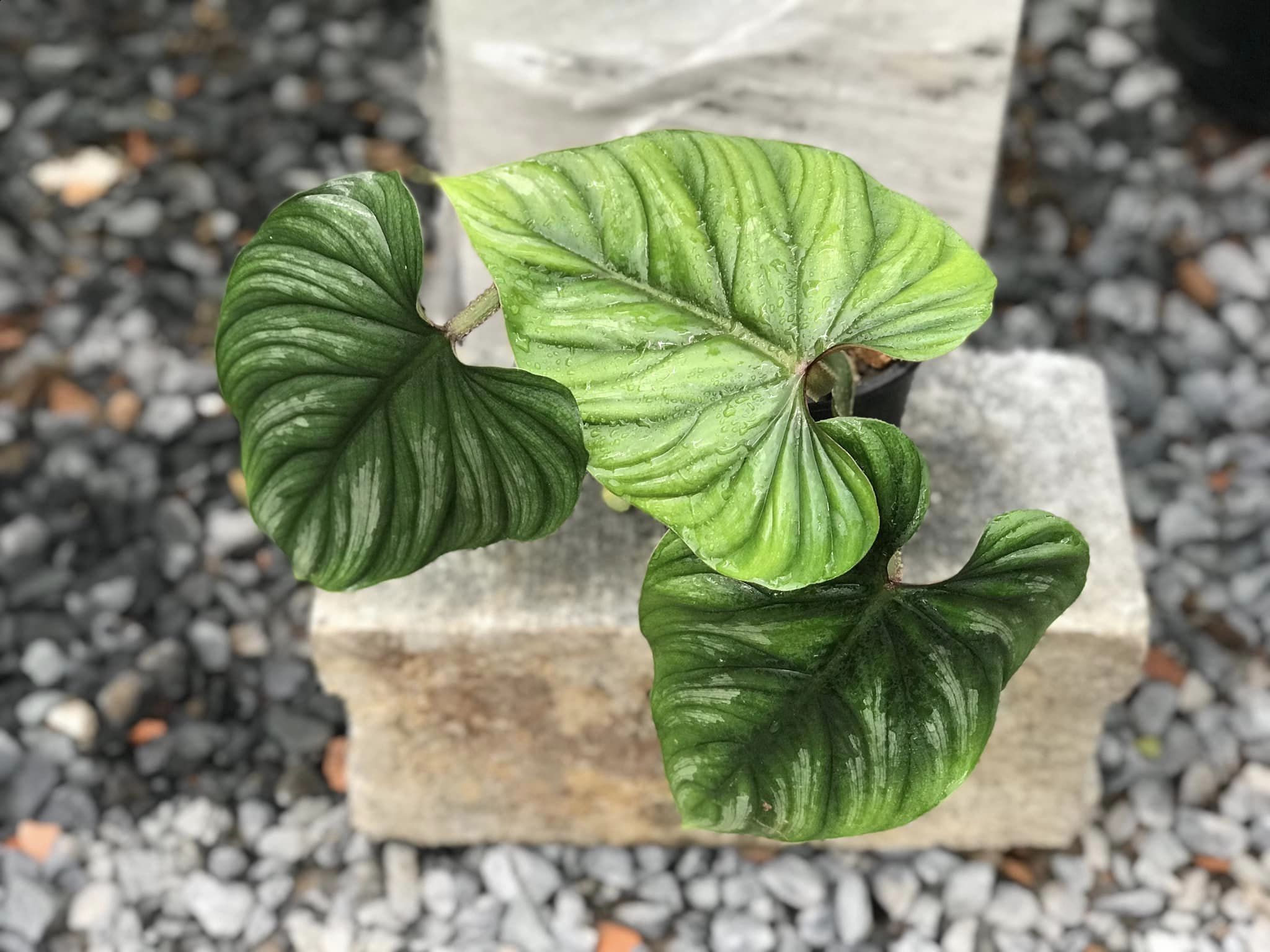
The botanical name is still unresolved
A search of Kew’s accepted plant-name backbone and IPNI on 25 August 2026 returned no validly published Philodendron plowmanii record. Horticultural sources sometimes write the name as “Croat, ined.”: ineditus signals an unpublished name, not an accepted species authority.
The International Aroid Society’s Philodendron species list also does not include it. “Black Face” is used in trade for darker-looking material, but no authoritative cultivar registration was located during this review. That makes both labels useful for commerce and collection history, but insufficient as botanical proof.
Read a sequence, not a dramatic leaf
Current Greenboog material shows cordate leaves with a strongly corrugated surface and dark-to-silvery fields between the veins. In the wider trade, ruffled petioles and a creeping stem are also used when comparing Plowmanii-like plants. None of those traits authenticates Black Face by itself.
| Evidence | Useful observation | Boundary |
|---|---|---|
| Leaf surface | Repeated corrugation across hardened leaves. | Texture varies with age and hydration. |
| Interveinal colour | Dark and silver fields recur in the seller line. | Light and hardening change contrast. |
| Petiole | Shape and ruffling repeat on connected leaves. | One petiole is weak identification evidence. |
| Stem | Nodes advance horizontally along the substrate. | A pot angle can hide the growth direction. |
| Provenance | Original label, seller and connected-plant photos. | A copied nickname is not lineage proof. |
Compare possible mamei-like or pastazanum-like material from the full plant, not a social-media leaf crop. If the history is missing, retain “Plowmanii Black Face” as the seller label and mark identity as unverified rather than inventing certainty.
Give the creeping stem room to advance
Use a wide container or planter with open substrate in front of the active growth point. Keep nodes close enough to the surface for new roots to enter the medium. A vertical pole works against the line’s horizontal architecture and can leave new nodes suspended beyond the pot.
When the stem reaches the container edge, extend the runway, shift to a wider pot or propagate a viable section. Avoid burying the crown or forcing old tissue into a tight bend.
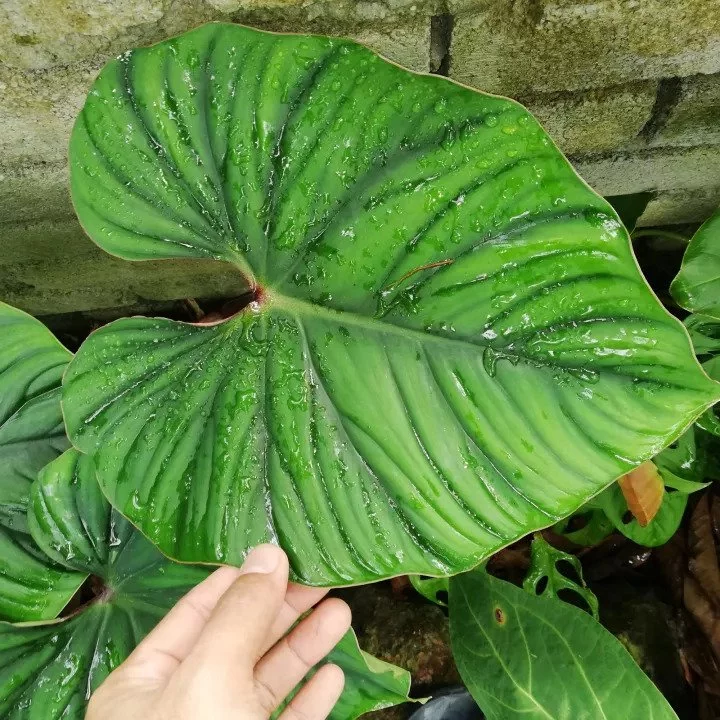
Use light and hardening as context
Start with bright diffused light and acclimate increases gradually. A fresh leaf can open lighter before darkening or developing stronger contrast; harsh direct exposure can mark tender tissue, while low usable light can slow growth and root-zone drying. Black Face is not a promise that every leaf will become nearly black.
Observe several hardened leaves before changing care. The Philodendron care guide owns broader room-level light, temperature and airflow decisions.
Water the rooted section, not the whole empty pot
A wide crawler container may contain unrooted substrate ahead of the stem. Water where functional roots occupy the medium, allow excess to leave, then recheck pot weight and moisture below the surface. A top-inch or weekly rule cannot account for a small root mass inside a wide pot.
Daily misting and pebble trays do not replace root watering or stable room humidity. Feed modestly during active rooted growth; the trade line is not proven to be a “heavy feeder,” and fertilizer cannot repair damaged roots. Use the watering guide for deeper diagnosis.
Diagnose before repotting or feeding
| Signal | Check first | Measured response |
|---|---|---|
| Fresh leaf is light | Hardening stage and connected sequence. | Wait before changing fertilizer. |
| Contrast fades | Leaf age, light shift and line variability. | Adjust only a verified light problem. |
| Crawler is limp in a wet pot | Rooted footprint, drainage and crown depth. | Pause watering; inspect if recovery stalls. |
| New node hangs past the rim | Runway ahead of the active point. | Extend, repot wider or propagate. |
| Newest growth distorts | Growth point, thrips, mites and damage. | Isolate and identify before spraying. |
Propagate a viable crawling section
A viable cutting needs a node, a bud or active growth point and enough stem context to preserve the line. A detached leaf and petiole cannot rebuild the crawler. Photograph connected leaves, petioles, stem direction and label before cutting.
- Choose a healthy node with useful leaf area.
- Keep the growth point and node orientation visible.
- Use clean tools and retain useful roots where practical.
- Keep the base warm, airy and moist rather than saturated.
- Carry the unresolved trade-name and seller history forward.
Use the Philodendron propagation guide for node preparation and transfer decisions.
Buyer checklist and live routes
- Confirm exact-plant versus representative-gallery scope.
- Request connected leaves, petioles, crawling stem and active point.
- Ask what the seller means by Black Face and where the line came from.
- Do not accept “formally accepted species” without a publication record.
- Verify current stock, format and shipment terms on the listing.
Safety and sources
Philodendron tissue contains insoluble calcium-oxalate crystals that can irritate the mouth and digestive tract when chewed. Keep plants and cut material away from children and pets, and seek appropriate medical or veterinary guidance after significant exposure.