Accepted Pacific-lowland species, fibrous cataphylls and connected-stem evidence
Philodendron fibraecataphyllum is an accepted appressed climbing species from the Pacific lowlands of western Colombia and Ecuador. Its name points to pale longitudinal fibres left by persistent cataphylls on the stem. Mature blade shape, warty petioles and those stem fibres matter more than a single juvenile leaf.
Start with the 2016 species record
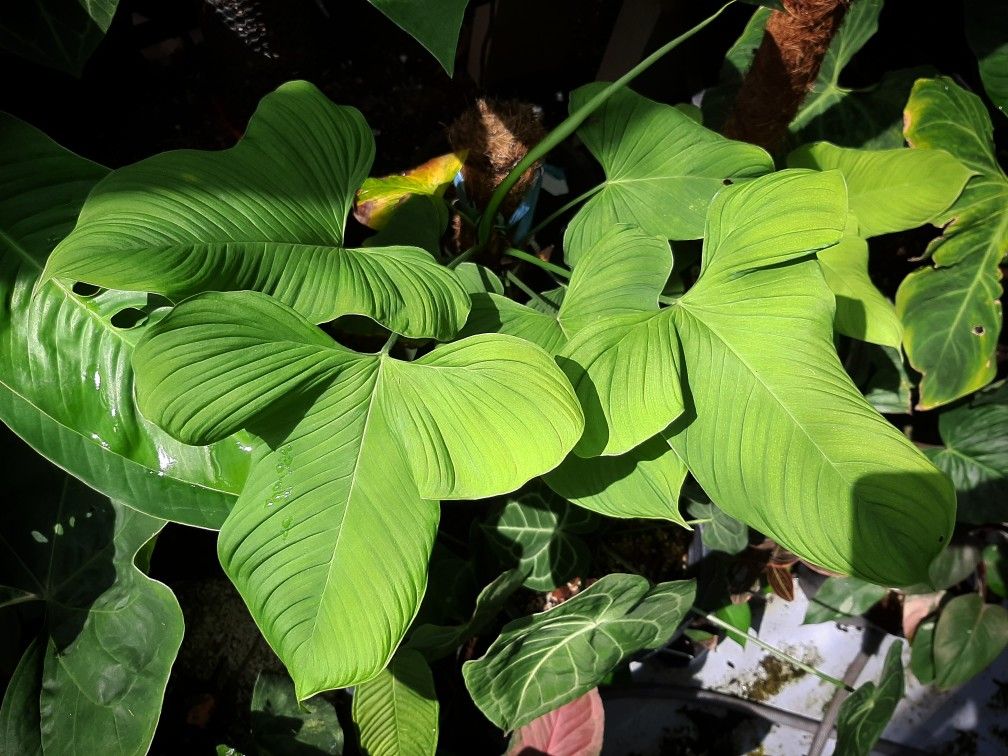
Kew accepts Philodendron fibraecataphyllum M.M.Mora & Croat, published in 2016. The native range runs from western Colombia to Ecuador in wet tropical forest. The original description is more precise: known collections came from Chocó Department and Esmeraldas Province in the Pacific lowlands, from near sea level to about 160 metres.
That corrects the common “Amazon Basin” story. Mora and Croat describe an appressed hemiepiphytic climber, meaning an established plant climbs closely against supporting vegetation while interacting with both host surface and ground/root-zone conditions. It is not a compact one-metre rosette selected for small rooms.
The name records the stem evidence
The epithet fibraecataphyllum refers to cataphylls that persist as fibres over the upper internodes. A cataphyll protects developing growth; on this species it soon becomes red-brown and remains in semi-intact fragments with many pale straw-coloured longitudinal fibres.
The protologue combines that character with short internodes, firm cylindrical petioles covered in fine pale warts, and hastate to sagittate-hastate mature blades. Posterior lobes spread outward around a broadly arcuate sinus. The long pointed anterior section, stem fibres and textured petiole should be read together.
Juvenile seller foliage needs time
Young cultivated plants can carry entire or weakly lobed blades that do not yet resemble the mature plate in a species description. Leaf angle, transport stress and incomplete hardening add more variation. Keep the source label while later nodes develop instead of forcing a new identity from an image search.
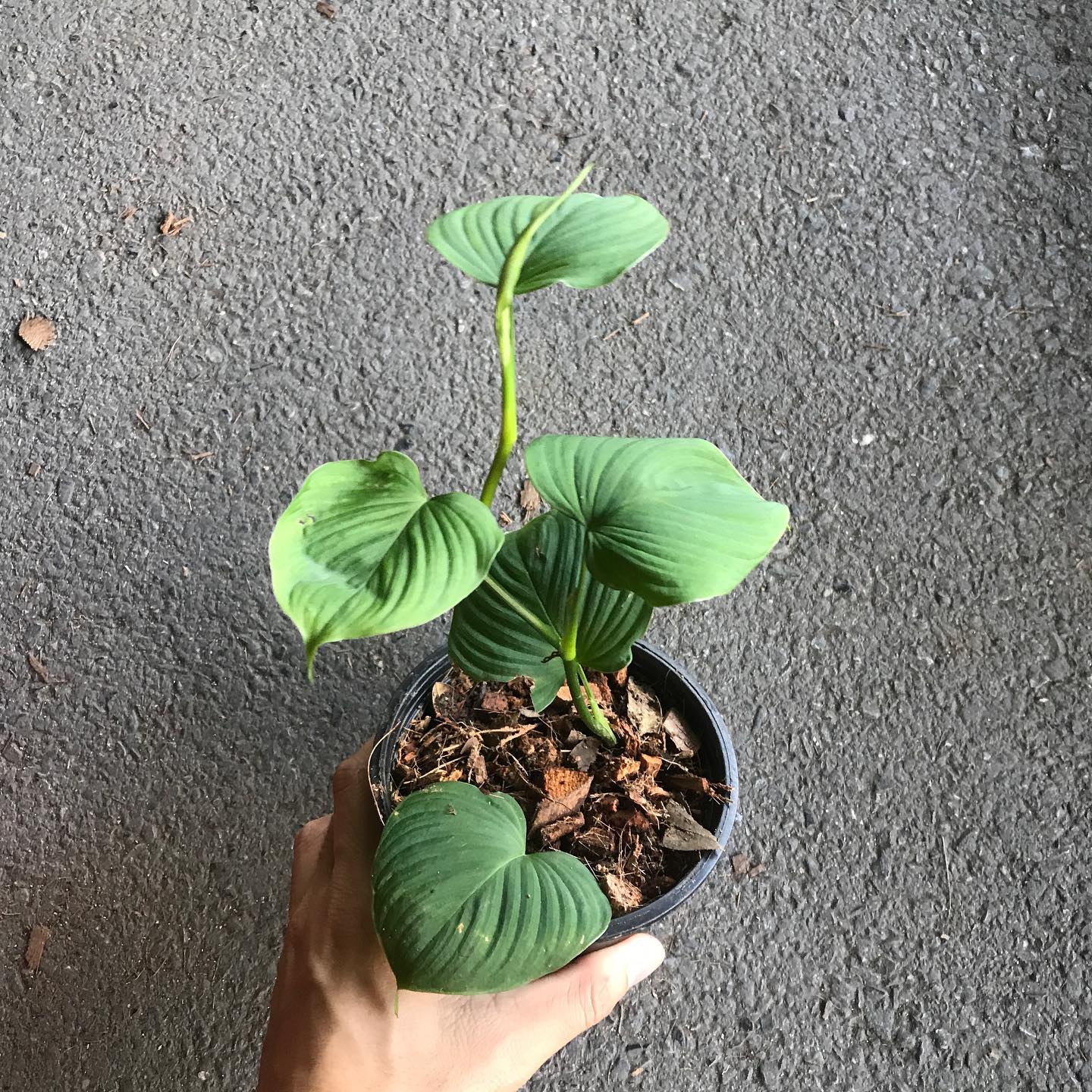
Ask whether a listing shows the exact plant, a representative juvenile batch or a mature reference. The strongest package includes the whole pot, source history, connected stem, node sequence and later mature photos.
Separate the closest formal comparisons
| Taxon | Useful formal difference | Do not use alone |
|---|---|---|
| Fibraecataphyllum | Persistent parallel pale cataphyll fibres, warty cylindrical petiole and outward basal lobes. | One ribbed juvenile blade. |
| Acuminatissimum | Variable hastate to deeply three-lobed blades; posterior lobes direct upward in the comparison. | A long-acuminate tip. |
| Balaoanum | Dry-forest context plus dried-colour and midrib/basal-vein blotch evidence in the protologue. | Outward lobes by themselves. |
These are specialist herbarium and field boundaries. A home grower rarely has dried colour or inflorescence evidence, so provenance and connected vegetative characters carry more weight than certainty from one photo.
Put support beside the active stem
Place a plank, pole or other close vertical surface beside the active stem. Tie stem tissue loosely and keep petioles free to orient leaves. If the plant has sprawled, guide the newest flexible section first; old hardened sections can split when forced.
Check new nodes for contact roots and keep the attachment surface clean and stable. Support gives the plant a useful climbing axis and makes later internodes and cataphyll remains easier to inspect. It cannot compensate for cold, weak light or failing roots.
Balance light, moisture and root-zone air
Start with bright diffused light. Increase exposure gradually if later growth becomes smaller and gaps lengthen after roots are checked. Pale or crisp injury following a move can indicate abrupt sun or heat; damaged tissue will not recover colour.
Use a well-drained, moisture-retentive medium and a pot only modestly larger than the active roots. Water across the rooted volume, let excess leave, and check below the surface plus pot weight before watering again. Medium, roots, airflow, warmth and light set the interval; a universal one-to-two-week schedule cannot.
Keep the plant warm and away from drafts. Feed lightly during active rooted growth. A water tray does not meaningfully humidify a room, and frequent misting cannot replace root watering or airflow. Use the Philodendron care guide for broader room-level decisions.
Diagnose the sequence before treating
| Pattern | Check first | Measured response |
|---|---|---|
| Long gaps and smaller later leaves | Support contact, light trend and root health. | Correct the limiting factor and judge later nodes. |
| Yellowing with wet medium | Pot size, drainage, warmth and root texture. | Restore air and warmth; remove only confirmed rot. |
| Pale crisp patches | Recent sun, heat or spray change. | Step back from exposure and acclimate gradually. |
| Distorted newest growth | Growth point, thrips, mites and roots. | Isolate and identify before stacking treatments. |
Propagate a node and preserve provenance
A stem cutting needs a real node and viable stem tissue; a detached leaf and petiole cannot rebuild the climbing plant. Photograph the mother plant, label, cataphyll fibres and connected leaf sequence before cutting. Preserve aerial roots when practical and use clean tools.
- Select a healthy node with a usable bud or growth point.
- Keep the base warm, airy and moist rather than saturated.
- Pot only when functional roots can support the shoot.
- Retain the original label through juvenile development.
- Record whether the plant came from a cutting or tissue culture.
The Philodendron propagation guide owns cutting and transfer technique. Tissue-culture plantlets need a separate deflasking/acclimation stage before this established-vine guidance applies.
Buyer checklist and live formats
- Request the exact plant or clearly labelled representative photos.
- Look for the whole stem, nodes, cataphyll remains, petiole texture and several leaves.
- Confirm potted versus lab format, count, rootedness and shipment terms.
- Prefer propagated stock with traceable nursery provenance.
- Do not pay a species premium for a leaf-only image.
Safety and sources
Philodendron tissue contains insoluble calcium-oxalate crystals that can irritate the mouth and digestive tract when chewed. Keep plants and cut material away from children and pets, and seek appropriate medical or veterinary guidance after a significant exposure.