Monstera species guide
Monstera standleyana is a wet-tropical climber with narrow, usually entire leaves. Variegated plants can show cream, white or yellow sectors and marbling, but identity and future pattern require more evidence than one dramatic leaf.
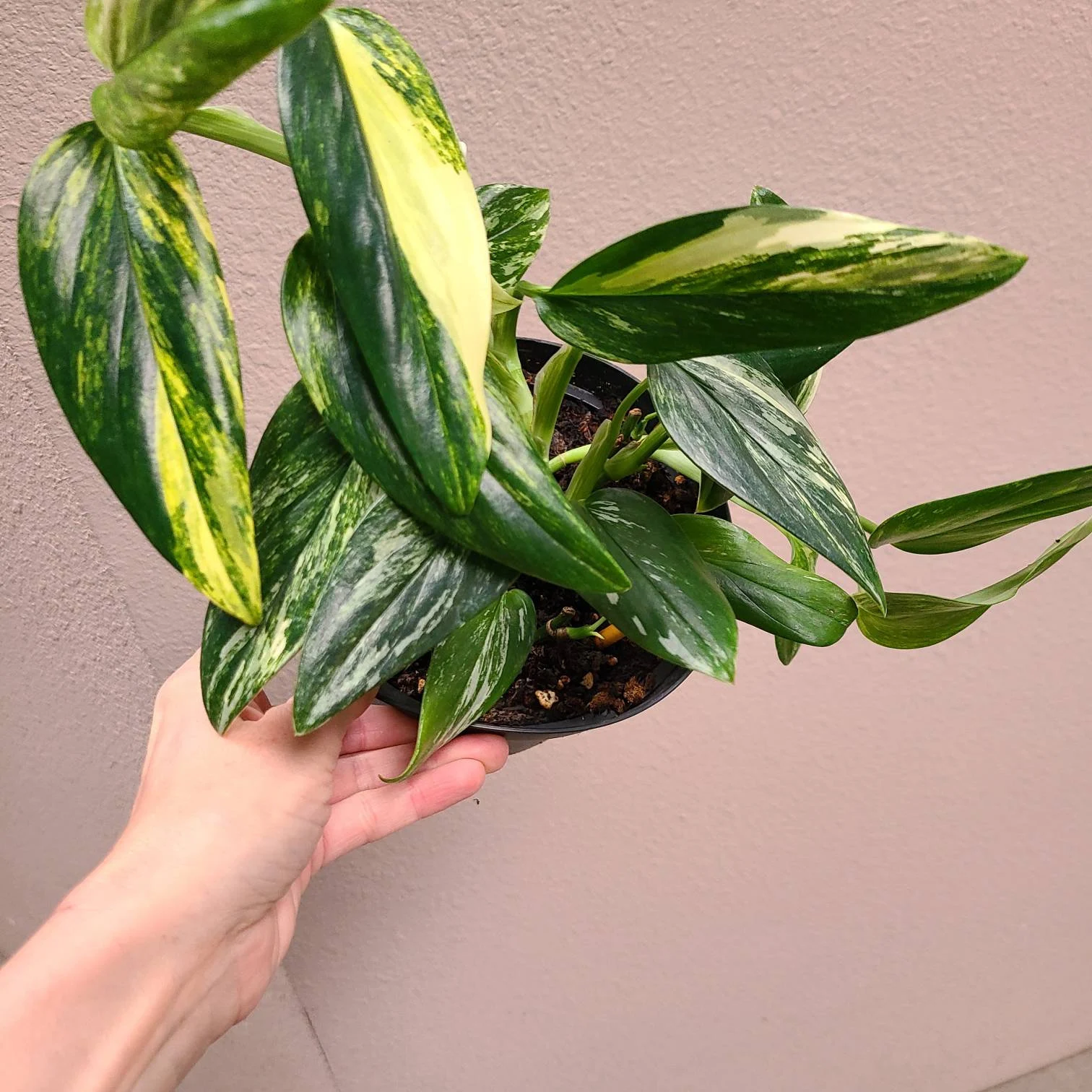
What is Monstera standleyana?
Kew’s Plants of the World Online accepts Monstera standleyana G.S.Bunting, first published in 1967. Its documented native range runs from southeast Nicaragua to northwest Colombia, and Kew describes it as a climber of the wet tropical biome.
The accepted name matters because listings may use “Cobra,” “Philodendron Cobra,” “Five Holes” or color adjectives inconsistently. A trade label can help locate a product, but it is not a botanical synonym by itself. Ask which accepted species the seller is applying and whether the photograph shows the exact plant, a mother plant or a representative specimen.
Identify the plant before judging variegation
| Feature | Standleyana clue | Boundary |
|---|---|---|
| Leaf blade | Narrow elliptic-to-lance-shaped blade, normally entire rather than naturally perforated. | One juvenile leaf cannot establish species identity. |
| Growth habit | A climbing vine with visible nodes, internodes and aerial-root potential. | A compact unsupported pot can hide the climbing form. |
| Variegation | Cream/white/yellow flecks, streaks, marbling or sectors across a leaf sequence. | Color alone cannot prove species, clone name or next-leaf pattern. |
| Seller evidence | Exact-plant photos, stem/node views and several recent leaves. | A representative hero image cannot show roots, current growth or reversion. |
Condition-led care
| Factor | Starting point | Evidence to watch |
|---|---|---|
| Light | Bright filtered light; acclimate gradually to any stronger exposure. | Leaf size, internode length, source-facing scorch and seasonal change. |
| Water | Water thoroughly, drain, then reassess after the upper mix dries and the pot becomes lighter. | Dry-down speed, root firmness, drainage and whether the pot stays heavy. |
| Root zone | Airy, moisture-retentive aroid mix in a container with open drainage. | Uneven wet pockets, collapsed mix, circling roots and stalled water movement. |
| Support | Secure the stem to a pole, plank or trellis; leave petioles free. | Shorter stable internodes, aerial-root contact and upward orientation. |
| Feeding | Use a balanced fertilizer conservatively only during active growth. | New roots/shoots, mineral crust, recent shipment or root stress. |
The Monstera light guide, condition-led watering guide and support guide own those detailed workflows. This species page keeps only the Standleyana-specific decision context.
Manage variegation as a sequence
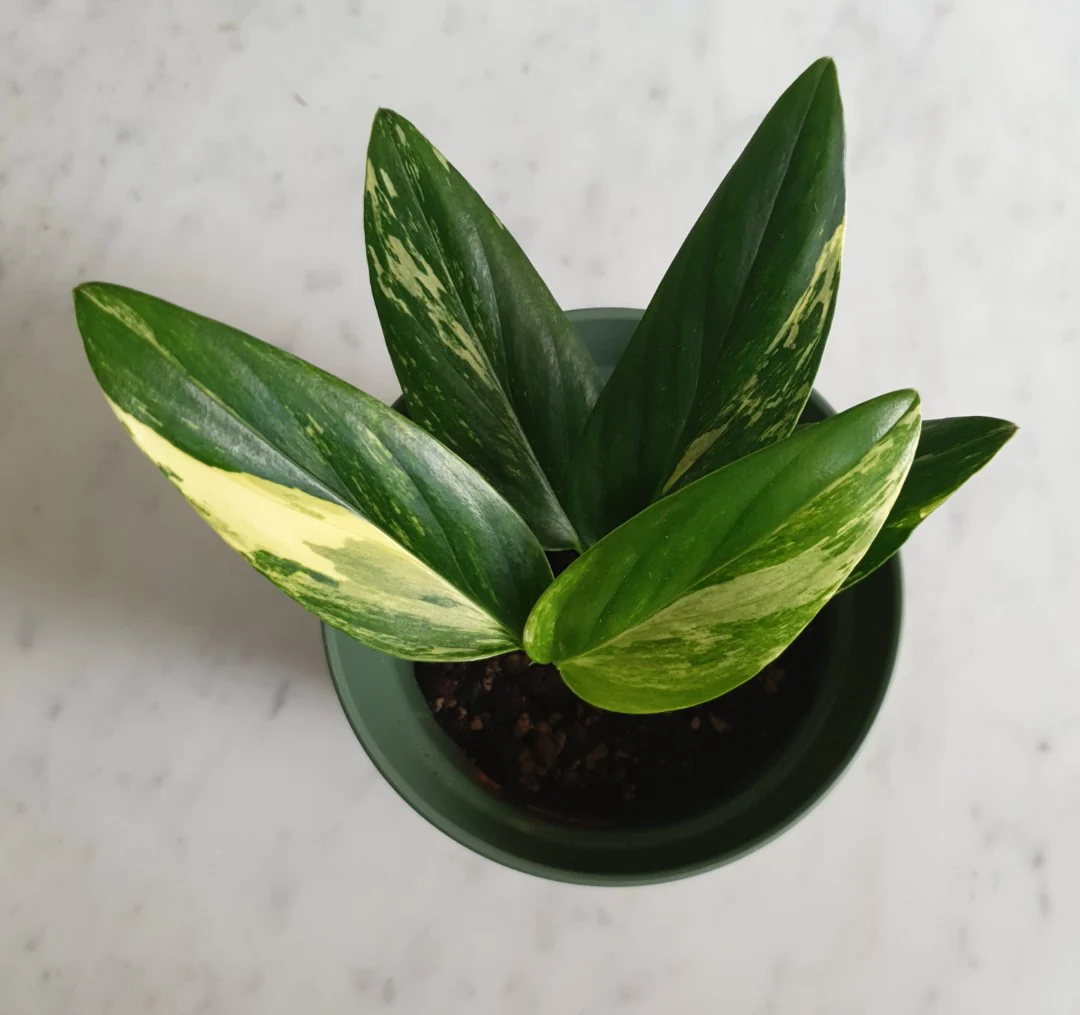
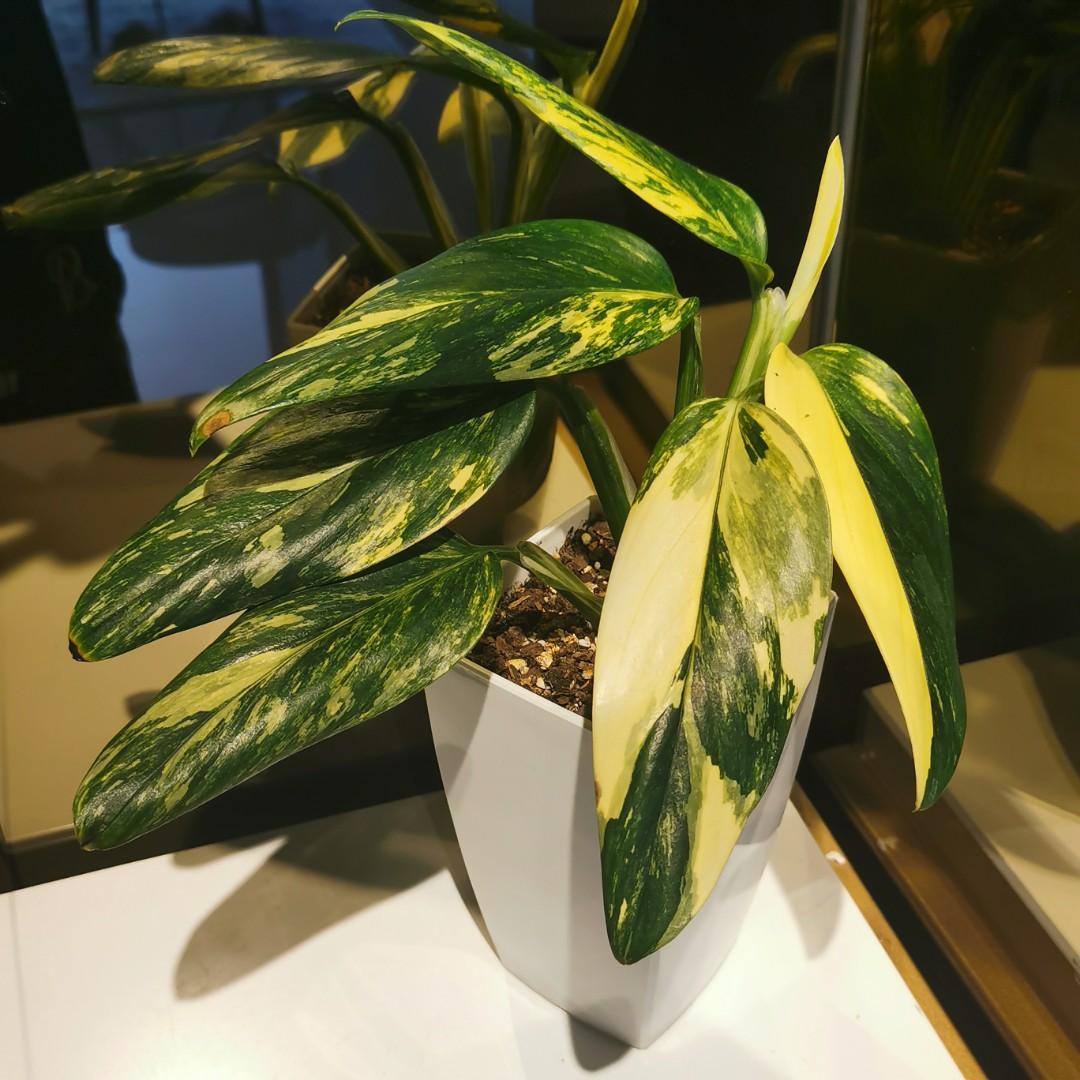
Track the newest three to five hardened leaves and the active stem. One greener leaf can be normal variation; repeated all-green growth may indicate reversion in the active sector. Repeated almost-all-pale leaves leave less productive green tissue and a smaller margin for root or shipping stress.
Do not prune after a single disappointing leaf. First locate lower nodes and buds, confirm the plant is healthy enough to recover, and decide which viable node offers a workable stem pattern. A cut can redirect growth to another bud, but it cannot guarantee a particular result.
Propagate a viable node
- Locate the node and bud. A leaf/petiole without stem tissue cannot continue as a vine.
- Choose firm material. Avoid a soft, black or hollow node; inspect the aerial-root side and growth point.
- Cut cleanly. Sterilize a sharp blade and leave enough internode to handle the cutting without crushing the bud.
- Root in a method you can monitor. Keep an airy medium evenly moist, or refresh water before it becomes stagnant; keep the bud above saturated material.
- Pot up after functional roots form. Wait for branching roots and stable uptake, not the first tiny root tip.
For method trade-offs and pot-up criteria, use the Monstera propagation guide. Variegation makes a cutting valuable to the owner, but it does not change the requirement for a viable node and axillary bud.
Troubleshoot patterns, not isolated symptoms
| Signal | Check first | First safe response |
|---|---|---|
| Yellow leaf; pot stays heavy | Drainage, root texture and watering history. | Pause watering and inspect the root zone before changing light or fertilizer. |
| Long internodes, smaller leaves | Usable light, roots and support contact. | Improve the confirmed limiting factor gradually. |
| Crisp pale-sector edges | Dry-down swings, direct sun, heat and salt buildup. | Correct the evidenced stress; humidity alone is not a diagnosis. |
| Stippling, webbing or black specks | Leaf backs, petiole bases and nearby plants. | Isolate, identify the pest, then use a labeled treatment. |
Use the Monstera brown-leaf diagnostic when foliage damage is the main question. Use the care pillar for the whole-plant baseline.