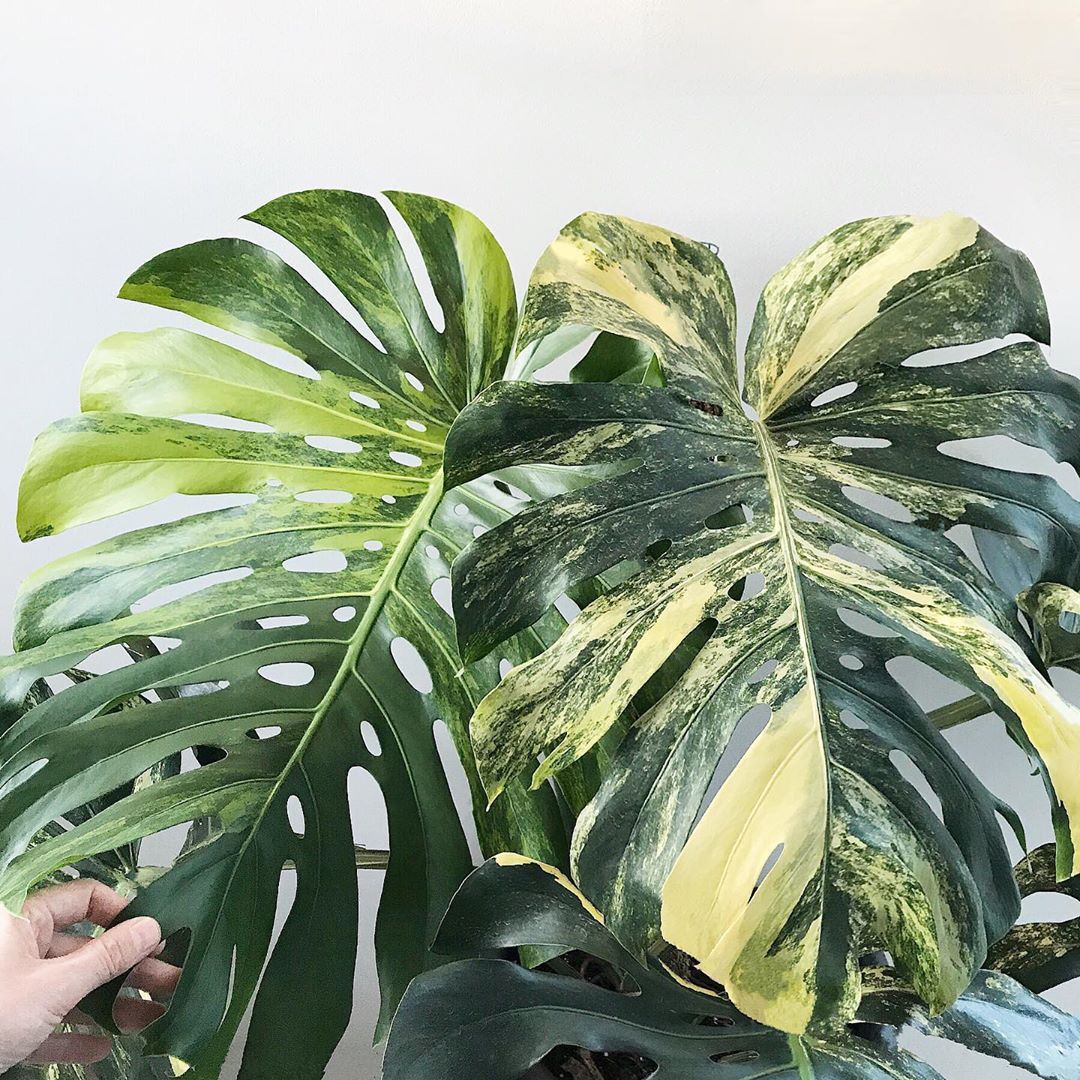
Greenboog yellow-variegated Monstera guide
This guide is for collectors, indoor growers and buyers deciding whether a yellow-variegated Monstera is correctly represented, how to keep its roots and green tissue functional, and which sale format matches their experience.
Use color as one clue, then verify the whole plant and the seller’s evidence.
| Label | Typical visual cue | What the label cannot prove |
|---|---|---|
| Aurea | Yellow, lime or warm-cream sectors and marbling | Registered pedigree, form or future pattern percentage |
| Albo | White-to-cream sectoral or marbled variegation | That one pale leaf predicts the next growth point |
| Thai Constellation | Cream-speckled pattern commonly sold under a distinct horticultural name | That every seller photo represents the exact plant or current batch |
What is Monstera Aurea?
Botanically, the plant belongs to Monstera deliciosa. Kew’s Plants of the World Online accepts that species and gives its native range as Mexico to Guatemala. A nursery-grown yellow-variegated selection is not a separate wild species, and “Aurea” is not evidence that a plant came from a particular country or breeder.
In horticultural listings, aurea is used for gold or yellow variegation. Pattern can be sectoral, marbled or mottled and can vary from leaf to leaf. Mature leaves may develop splits and internal holes, but juvenile plants often have few or none. Fenestration is therefore not a reliable test on its own.
Aurea, Albo and Thai Constellation are not interchangeable labels
Aurea generally describes yellow-to-gold patterning, while Albo is used for white-to-cream sectoral variegation. “Thai Constellation” is a separate horticultural name commonly associated with cream-speckled plants. Trade labels are applied inconsistently, so use the current leaves, stem, growth point and seller’s provenance together. The Monstera Albo identification and care guide owns the white-variegated comparison.
If the label itself is still unclear, start with the variegated Monstera names and patterns guide. It separates accepted species, horticultural names, collector labels and leaf-pattern words before this page narrows the decision to yellow-variegated Aurea plants.
Monstera Aurea care at a glance
Start with the rooted zone and current growth, then adjust as light, pot size and season change.
| Factor | Useful starting point | Adjust when |
|---|---|---|
| Light | Bright, filtered light with a stable rhythm | Internodes stretch or pale sectors heat, bleach and crisp |
| Water | Soak fully after meaningful partial dry-down, then drain | Pot depth, root mass, light, temperature or growth rate changes |
| Root zone | Airy, moisture-retentive mix in a draining pot | The center stays saturated or the whole pot dries before roots can use it |
| Temperature and air | Warm, stable room with gentle airflow | Cold glass, drafts or heater blasts change leaf and water loss |
| Support | Firm pole, plank or trellis installed early | The stem leans or outgrows its anchors |
| Feeding | Label-directed balanced fertilizer during active growth | Roots, light or growth cannot use the dose |
Light: bright enough for growth, gentle enough for the leaf
The RHS Swiss cheese plant guide recommends indirect light and warm conditions. For Aurea, start near a bright window behind a sheer curtain or beyond the strongest direct beam. Acclimate over days or weeks when increasing exposure; a shade-grown leaf moved straight into intense afternoon sun can scorch before the plant adapts.
Yellow tissue has less green pigment than the neighboring green surface. A peer-reviewed study of yellow sectors in another variegated ornamental found lower net photosynthesis than in its green sectors; it does not establish a Monstera-specific light target or a “perfect” green-to-yellow ratio. The practical rule is to preserve enough healthy green tissue, provide useful filtered light and judge the response of new growth.
Low light can produce weaker, smaller growth, but it does not simply switch a genetic variegation pattern off. Do not promise that moving a reverted shoot to a brighter window will turn it yellow again.
How to water without using a calendar
Check more than the top inch. Feel or probe the mix at several depths, note the pot’s weight and ask how quickly it changed since the last watering. Water thoroughly when a meaningful part of the root zone has dried but before the entire plant remains limp. Empty the cachepot or saucer so the root ball is not left standing in water.
A fixed weekly schedule fails because pot size, root mass, substrate, light, temperature and season change water use. A small cutting in dense mix may stay wet longer than a mature supported vine in a coarse mix. Persistent saturation, sour odor, black soft roots or a stem base that softens require a root inspection—not another measured cup of water.
Why fixed care targets can mislead
Translate a broad rule into an observable decision for the plant in front of you.
| Common advice | Useful core | Context that changes it |
|---|---|---|
| Wait until the top 2–3 inches are dry | Avoid continuous saturation | That depth can be most of a cutting pot but only the surface of a deep mature pot; check weight and moisture through the rooted zone |
| Maintain 60–80% humidity | Stable air can help tender leaves open cleanly | Healthy established plants can adapt below that range; humidity cannot repair failed roots, cold or stagnant air |
| Feed every two weeks | An actively growing vine needs nutrients | Product strength, light, roots and growth rate determine whether that interval is useful or excessive |
| Use a moss pole | A climbing stem benefits from stable vertical contact | A plank or trellis can also work; support helps maturity but does not guarantee fenestration or color pattern |
Substrate, pot and repotting
Use a pot with working drainage and a mix that holds some moisture while leaving air around the roots. Bark, coarse mineral aggregate and a quality potting base can create that balance, but no single recipe fits every room. Repot when roots have filled the usable volume, water runs through channels without wetting the core, the mix has collapsed or a root problem requires intervention. Moving an undersized root system into a much larger wet volume raises the margin for watering error.
Humidity, airflow, temperature and feeding
Moderate household humidity can work when roots and light are sound. A humidifier is more controllable than repeated misting, which changes leaf-surface moisture briefly and may leave spotting without correcting dry room air. Keep air moving gently; avoid cold drafts, heater blasts and leaves pressed against hot or cold glass.
Feed only a plant that is actively growing in adequate light with functioning roots. Follow the product label rather than doubling strength for faster variegated growth. Flush or repot if salts accumulate as a crust and root tips decline. Reduce feeding as growth slows.
Train the vine for larger, more mature leaves
Monstera deliciosa is a climber with aerial roots. NC State Extension recommends sturdy support and notes propagation by layering or stem cutting. Give the stem a firm pole, plank or trellis and fasten it with soft, loose ties that do not cut into expanding tissue. Keep the growth side facing the support and extend the structure before the plant leans. Light, age and climbing opportunity all affect leaf size and fenestration, so a juvenile unfenestrated leaf is not automatically a care failure.
How to propagate Monstera Aurea
The non-negotiable part is a stem node with a viable growth point. A leaf and petiole may remain attractive in water, but without a node they cannot produce a new vine. The University of Minnesota Extension propagation guide describes stem cuttings, air layering and division and requires a node for each division.
Stem-cutting method
- Choose a healthy stem section and locate the node, axillary growth point and any aerial root. Inspect the stem pattern as well as the leaf.
- Use a clean, sharp tool and leave enough stem around the node to handle it without injuring the bud.
- Root in clean water or a lightly moist, airy medium. Keep the node correctly oriented and do not bury a leaf or petiole.
- Give warmth, bright filtered light and oxygen around the developing roots. Replace dirty water or correct a stagnant medium rather than adding fertilizer to a failing cutting.
- Pot after the cutting has a functional root system that can support the leaf and new growth. Transition gradually; newly formed water roots and fine roots can be damaged by an abrupt dry shift.
What propagation cannot guarantee
The mother leaf’s color is not a contract for the next shoot. The growth point’s tissue determines what it can express, and a cutting may produce greener, yellower or differently patterned leaves. Photographs of the node and stem are therefore more useful than a cropped leaf photo. Pruning back toward a visibly patterned node may change which bud grows, but it cannot guarantee a chosen percentage or half-moon pattern.
Troubleshoot the symptom, not the slogan
Use the pattern to choose the first inspection; the detailed sections below explain each branch.
| Pattern | Check first | Next decision |
|---|---|---|
| Crisp yellow sectors | Recent sun increase, dry-down, salts and cold contact | Prevent the next injury; dead tissue will not recolor |
| Greener new growth | Several leaves and patterned tissue around active nodes | Observe before pruning; light supports growth but cannot order a genetic pattern |
| Nearly all-yellow growth | Remaining green area, vigor and the next growth point | Protect functional green tissue and avoid reactive sun or fertilizer increases |
| Droop + heavy wet pot | Odor, drainage, black roots and soft stem tissue | Inspect roots before adding more water |
| Scarred or stippled growth | Undersides, petiole joints, support and pot rim | Isolate, identify the pest and use a label-directed treatment |
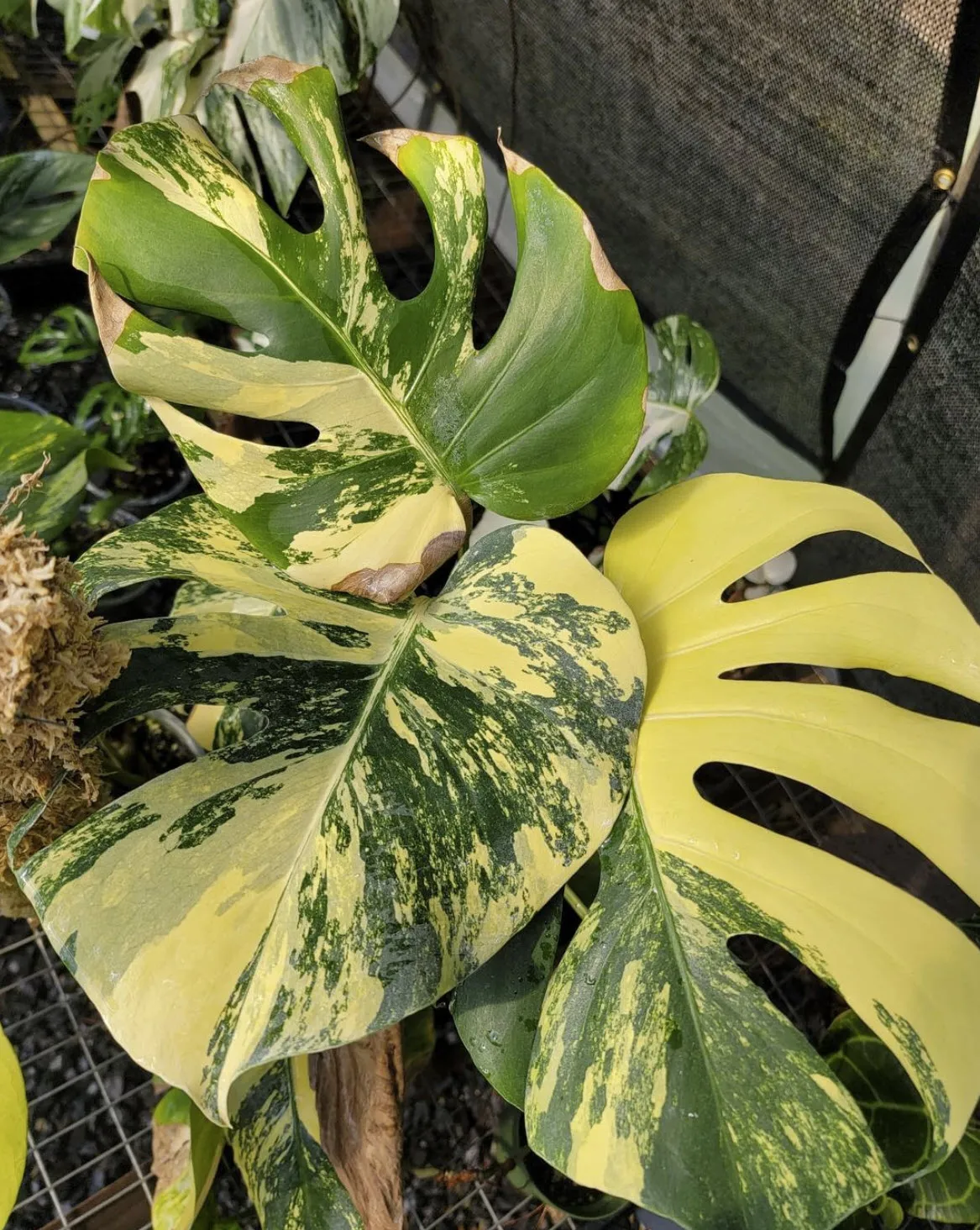
Brown yellow sectors or crisp margins
Damaged tissue will not turn green again. Check for an abrupt sun increase, repeated full dry-down, a saturated root core, fertilizer salts, cold contact and pest feeding. Trim only dead tissue if desired; correcting the cause matters more than making a cosmetic cut.
Mostly green new growth
First confirm that the greener leaf is mature; patterns can look different as a leaf hardens. Then inspect several leaves and the stem around active nodes. Give adequate light for healthy growth, but do not claim light alone reverses the genetics. If a sequence of shoots remains green, a collector may choose to prune to a node with visible patterned tissue, accepting that the outcome is uncertain.
Very yellow growth
A highly yellow leaf has less green area available to support the plant. Do not respond with intense direct sun or heavy fertilizer. Protect the existing green tissue, keep roots healthy and observe the next growth point. A plant producing only weak, nearly chlorophyll-free growth may need expert assessment before any irreversible pruning.
Droop, generalized yellowing or a soft stem
Separate thirst from root failure. A dry, light pot with firm roots suggests water deficit; a wet, heavy pot with odor, black roots or soft tissue suggests oxygen loss and decay. Use the dying Monstera diagnostic guide for a root-first recovery sequence.
Spider mites, scale or mealybugs
Inspect the undersides, petiole junctions, support and pot rim. Isolate a new or affected plant. University of Minnesota Extension recommends washing or physical removal for small infestations and label-directed products when needed; household detergent is not a substitute for insecticidal soap.
Buying checklist: plant, cutting or tissue culture
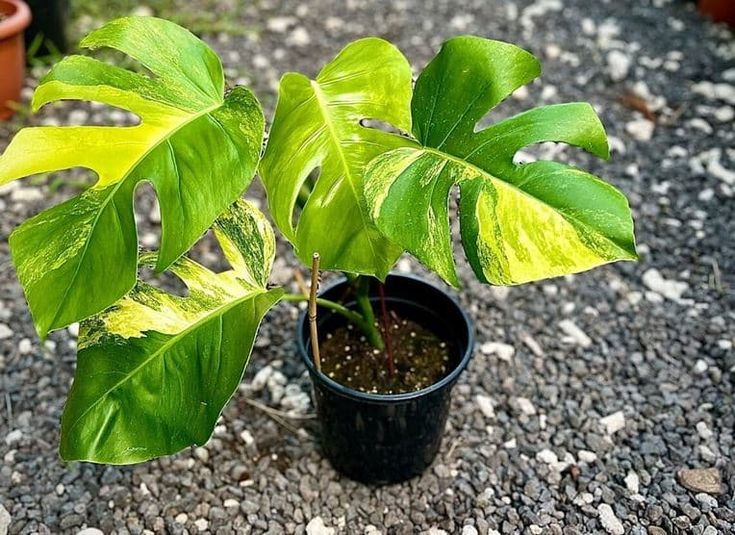
- Exact plant: request current photos of the whole plant, stem, newest growth, root zone and both leaf surfaces.
- Cutting: confirm a viable node and growth point; ask whether roots are water-grown, substrate-grown or newly initiated.
- Tissue culture: ask whether the plantlet is still in vitro, freshly deflasked or already acclimated. Established-plant watering does not apply on day one.
- Health: look for pests, soft tissue, extensive fresh cuts, unstable rooting and cold or heat damage.
- Claims: do not pay for a promised future percentage, “perfect genes” or guaranteed half-moon leaves.
- Terms: check whether photos are of the exact plant or representative stock and review shipping, phytosanitary and damage policies.
The established Monstera Aurea listing and tissue-culture Monstera Aurea listing are separate transaction formats. Availability and batch characteristics can change; this article remains the care and identity owner.
Safety around pets and children
The ASPCA lists Monstera deliciosa as toxic to cats and dogs because of insoluble calcium oxalates. Keep leaves, cuttings and propagation water out of reach, wear gloves if the sap irritates you and seek appropriate veterinary or medical advice after exposure. The Monstera toxicity guide covers symptoms and response boundaries in more detail.
Frequently asked questions
Is Monstera Aurea a separate species?
No. The name is used in horticulture for yellow-variegated Monstera deliciosa. Seller labels may add terms such as Marmorata or Tricolor, but those words alone do not prove a pedigree or form.
Does more light create more yellow variegation?
Light supports growth and can change leaf size, spacing and stress, but it does not let a grower order a genetic pattern. Increase useful light gradually and judge plant health, not a promised color percentage.
Can a Monstera Aurea leaf root without a node?
A leaf may form or maintain roots in some circumstances, but without a stem node and viable growth point it cannot produce a new vine. Buy or cut a node, not a leaf-only display piece, when propagation is the goal.
Why is a new Monstera Aurea leaf not fenestrated?
It may be juvenile, recently propagated, growing without vertical support or receiving inadequate usable light. Review age, roots, support and conditions together before concluding that the plant was mislabeled.
Should every brown yellow patch be removed?
No. Brown tissue does not recover, but cutting it off does not fix the cause and removing functioning green tissue reduces leaf area. Diagnose light, water, roots, salts, temperature and pests first.