
Greenboog household plant-safety guide
Use the affected person or pet and current symptoms to choose the next contact.
| Question | Short answer or action |
|---|---|
| Toxic to cats? | Yes. ASPCA lists Monstera deliciosa as toxic to cats. |
| Toxic to dogs? | Yes. The same insoluble-oxalate hazard applies. |
| Toxic to people? | Chewing plant tissue can burn and swell the mouth; sap may irritate skin or eyes. |
| Common signs | Oral pain, drooling, pawing at the mouth, vomiting and difficulty swallowing. |
| First pet contact | A veterinarian, emergency animal hospital or animal poison-control service. |
| First human contact | A local poison center; emergency services for severe swelling or breathing/swallowing difficulty. |
This page provides general safety information, not a diagnosis or treatment plan. Advice must be tailored to the species, age, symptoms, amount and route of exposure.
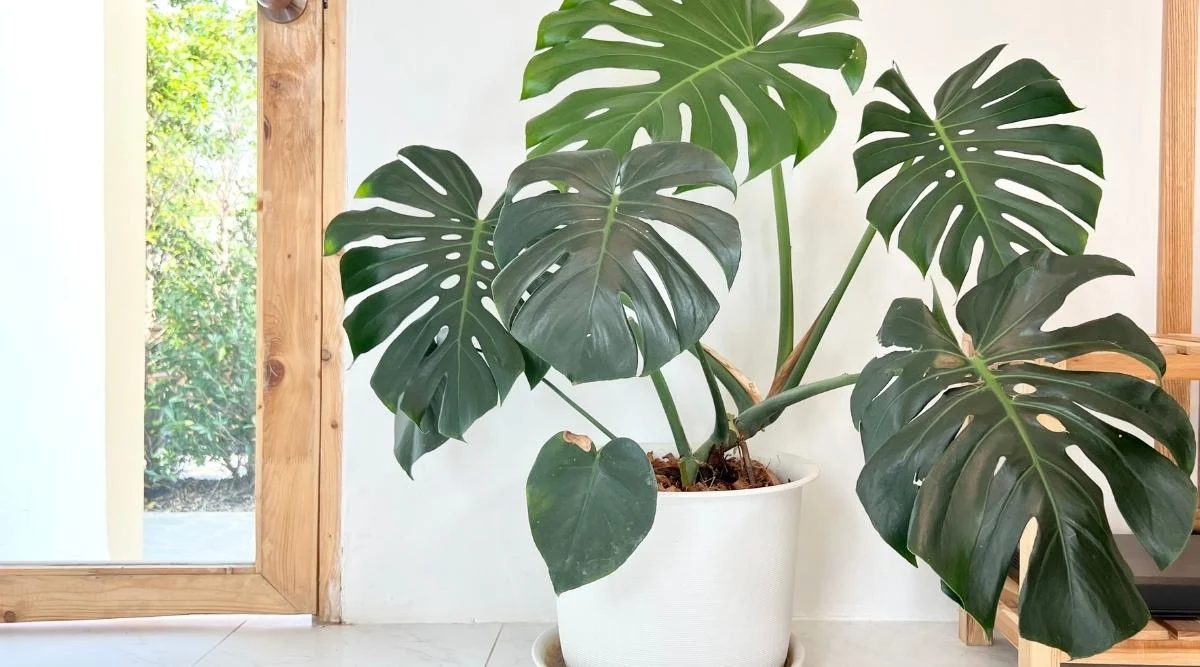
Why is Monstera toxic?
Monstera belongs to the aroid family, Araceae. Its tissues contain insoluble calcium oxalate crystals shaped like tiny needles, often called raphides. When plant tissue is chewed or sap contacts sensitive tissue, those crystals can cause mechanical irritation and inflammation.
UF/IFAS identifies insoluble calcium oxalate as the principal Monstera toxic agent and warns about mouth, throat, eye and digestive irritation. The current ASPCA Monstera record lists the plant as toxic to both cats and dogs.
Monstera is not carnivorous, and it does not use these crystals to “digest insects.” Do not compare its risk casually with another plant or assume the result will be mild. Exposure severity depends on the animal or person, the amount, the body part exposed and the symptoms that develop.
Symptoms after Monstera exposure
Match the exposure route to signs; do not estimate severity from leaf damage alone.
| Exposure | Possible signs | Urgent boundary |
|---|---|---|
| Person chews plant | Immediate burning, mouth/lip/tongue swelling, drooling, nausea, vomiting or painful swallowing | Breathing or swallowing difficulty, severe swelling or altered responsiveness |
| Cat or dog chews plant | Oral irritation, intense burning, drooling, pawing at the mouth, vomiting or difficulty swallowing | Breathing difficulty, collapse, seizures, unconsciousness or rapidly worsening signs |
| Sap on skin | Burning, redness, rash or swelling | Severe or spreading reaction, or symptoms that do not improve after thorough washing |
| Sap in an eye | Pain, tearing, redness, swelling or visual discomfort | Severe pain, vision change or symptoms after irrigation |
Symptoms often begin quickly because the crystals physically irritate tissue. An animal may chew only a small amount and still drool heavily because the mouth is painful. Conversely, not seeing a missing chunk does not rule out sap exposure. Use symptoms and professional advice rather than estimating risk from the leaf alone.
What should a person do after exposure?
If plant material was chewed
- Remove any remaining plant material from the mouth without putting yourself at risk.
- Rinse the mouth with water and spit. Do not force fluids.
- Contact a poison center for advice based on the person’s age, symptoms and amount.
- Call emergency services for difficulty breathing or swallowing, severe swelling, collapse or altered responsiveness.
In the United States, Poison Control is available online or at 1-800-222-1222. Outside the U.S., use your local poison-information or emergency service.
If sap reached skin or an eye
Wash exposed skin thoroughly with soap and water for 15 minutes. For an eye exposure, irrigate with clean water for at least 15 minutes and remove contact lenses if they come out easily. Seek medical attention for severe symptoms, vision changes or irritation that does not improve.
What should you do if a cat or dog chews Monstera?
- Stop further exposure. Move the pet away from the plant and remove accessible debris.
- Check the pet. Look for breathing difficulty, collapse, seizures, excessive drooling, vomiting, mouth swelling or difficulty swallowing.
- Call promptly. Contact your veterinarian, an emergency animal hospital or an animal poison-control service. Do not wait for symptoms to become severe.
- Keep useful evidence. Take a clear plant photograph, note the time, estimated amount and symptoms, and keep chewed material away from other animals.
- Follow the professional’s instructions. The correct response depends on the pet and exposure.
In the U.S., ASPCA Animal Poison Control is available 24/7 at (888) 426-4435; a fee may apply. The FDA lists veterinarians, emergency animal hospitals and animal poison centers as the appropriate sources of pet emergency advice. Elsewhere, call a local veterinarian or animal poison service.
What not to do
- Do not induce vomiting in a pet unless a veterinarian or poison-control professional directs it. ASPCA warns that home vomiting attempts can cause additional harm, and hydrogen peroxide must never be given to a cat.
- Do not give human medication, antihistamines, milk, oil, salt or another home remedy unless the professional managing the case tells you to.
- Do not force food or fluid into a person or animal that is drooling heavily or struggling to swallow.
- Do not rely on “mildly toxic” as a triage decision. Symptoms and airway/swallowing status matter more than a label.
Read the ASPCA’s explanation of why inducing vomiting at home can be dangerous before storing any online “pet detox” recipe as an emergency plan.
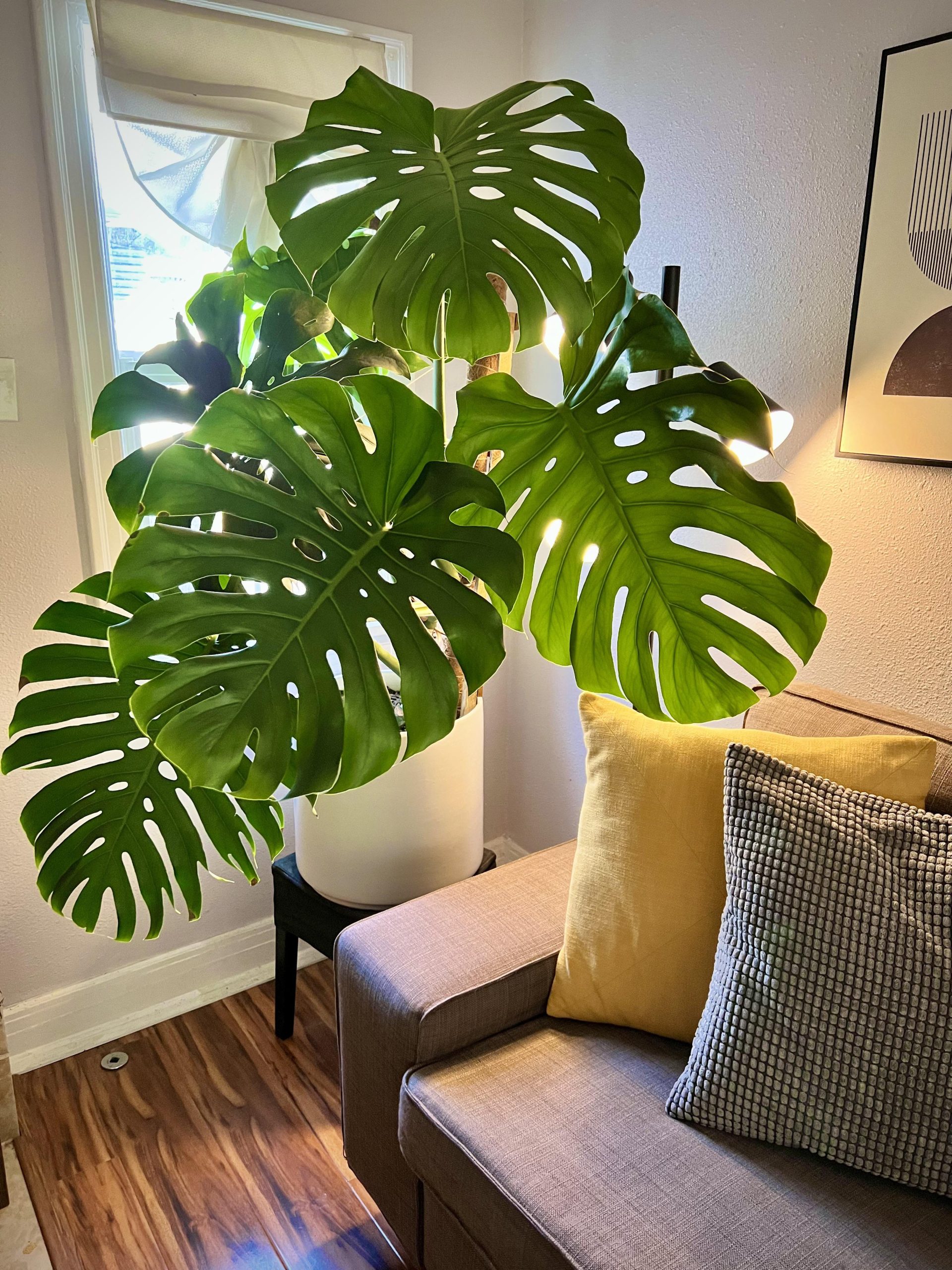
How to keep a Monstera in a home with pets or children
Use a real barrier, not only height
Cats climb, dogs can pull leaves down, and a mature Monstera may extend far beyond its pot. A closed plant room, physical barrier or location the specific child or pet cannot access is safer than a low plant stand. If an animal persistently chews plants, a non-toxic plant is the lower-risk choice.
Stabilize the plant and its support
A top-heavy pot or loose pole can move the foliage into reach. Secure the container and train the stem to a stable support. Our guide to supporting a Monstera plant covers the structural side; keep ties, poles and cachepots from becoming new hazards.
Control pruning and propagation waste
Wear gloves if sap irritates your skin. Wash tools and hands, clean the work surface, and place cut leaves, stems and roots in a closed bin immediately. Do not leave a water-propagation jar or node cutting where a child or pet can tip, drink from or chew it.
Label the plant for other caregivers
Keep the botanical name, veterinarian number and local poison contacts available to family, pet sitters and childcare providers. A correct name and clear photograph can save time during an exposure call.
For routine placement, watering and training after the safety decision is made, use the Monstera care guide. Our evidence-based overview of Monstera plant benefits also keeps pet safety separate from unsupported air-purification claims.
Are Albo, Thai Constellation and other Monsteras toxic?
Variegation does not make an Albo or Thai Constellation safe to chew. They are forms of Monstera deliciosa and should be handled with the same calcium-oxalate precautions. UF/IFAS advises treating all Monstera species and their plant parts as toxic to cats, dogs and humans; that includes commonly grown Monstera adansonii.
Common names can mislead. “Swiss cheese plant” may refer to more than one Monstera in trade, while “split-leaf philodendron” is often applied to M. deliciosa even though Monstera and Philodendron are different genera. Use the botanical name when calling poison control.
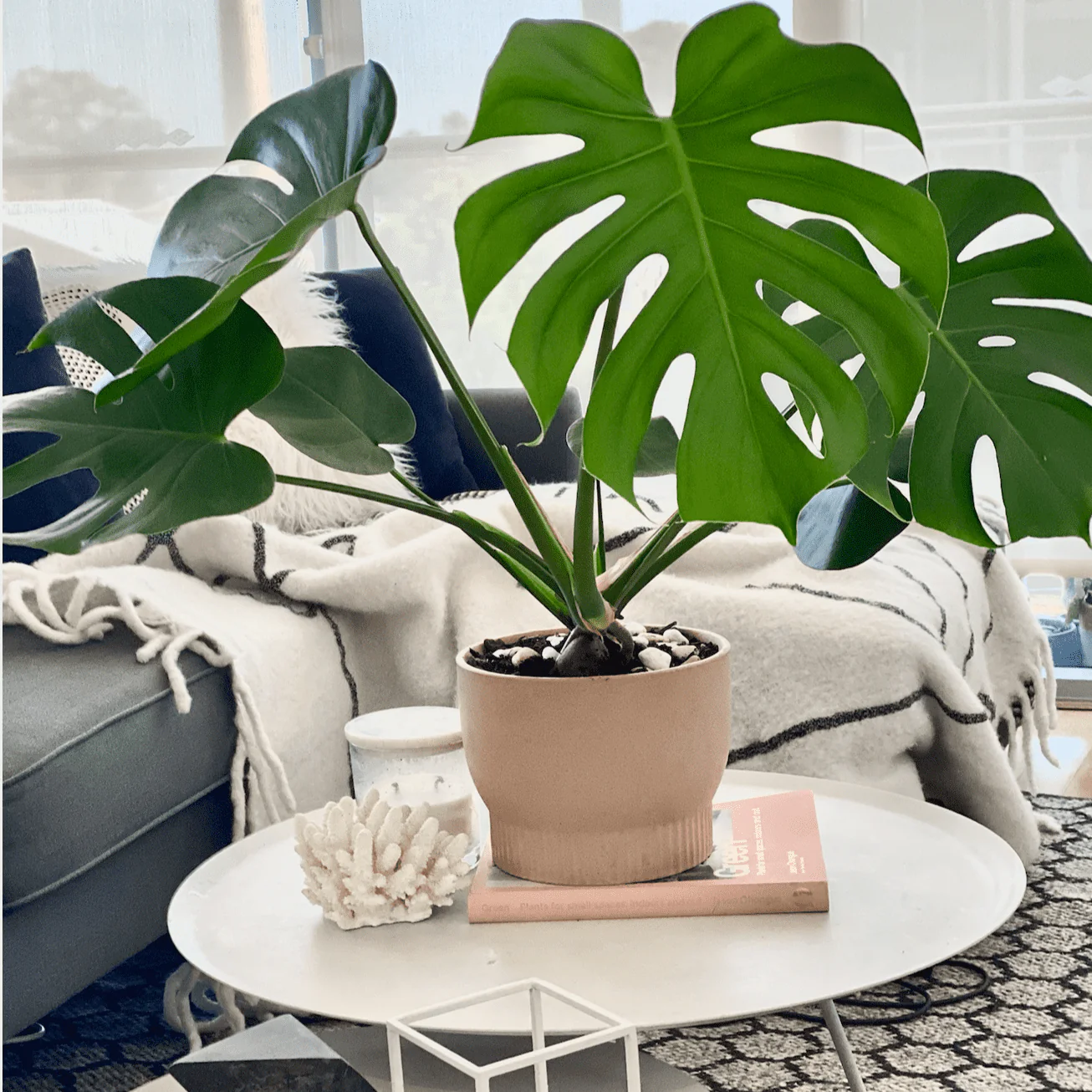
What about ripe Monstera fruit?
Monstera deliciosa has a narrow exception: properly ripened fruit pulp is eaten in regions where the plant fruits outdoors. That does not make the rest of the plant edible. Indoor Monsteras rarely fruit, and unripe sections contain irritating crystals.
UF/IFAS fruit guidance says only pulp from a portion whose scales loosen and fall away naturally should be eaten; immature portions can cause severe discomfort. Do not experiment with an indoor inflorescence or serve Monstera fruit to pets or children based on a photograph.
Frequently asked questions
Is Monstera poisonous to touch?
Touching an intact leaf is not the same as chewing it, but sap from cuts can irritate skin and eyes. Wear gloves if you are sensitive, wash after pruning and avoid touching your face.
Is Monstera deadly to cats or dogs?
ASPCA lists it as toxic because it causes intense oral irritation and can affect swallowing. Do not use an online probability to decide that an exposure is safe. Call a veterinarian or animal poison-control service, especially if symptoms are present.
Can a Monstera stay in a pet-friendly home?
Only if the specific pet cannot access or pull down any part of it and all pruning waste is controlled. For a persistent plant-chewer or a household where barriers are unreliable, choosing a plant listed as non-toxic by ASPCA is safer.
How quickly do symptoms appear?
Oral burning and drooling can begin quickly because the crystals irritate on contact. Timing and severity vary, so call based on the known exposure or symptoms rather than waiting for a set number of minutes.
Sources and evidence boundaries
- ASPCA: Monstera deliciosa toxicity, signs and animal poison-control contact
- FDA: who to call for a pet emergency
- U.S. Poison Control: raphide exposure, first aid and emergency boundaries
- UF/IFAS: Monstera and other calcium-oxalate houseplants
- UF/IFAS: the narrow properly ripened M. deliciosa fruit-pulp exception
