
Greenboog evidence-led buyer guide
There are limits worth knowing. A Monstera is not a meaningful substitute for ventilation or an air cleaner, it is not a dependable room humidifier, and it is not pet-safe. Use the seven realistic benefits below to decide whether the plant fits your space rather than buying from a wellness promise.
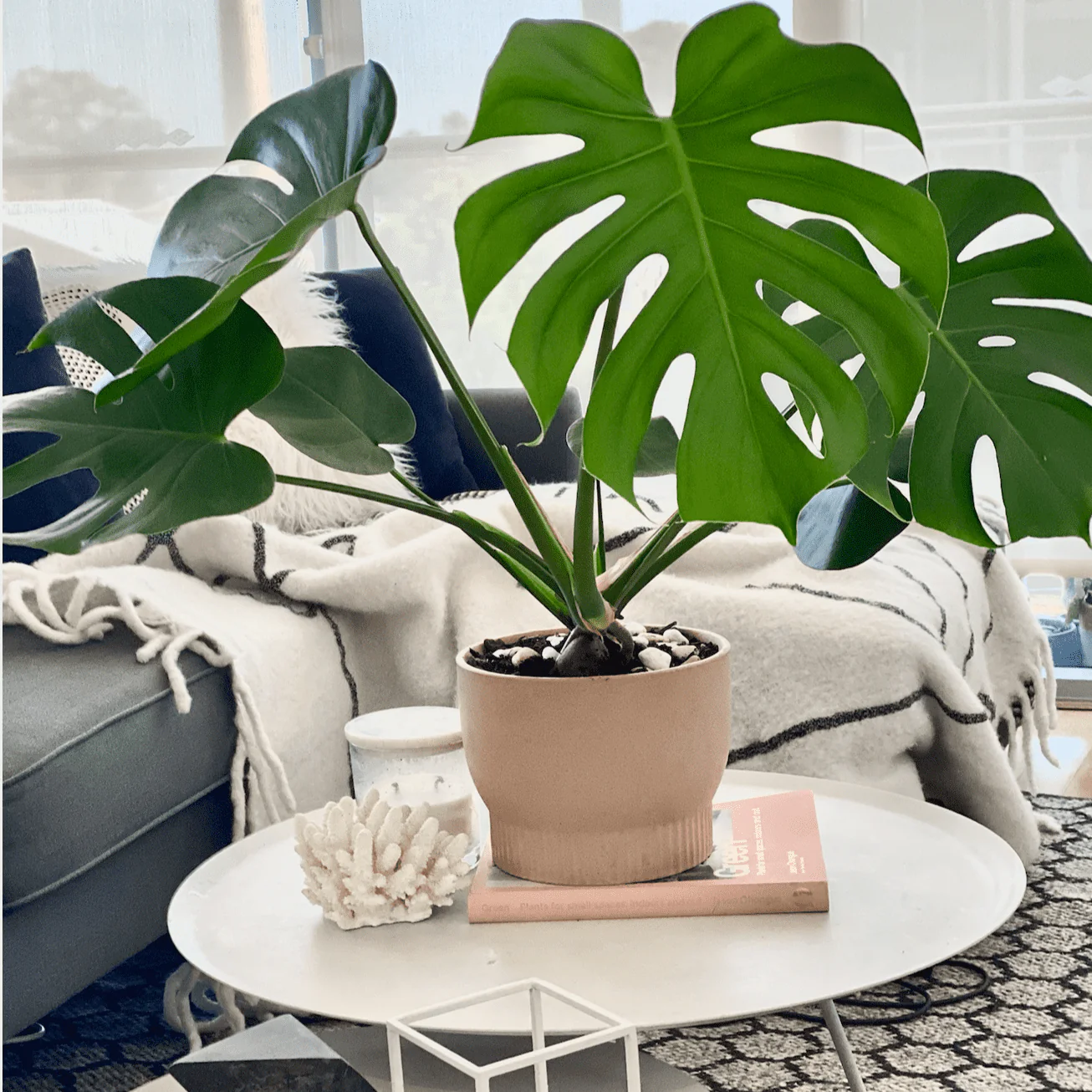
Monstera benefits at a glance
Read across from the benefit to the condition that makes it realistic in an ordinary home.
| Benefit | What it offers | Reality check |
|---|---|---|
| Statement foliage | One mature plant can create a strong visual focal point. | Leaf size and fenestration depend on maturity and growing conditions. |
| Vertical training | A climbing vine can use height instead of sprawling over furniture. | Install a sturdy support before stems become difficult to reposition. |
| Visible feedback | New leaves and internodes help a grower observe change. | One symptom can have several causes; observe before correcting. |
| Propagation | A healthy stem section can be restarted or shared. | A complete new vine needs a node, not only a leaf and petiole. |
| Collector choice | Green and variegated forms offer distinct patterns and traits. | Judge the stem, nodes, roots and active growth—not the label alone. |
| Indoor adaptability | It can grow in many bright indoor positions. | Low maintenance does not mean very low light or wet roots. |
| Manageable direction | Support, pruning and propagation can shape the footprint. | A mature Monstera is still a large plant that needs measured space. |
1. Statement foliage without needing many plants
A mature Monstera deliciosa can fill a visual gap that might otherwise require several smaller houseplants. Its leaves become larger and develop splits and internal holes, called fenestrations, as the plant matures under suitable conditions.
This makes Monstera useful when you want one clear focal point in a living room, office, or sheltered patio. The effect comes from leaf form and scale, not from a promise that every young leaf will emerge heavily fenestrated.
2. A climbing plant you can train vertically
Monstera is a climbing aroid, not a naturally compact tabletop plant. A sturdy plank, trellis, or moss pole helps guide growth upward and gives aerial roots something to approach. Training the vine vertically can use floor space more efficiently than letting long stems sprawl across furniture.
Position the support when the plant is still manageable. Retrofitting a pole after the stems have hardened is possible, but it is easier to damage roots or force petioles into an unnatural angle.
3. New growth gives useful care feedback
Each new leaf tells you something. Smaller leaves and long gaps between nodes can point to inadequate light. Brown edges may reflect several different problems, including dry roots, damaged roots, salt buildup, heat, or low humidity; the symptom alone is not a diagnosis.
That visible feedback makes Monstera rewarding for a grower who likes to observe and adjust. If your plant is already showing damage, use our guide to brown Monstera and Swiss cheese plant leaves before cutting or watering by habit.
4. Propagation makes one plant easier to share
A healthy stem cutting that includes at least one node can form roots and a new growth point. This allows an established plant to be shortened, restarted, or shared with another grower.
A leaf and petiole without a node may remain green in water for a time, but it cannot produce a complete new vine. Check for a node before buying or taking a cutting, especially when a highly variegated leaf is being sold on its own.
5. Collectors can choose genuinely different forms
The standard green Monstera deliciosa is only the starting point. Growers also seek plants sold as Albo, Aurea, Thai Constellation, Mint, and other forms. These names can describe different variegation colors, patterns, origins, or trade selections, so a label alone should not determine value.

Compare the plant’s stem, nodes, active growth, root condition, and the stability of its pattern. Our guide to variegated Monstera types provides an orientation, while the Monstera Albo vs Thai Constellation comparison focuses on two commonly confused choices.
6. It fits many bright indoor environments
Monstera is adaptable, but “low maintenance” should not mean “put it anywhere.” Bright, indirect light usually supports stronger growth indoors. Very low light can produce weak, stretched growth, while abrupt intense sun can scorch foliage that has not been acclimated.
Water according to the plant and pot rather than a fixed weekly schedule. Check the mix below the surface, water thoroughly when it has partly dried, and let excess water drain. Pot size, root mass, temperature, airflow, and season all change how quickly the mix dries.
7. You can manage its size over time
A well-grown Monstera can become large, but its direction and footprint are not completely outside your control. Rotate the pot only when needed, keep the main vine attached to a support, remove genuinely damaged foliage, and prune a stem above your planned propagation point when the plant outgrows its space.
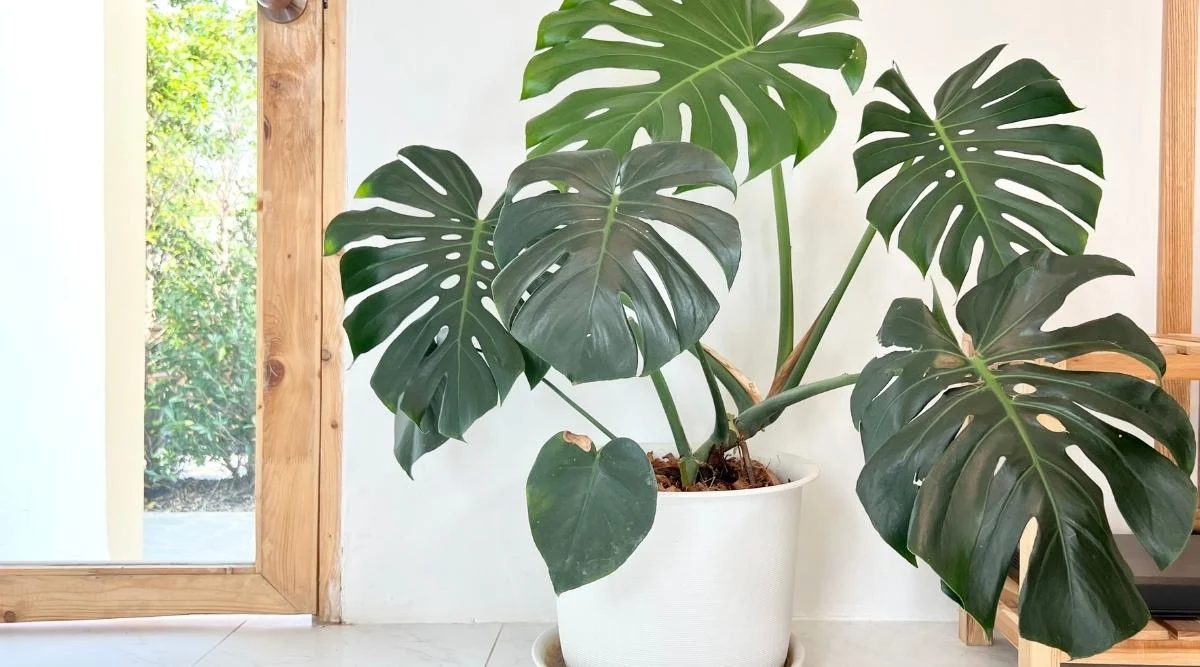
Before bringing one home, measure the available floor area and the height of the support you can provide. A buyer who wants a permanently compact desk plant may be happier with a different species.
What a Monstera does not reliably do
It does not meaningfully clean the air in a normal room
Plants exchange gases and some sealed-chamber studies have measured pollutant removal. That does not mean one or two houseplants clean a lived-in room. The US Environmental Protection Agency states that there is no evidence a reasonable number of houseplants removes significant quantities of pollutants in homes and offices. A review of reported VOC-removal studies found that ordinary building air exchange outpaces passive potted-plant removal. Use source control, ventilation and appropriate filtration for indoor-air problems.
It is not a dependable humidifier
A Monstera transpires water, but its effect depends on leaf area, room volume, ventilation, temperature, and many other factors. Do not use the plant as a substitute for measuring humidity or addressing a dry indoor environment directly.
It is not safe for a pet to chew
Monstera deliciosa contains insoluble calcium oxalates. The ASPCA lists it as toxic to cats and dogs, with chewing potentially causing oral irritation, drooling, vomiting, and difficulty swallowing. Keep it out of reach and contact a veterinarian or animal poison service if exposure occurs.
Who is a Monstera best for?
- Good fit: you want one large-leaved feature plant, have a bright position and will provide support as it grows.
- Collector fit: you enjoy comparing leaf, stem and root traits instead of buying from a cultivar name alone.
- Think twice: a pet regularly chews plants, the only position is very dark, or you need a permanently small tabletop specimen.
What to check before buying
- Plant format: established potted plant, rooted cutting, unrooted cutting, or tissue culture.
- Photo disclosure: the exact plant versus a representative example.
- Stem and node: especially important for propagation and variegation potential.
- Root condition: ask what substrate the plant is currently growing in and whether it has been acclimated.
- Variegation expectations: no seller can guarantee that every future leaf will repeat the same pattern.
- Shipping plan: understand transit, documents, seasonal packing, and arrival care before ordering internationally.
Frequently asked questions
What is the main benefit of a Monstera plant?
Its main benefit is ornamental: one trainable plant can produce large, distinctive foliage and become a strong indoor focal point. Propagation and the range of green and variegated forms add interest for collectors.
Do Monstera plants purify indoor air?
Not at a meaningful real-room scale based on current evidence. A reasonable number of houseplants should not replace source control, ventilation, or suitable filtration.
Are Monstera plants easy to care for?
They can be manageable in a bright indoor position with a draining mix and climbing support. They are less forgiving of chronically wet roots, very low light, or fixed watering schedules that ignore how quickly the pot dries.
Are Monstera plants safe for pets?
No. Their insoluble calcium oxalates can cause painful irritation when chewed. Keep the plant away from pets and seek veterinary advice after suspected ingestion.
Sources and further reading
- Kew Science: Monstera deliciosa taxonomy and distribution
- University of Florida IFAS: Monstera growing guidance
- US EPA: Improving indoor air quality
- Cummings and Waring: real-room interpretation of potted-plant VOC removal
- Han and Ruan: systematic review of indoor plants and human functions
- ASPCA: Swiss cheese plant toxicity

1 thought on “Monstera Plant Benefits: 7 Real Reasons to Grow One”