
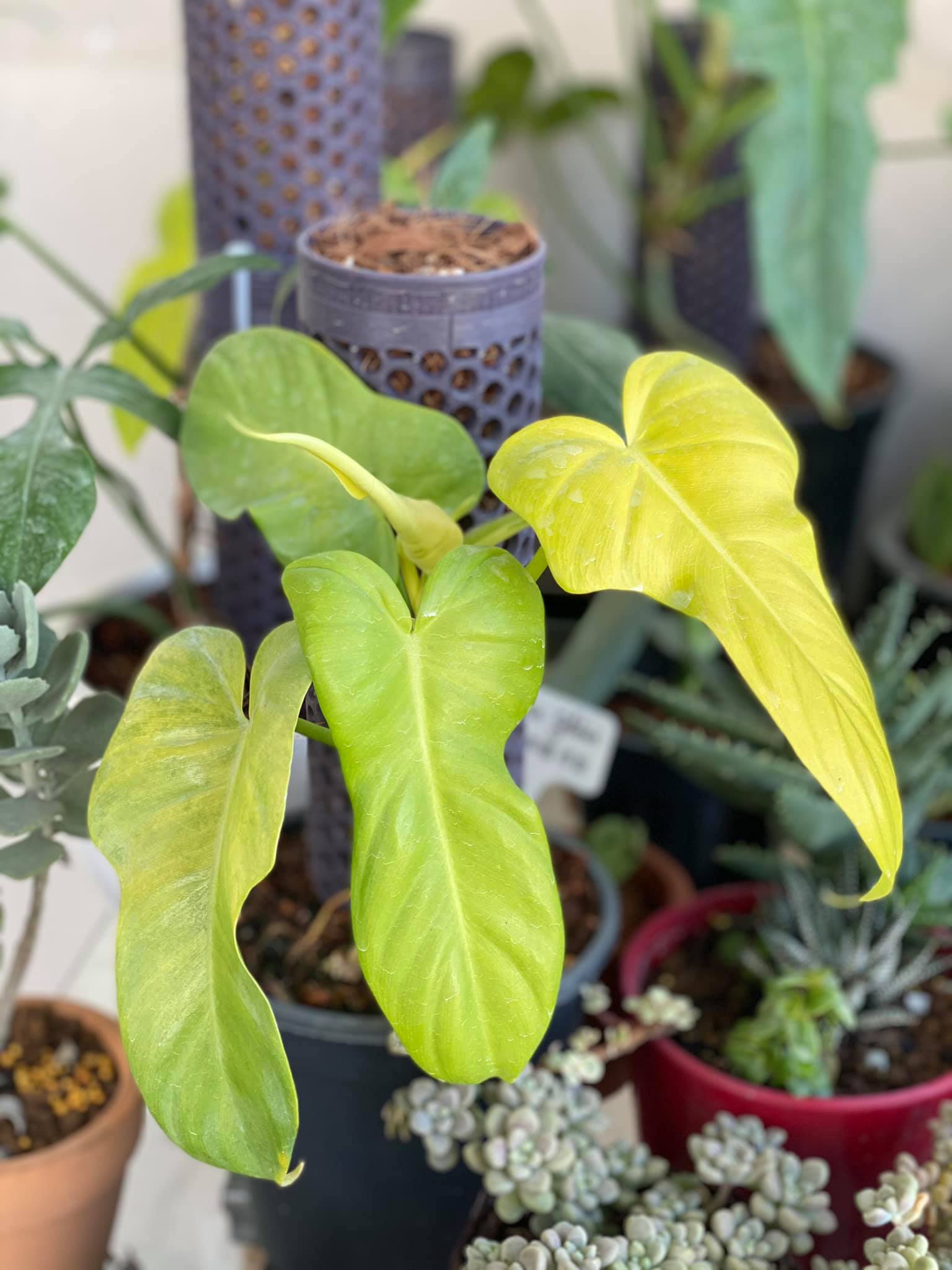
Growth habit, naming evidence and collection fit
Philodendron is not one silhouette. The genus contains hundreds of accepted species and a much larger horticultural vocabulary, so the useful question is not simply “Which type looks best?” but “How does this plant grow, and what does its name actually prove?”
Philodendron is a genus, not a look
Philodendron belongs to the aroid family, Araceae. Kew’s Plants of the World Online accepts the genus and places its native range from Mexico through Tropical America. Its botanical description includes mostly climbing hemiepiphytes or epiphytes, alongside rhizomatous, terrestrial, arborescent and rosette-like habits. That range explains why a heart-shaped leaf, a split blade or a compact rosette cannot define the whole genus.
Leaf shape also changes with age, support and growing conditions. A juvenile plant can look unlike its mature form, while two unrelated selections may both produce cordate leaves. Use several connected features—stem, node, internode, aerial root, cataphyll, petiole and new-growth position—before treating a visual match as evidence.
Four practical growth-form groups
| Growth form | What to inspect | Collection implication |
|---|---|---|
| Climbing / appressed-climbing | Distinct nodes and internodes, aerial roots and a stem seeking vertical contact. | Provide a stable support early; reattach the stem as it advances and allow headroom. |
| Creeping / rhizomatous | A stem or rhizome travelling horizontally across or just under the substrate. | Choose a wider footprint rather than forcing the growth point up a pole. |
| Compact crown / self-heading trade group | Very short internodes and successive leaves emerging close to a central crown. | Reserve lateral canopy space; keep the crown above wet substrate and rotate for even light. |
| Terrestrial or rosette-like | Growth anchored at ground level; the exact stem/rhizome structure depends on the taxon. | Research the accepted taxon instead of copying a generic pole-or-basket recipe. |
These are practical collection groups, not a replacement for a botanical description. Some Philodendrons can climb when attached yet creep when terrestrial; habit can also change with maturity. When the listing does not show the stem, ask for a current whole-plant view.
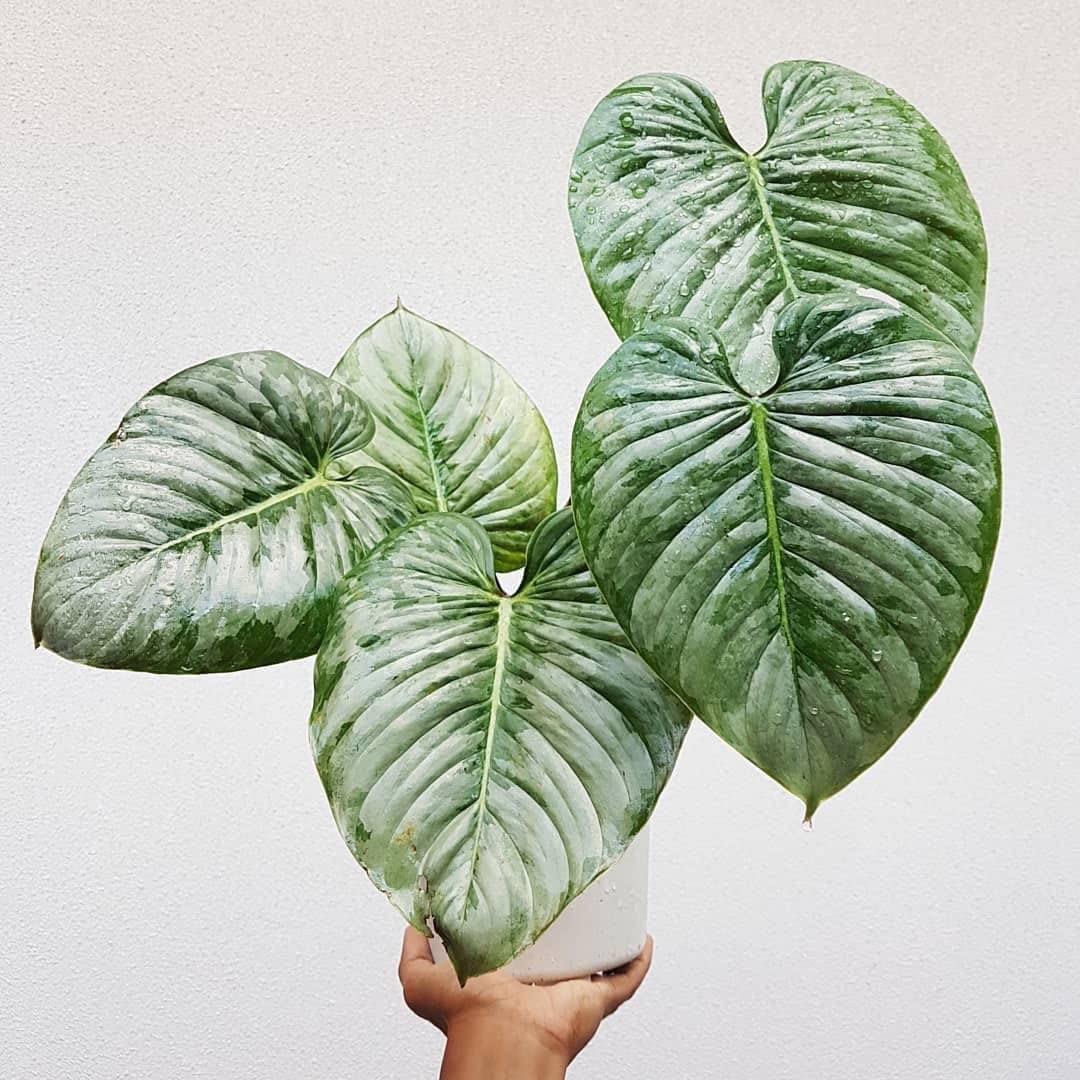
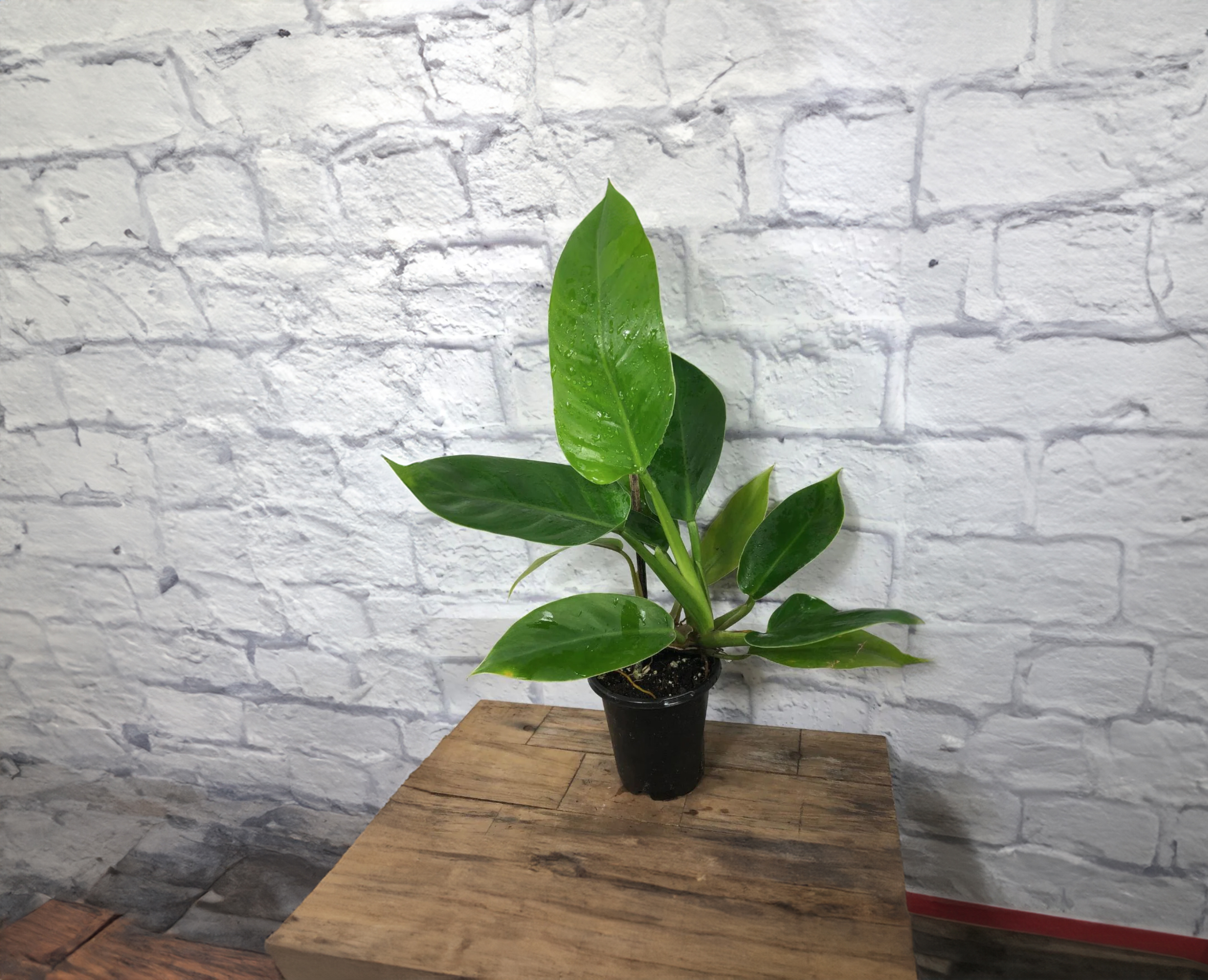
Species, cultivar, hybrid or seller line?
| Label layer | Strong evidence | Do not assume |
|---|---|---|
| Accepted species | A current taxonomic record, botanical authorship and connected diagnostic features. | That every market photo with a similar leaf is the same taxon. |
| Cultivar | A preserved cultivar name plus traceable horticultural source or registration where available. | That the cultivar name is a wild species or guarantees every future leaf. |
| Hybrid | Recorded parentage or breeder provenance and a stable label carried with the plant. | That a resemblance proves the stated cross. |
| Seller line / working name | Exact wording, source, acquisition date and linked photos retained together. | That a social nickname has taxonomic standing. |
Check a current authority such as Kew for accepted species status, but keep the live record in context: taxonomic treatments change. For cultivated material, provenance often matters more than trying to reverse-engineer a name from one leaf.
Inspect a listing from the growth point outward
Start with a current whole-plant image rather than the hero leaf. Find the active growth point and follow the connected stem back through several nodes. On a climber, compare internode length, aerial-root position and how the stem meets its support. On a creeper, ask for a side view showing the rhizome’s direction and the newest growth relative to the pot edge. For a compact crown, confirm that the short spacing is structural rather than a young cutting that has not begun to climb.
Then connect the plant to its record. Save the exact label, listing date, source and images of the stem, cataphyll, petiole and both leaf surfaces. A flower can carry important diagnostic information, but most retail plants are sold without one; in that case, keep the identity confidence proportional to the evidence. Tissue-culture and wholesale listings may appropriately use representative batch photos, while a one-off collector plant should state whether the photographed specimen is the one that ships.
Choose by growth job, then by appearance
- Vertical statement: choose a climber only if you can provide stable support, ties and height.
- Low, spreading display: make room for a creeping rhizome and use a pot geometry that follows it.
- Compact floor or tabletop form: verify the mature footprint of the named cultivar or hybrid rather than assuming “self-heading” means small.
- Collector evidence: save the whole-plant listing, current label, source and date—not just the most colourful leaf.
Once the growth form is clear, use Greenboog’s Philodendron care pillar for light, water and root-zone decisions. The rare Philodendron guide helps place morphology, provenance and collection value in context, while the Philodendron care FAQ handles quick care questions.
Philodendron growth forms FAQ
Is “self-heading Philodendron” a species?
No. It is a practical horticultural description for compact-crown growth. The plant still needs a separate accepted species, cultivar, hybrid or seller-line identity.
Can leaf shape identify a Philodendron?
Not reliably by itself. Compare connected leaves with stem, nodes, internodes, cataphylls, petioles, roots, new growth and reliable provenance.
Do all climbing Philodendrons need a moss pole?
They need suitable, stable support if grown vertically, but the material and moisture strategy can vary. Support is a structural decision, not a guarantee of mature leaf size.
Why avoid a fixed species count?
Accepted taxonomies are updated. A live authority is more useful than freezing a changing count in an evergreen buying guide.

4 thoughts on “Philodendron Growth Forms: Climbing, Creeping & Compact”