
Greenboog horticultural-label guide
The useful decision is not whether the plant looks “rare.” It is whether the current item, format and photos support the pattern and stage you intend to buy.
What the Renaissance label does—and does not—prove
Exact Kew/IPNI-focused searches do not surface `Anthurium Renaissance` as an accepted taxon. Treat the name as a horticultural or seller label until documented parentage, registration or clonal provenance is supplied. Do not invent a wild native range for the label.
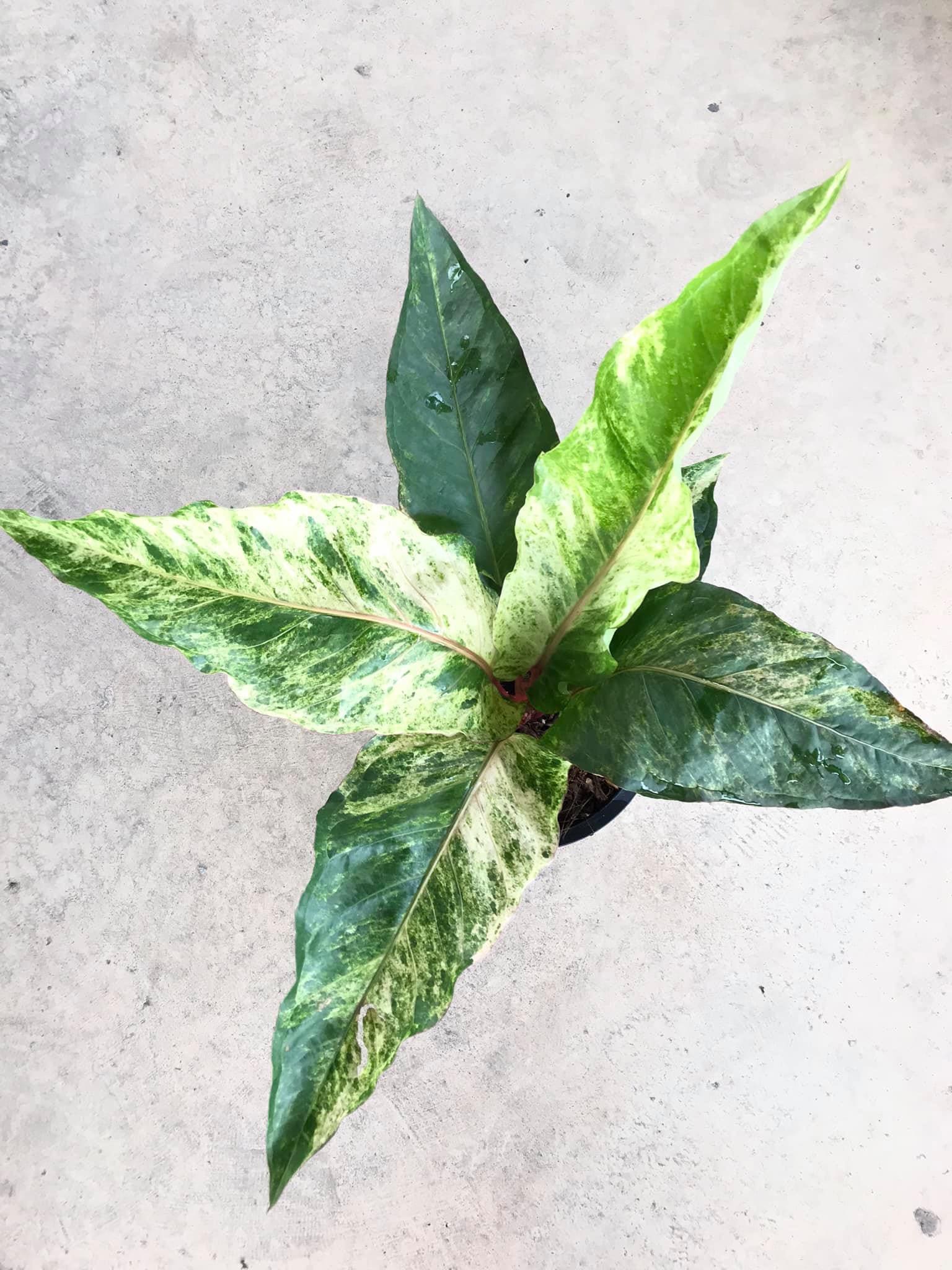
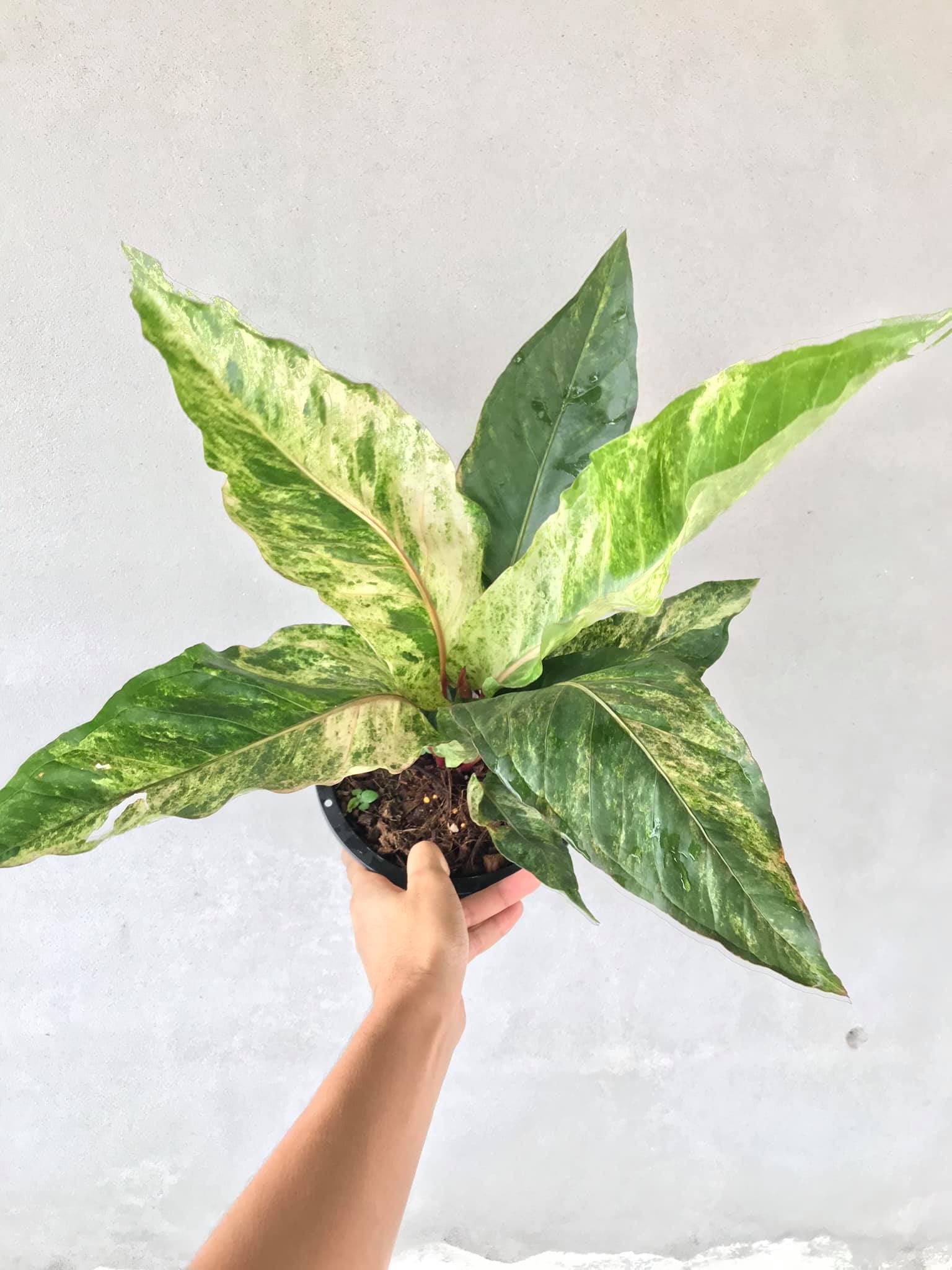
The photographed Greenboog material has a bird’s-nest-style crown, elongated blades and irregular green, cream and pale-pink patterning. Those visible traits describe the seller-labeled plants; photographs alone do not prove that the material is Anthurium hookeri, a particular hybrid or one registered cultivar.
| Evidence | Ask | Limit |
|---|---|---|
| Seller label | Is parentage or clone provenance documented? | The name alone is not taxonomy |
| Exact photo | Is this the plant that ships? | Future leaves can differ |
| Successive leaves | Does stable green/patterned growth continue? | One leaf is a weak trend |
| Roots and format | Potted, ex-vitro or in-vitro; established how long? | Mother-plant photos do not show arrival stage |
Light decisions for patterned foliage
Green tissue carries more photosynthetic capacity than cream or pale-pink sectors. Begin with bright filtered light, avoid abrupt direct heat and judge the next hardened leaf. Harsh exposure can bleach or scorch tissue; low usable light can reduce growth without reliably “forcing” more green or more variegation.
Rotate only when needed for balanced placement, not on a rigid schedule. Give the crown clearance so a soft new blade can open without rubbing a wall, shelf or neighboring plant.
Stabilize roots before chasing color
Use an aerated, structurally stable root zone that holds usable moisture without staying saturated. Match the container to the active root mass. Water when pot weight, depth moisture, drainage behavior and current root activity agree, then let excess water drain.
A top-inch or weekly rule ignores pot depth, warmth and establishment stage. Potted, recently deflasked and in-vitro plants require different transitions; do not apply a mature mother-plant routine to a plantlet.
Feed, repot and prune from evidence
Feed only a rooted plant in stable growth, following the product label and accounting for mineral load in water and medium. Repot when roots, medium collapse or unstable dry-down justify disturbance. Remove only dead or clearly failing tissue; cutting healthy green sectors does not engineer better variegation.
Troubleshoot the pattern and the plant separately
| Pattern | Check first | Response |
|---|---|---|
| More-green new leaf | Several successive leaves, roots and light history | Track the trend; do not cut from one leaf |
| Large pale sector browns | Heat, salts, root loss and dry-down | Correct the measured stress; protect the next leaf |
| Yellowing + heavy pot | Depth moisture, cold, odor and roots | Restore warmth/air; inspect if decline spreads |
| Distorted new growth | Thrips/mites, contact, fan and moisture swings | Inspect closely and protect the next expansion |
Propagation and pattern boundaries
Division or a stem section must retain viable growth tissue, ideally with roots. A leaf and petiole cannot regenerate a complete Anthurium. Vegetative propagation can preserve a clone’s genetics, but pattern placement and balance can still vary from leaf to leaf. Use the Anthurium propagation guide for method selection.
Compare potted and tissue-culture offers
- Identity: seller label plus any parentage/clone documentation.
- Photo type: exact item, representative batch or mother plant.
- Format: in-vitro, ex-vitro or established potted plant.
- Pattern: current green-to-pale balance across several leaves.
- Roots: present medium, establishment and stable recent growth.
Use the rare Anthurium buying guide for the verification framework and the Anthurium collection for live stock. Compare the potted Renaissance Variegated listing with the tissue-culture listing; they are different establishment stages.
Renaissance Variegated FAQ
Is it an accepted Anthurium species?
No accepted taxon under the exact Renaissance name was found in current Kew/IPNI-focused searches. Treat it as a horticultural seller label.
Is it definitely Anthurium hookeri?
Not from the label or photographs alone. Keep that species assignment unresolved unless stronger provenance is supplied.
Will every new leaf be pink and cream?
No. Current leaves show the present pattern; future distribution and color can change as leaves emerge and harden.
Can a leaf cutting preserve the variegation?
A detached leaf cannot produce a complete Anthurium. Propagation requires viable growth-point tissue, and future leaf pattern can still vary.
Continue through the Anthurium cluster
Compare growth and leaf forms in the Anthurium types guide, then use the genus care guide for shared baseline decisions.
