
Syngonium collector guide
Syngonium Starlite is a commercial selection label used for very pale silver-white or cream foliage with narrow green margins and irregular green sectors. Verify a plant from a healthy sequence, viable stem structure and traceable photographs—not from one nearly white leaf or a name alone.
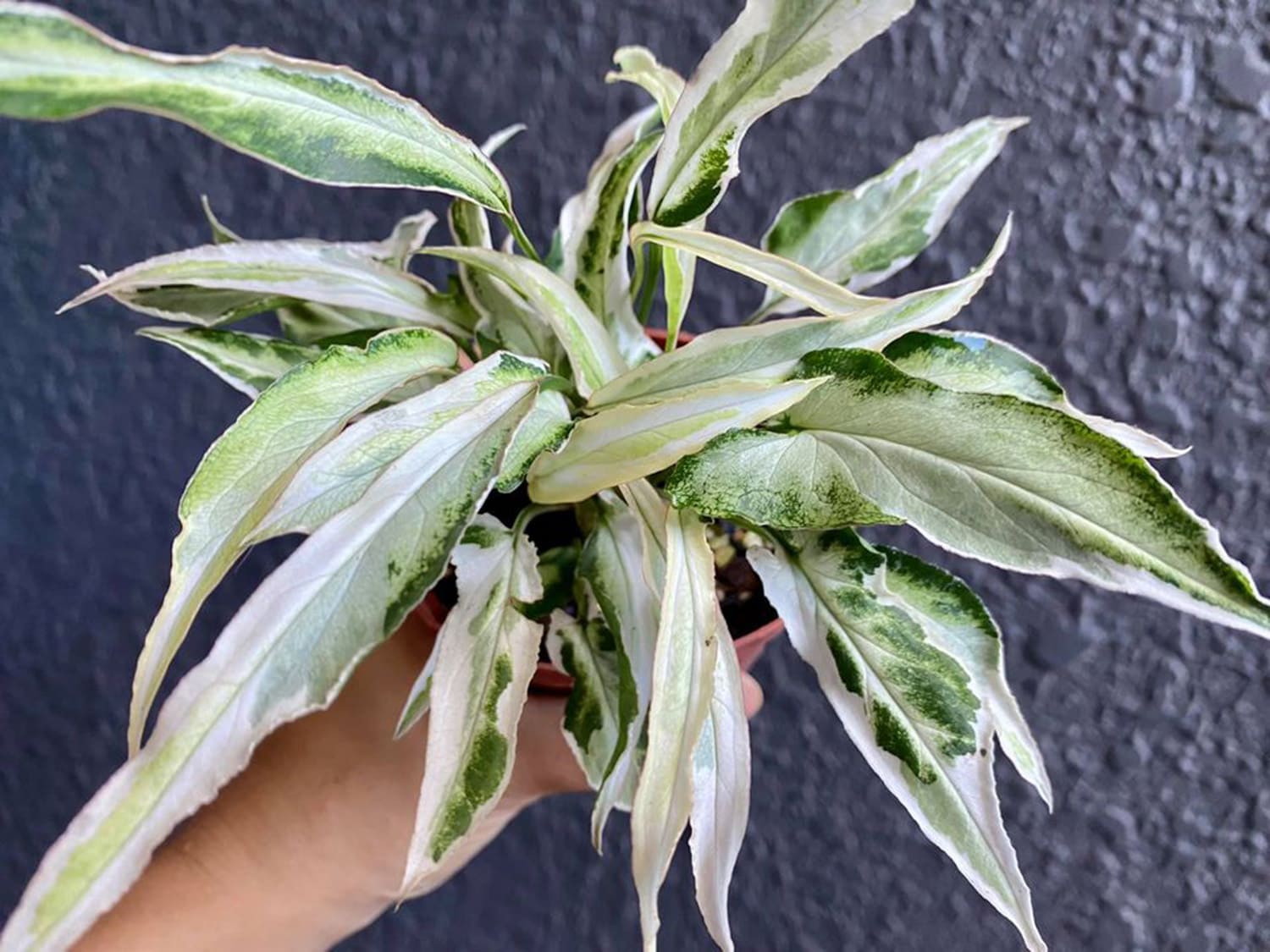
- Sequence: compare several hardened leaves, not only the newest one.
- Green tissue: record margins, sectors and stem growth that can support the pale foliage.
- Structure: verify stem, node, petiole sheath and an active growth point.
- Condition: separate stable color from bleaching, scorch, lesions or pest stippling.
- Source: confirm whether photographs show the exact plant, current lot or a mother plant.
Species framework and the Starlite label
Kew accepts Syngonium podophyllum as a tropical American climbing species. NC State describes juvenile arrowhead-shaped leaves and changing mature form when the vine climbs. Those sources establish the species framework; they do not register “Starlite,” prove a breeder, or make a nursery label a separate species.
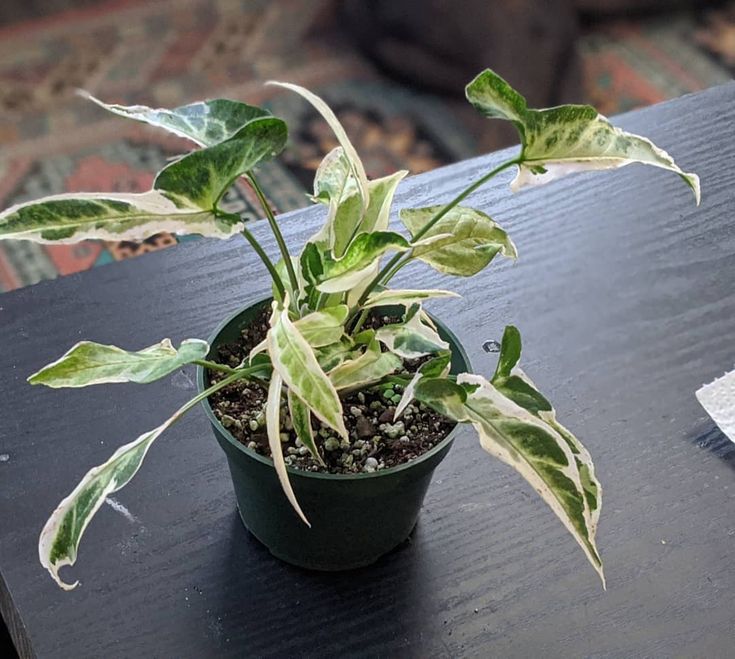
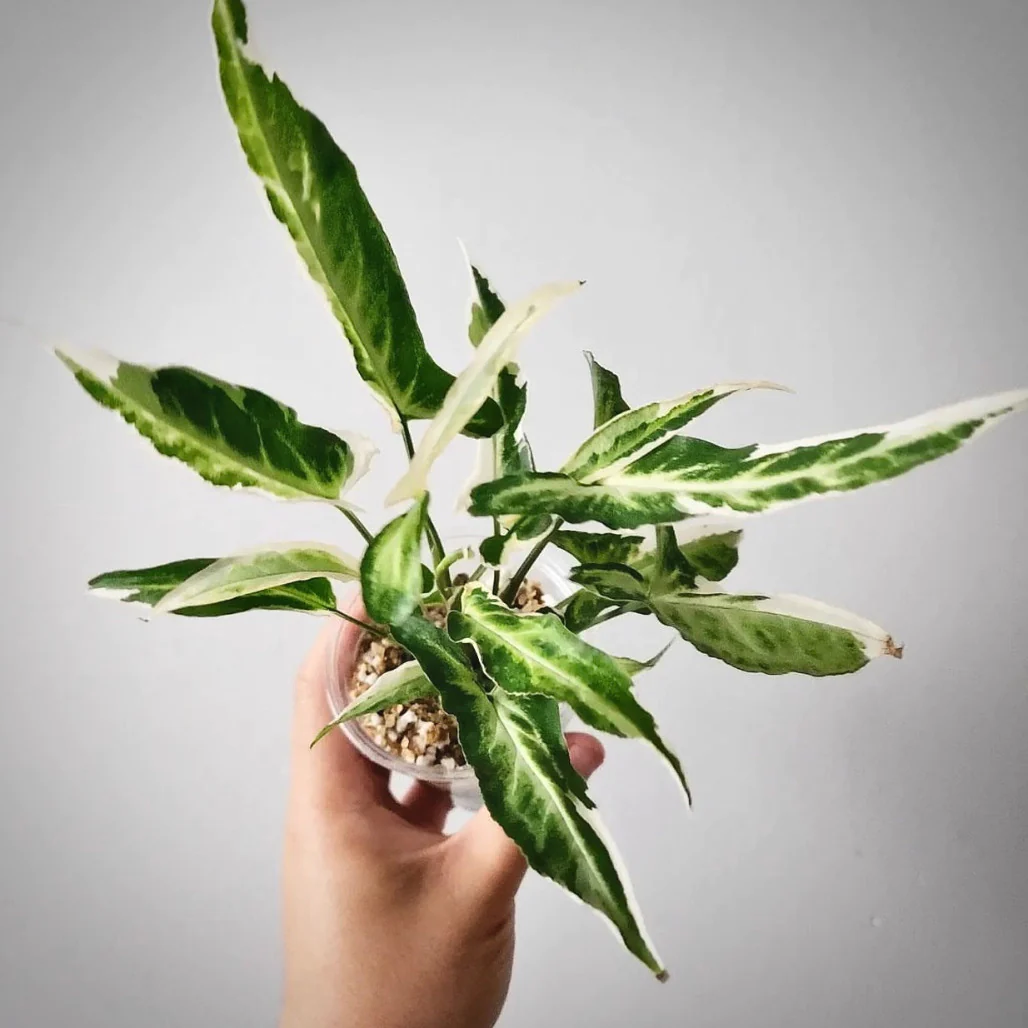
Use Starlite as the commercial name attached to a traceable source and visible phenotype. The Greenboog photographs show a pale field with green margins or sectors, but they do not establish pink as a dependable trait or guarantee that the next leaf will match any example.
Stable pattern or a damage signal?
| Observation | Useful interpretation | Next check |
|---|---|---|
| Pale field + green edge repeats | Supports the photographed Starlite phenotype when several healthy leaves repeat it. | Compare the whole stem and source plant. |
| One almost-white new leaf | A color event, not proof of a stable future sequence. | Inspect the next growth point and remaining green tissue. |
| Paling after a light move | Bleaching or heat stress may be superimposed on variegation. | Compare older protected leaves and exposure history. |
| Wet or expanding brown area | A lesion is damage, not decorative pattern. | Isolate if needed; inspect crown, roots and progression. |
| Fine stippling or scarring | Possible pest feeding can visually fragment pale tissue. | Inspect leaf undersides and tightly emerging growth. |
Authentic examples show plant-to-plant variation
These Greenboog photographs record individual plants under different settings. Leaf width, pale-to-green ratio and sector placement vary; use them as phenotype references rather than a promise of an identical order.
Buyer checklist: evidence before color promises
- Ask whether the listing uses exact-plant, current-lot or representative photographs.
- Request neutral-light views of multiple hardened leaves and the active growth point.
- Verify a viable stem/node, firm roots and the absence of soft crown tissue.
- Confirm whether the offer is established, rooted cutting, fresh cutting or tissue culture.
- For a very pale specimen, locate enough green tissue on the current stem rather than buying on whiteness alone.
- Use the live product page for current size, price, stock and shipping terms.
Care and propagation handoff
The Syngonium care hub owns the complete light, watering, support and troubleshooting workflow. For Starlite, make exposure changes gradually, monitor pot weight and root activity, and protect functioning green tissue. Stronger light cannot manufacture the named pattern, while abrupt exposure can damage pale areas.
A new vine requires viable stem/node tissue and a growth point. Photograph the parent and cutting, label the source and date, and retain enough healthy tissue on the parent. A detached leaf may survive temporarily but cannot reproduce the vine by itself.
Choose the next page by intent
Sources and evidence boundaries
- Kew Plants of the World Online: Syngonium podophyllum — accepted species, climbing habit and native range.
- NC State Extension: Syngonium podophyllum — juvenile/adult leaf development and stem-cutting framework.
Evidence limit: species sources do not register the Starlite trade label. Greenboog photographs document visible phenotype and condition, not genotype, pedigree or future expression.
